Results for “model”

arXiv (research papers) Vicenç Torra Security

On Private Knowledge Retrieval and Private Inference for secure multi-agent systems

Multi-agent systems provide a convenient framework for the massive deployment of agents based on Large Language Models (LLMs). It provides a sound framework where agents can interact with existing software to perform actions in an autonomous way. Agentic AI is the new term to denote these AI-based autonomous systems. In real multi-agent systems, agents need to deal with malicious agents some of which can exploit security vulnerabilities to do harm. A memory poisoning attack…

Read at arXiv (research papers)

arXiv (research papers) Weifeng Yuan Security

BypassGym: A Benchmark for Evaluating AI Agents' Endpoint Defense Evasion Capabilities

Artificial intelligence agents increasingly automate cybersecurity tasks, including offensive operations. Frequent attacks across the web make endpoint detection and response (EDR) a critical defense, but whether AI agents can evade it remains unclear. Benchmarks evaluate the offensive capabilities of large language model (LLM) agents in areas such as penetration testing and vulnerability discovery. One important capability that these benchmarks do not address is defense…

Read at arXiv (research papers)

Simon Willison SI

Introducing Our Smallest, Most Efficient Model: Muse Ember

Introducing Our Smallest, Most Efficient Model: Muse Ember Meta AI just launched their entry in the Claude Haiku/GPT Luna category: Muse Ember, which they describe as:

Read at Simon Willison

Tech in Asia Aiko Gao Ishida Startups

ByteDance launches Seedream 5.5 with 100-round image editing

Tests found the model still made errors with human anatomy and small objects such as glasses.

Read at Tech in Asia

arXiv (research papers) Alok Shukla

An Efficient Quantum Algorithm for Preparing Uniform Superpositions over Arbitrary Integer Intervals

We consider exact preparation of the uniform quantum state supported on an arbitrary nonempty interval of integer labels in an $n$-qubit register. For every $0\leq a<a+M\leq2^n$, we give an ancilla-free circuit using only one-qubit gates and singly controlled one-qubit gates. In the logical gate model specified in the paper, the direct construction has exact worst-case gate count $5n-9$ for $n\geq3$; its exact maxima for $n=1$ and $n=2$ are $1$ and $3$, respectively. A…

Read at arXiv (research papers)

arXiv (research papers) Shuao Jia

Tri-Stack-PIM: A Heterogeneous Multi-Die 3D-Integrated Processing-in-Memory Architecture for Efficient LLM Inference

Large language model (LLM) inference during autoregressive decoding is fundamentally memory-bandwidth-bound. Existing three-dimensional (3D) stacked processing-in-memory (PIM) architectures alleviate the off-chip bandwidth wall, yet remain constrained by several limitations: physical layer (PHY), controllers, and direct memory access (DMA) engines compete with arithmetic units for advanced-node base-die area; hybrid-bonding keep-out zones fragment the base-die floorplan and…

Read at arXiv (research papers)

arXiv (research papers) Linru Zhang Security

MOAI: Module-Optimizing Architecture for non-interactive secure transformer Inference

Privacy concerns have been raised in Large Language Models (LLM) inference when models are deployed in Cloud Service Providers (CSP). Homomorphic encryption (HE) offers a promising solution by enabling secure inference directly over encrypted inputs. However, the high computational overhead of HE remains a major bottleneck. To address this challenge, we propose MOAI, an efficient HE-based, non-interactive framework for secure transformer inference. MOAI gains significant…

Read at arXiv (research papers)

MarkTechPost Asif Razzaq SI

Meta Releases Muse Ember, a 1M-Context Model for High-Volume Agent Work

Meta Muse Ember is Meta’s smallest model, built for tool calls, coding subtasks and document parsing. It ties Claude Haiku 5.5 on the Artificial Analysis Intelligence Index at roughly a third of the cost per task.

Read at MarkTechPost

Android Authority Hadlee Simons Gadgets

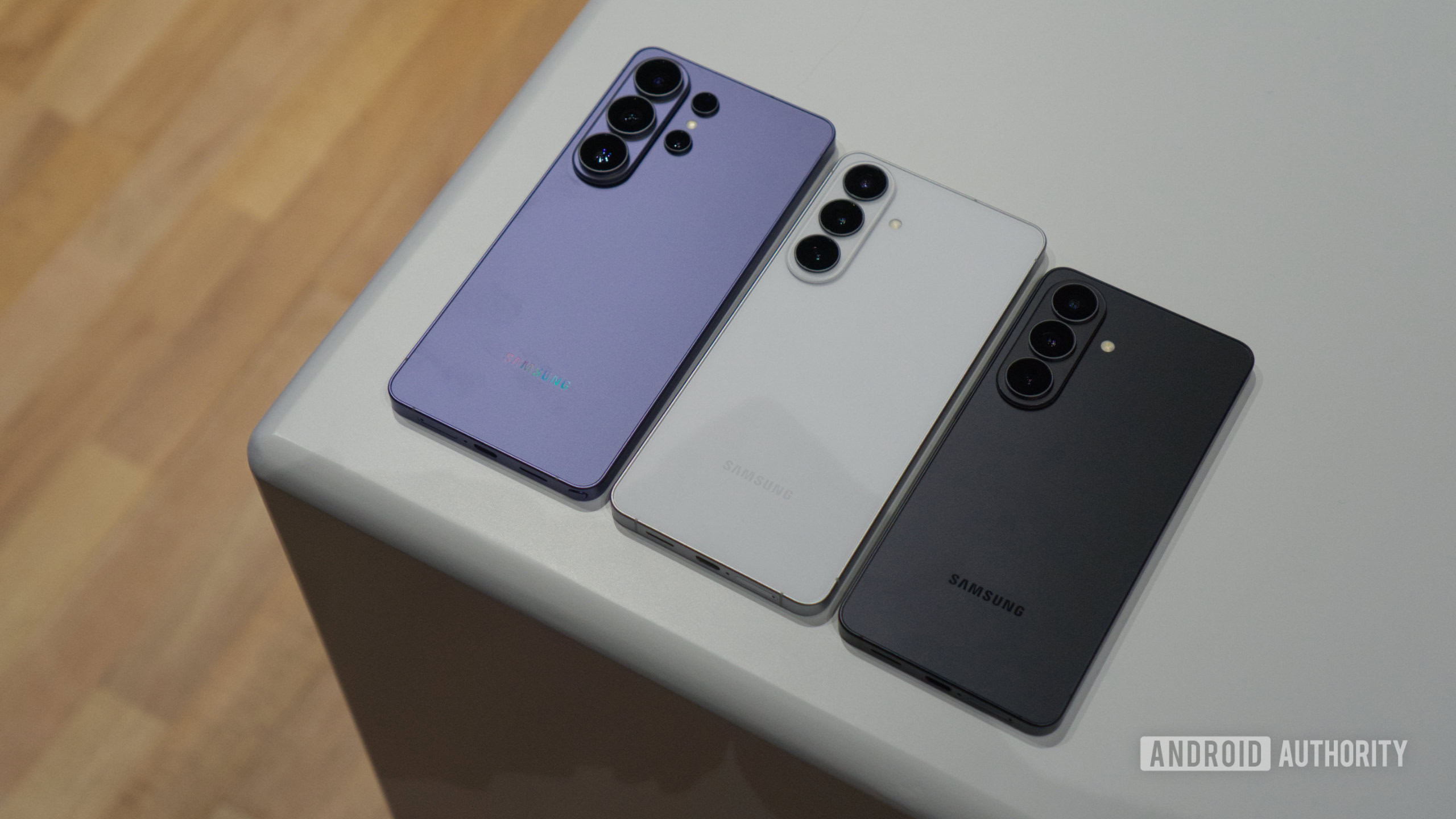
Galaxy S27 series leak reveals all the camera sensors

The base and Plus models see no significant changes, while the Pro and Ultra models only get upgraded main shooters.

Read at Android Authority

Financial Times Russia

EU on track to add Montenegro in 2028 despite national vetoes, says Ireland

Also in this newsletter: Are European companies able to feed their AI models enough data?

Read at Financial Times Russia

South China Morning Post Reuters Geopolitics

California billionaire tax measure defeated in contentious vote

A billionaire tax that US Senator Bernie Sanders and other progressives championed as an antidote to economic inequality and a potential model for the rest of the country was defeated in California, US media projected on Monday. Proponents…

Read at South China Morning Post

Simon Willison SI

Quoting Prompting Claude Fable 5.2

Claude Fable 5.2 responds closely to what the prompt says about who owns the code it works on. In Anthropic’s testing on small coding tasks, when a prompt said nothing about ownership or presented the code base as someone else’s, the model tended to add to the existing structure, even when that repeated existing code.

Read at Simon Willison

Help Net Security Anamarija Pogorelec Security

Over 575 malicious OpenClaw skills delivered malware to Windows and macOS

Cybercriminals are using AI agents to coordinate attacks, stolen credentials to access linked services, and tools that interfere with intrusion detection and system recovery, according to Acronis TRU Cyber Pulse 2026. One operator coordinates activity across several countries In an investigation known as BOSSAI, researchers documented how one operator connected more than 10 AI models to tools for reconnaissance, scanning and exploitation. Through WeChat and LINE, the…

Read at Help Net Security

Help Net Security Anamarija Pogorelec Security

Cybersecurity jobs available right now: November 10, 2026

Application Security Engineer ONE ZERO BANK | Israel | Hybrid – View job details As an Application Security Engineer, you will work with developers to build security into the software development lifecycle. You will use security reviews and threat modeling to find vulnerabilities in web and mobile apps, APIs, CI/CD pipelines, and the software supply chain, then help developers fix them. You will automate security controls and build internal tools, including AI-powered tools…

Read at Help Net Security

arXiv (research papers) Haoyi Wu Security

POEM: Output-Relative Block-Sparse Attention for Long-Context Prefilling

Large language models (LLMs) have shown strong capabilities across diverse applications, making both safety and utility essential for reliable deployment. Jailbreak attacks use diverse forms of adversarial prompting to bypass alignment safeguards and induce LLMs to generate harmful responses. Some representation-based defenses regulate internal activations using predefined steering directions or learned safety regions. However, adapting intervention to each input without a…

Read at arXiv (research papers)

arXiv (research papers) Yunkai Dang Security

TERM: Target-Free Jailbreak Defense via Entropy-Guided Residual Modulation

Large language models (LLMs) have shown strong capabilities across diverse applications, making both safety and utility essential for reliable deployment. Jailbreak attacks use diverse forms of adversarial prompting to bypass alignment safeguards and induce LLMs to generate harmful responses. Some representation-based defenses regulate internal activations using predefined steering directions or learned safety regions. However, adapting intervention to each input without a…

Read at arXiv (research papers)

Tech in Asia Minh Le Startups

Ant Group’s Robbyant open-sources tactile AI model

The model helps robots process touch signals from different sensor types through a shared representation.

Read at Tech in Asia

Simon Willison SI

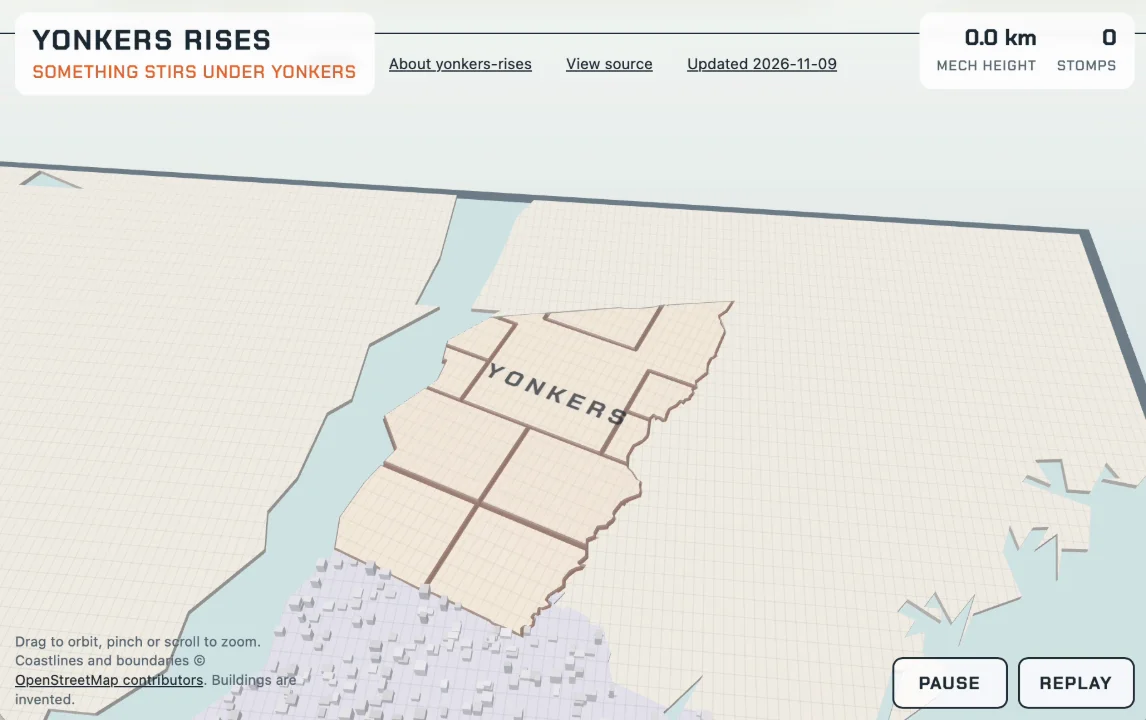
Yonkers Rises

Tool: Yonkers Rises I realized I didn't know where Yonkers was, so I looked it up on Google Maps and then, to help embed its location and shape in my head (and to try out Claude Fable 5.2's 3D modeling and animation skills), I prompted Fable 5.2 Medium to: Make a three js animation where yonkers stands up as a big mech (cool stand up motion) and átomos around manhattan and queens and Brooklyn, use openstreetmap mapping data It correctly deduced that "átomos" was a mobile…

Read at Simon Willison

arXiv (research papers) Yalan Dong Tech policy

Developing an Operational Model for an Internet of Data Based Trusted Data Space for Vocational Education

Data circulation in vocational education has long been constrained by unclear ownership, a lack of trust, and insufficient incentives. The Internet of Data provides a new underlying technology for enabling trusted cross-domain data circulation. Building on an Internet of Data based trusted data space for vocational education, this paper develops a multi-stakeholder operational model encompassing a value network, a product portfolio, revenue allocation, and governance rules…

Read at arXiv (research papers)

arXiv (research papers) Kaviya Parthasarathy Space

A Possible Non-Transiting Companion in the TOI-2109 System Supported by Transit Timing Variations

Transit timing variations are a powerful method for detecting non-transiting planets, particularly in systems near mean-motion resonances. We investigate the ultra-short-period hot Jupiter TOI-2109 b using 87 transit epochs spanning two decades (2006-2025), combining observations from TESS, CHEOPS, HST, and ground-based photometry. We compare five timing models representing different physical scenarios: a linear ephemeris, orbital decay, apsidal precession, a sinusoidal…

Read at arXiv (research papers)

arXiv (research papers) Dowon Kim Security

Data-Efficient Unlearning-Based Backdoor Detection in Federated Learning

Detecting backdoor attacks in federated learning (FL) is challenging because malicious clients can manipulate the global model while preserving main-task performance. Static model-update statistics may therefore fail to clearly distinguish malicious from benign clients. Unlearning-based detectors instead probe client models through loss ascent on clean server data, but detection performance degrades with scarce proxy data. We propose Screening via Unlearning Response…

Read at arXiv (research papers)

Amwaj.media Paul Iddon

Would a Turkish base in Saudi Arabia be more symbol than shield?

Saudi Arabia is reportedly seeking the kind of Turkish military presence it refused nine years ago. The Kingdom appears to be calculating that such a deployment, modeled on the base Ankara set up in neighboring Qatar a decade ago, could bolster its deterrence against threats like Iran and the Houthis in Yemen. Yet if the Qatar base is any precedent, the defense such a presence can realistically provide may prove far more limited than Riyadh hopes. In an Oct. 27 report, the…

Read at Amwaj.media

SiliconANGLE AI Maria Deutscher SI

Meta introduces Muse Ember to power cost-efficient AI agents

Meta Platforms Inc. today introduced Muse Ember, an entry-level artificial intelligence model that costs significantly less than the competition. Notably, it’s the first AI that the company trained using Muse Wonder. The latter algorithm is the Facebook parent’s flagship large language model. Meta didn’t specify which part of the workflow it automated with Muse Wonder.

Read at SiliconANGLE AI

arXiv (research papers) Paulo Camara LUA Vision Tech policy

Inherited Weights: Measuring the Tokenization Premium and the Sovereignty Cost of Language Models for the Global South

Most language models deployed outside the United States and China are fine-tuned descendants of a small number of pretrained families. We argue that fine-tuning leaves the decisive properties of a model inherited from its base: vocabulary, knowledge, cultural alignment, memorized data and license. We contribute (i) an updated, reproducible measurement of the tokenization premium across 31 languages and 7 tokenizers released in 2023-2024, on 27 articles of the Universal…

Read at arXiv (research papers)

TechPowerUp DrUsmanSaleem SI

Microsoft Patent Describes Paying PC Owners to Train AI on Idle GPUs

Gaming PCs sitting idle could one day earn their owners credits, or even cash, by training AI models, at least if a newly published Microsoft patent application ever becomes a product. Titled "Opportunistic Micro-training on Edge Devices Using Spare GPU Utilization," the filing US-20260349820-A1 from Microsoft Technology Licensing was submitted in April 2025 and made public on November 5. It describes chopping large training jobs into small micro-tasks sized to what each…

Read at TechPowerUp

Tech in Asia Grace Priscilla Teo Startups

Anthropic unveils new AI models ahead of planned IPO

Fable 5.2, due Monday, is built to coordinate more than 1,000 AI agents.

Read at Tech in Asia

arXiv (research papers) Canyon Grey Dell'Omo Security

Stinging the Swarm: Extracting Attacker Intelligence from a Twin-Controller OT Honeypot

Autonomous language-model agents can drive industrial controllers over fieldbus protocols, probing a plant at machine speed and in coordinated swarms. We present Talos, an inline gate that judges every agent request to a controller in milliseconds and routes agents it flags as hostile to a device-faithful decoy -- a mirror twin of the real plant -- where their attack continues harmlessly and is read for intelligence. We evaluate the full pipeline (detect -> quarantine ->…

Read at arXiv (research papers)

BBC World Geopolitics

Epstein associate who still runs model agency 'put me in danger' says abuse survivor

A woman says an agency boss sent her to photoshoots at the sex offender's Florida beach home.

Read at BBC World

SiliconANGLE AI Maria Deutscher SI

Anthropic launches Fable 5.2 and Mythos 5.2 with science, coding upgrades

Anthropic PBC today pulled back the curtains on Claude Fable 5.2 and Claude Mythos 5.2, its two most capable large language models to date. The LLMs are identical as far as their core capabilities are concerned. The difference is that Fable 5.2 blocks certain biology and cybersecurity use cases, while Mythos 5.2 includes more relaxed

Read at SiliconANGLE AI

The Register Simon Sharwood SI

Anthropic's super bug-finding Mythos model is going into Cisco and IBM products

Enterprise security tools will offer its capabilities without handing customers the model itself

Read at The Register

Older stories