Results for “model”

arXiv (research papers) Christopher Liaw SI

Sketching Language Models for Context Attribution

Context attribution asks how removing parts of a prompt changes a language model's output. We study leave-one-out (LOO) attribution for a prompt of $n$ tokens and a fixed measurement function. Computing all LOO values directly requires $n$ model evaluations. Under a stability assumption, our algorithm estimates all LOO values to error proportional to $\varepsilon$ with constant probability using $O(\sqrt{\log(1/\varepsilon)}/\varepsilon)$ evaluation calls. To complement our…

Read at arXiv (research papers)

arXiv (research papers) Benjamin Hoover SI

Classical Energies Learn to Reason 1,000x Faster than Looped Models

Looped models have emerged as a prominent paradigm for reasoning, with successes on simple reasoning puzzles such as Sudoku-Extreme and Maze-Unique. However, these models can be unstable, slow to train, and use many parameters and FLOPs to solve simple puzzles. Descent on an energy not only mitigates these issues but also offers advantages: built-in early stopping, compute that adapts to problem difficulty, fast training without differentiating through a solver, and…

Read at arXiv (research papers)

arXiv (research papers) Haozhe Wang SI

Metal Sandbox: Isolated Execution and Command Scheduling for GPU Coding Agents on Apple Silicon

On-device inference requires kernels that make effective use of local accelerators. Efficient training and evaluation of models that generate Apple Metal kernels benefit from native macOS tools and concurrent agent sessions. These sessions alternate between model requests, development commands, and GPU execution, leaving GPU capacity idle for much of a rollout. We present Metal Sandbox, infrastructure that combines restricted per-instance file access, native command…

Read at arXiv (research papers)

arXiv (research papers) Gautam Galada SI

Synthesis Smuggling: Maliciously Hiding Inferred Personal Attributes in LLM Outputs

We propose Synthesis Smuggling, a novel threat model in which an adversarial LLM infers sensitive information about a user from routine assistance-seeking interactions and steganographically encodes that into innocuous-looking model-generated content. The user may then unknowingly transmit that information by sharing the generated artifact, say as an email, social-media post, or message, through ordinary communication channels. An adversary monitoring these channels can…

Read at arXiv (research papers)

arXiv (research papers) Konstantin Beyer

Observation of Genuine Multi-Time Quantum Memory

Memory effects in open quantum systems do not by themselves imply quantum memory, since non-Markovian dynamics can often be reproduced by classical-memory models. Known criteria certify the presence of quantum memory in the environment by comparing the evolution of the system at two different times. We show that quantum memory can remain hidden from all such pairwise tests and become detectable only when three or more times are considered jointly. We derive an analytical…

Read at arXiv (research papers)

Digital Trends Nadeem Sarwar

Google’s next-gen Gemini 4 Hydrogen AI model is here, touting faster intelligence for all

Merely weeks after introducing the Gemini 4 Carbon and Gemini 4 Argon frontier AI models, the company has today launched Gemini 4 Hydrogen.

Read at Digital Trends

AWS Machine Learning Blog Majd Arbash SI

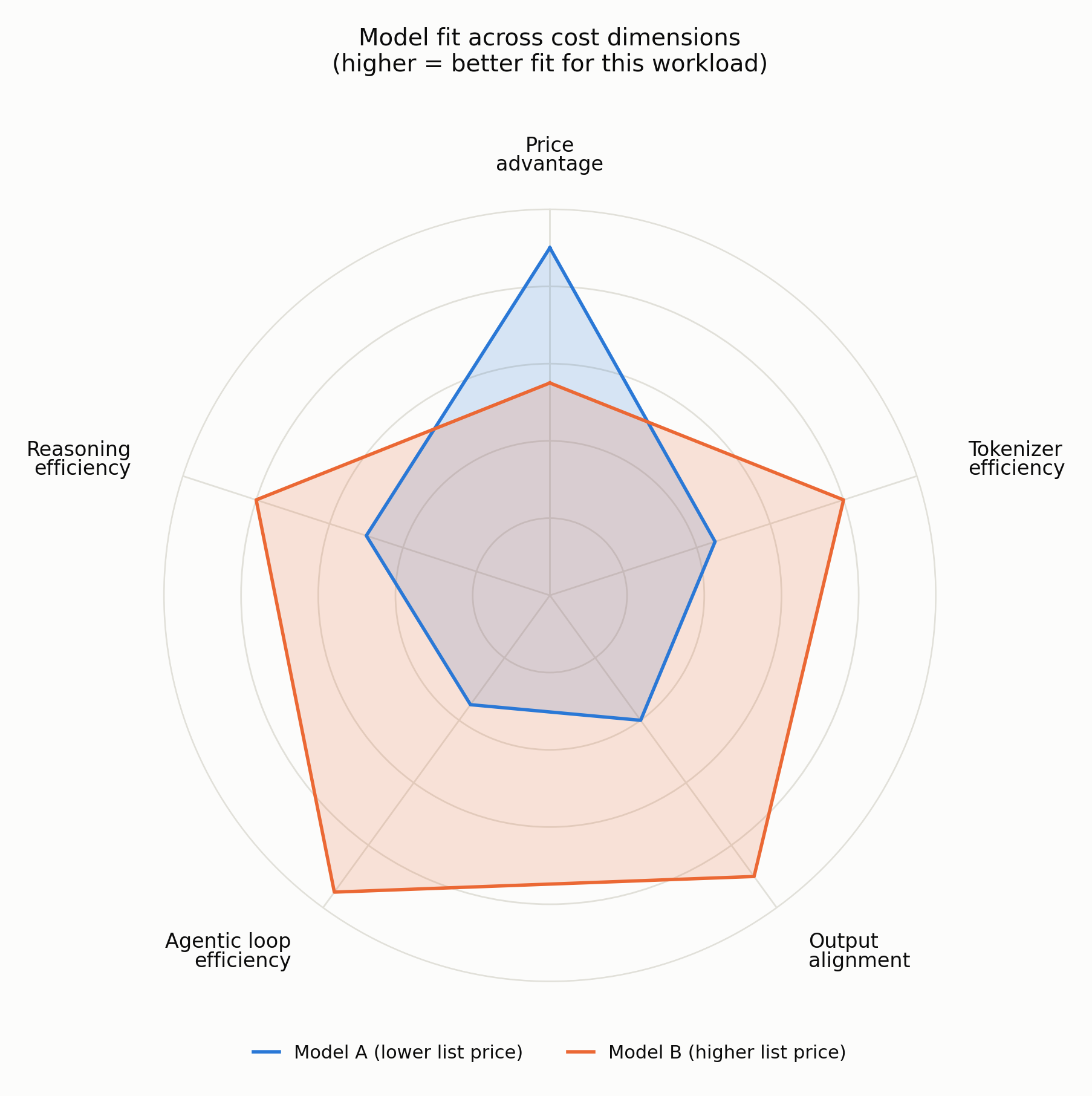
Optimizing cost per task and proving agent ROI on Amazon Bedrock

Comparing per-token prices hides the real cost of running a model on Amazon Bedrock. This post shows how to calculate the true cost per task across four hidden cost drivers, reduce it with caching, routing, and output constraints, and prove agent ROI with human baselines, holdout experiments, and a five-dimension scorecard.

Read at AWS Machine Learning Blog

arXiv (research papers) Sandro Donadi

Non-interferometric tests of gravitational decoherence models with mechanical oscillators

Phenomenological models of quantum-gravity-induced decoherence can leave observable effects even in experiments that do not rely on interferometric measurements. We study three such models, based respectively on deformed relativistic symmetries, stochastic metric fluctuations, and a stochastic generalized uncertainty principle, all of which induce decoherence in the momentum basis. For a free particle, the models preserve momentum distribution and mean energy but produce…

Read at arXiv (research papers)

AWS Machine Learning Blog Sitaraman Vijay Krishna SI

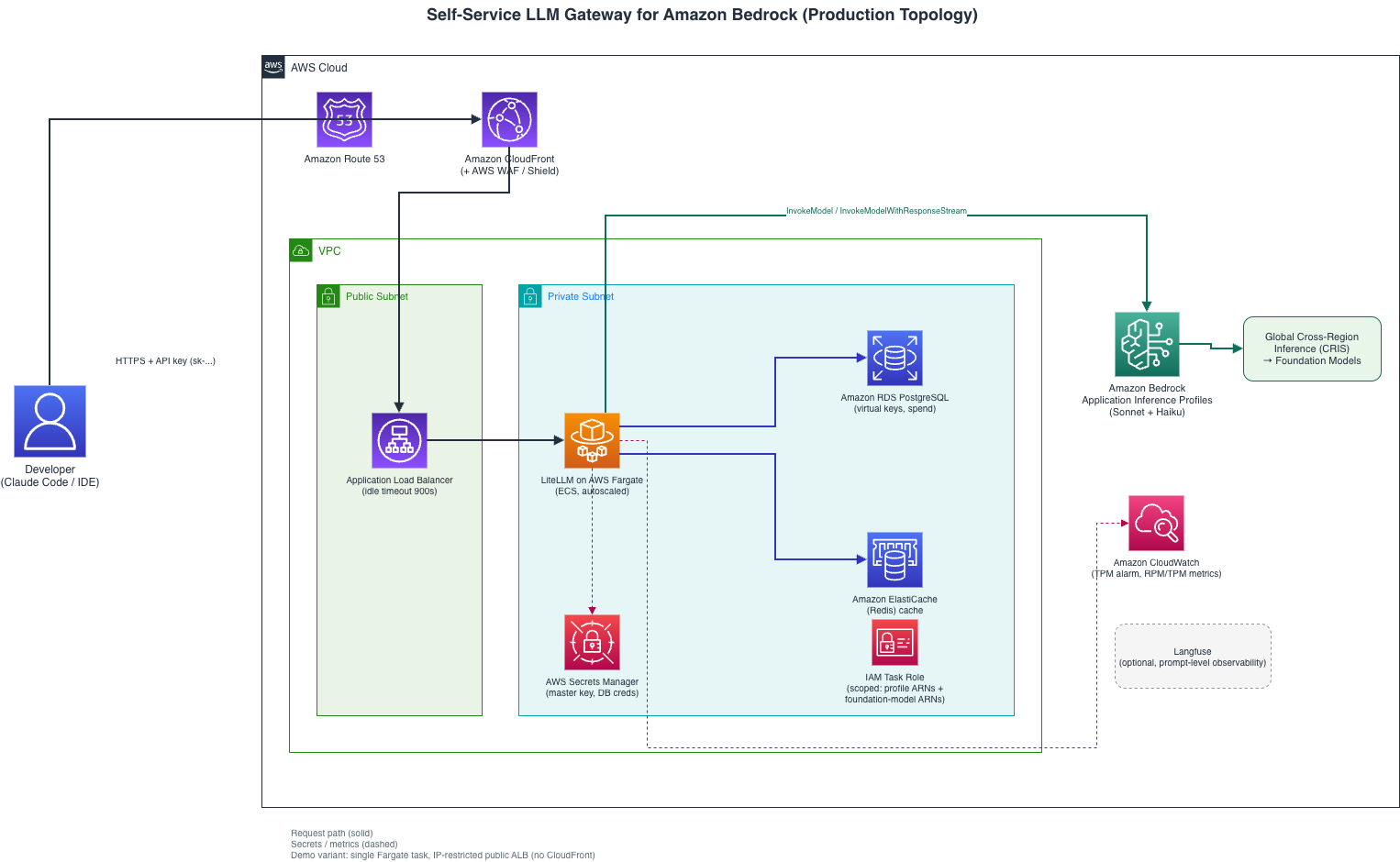
Building a self-service LLM gateway with Amazon Bedrock and LiteLLM

Build a self-service LLM gateway with LiteLLM on AWS Fargate that puts Amazon Bedrock foundation models behind an OpenAI-compatible API. Developers get instant access through a single API key, while platform teams gain per-user cost controls, quota isolation, and observability.

Read at AWS Machine Learning Blog

TechCrunch Rebecca Bellan SI

Jensen Huang’s exit puts Nvidia’s support for open source in question

Jensen Huang’s resignation raises questions about Nvidia’s commitment to open-source AI, including its Hugging Face acquisition, open-weight models, and advocacy against restrictions, as the company navigates a leadership transition.

Read at TechCrunch

arXiv (research papers) Tiago de Souza Farias

Programming Quantum Circuit Parameters with Large Language Models

Large language models (LLMs) have recently demonstrated the ability to generate parameters for variational quantum circuits without conventional optimization. However, the conditions under which this approach is effective remain unclear. Here, we investigate a frozen, general-purpose LLM that generates complete circuit parameter vectors from symbolic circuit and Hamiltonian descriptions, with optional iterative energy feedback. We evaluate the approach on general random…

Read at arXiv (research papers)

arXiv (research papers) Samidha Verma SI

Ballad: Bandit-Based LLM Routing for Automated Heuristic Discovery

Modern automated heuristic discovery (AHD) systems increasingly rival hand-crafted heuristics by leveraging Large Language Models (LLMs) to iteratively mutate and refine solutions. A natural assumption is that more powerful and more expensive models consistently yield better heuristics. We challenge this empirically: across multiple NP-hard combinatorial optimization problems, we find no consistent advantage for larger, costlier models. This raises a deeper question: given a…

Read at arXiv (research papers)

arXiv (research papers) Hannah Li SI

When Both Sides Adapt: The Challenges of Evaluating Interactive LLM Systems

In interactive systems where users engage with LLMs, users are adaptive and, after observing LLM responses, can change their prompting strategy, as well as the type and difficulty of subsequent tasks. Thus model responses can influence the set of prompts on which the model is subsequently evaluated. We study the implications of this user adaptivity and prompt endogeneity for the evaluation of LLMs. We define two classes of estimands for comparing models: the…

Read at arXiv (research papers)

arXiv (research papers) Elnaserledinellah Mahmoud Abdelwahab SI

Al-Ghasali: A Computational Framework for Simulating Islamic Jurisprudential Rulings via Finite State Automata and Large Language Models

This paper presents Al Ghasali, a computational framework designed to formalize and simulate Islamic jurisprudential (Fiqh) rulings. Building upon recent set theoretic formalizations of al sabr wa al Taqsim that extract minimal operational rules as simple Horn clause logical programs, this work proves that the semantics of closed Fiqh chapters collapse completely to deterministic Finite State Automata (FSA). We establish a formal computational hierarchy, demonstrating that…

Read at arXiv (research papers)

Google (The Keyword)

Gemini 4 Hydrogen: everyday coding and agentic workflows for developers

Build faster with Gemini 4 Hydrogen, Google’s new model for cost-efficient agentic coding and debugging. Start building in Google AI Studio today.

Read at Google (The Keyword)

arXiv (research papers) Rui Sun SI

Cortex-FL: Agent-Mediated Collaboration for Federated Learning

Federated learning (FL) enables independent data owners to train models collaboratively without centralizing raw data. However, identifying collaborators, preparing training tasks, and coordinating execution and incentives hinder its practical adoption by organizations without specialized expertise. We present Cortex-FL, an agent-native FL system that enables users to express learning objectives in natural language and delegate the collaboration required to train a model…

Read at arXiv (research papers)

arXiv (research papers) Haochen Liu SI

Actor, Judge, or Teacher? Understanding Decision Models in Long-Horizon Agents

Decision models answer a question with a typed output, such as a choice among options with a probability for each, so one model can choose an agent's actions, evaluate actions already taken, or score every action to teach a policy with reinforcement learning. Prior work has studied them mainly as actors, judging their usefulness by how well they act. We ask whether a decision model that acts poorly can still teach well. We compare three decision models and three general LLMs…

Read at arXiv (research papers)

arXiv (research papers) Tanzeel Abbas SI

Cited but Unused: Parametric Provenance in Retrieval-Augmented Generation

Retrieval-augmented generation systems attach citations to attribute claims to their sources. These citations frequently misstate provenance, and standard verification cannot detect this. We measure provenance by counterfactual value substitution: a fact in the retrieved passages is replaced with a false variant and the model re-queried. We find that across five sizes of one model family and a second comparator family, 1.2% to 15.7% of citable claims derive from parametric…

Read at arXiv (research papers)

arXiv (research papers) Kerui Gu

XBot-Omni: An Omni-Modal Model for Embodied Understanding and Interaction

Embodied interaction requires an agent to integrate multimodal perception with verbal and nonverbal behaviors to effectively communicate its intentions, including speech, body motion, and facial expressions. We present XBot-Omni, a Thinker--Talker--Actor architecture that extends the Omni paradigm to robotic modalities, including body motion and facial expressions, with ``X'' representing the extensibility to robotic-specific modalities. The Thinker processes text, images…

Read at arXiv (research papers)

MarkTechPost Asif Razzaq SI

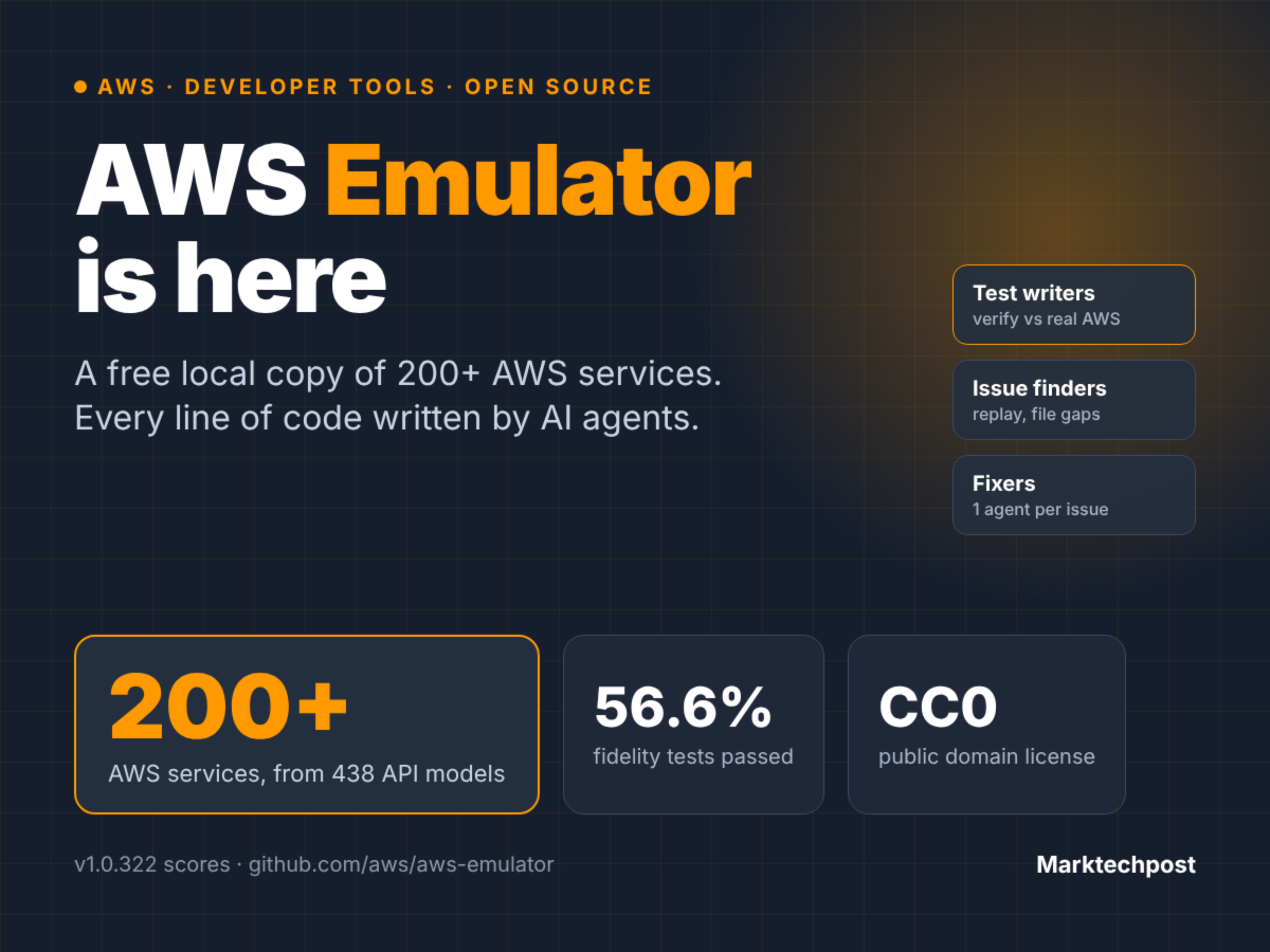
AWS Releases AWS Emulator: A Local Copy of 200+ AWS Services Built by AI Agents

AWS released AWS Emulator, a free, CC0-licensed local emulator of AWS APIs built from 438 API models. Autonomous agents wrote all of its code. It passes 56.6% of 42,857 published fidelity tests at launch.

Read at MarkTechPost

arXiv (research papers) Tanzeel Abbas SI

Parameter-Efficient Conciseness Adaptation: Differentiable Length Control for Concise Clinical Reasoning in Smaller Language Models

Smaller language models (SLMs) make it feasible to deploy clinical natural language processing where large proprietary models are too costly, and parameter-efficient fine-tuning allows them to be specialised on commodity hardware. One obstacle persists after training: on medical tasks these models answer at far greater length than the clinical question requires. In clinical decision support and point-of-care use, where time is short, such verbosity is hard to act on even…

Read at arXiv (research papers)

Kyiv Post Kyiv Post Geopolitics

Zelensky Questions US-Russia Push for New Security Model With Europe

Speaking at the 9th European Political Community (EPC) Summit in Dublin on Thursday, Nov. 12, President Volodymyr Zelensky claimed that the US-Russia talks on security are less about guarantees for Ukraine, and more about a new security model between Europe and Russia. He called the approach “somewhat strange,” noting that Europe sought close ties with Moscow for three decades after the Soviet collapse. During the same summit, Kyiv urged Western partners for Patriot and…

Read at Kyiv Post

arXiv (research papers) Zimo Xu SI

CapLite: Prompt-Injection Defense for Small Language Model Agents without Model-Written Security Artifacts

Enforcement defenses against prompt injection, such as CaMeL, Progent, IPIGuard and DRIFT, ask the agent's own model to write a security artifact (a program, a privilege policy, a dependency graph or a constraint list) that code then enforces. We ask whether small language model (SLM) agents can be trusted to write these artifacts. Across 15 open-weight models, 13 of them between 1.7B and 12B parameters, they cannot: the policies, graphs and constraints that the agent's…

Read at arXiv (research papers)

arXiv (research papers) Petter Törnberg SI

Designing Institutions for Autonomous AI

As autonomous AI agents increasingly interact in persistent populations, their collective capabilities and alignment depend not only on individual models, but also on the institutions governing their interactions. Yet AI research has largely focused on individual agents. In this Perspective, we argue that institutional design must become a distinct focus of AI research. Drawing on institutional political economy, social epistemology and organizational theory, we develop…

Read at arXiv (research papers)

arXiv (research papers) Jiachun Jin SI

SALA: Semantically Aligned Latent Actions Enable Dual-Axis Scaling of Embodied Foundation Models

Embodied foundation models hinge on diverse robot interaction data, which are costly to collect. Egocentric human videos offer a complementary source of experience, and latent action models (LAMs) provide a popular means of leveraging these videos for policy supervision. Compared with world-action models (WAMs), LAMs can offer greater training efficiency and potentially lower inference costs by avoiding explicit pixel prediction during policy learning and execution. However…

Read at arXiv (research papers)

The New Stack Amanda Caswell

Google built an AI model that can’t write a sentence — and that’s the point

Google’s new Gemini Decisions API, introduced Wednesday, is designed to handle the routine decisions that AI applications make thousands of

Read at The New Stack

arXiv (research papers) Amirmohammad Mohammadi SI

Predicting Ethanol Drinking Status from Nonhuman Primate Liver Histology: A Proof of Concept for Parameter-efficient Fine-tuning in Few-Shot Vision-Language Modeling

Combining vision-language models (VLMs) with parameter-efficient fine-tuning (PEFT) offers a promising approach to few-shot whole-slide image (WSI) classification in computational pathology. This study evaluates this approach for predicting ethanol drinking status from nonhuman primate liver histology. Adapters are evaluated against non-PEFT configurations on a subset of the Monkey Alcohol Tissue Research Resource (MATRR). All evaluated PEFT configurations achieve higher…

Read at arXiv (research papers)

The Decoder Maximilian Schreiner SI

OpenAI’s data suggests that frontier models are hiding their thoughts because developers optimize for capability and compute

OpenAI's safety team systematically investigated why the chains of thought in frontier models like GPT-6 Astra are increasingly evading oversight. Four training steps drive the erosion, including architecture choices and reinforcement learning. The analysis shows that the loss of transparency is not a law of nature but also reflects tradeoffs around capability and cost. The article OpenAI’s data suggests that frontier models are hiding their thoughts because developers…

Read at The Decoder

arXiv (research papers) Hannah Atmer

Broadcast, Don't Replicate: Eliminating Weight HBM in Datacenter LLM Serving

Large language model (LLM) inference at datacenter scale is fundamentally bottlenecked by memory capacity and bandwidth limits. Because model weights are read-only and identical across instances, conventional architectures that replicate these parameters across the local DRAM of tens of thousands of accelerators incur massive capital expenditures, significant static power dissipation, and redundant memory-fetch energy. A recent proposal to use optical fiber loops as…

Read at arXiv (research papers)

arXiv (research papers) Feng Jiang Security

Optimal Single-History Tokenization Disambiguation for Provably Secure Linguistic Steganography

Provably secure linguistic steganography assumes that the receiver recovers the sender's tokens, but a text channel delivers only text, and ambiguous tokenizations break extraction. Existing fixes change the distribution, synchronize whole pools of tokens at a capacity that collapses with large vocabularies, or track several token histories. We prove that if extraction is exact and error-free across full-support language models, a single-history receiver is confined to a…

Read at arXiv (research papers)

Older stories