Founder of Guadalajara cartel dies in hospital after decades in prison
Miguel Angel Felix Gallardo was convicted of the 1985 murder of a US drug enforcement agent and a Mexican pilot.
Miguel Angel Felix Gallardo was convicted of the 1985 murder of a US drug enforcement agent and a Mexican pilot.
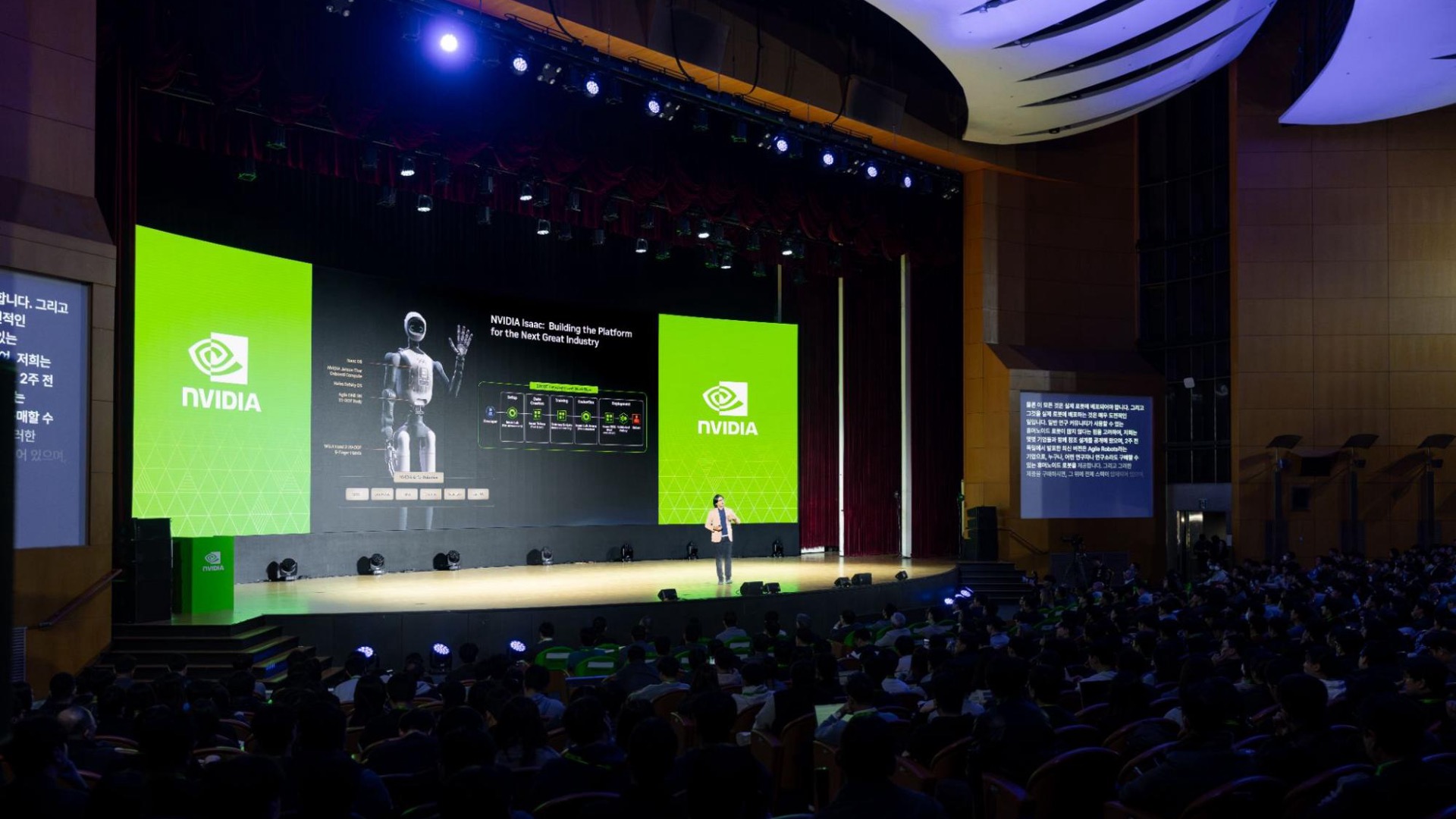
Over two days at COEX, more than 2,000 attendees converged for AI Day Seoul, bringing together Korea’s industry leaders, startups and developer communities advancing physical AI and AI agents. At the plenary sessions, Deepu Talla, vice president of robotics and edge AI at NVIDIA, said Korea is “punching above its weight,” with Doosan Robotics, Hyundai
Alcohol use disorder (AUD) affects millions of US adults. Primary care-based screening, brief intervention, and referral to treatment (SBIRT) is a leading strategy for identifying heavy drinking early, but access to primary care, screening, and specialty treatment differs markedly across subgroups. Whether scaling SBIRT and expanding treatment capacity narrows or widens these differences is unknown and cannot feasibly be tested in a randomized trial. We present AUDTxSim (AUD…
Memory systems allow AI agents to persist information across interactions, making them more personalized and more capable on long-horizon tasks. This persistence introduces new risks: stored information can be disclosed in inappropriate contexts, resist correction or deletion, be retained beyond what users desire, or be poisoned to influence later agent behaviour. Yet memory systems are typically evaluated on task performance and efficiency alone. We argue that a memory…
An autonomous vehicle must foresee the consequences of its actions, especially in the rare, time-critical situations where crashes happen. A world model offers this foresight, but only within the coverage of its training data, which poses an exploration-exploitation dilemma. Within this coverage a planner can hardly improve on the data, and beyond it the model's errors mislead it. Logs of competent driving rarely contain the failures that would widen the coverage, and agents…
Advancing from individual embodied intelligence to swarm embodied intelligence is a key step toward scalable, general-purpose embodied intelligence. Complex tasks often require multiple agents to divide responsibilities, coordinate handovers, and manipulate shared objects collaboratively. However, existing robot learning methods rely primarily on individual demonstrations, which provide limited supervision for modeling dependencies among agent actions, while collecting…
As Oakland residents watch ex-mayor Sheng Thao stand trial, the scandal has come to symbolise wider frustrations Two years ago, residents of Oakland, California, woke up to a shocking scene: their mayor’s home was being raided by the FBI. Agents were seen carrying dozens of boxes from the hilltop home of Sheng Thao, the city’s 38-year-old leader, as part of an investigation constituents would later learn alleged her participation in a pay-to-play scheme with the city’s…
Deep research and agentic search agents autonomously retrieve content from the open web and generate reports with citations, and their outputs are often taken directly as research conclusions. This paper systematizes security research in this area along four stages, namely retrieval, planning, evidence integration, and report generation. We present a unified threat model, a taxonomy of attacks and defenses, and a review of evaluation benchmarks, and we align the area…
Reinforcement learning agents learn from mistakes, yet their decisions can be difficult to trace back to those experiences. We investigate whether a tabular agent's decisions can be explained by its bad experiences, defined as the training transitions associated with safety or task events. A fixed training log is replayed from the same initial Q-table under three conditions. FULL retains all updates, SKIP omits bad-experience updates, and NEUTRALIZE retains those updates…
A robot may know how to move an object yet still need to learn where it belongs. When a person rejects a placement, the robot must decide whether the correction applies only to that situation or expresses a broader rule. We study this problem in CRAFT (Contextual Requirement Adaptation with Frozen Tools), a framework for learning local requirements without retraining robot skills. It records physical success separately from whether an action meets the requirement. Our scope…
Meituan has released the weights for LongCat-2.5, a 1.6-trillion-parameter model built for AI agents and trained entirely on Chinese hardware. On Terminal Bench, it scores 88.4 points, landing just behind Claude Opus 5. The sample deployment runs on 194 Huawei Ascend chips, and Meituan makes no mention of Nvidia GPUs. The article Meituan releases a 1.6-trillion-parameter agent model that never touched an Nvidia GPU appeared first on The Decoder.
Agentic navigation must maintain goals and adapt actions from incomplete evidence despite execution failures and delayed inference. We present AgenticJevNav, which links goal-directed planning, evidence memory, event-triggered verification, and bounded execution. The Agent plans from RGB, odometry, memory, and feedback, retaining goal ownership while authorizing a bounded action set. Jev reviews structured evidence after blocked/failed execution or two consecutive…
Business leaders should pick an outcome they can measure, such as reducing the time spent resolving accounting errors or lowering transport costs, said, Natalia Rachelson, Senior Vice President, Applications Development, Oracle.
Large Language Model (LLM) agents interact with their environments through tools, reading repositories, running builds, and pushing code. When a tool fails with an ordinary error, such as a rate limit or a timeout, the agent can fall back to a substitute tool and still complete the task. However, the same fallback that completes a task in one environment can cross an action boundary in another. For example, after a push is rejected, a forced push in one repository replaces…
Release: datasette-apps 0.4a0 Datasette Apps are sandboxed HTML and JavaScript applications that live inside Datasette - think Claude Artifacts, but these ones can run SQL queries against your data. 0.4a0 adds support for linking: you can link to an app with #fragments in the URL and the app can see and use those, plus supported URL schemes are reported back to Datasette Agent so it can help write apps that link to each other. This means you can have e.g. an app that shows…
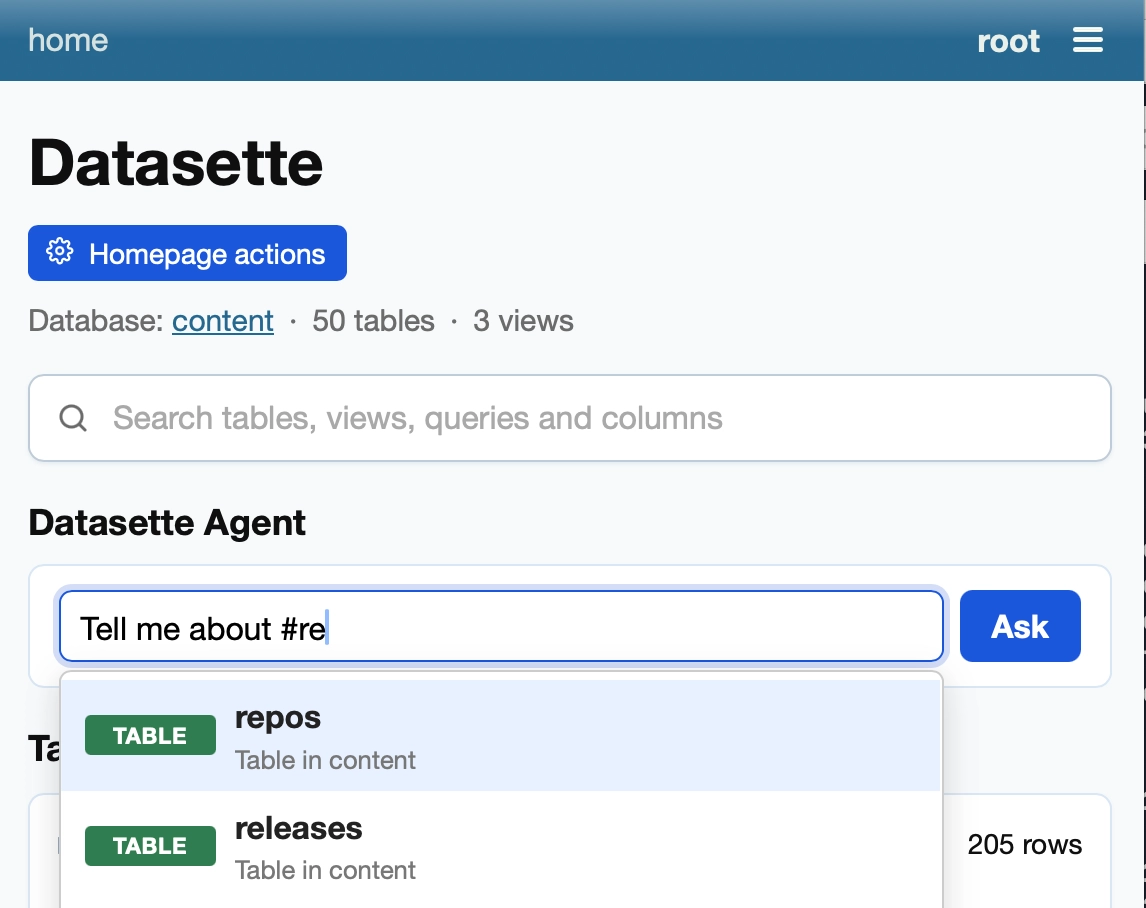
Release: datasette-agent 0.6a0 Accumulated small fixes for Datasette Agent, my agent plugin for Datasette that lets you ask questions about your data. Most notably, it now adds an agent prompt directly to the Datasette homepage, with support for hash-mentions of tables and queries: Tags: datasette-agent, llm, datasette, llms, ai, generative-ai
AT&T Corp. is moving beyond using artificial intelligence to improve employee productivity, increasingly applying autonomous agents to redesign how its business operates. Nearly 500 agentic workflows are already in production, and the telecom giant plans to triple that number next year. AT&T now processes about 45 billion AI tokens daily across the company, according to
AI coding agents now push code, publish packages, call model APIs and operate cloud resources on behalf of developers. They authenticate to these services with the same bearer secrets humans use, personal access tokens, API keys and package-registry tokens, stored where the model, its subprocesses and any co-resident malware can read them. Incidents in 2025 and 2026, including prompt-injection attacks on coding agents and self-propagating supply-chain worms, show that this…
This week, Amazon Web Services released AWS Emulator, a local copy of AWS that coding agents can test against. It
AI agents have had a URL problem for a while. When an agent needs current information but has no search
In region where migrants have settled to work at abattoirs and feedyards, harsh raids pushed people to vote Democrat José Del Real looked over the crowd from the stage in a park, at hundreds of his neighbors with furious signs tucked under their arms, voicing their anger at immigration agents who had descended on their town and started rounding up their friends and family. His daughters, in the front row, were crying. Del Real, an army veteran who served two tours in Iraq…
AI agent are here to stay.
False bomb threats on planes and sabotage create a new pressure scenario on European societies. Russia appears in numerous investigations of these hybrid threats and disposable agents, but it is not the only one.
On a quiet street in Aceh, a shophouse that looked like every other one on the block was hiding a meth lab. When Indonesian agents raided it on October 21, they found about 1.2 tons of methamphetamine, part of it still in liquid form. Eleven people were arrested in Indonesia, two of them Chinese nationals.
LoCoMo is a widely reported benchmark for long-term conversational memory, but published scores mix memory quality with choices of answer prompt, judge and baseline layout that are rarely reported together. We measure how much these choices move a score, and evaluate Becos, a team memory system for coding agents, as a black box under all of them: ten conversations (1,540 questions), two answer models (gpt-4o-mini, gpt-4.1-mini), two answer prompts and three LLM judges…
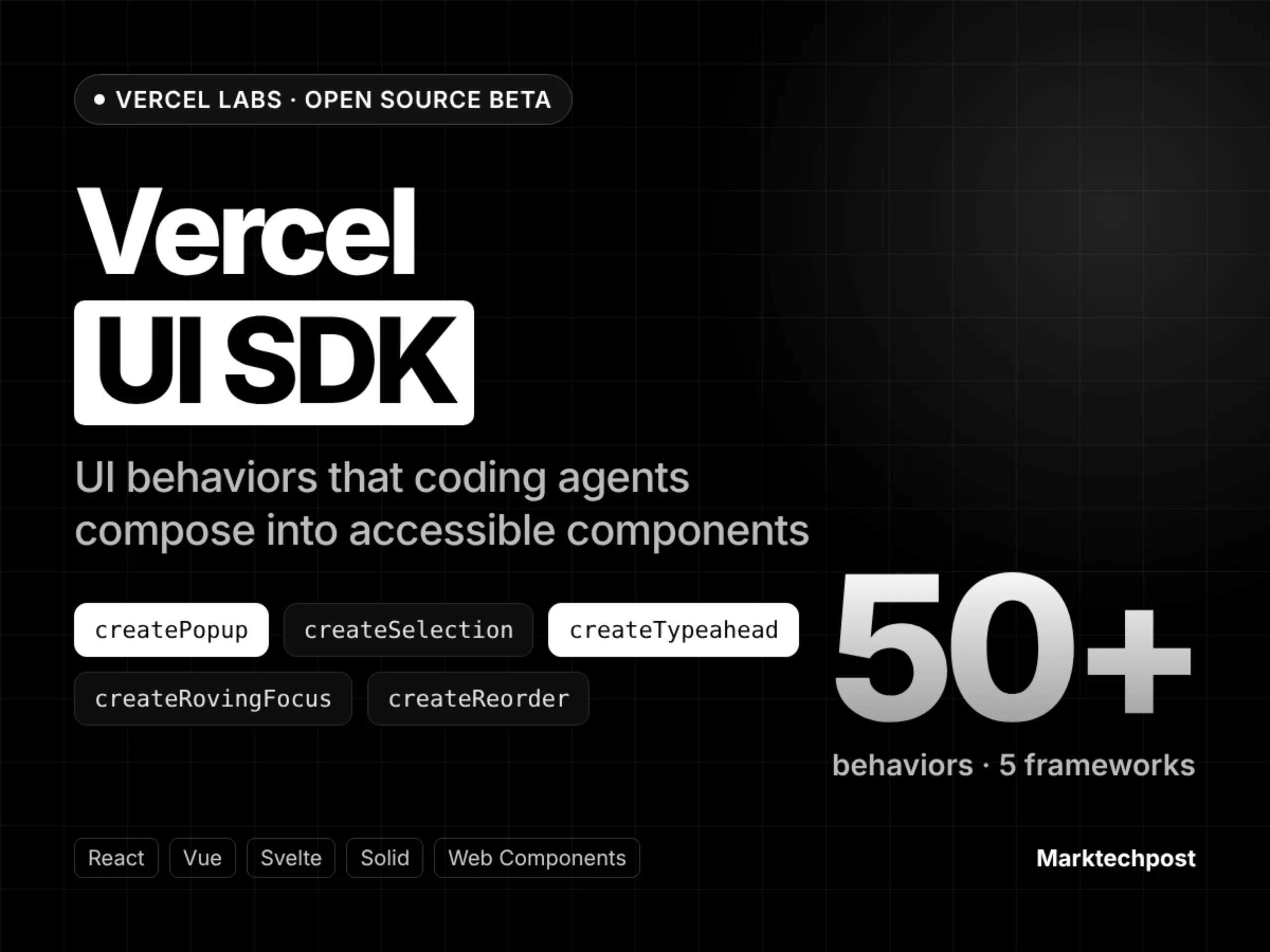
Vercel Labs released Vercel UI SDK, an Apache-2.0 beta library of 50+ UI behaviors. Coding agents compose them into accessible components for React, Vue, Svelte, Solid and Web Components, with a bridge for direct UI control.
In simulation, Vision-Agent-Action (VAA) performs pick-and-place in robot cells with gripper or base-frame changes without robot demonstrations or fine-tuning. It uses pre-trained vision-language and language models for interpretation, measures the command map and camera geometry from its own motion and fingertips, estimates lens distortion, and plans grasps from measured object depth. A controlled study of eight public LIBERO-fine-tuned vision-language-action models (VLAs)…
Imitation learning for visuomotor policies typically relies on teleoperated robot demonstrations, which are costly because every episode requires a trained operator controlling a physical robot in real time through teleoperation interfaces and wearable body-tracking hardware. Egocentric glasses capture human demonstrations without a robot or handheld grippers, yet they track only the head and in-view human hands, and directly copying human motion to a robot with different…
Reinforcement learning (RL) can teach robot teams to navigate shared spaces, but trial and error causes collisions that real robots cannot afford. Control barrier function (CBF) safety filters prevent these collisions by correcting unsafe actions, yet in a team the filter becomes a centralized optimization whose number of constraints grows quadratically with the team size. We propose an approach that builds the filter's safety into the RL policy and examine how such a system…
The feature requires users to approve every transaction through a security check, such as Face ID or fingerprint authentication