Results for “model”

ReliefWeb

Botswana: Southern Africa and Indian Ocean (SAIO) region | 2026-2027 tropical cyclone season multi-model forecast - DG ECHO Daily Map | 16/11/2026

Countries: Botswana, Madagascar, Burundi, Comoros, Lesotho, Mozambique, Mauritius, Mayotte (France), Réunion (France), Rwanda, Eswatini, Seychelles, United Republic of Tanzania, South Africa, Zambia, Zimbabwe Source: European Commission's Directorate-General for European Civil Protection and Humanitarian Aid Operations Please refer to the attached Map.

Read at ReliefWeb

arXiv (research papers) Itamar Mishani SI

Lazy-MOSAIC: Accelerating Skill-Centric Manipulation Planning with Learned Skill-Effect World Models

Long-horizon manipulation tasks require a robot to perform a sequence of physical interactions with its environment, typically combining several different skills. Planning such behaviors efficiently is challenging: given a library of parameterized skills, solutions lie in a vast hybrid space of skill sequences and their parameters, and evaluating each candidate skill's feasibility and effect with a high-fidelity world model such as a physics simulator is computationally…

Read at arXiv (research papers)

arXiv (research papers) Chenhuan Wu

Entanglement distillation, nonlocal magic, and state sharing in an isospectral non-Hermitian bipartite model

An invertible nonunitary similarity deformation leaves a two-qubit Hamiltonian's spectrum unchanged while varying a selected normalized right eigenstate in the fixed physical inner product. We embed this state in a two-parameter maximally correlated family that includes local dephasing and noisy circuit preparation. Hashing and a matching diagonal relative-entropy bound give the exact distillable entanglement and the PPT comparison distances at every finite tensor power…

Read at arXiv (research papers)

arXiv (research papers) Shaohao Rui SI

LynnReal-Hand: Unlocking World Interaction with Hand Control

Interactive video world models enable exploration through text and camera controls, yet direct object interaction requires finer control. Hands provide a natural interface, but translating continuous hand movements into coherent visual responses remains challenging because of complex hand-object dynamics and demanding real-time computation. To address these challenges, we introduce LynnReal-Hand, a hand-controlled video world model that unifies precise interaction modeling…

Read at arXiv (research papers)

MacRumors Hartley Charlton Gadgets

Some OLED MacBook Pro Owners Report Eye Strain and Dizziness

Some owners of Apple's new MacBook Pro with PROLED XDR display say they experience eye strain, headaches, and dizziness when using the laptop, with affected users pointing to the screen's brightness-control system as a possible explanation. A significant number of complaints have appeared on Reddit, X, and the MacRumors forums since the new models launched earlier this month. The discussions on MacRumors include a dedicated PWM thread, a separate owner poll, and comments in…

Read at MacRumors

arXiv (research papers) Bonam Mingole SI

Generative AI and the Crisis of Higher Education Assessments: Examining 'AI-Proofing' Strategies for College-Level Assessments

Higher education is confronting an academic-integrity challenge unlike any in its history. Students can now outsource homework, take-home assignments, and online examinations to large language models (LLMs) that complete them in seconds. Existing research on evaluating LLM performance on academic assessments has focused largely on standardized examinations, or on questions from college-level courses drawn from a single discipline. Far less is known about how LLMs perform on…

Read at arXiv (research papers)

arXiv (research papers) Maxime Rochkoulets SI

Warm Starting Neural Dynamics Models From Few Jacobian Samples

Model-based reinforcement learning (MBRL) leverages a model of the environment, used for planning and generating samples without interacting with the real world. Motivated by evidence that informed initialization significantly improves the efficiency of MBRL, we propose TDec-Init, an algorithm to warm-start neural dynamics models using transition Jacobians. Using a decoupling algorithm based on the decomposition of a tensor of stacked Jacobian samples, we recover weights and…

Read at arXiv (research papers)

Android Authority Matt Horne Gadgets

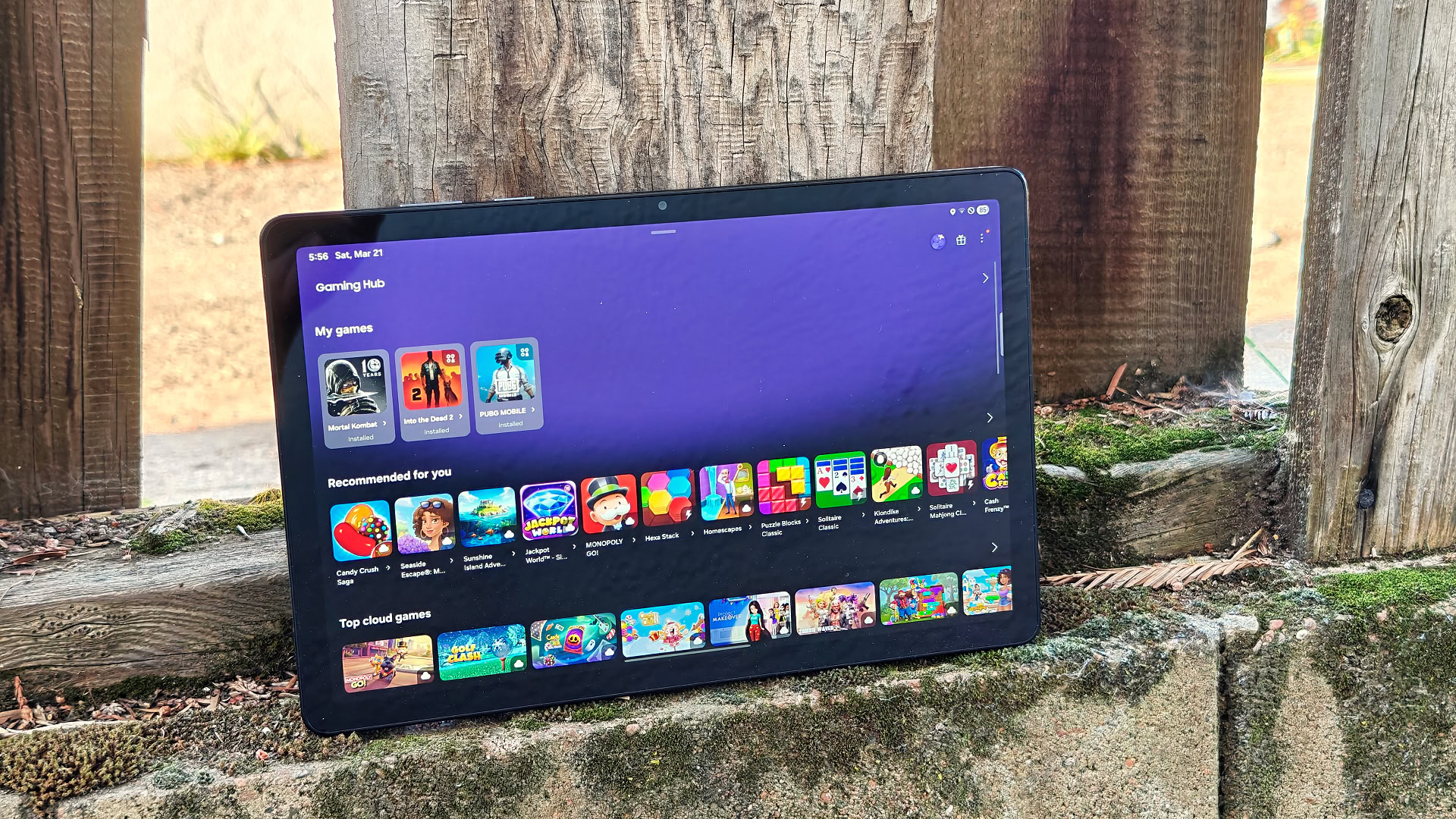
Score $101 off the 256GB Samsung Galaxy Tab A11 Plus

The 8GB/256GB model is 27% off, its lowest price since early July.

Read at Android Authority

arXiv (research papers) Meng Tang SI

Out of Sight, Into Memory: Compact Visual Latents Retain Local Evidence in Ultra-High-Resolution Remote Sensing

Question answering over ultra-high-resolution (UHR) remote sensing scenes poses a tension for multimodal large language models: global overviews obscure small objects and local attributes, whereas detailed crops consume substantial context. Compressing inspected crops into short sequences of continuous visual latents offers a compact memory once crop tokens are discarded, yet diagnostic studies on natural images find that models often ignore latent content, leaving unclear…

Read at arXiv (research papers)

arXiv (research papers) Roksana Goworek SI

Replicating and Extending Weight-Space Programming: Frontier LLMs Compile Programs into Weights and Read Input Layers

Researchers at MIT recently reported that GPT-6 Astra, a frontier large language model (LLM), can write the weights of small neural networks directly in a single reply, and can read the raw weights of small networks to say what they were trained to do. In a three-day sprint, we replicated and extended these results. Our four findings: (1) Writing weights reproduces. Astra's networks for the game Breakout scored 514, 550 and 307 (versus MIT's 517), and scored just as well on…

Read at arXiv (research papers)

TechPowerUp btarunr Startups

(PR) AMD Completes Acquisition of World Labs

AMD today announced the completion of its acquisition of World Labs, expanding its capabilities across the AI stack with a world-class model team. The acquisition brings together leading AI model researchers and AMD engineers to shape the next generation of AMD hardware, software and systems for the open AI ecosystem. "Delivering the infrastructure that will power the next era of superintelligence requires us to optimize compute platforms and models together," said Dr. Lisa…

Read at TechPowerUp

TechCrunch Rebecca Bellan SI

OpenAI will embed Apollo researchers to investigate AI subversion

OpenAI will embed six Apollo Research evaluators to investigate whether its AI models engage in subversive behavior, but restrictions on access and disclosure raise questions about their independence.

Read at TechCrunch

Microsoft Research blog SI

TokenEconomizer: Learning from Experience to Make AI Coding Agents More Efficient

AI coding agents are increasingly help developers fix bugs and build features largely on their own, but every interaction with their models consumes tokens. In each session, an agent sends instructions, tool descriptions, and session history to its model. Most efforts to reduce this cost focus on individual tasks. Yet developers return to the same

Read at Microsoft Research blog

arXiv (research papers) Vijay Nagarajan

Do Apple M-Series Processors Enforce the Compound Memory Model? Sequential and Parallel Composition of Arm and TSO

Apple's M-series processors can run each thread under the Arm memory model or under a TSO model, and threads of both kinds can share memory. This raises two questions of composition that Apple has not answered. Across threads, how does the machine behave as a whole? Within a thread, which Arm instructions play the roles of TSO's loads, stores and atomic read-modify-writes, and how are they ordered between themselves and across other Arm instructions? We propose that both…

Read at arXiv (research papers)

OpenAI News SI

Broadening access to AI for scientists

We’re expanding our ChatGPT for Academic Researchers program to offer 200,000 researchers worldwide free access to our frontier models.

Read at OpenAI News

The Decoder Jonathan Kemper SI

Alibaba's Qwen4-Max takes on Opus 5.5, GPT-6, and Kimi K3.1 Pro at much lower prices

Alibaba launches Qwen4-Max, a new flagship model with 2.4 trillion parameters that activates only 71 billion per token. A hybrid architecture sharply cuts costs on long contexts. Qwen4-Max lands just behind Kimi K3.1 Pro on the Artificial Analysis Intelligence Index, and Alibaba plans to release smaller Qwen4 models as open source. The article Alibaba's Qwen4-Max takes on Opus 5.5, GPT-6, and Kimi K3.1 Pro at much lower prices appeared first on The Decoder.

Read at The Decoder

The New Stack Paul Sawers

With Qwen4-Max, Alibaba puts the open source jacket back on the hanger

Alibaba has officially unveiled Qwen4-Max, the first model in its next-generation Qwen4 family, with a focus on complex professional tasks

Read at The New Stack

Phys.org Quantum Physics

Model of 'alpha-beta decay' could solve a decades-old nuclear mystery

A pair of researchers has created a new model for radioactive decay, which allows alpha and beta decay to happen simultaneously in a single transition. Testing their model's predictions against a full chart of known isotopes, Wenqiang Zhang at the Chinese Academy of Sciences, together with Chong Qi at the Alba Nova University Centre, Stockholm, showed that these simultaneous emissions could better explain the observed emission spectra of several radioactive isotopes.

Read at Phys.org Quantum Physics

arXiv (research papers) Jason Alexander Tech policy

A Crowd-Audited Atlas of Implicit Bias in LLM-Powered Agents

Prior work has shown that large language models (LLMs) express implicit biases in high-publicity, one-off decision scenarios such as hiring and intelligence assessment. However, as people increasingly employ autonomous, LLM-powered AI agents that make decisions on their behalf in doing day-to-day tasks, it is of critical importance that we understand how implicit biases, based on sociodemographic assumptions, emerge across a broad milieu of workaday decision scenarios. We…

Read at arXiv (research papers)

VietnamPlus (Vietnamese state media)

Vietnam’s textile-garment firms striving to achieve export targets, sustain employment

To achieve the annual target, textile and garment businesses are jointly implementing several core tasks, including diversifying export markets and partners, developing the supporting industries for raw materials and accessories to establish integrated supply chains, investing in technological innovation linked to AI, stepping up high-quality workforce training, promoting green transformation based on circular economy models, and building brands in both domestic and…

Read at VietnamPlus (Vietnamese state media)

arXiv (research papers) Amirhossein Shekofteh Security

K-out-of-N Oblivious Transfer over Erasure Channels: Capacity and Reductions

We study $K$-out-of-$N$ oblivious transfer (OT) between a server and a client over a discrete memoryless channel, under an honest-but-curious model. The client must retrieve $K$ out of $N$ messages stored by the server while learning nothing about the remaining $N-K$ messages, and the server must not learn the client's selection. For a binary erasure channel (BEC) with parameter $ε$, we show that the $K$-out-of-$N$ OT capacity is $\min\Big(\frac{Kε}{N-K},1-ε\Big)$. This…

Read at arXiv (research papers)

arXiv (research papers) Pascal Descamps Space

Why Cassini's Oval Could Not Replace Kepler's Ellipse?

In the later seventeenth century, Kepler's ellipse was not yet accepted. Ward claimed that Boulliau's conic hypothesis amounted to a Ptolemaic equant at the ellipse's empty focus, and built his own model on it. Around 1675--1680, Giovanni Domenico Cassini proposed another curve, the ``oval'', a genus-1 quartic with no closed-form Kepler equation; yet its eccentric anomaly shares exactly the leading coefficient of Kepler's, and its empty focus is, for the Sun, 38 times closer…

Read at arXiv (research papers)

arXiv (research papers) Paul-Andrei Sava Security

TRIAGE-CPG: A Cross-Model Study of Budgeted Static Malware Triage with Large Language Models

When triaging unknown binaries, security analysts must decide which samples to clear as benign, flag as malicious, or escalate for deeper analysis. Large Language Models (LLMs) could support these decisions by interpreting decompiled code, but a binary can contain hundreds or thousands of functions, making exhaustive LLM analysis impractical. We study how current LLMs behave when static triage is formulated as budgeted evidence acquisition: which functions they inspect and…

Read at arXiv (research papers)

arXiv (research papers) Arda Cinar Demirtas

Déjà-Events: Multi-view 3D Geometry with Event Cameras via Sparsity-Aware Adaptive Gating

Event cameras keep capturing structure where conventional cameras blur or saturate, which makes them attractive for 3D perception in fast or poorly lit scenes. Event datasets with dense 3D ground truth, however, are far smaller and less diverse than the image collections behind feed-forward 3D reconstruction models. We present Déjà-Events, an event-only model that predicts depth, camera pose and pointmaps from multiple views in a single forward pass. Rather than relying on…

Read at arXiv (research papers)

NVIDIA Blog Brian Sparks SI

Lambda Boosts AI Factory Resiliency and Efficiency With NVIDIA Photonics

To train an AI model, thousands of GPUs have to work together, requiring a network that’s fast, efficient and resilient. Lambda is tackling the network piece of the puzzle with NVIDIA Photonics co-packaged optics (CPO) switches. The cloud provider is using the switches to connect NVIDIA GB300 NVL72 racks with more than 10,000 GPUs, delivering

Read at NVIDIA Blog

NVIDIA Blog Kibibi Moseley SI

NVIDIA CUDA-X Libraries Give Agents the Tools to Accelerate Scientific Discovery

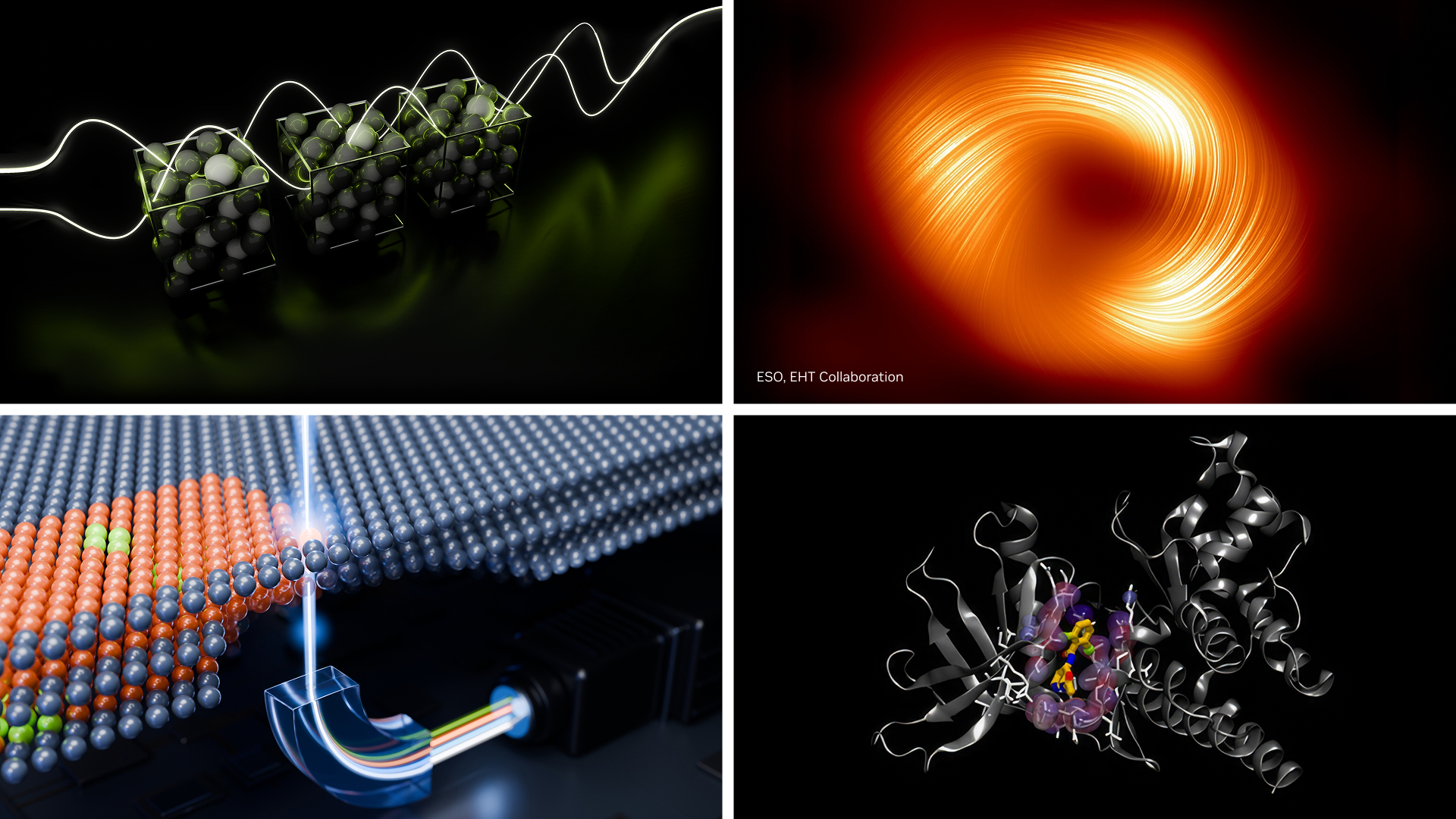
With expanded NVIDIA CUDA-X libraries, including cuPhoton, cuPotential and cuSpa, researchers can sift through vast amounts of data to accelerate research, from astrophysics and materials science to single-cell biology. The speedups are helping scientists analyze larger datasets and model more complex systems. The new libraries give AI agents the tools to help researchers make discoveries

Read at NVIDIA Blog

Semiconductor Today

Photon Design enables dynamic, 3D nitride laser modelling within simulation design flow

Photon Design Ltd of Oxford, UK has enabled nitride laser modelling within its photonic simulation CAD software design flow...

Read at Semiconductor Today

arXiv (research papers) Prashant Shekhar Security

Watermark Evidence under Open-Weight LLM Modification: Exact Bounds for Low-Rank Output Watermarks

Open-weight language models can continue generating after their released weights are modified, while a watermark verifier still scores outputs against the original base and marked models. We study how such modifications change the evidence available to an OpenStamp-style verifier. At each shared prefix, we represent the modification as a residual in the next-token logits. We derive an exact finite-vocabulary lower bound on the expected log-likelihood-ratio evidence under a…

Read at arXiv (research papers)

AWS Machine Learning Blog Dustin Liu SI

Use prompt caching with open-weight models on Amazon Bedrock

Many generative AI applications resend the same long context on every request. Prompt caching lets open-weight models on Amazon Bedrock reuse it to reduce input cost and latency. This post shows implicit and explicit caching through the Chat Completions API and applies caching to an OpenCode coding agent session.

Read at AWS Machine Learning Blog

arXiv (research papers) Haoran Shang

SURMA: Efficient Fine-Grained Communication Offload for SuperPOD

GPU SuperPODs underpin large language model (LLM) serving, but growing bandwidth and round-trip times make inter-GPU communication consume increasing compute resources. SM-driven remote memory access occupies shared memory or registers for in-flight data and competes for SM-to-NoC bandwidth. Dedicated engines can free these resources, but must handle fine-grained transfers, down to a 576\,B KV-cache entry. NVIDIA's CopyEngine uses less than 1\% of NVLink bandwidth at 7\,KB…

Read at arXiv (research papers)

Older stories