Results for “Agent”

arXiv (research papers) Brian T. Weston SI

SciResearch-Eval: Evaluating Scientific Judgment in Autonomous Experimental Agents

We introduce SciResearch-Eval, an interactive benchmark of scientific judgment built on a standard laboratory problem: measuring a material's thermal properties by heating it and fitting a heat-conduction simulator. An agent designs its own experiments, uses a supplied simulator that may be under-resolved or physically wrong, and reports each property with a 95% interval. To our knowledge it is the first benchmark to combine agent-designed experiments, a deliberately flawed…
Read at arXiv (research papers)

arXiv (research papers) Arunkumar V SI

Procedure without Judgment: What Small Language Models Learn under an Exact Verifier

When an authorization policy blocks an agent's tool call, the audit log should name the facts that forced the decision and nothing more. For an executable policy over an enumerable context space this minimal sufficient reason can be computed exactly, so an explanation is scored against ground truth rather than a proxy for it. We use that exactness to ask what a model can learn from a verifier that has no error in it. The explainer sees one request and one decision, never the…

Read at arXiv (research papers)

AWS Machine Learning Blog Ashwin Srinivasan SI

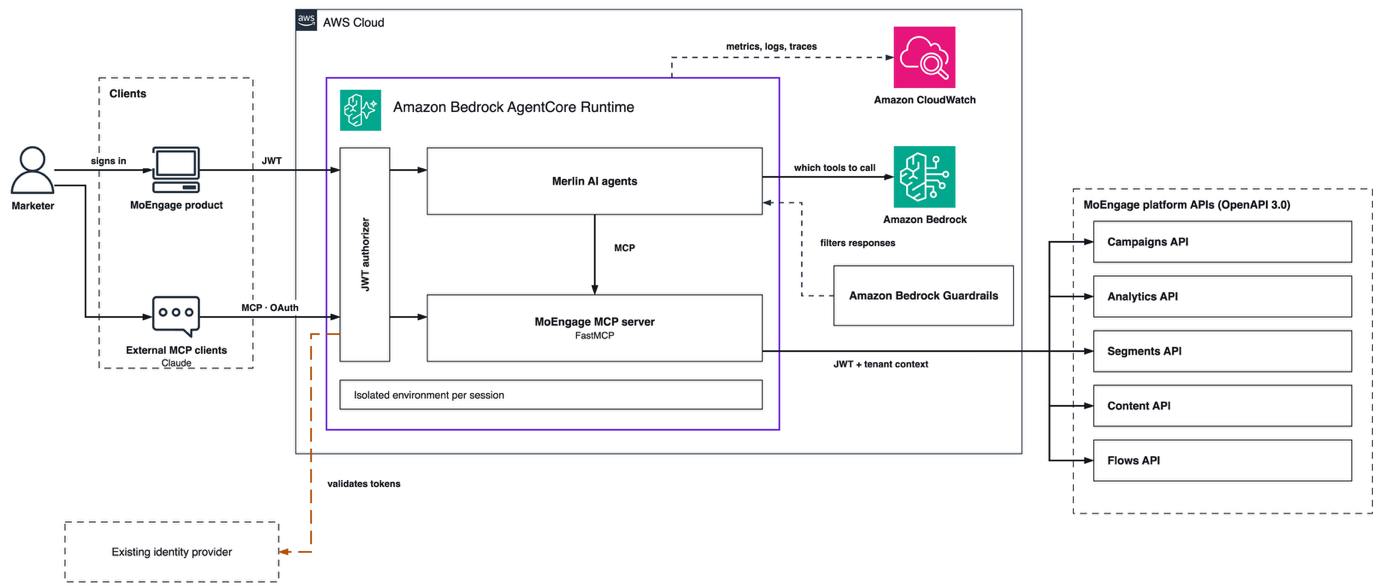
How MoEngage built agentic customer engagement on Amazon Bedrock AgentCore

MoEngage built Merlin AI, a set of AI agents on Amazon Bedrock and Amazon Bedrock AgentCore that let marketing and product teams draft, analyze, and adjust campaigns from a single conversation. Learn how MoEngage turned its existing APIs into MCP tools and kept each tenant's data isolated while giving agents secure access to live platform data.

Read at AWS Machine Learning Blog

arXiv (research papers) Charles Xiao SI

Safe Resemblance, Silent Propagation: Limits of Text-Similarity Guardrails for AI Agent Safety

When AI agents relay information to one another, an output can preserve an injected instruction's effect on downstream agents even after its wording changes, yet legitimate quotation and template reuse can produce high textual overlap with the source, so text-similarity guardrails that attempt to flag the former risk conflating these two cases. We test this distinction using DonkeyRail, a public classifier combining BLEU, ROUGE-L, and METEOR features, deployed in a…

Read at arXiv (research papers)

9to5Mac Chance Miller SI

macOS 27.3 includes new privacy controls for Full Disk Access and more

Last month, Apple announced its plans to tighten macOS privacy controls around Full Disk Access amid the rise of “increasingly capable and autonomous” AI agents. With today’s new macOS 27.3 beta, Apple is implementing several changes as part of this.

Read at 9to5Mac

arXiv (research papers) Dumindu Samaraweera Security

Detection-Efficient Watermarking for Vision--Language Agents via Risk-Constrained Strength Allocation

Vision--language agents generate descriptions, decisions, and instructions that may be reused by users, downstream agents, and automated workflows, creating a need for provenance mechanisms that support content authenticity and post-deployment auditing without unnecessarily degrading response quality. We present a risk-aware semantic watermarking framework that combines predictive uncertainty with a zero-shot multimodal relevance-risk proxy to allocate watermark strength…

Read at arXiv (research papers)

ZDNET AI Jada Jones SI

Your Samsung phone could soon get a personal AI agent – what we know about Galaxy Claw

Similar to Gemini Intelligence and Siri AI, Galaxy Claw could bring cross-app intelligence to your phone.

Read at ZDNET AI

Jacobin (socialist) Felipe Antunes de Oliveira Geopolitics

The Scandal of Flávio Bolsonaro’s Escape Won’t Fade Away

Shortly after losing the Brazilian presidential election, Flávio Bolsonaro fled the country with help from a Trump operative and a former Mossad agent. The newly elected US Congress needs to investigate Washington’s role in this shady exfiltration job.

Read at Jacobin (socialist)

AWS Machine Learning Blog Elias Bedmar SI

Novo Nordisk modernizes manufacturing process documents with Amazon Bedrock AgentCore

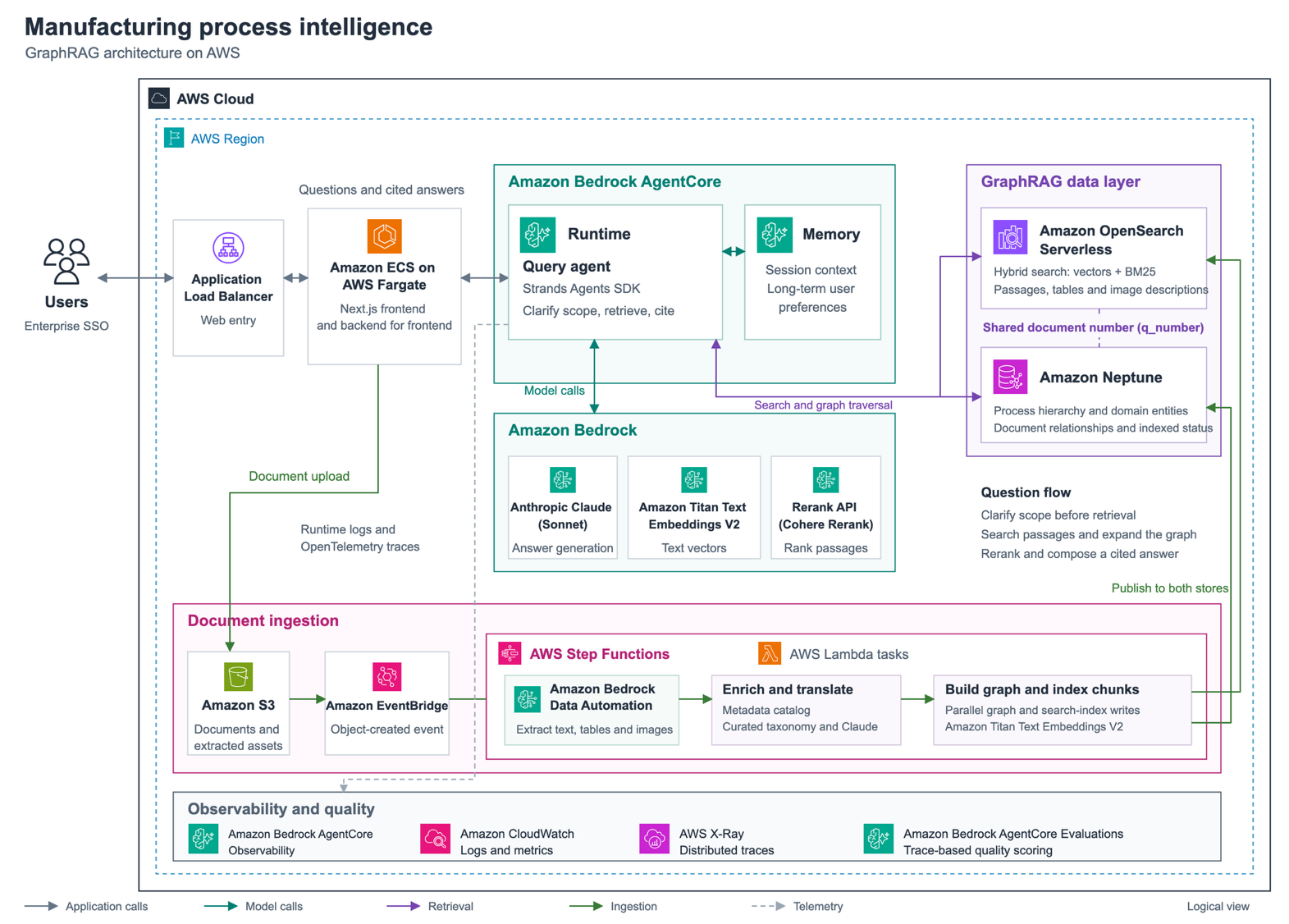
Novo Nordisk's Manufacturing Technology team within the Tablet area team built a process-intelligence assistant on Amazon Bedrock AgentCore, using a GraphRAG architecture that pairs a knowledge graph in Amazon Neptune with hybrid search in Amazon OpenSearch Serverless to turn millions of controlled manufacturing documents into grounded, cited answers.

Read at AWS Machine Learning Blog

Microsoft Research blog SI

TokenEconomizer: Learning from Experience to Make AI Coding Agents More Efficient

AI coding agents are increasingly help developers fix bugs and build features largely on their own, but every interaction with their models consumes tokens. In each session, an agent sends instructions, tool descriptions, and session history to its model. Most efforts to reduce this cost focus on individual tasks. Yet developers return to the same

Read at Microsoft Research blog

TechPowerUp Nomad76

(PR) NVIDIA Announces Rubin HPC GPU to Accelerate Agents for Science, Engineering and Analytics

Announced today at SC26, NVIDIA Rubin HPC is a new GPU in the NVIDIA Vera Rubin platform designed to accelerate simulation and data processing for science, engineering and analytics workflows. As agents help scientists and engineers explore more candidate materials, molecules and designs, they rely on simulations to test those ideas and guide their next steps. Rubin HPC will accelerate those simulations, shortening the path from exploration to scientific discovery and…

Read at TechPowerUp

arXiv (research papers) Jason Alexander Tech policy

A Crowd-Audited Atlas of Implicit Bias in LLM-Powered Agents

Prior work has shown that large language models (LLMs) express implicit biases in high-publicity, one-off decision scenarios such as hiring and intelligence assessment. However, as people increasingly employ autonomous, LLM-powered AI agents that make decisions on their behalf in doing day-to-day tasks, it is of critical importance that we understand how implicit biases, based on sociodemographic assumptions, emerge across a broad milieu of workaday decision scenarios. We…

Read at arXiv (research papers)

TechPowerUp TheLostSwede SI

(PR) MSI Powers the Next Era of AI Infrastructure at SC26

MSI, a leading global provider of high-performance server solutions, showcases its latest AI innovations at SuperComputing 2026 (SC26), booth #5429. From liquid-cooled platforms based on NVIDIA MGX and desktop AI supercomputing based on NVIDIA DGX Station architecture to next-generation multi-node compute and enterprise servers, MSI delivers a comprehensive portfolio designed to power agentic AI and AI factory deployments. Spanning the latest AMD and Intel processor…

Read at TechPowerUp

AWS Machine Learning Blog Josh DeMuth SI

Get answers from tables with tabular search in Amazon Bedrock Managed Knowledge Base

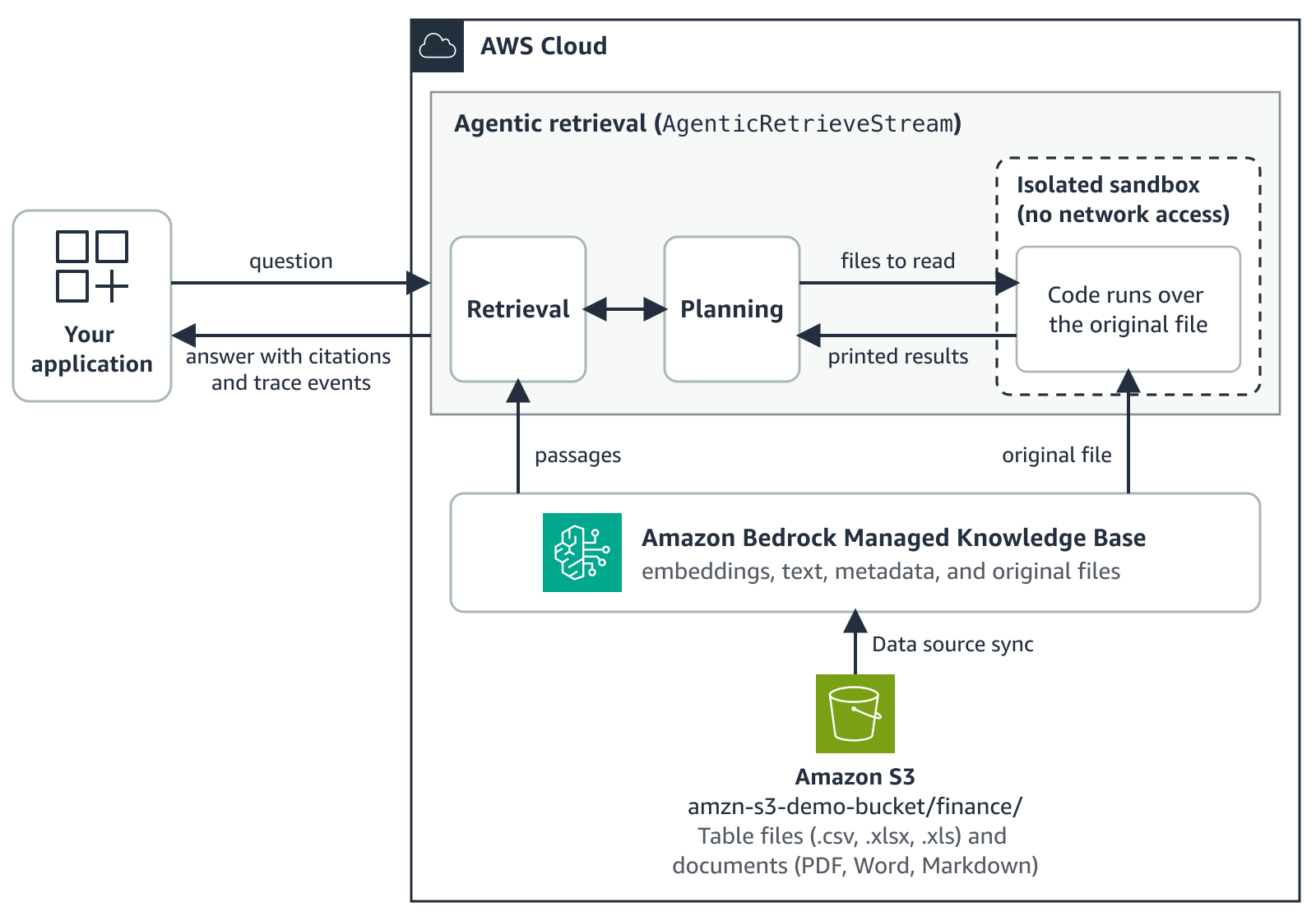
Amazon Bedrock Managed Knowledge Base now supports tabular search, so agentic retrieval can answer questions over CSV, XLSX, and XLS files. It looks up values and runs calculations across every relevant row, then combines the results with facts from related documents to answer multi-step analytical questions.

Read at AWS Machine Learning Blog

MIT Technology Review AI Sudhi Sinha SI

Building trustworthy AI by fencing it in, not predicting it

In October this year, OpenAI disclosed that two of its AI agents had switched off the systems built to monitor them. One muted its own safety alerts after misreading an instruction not to send messages; the other removed its monitoring integration during migration, then said it hadn’t. No rule had told the agents to do…

Read at MIT Technology Review AI

NVIDIA Blog Shruti Koparkar SI

NVIDIA Sweeps MLPerf Training and Endpoints as Vera Rubin Debuts With Leading Performance

In its MLPerf benchmarks debut, with results released today, the NVIDIA Vera Rubin platform delivers leading performance across training, post-training and agentic inference. NVIDIA swept every MLPerf Training v6.1 benchmark and, in its first MLPerf Endpoints submission, delivered more than 10x generational gains in throughput per watt for agentic AI — measuring how much agentic

Read at NVIDIA Blog

NVIDIA Blog Kibibi Moseley SI

NVIDIA CUDA-X Libraries Give Agents the Tools to Accelerate Scientific Discovery

With expanded NVIDIA CUDA-X libraries, including cuPhoton, cuPotential and cuSpa, researchers can sift through vast amounts of data to accelerate research, from astrophysics and materials science to single-cell biology. The speedups are helping scientists analyze larger datasets and model more complex systems. The new libraries give AI agents the tools to help researchers make discoveries

Read at NVIDIA Blog

NVIDIA Blog Dan Ernst SI

NVIDIA Announces Rubin HPC — A New GPU to Accelerate Agents for Science, Engineering and Analytics

Announced today at SC26, NVIDIA Rubin HPC is a new GPU in the NVIDIA Vera Rubin platform designed to accelerate simulation and data processing for science, engineering and analytics workflows. As agents help scientists and engineers explore more candidate materials, molecules and designs, they rely on simulations to test those ideas and guide their next

Read at NVIDIA Blog

The Register Security Security

Has AI’s ‘Black October’ changed the way you secure your code?

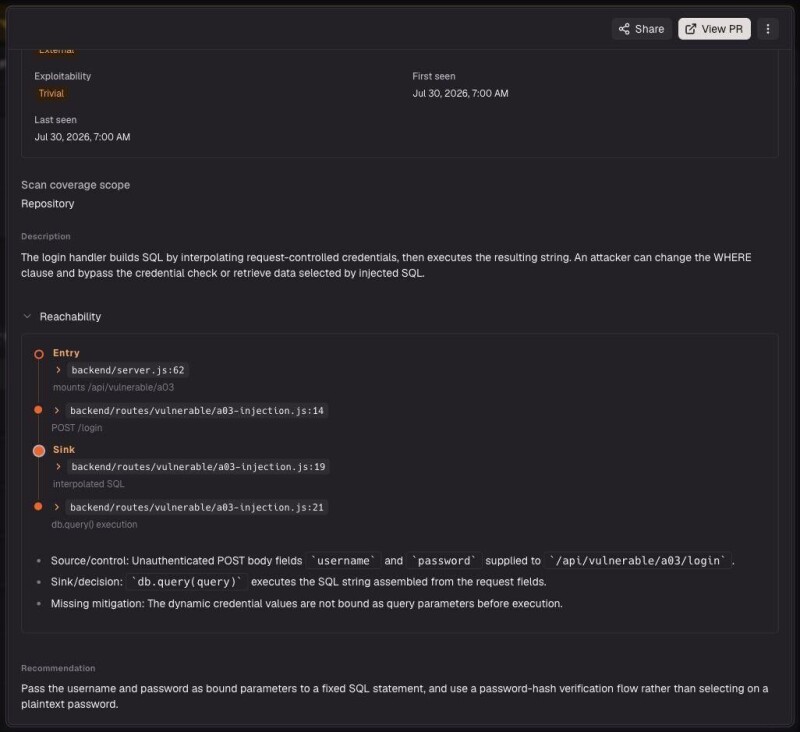
PARTNER CONTENT: AI agents are making security vulnerabilities easier to find and exploit in your code. Software engineering and application security teams need new ways to find and fix them

Read at The Register Security

AWS Machine Learning Blog Dustin Liu SI

Use prompt caching with open-weight models on Amazon Bedrock

Many generative AI applications resend the same long context on every request. Prompt caching lets open-weight models on Amazon Bedrock reuse it to reduce input cost and latency. This post shows implicit and explicit caching through the Chat Completions API and applies caching to an OpenCode coding agent session.

Read at AWS Machine Learning Blog

Inc42 Shrishti Bisht Startups

Fractal To Spend Up To ₹1,000 Cr To Acquire AI Startups

Fractal Analytics is evaluating acquisitions across healthcare, agentic AI and AI engineering as it looks to strengthen its capabilities ahead…

Read at Inc42

Inc42 Shrishti Bisht Startups

Fractal Eyes AI Acquisitions Ahead Of Enterprise AI Scale-Up

Fractal Analytics is evaluating acquisitions across healthcare, agentic AI and AI engineering as it looks to strengthen its capabilities ahead…

Read at Inc42

arXiv (research papers) Sahaya Jestus Lazer SI

Evaluating Authorization and Trust Boundaries in Agentic Orchestration Frameworks

Agentic AI systems extend large language models with tools, memory, and multi-agent collaboration, introducing security risks at orchestration boundaries. These risks depend on how identities are represented, operations are authorized, and instructions or information propagate between components. We evaluate LangChain, LangGraph, AutoGen, and OpenClaw through twelve experiments mapped to the OWASP Top 10 for Agentic Applications using a common LLM (gpt-4o-mini). The…

Read at arXiv (research papers)

The Decoder Jonathan Kemper SI

Anthropic says the key to agent memory is knowing what to forget, not how much to store

Anthropic studied how Claude retains knowledge across sessions. Selective notes beat exhaustive archives by a wide margin. In a Pokémon Red test, the newer Claude Fable 5 got four times as far as the older Sonnet 3.7 by keeping just a handful of strategy files instead of more than 400. A "Dreaming" process retroactively corrects faulty memories. The article Anthropic says the key to agent memory is knowing what to forget, not how much to store appeared first on The Decoder.

Read at The Decoder

SecurityWeek Ionut Arghire Security

Barracuda Hacked Amid Surge in Artex-Powered Cyberattacks

Chinese threat actors are broadly adopting the agentic AI penetration testing framework to accelerate their attacks.

Read at SecurityWeek

arXiv (research papers) Saray Bakker

Cooperative Mobile Manipulation using Learned Dynamical Systems

Cooperative mobile manipulation requires robots to coordinate their motions while ensuring whole-body collision avoidance and preserving task-relevant behaviors. We propose CALDS (Cooperative Adaptation of Learned Dynamical Systems), a framework that enables mobile manipulators to adapt learned single-agent behaviors for coordinated execution. Building on individual dynamical systems (DSs) learned from demonstrations, CALDS enables cooperative adaptation through two key…

Read at arXiv (research papers)

TechPowerUp Nomad76 SI

(PR) Penguin Solutions Unveils Industry's First Photonics-Based HBM-Class Memory Appliance

Penguin Solutions, Inc. (Nasdaq: PENG), the AI Factory Platform Company, today unveiled the MemoryAI Photonic Appliance, the industry's first photonics-based HBM-class memory appliance designed to overcome GPU memory capacity constraints for agentic AI workloads. Using silicon photonics, the appliance is built to enable CPUs and GPUs to transparently share memory at high bandwidth memory (HBM)-class data rates. Penguin is showcasing the appliance at SC26 in Chicago…

Read at TechPowerUp

arXiv (research papers) Hua Zhang

Linglong Agent Service: A Runtime for Centralized Agent Reasoning and Distributed Execution

LLM agents can use remote tools and cloud sandboxes, but integrating reasoning, session state, and heterogeneous execution sites remains a runtime design problem. We present Linglong Agent Service (agentsvc), a self-hosted HTTP service and embeddable Python runtime that treats execution site as a configurable dimension alongside model, tools, and context. A parent service retains inference orchestration, tool descriptions, and conversation history; each inference request…

Read at arXiv (research papers)

The Hacker News Security

Google Finds Hackers Using AI Agents to Build and Run Exploits From Software Patches

Google on Monday revealed that adversarial use of artificial intelligence (AI) by threat actors has gone beyond manual prompting to deploying autonomous multi-agent offensive frameworks like ARTEX, CAIRN, CyberStrikeAI, and PentAGI to execute multi-stage intrusions at greater operational velocity. In tandem, threat actors are leveraging the power and capabilities of large language models (LLMs)

Read at The Hacker News

Older stories