Results for “models”

arXiv (research papers) Suho Yoo

VSpark: Speculative Decoding for Autoregressive Vision-Language-Action Models

Our aim is to accelerate autoregressive vision-language-action models (VLAs), which generate robot actions one token at a time. Speculative decoding makes this possible: a lightweight draft model proposes several tokens at once, and the VLA verifies them in a single pass, accepting only those that match its own predictions, so decoding remains lossless. The speedup, however, is limited in robot control, where many different tokens encode nearly the same motion and a draft…


Read at arXiv (research papers)

SecurityWeek Associated Press Security

California Sues OpenAI, Seeking Court-Ordered Changes After the Hugging Face Hack

The lawsuit alleges that OpenAI misled and endangered the public and users by knowingly developing advanced AI models without necessary safeguards.

Read at SecurityWeek

arXiv (research papers) Mingcheng Zhu

VLM-guided Grounding Expert for Generalised Referring Expression Comprehension

Generalised referring expression comprehension (GREC) aims to identify and localise the zero, one or multiple objects referred to by a language expression. In robotic manipulation, grounding also needs to remain accurate when requests for the same objects are paraphrased or embedded in additional context in robotics. However, grounding expert models are sensitive to instruction variation, while generative vision--language models (VLMs) struggle with complete target recovery…

Read at arXiv (research papers)

arXiv (research papers) Jialong Liu

Distilling World Action Models for Efficient Bimanual Manipulation via Anchored Path Matching

World Action Models (WAMs) jointly generate future video and robot actions through iterative denoising. Few-step distillation reduces the number of model evaluations, but its coarse updates can move the student away from the teacher's trajectory. We propose Anchored Path Matching (APM), which supervises endpoint and short-transition predictions from states reached by the student. From each state, we continue the teacher to zero noise and use its endpoint and first…

Read at arXiv (research papers)

Tech.eu John Reynolds Startups

Synthesia and Datadog CEOs back AI startup Remanence in $30M funding round

A Paris-based startup which uses open-weight AI models to help businesses develop their own specialised AI models has raised $30m in seed funding, it said today.Remanence was founded by three former e...

Read at Tech.eu

arXiv (research papers) Pedro Beltrán-López Security

Adaptive LLM-Driven Honeypots vs. LLM-Driven Attackers: Does Narrative Coherence Improve Deception?

Large Language Models (LLMs) enable honeypots to generate responses and deceptive artefacts on demand, yet existing approaches evaluate generated content one reply at a time and leave open whether artefacts that jointly describe a coherent event retain an attacker better than unrelated ones. This question becomes pressing as autonomous LLM-driven offensive agents emerge as realistic adversaries. This paper proposes narrative deception, a reactive strategy in which the…

Read at arXiv (research papers)

CyberScoop Greg Otto Security

The Super Intelligence Task Force should open the door to defenders

Artificial intelligence models now find software vulnerabilities faster than organizations can fix them. In HackerOne’s platform data, the valid report backlog is up 131% over the last two years, and critical and high-severity findings are rising while remediation falls further behind. Finding flaws is no longer the hard part. The harder question will decide the

Read at CyberScoop

WIRED AI Will Knight SI

Rogue Agents Hacked His Company. Why Is Clément Delangue So Optimistic About AI?

The French CEO of Hugging Face, a mega-hub of open-source AI software, says the attack by OpenAI models earlier this year proved one thing: Humanity can’t let AI be controlled by the few.

Read at WIRED AI

arXiv (research papers) Tian Lyu

JointGV: Structure-Aware Correction of Visual World Models with Parallel Graph Dynamics for Long-Horizon Modeling

Visual world models predict future visual states conditioned on actions, but recursive errors in entity poses and spatial relations limit their long-horizon prediction for robot planning and control. We ask whether a separately predicted relational state can correct this drift without restructuring the visual model. This is challenging because graph nodes and visual states share neither elements nor a feature space. We propose Joint Graph--Visual Dynamics Correction…

Read at arXiv (research papers)

arXiv (research papers) Mohammad Nomaan Husain

DGF-Asym: Adaptive Peer Weighting for Collective Estimation under Noisy and Faulty Sensing

Collective estimation under unreliable sensing requires robots to adaptively balance personal observations and social information from peers. We propose DGF-Asym, a decentralized collective estimation method extending the DeGroot-Friedkin model with asymmetric peer weighting based on retrospective predictive performance. The method supports consensus formation without prior sensor-noise statistics or explicit fault models while keeping inter-robot communication asynchronous…

Read at arXiv (research papers)

arXiv (research papers) Jingyao You

The Multivariate Feedback Particle Filter for State-dependent Multiplicative Noises and Its Application to Attitude and Pose Estimations

Nonlinear filtering with state-dependent multiplicative measurement noise poses a notable challenge for spacecraft attitude determination and robotic pose estimation. This work develops the FPF-DM, a decomposition scheme for feedback particle filters tailored to this family of filtering problems. Extending prior decomposition techniques for additive noise and polynomial measurement models, the proposed method resolves the key difficulty that state-dependent multiplicative…

Read at arXiv (research papers)

Tech in Asia Naomi Li Gan Startups

Chinese AI firms tap US models as chip restrictions tighten

The documents show Chinese developers turning answers, code, and problem-solving steps generated by American models into training data for smaller local models.

Read at Tech in Asia

MarkTechPost Asif Razzaq SI

Sarvam Launches Sarvam Token Factory: Bringing India-Hosted Inference to 8 Open Models

Sarvam Token Factory is now open to everyone. It serves Sarvam 105B, GLM 5.3, DeepSeek V4.1 Flash, Kimi K3.1 Pro and Gemma 4 31B from GPU clusters in India through one OpenAI-compatible API.

Read at MarkTechPost

Inc42 Anjali Jain Startups

Sarvam AI Opens Token Factory To Run Global AI Models On Indian Servers

AI unicorn Sarvam AI has opened Token Factory to developers and enterprises, giving them access to its own and global…

Read at Inc42

arXiv (research papers) Jiwon Park Security

Fast and Strong Image Protection against Diffusion Personalization

Personalized text-to-image diffusion models can reproduce a person from a handful of photographs. Image protection perturbs each image before publication so that fine-tuning on it fails, but it optimizes every perturbation from scratch, so its cost grows with the number of images. We present the protective diffusion model (PDM), which is trained once and samples the perturbation of a new image over many denoising steps. PDM distills an iterative teacher and is then…

Read at arXiv (research papers)

arXiv (research papers) Wenbo Zhu

Manufacturing Differential Sparsity: Planner-Hardware Co-Design for Efficient World Model Planning

JEPA-style latent world models let embodied agents plan toward new goals with model predictive control, but they are still too slow for real-life embodied control: sampling-based MPC repeats predictor inference tens of thousands of times per plan, and even on high-end GPUs one planning step can take tens of seconds. We observe substantial latent locality in this repeated-inference workload: the predictor maps close actions to close latents, and inside a quantized predictor…

Read at arXiv (research papers)

MarkTechPost Asif Razzaq SI

Liquid AI Releases d1.2 and d1.2-ultra: Omnimodal Decision Models That Top the AA Decision Index

Liquid AI released d1.2 and d1.2-ultra, decision models that read text, images and audio and return calibrated probabilities with zero output tokens. d1.2-ultra scores 75 on the Artificial Analysis Decision Index v2.1.

Read at MarkTechPost

arXiv (research papers) Arusa Kanwal

VoxelSBFL: Voxel-Level Spectrum-Based Failure Prediction for Vision-Language-Action Models

Vision-Language-Action (VLA) models integrate visual perception, language understanding, and action generation to control robots. Testing these systems produces trajectories and task outcomes, but existing approaches provide limited guidance on using these recorded trajectories to assess subsequent executions or inform policy repair. We conjecture that, for a given policy and task, traversing certain workspace regions is associated with a higher likelihood of failure. To…

Read at arXiv (research papers)

arXiv (research papers) Siqing Fu

KD-DSE: A Knowledge-Driven LLM Framework for Fast Microarchitecture Design Space Exploration

Domain-specific architectures have made design space exploration (DSE) a bottleneck of processor design, yet each candidate costs a full simulation, so exhaustive search is out of reach. Surrogate models need thousands of simulations before they predict reliably, and LLM agents that search directly hallucinate, lack cold-start architectural knowledge, and follow a fixed per-round policy. We present KD-DSE, a knowledge- driven LLM framework for fast microarchitecture DSE. KD…

Read at arXiv (research papers)

arXiv (research papers) Mehul Arora

CoBoVLA: Decoupling Language from Action with Discrete Codes for Robust and Interpretable Robot Manipulation

Vision-Language-Action (VLA) models achieve high success rates on the LIBERO benchmark but remain sensitive to paraphrasing. Existing VLAs ranging from 0.6B to 7.5B parameters experience a 22-52 point performance drop on LIBERO-Para while SmolVLA exhibits an even larger decline, from 83\% to 8\%. Because most VLAs jointly learn language understanding and action generation, it is difficult to determine whether a failure originates from misunderstanding an instruction or…

Read at arXiv (research papers)

Help Net Security Mirko Zorz Security

NATO’s AI cyber defense work hits up to 300 billion OpenAI tokens a month

NATO’s Communications and Information Agency (NCIA) gives NATO’s core institutions access to OpenAI’s cybersecurity models to help protect Allied networks. NATO has used up to 300 billion raw input and output tokens a month. Access comes through Daybreak, OpenAI’s program for vetted defenders doing authorized work like reviewing code, chasing suspicious activity and testing fixes. The exposure sits in software that European institutions run every day. ENISA, the EU’s cyber…

Read at Help Net Security

Al Jazeera Geopolitics

AI models abandon climate facts to please users, UNESCO report finds

AI models abandon climate facts to agree with users in eight out of 10 tests.

Read at Al Jazeera

Tech.eu Cate Lawrence Startups

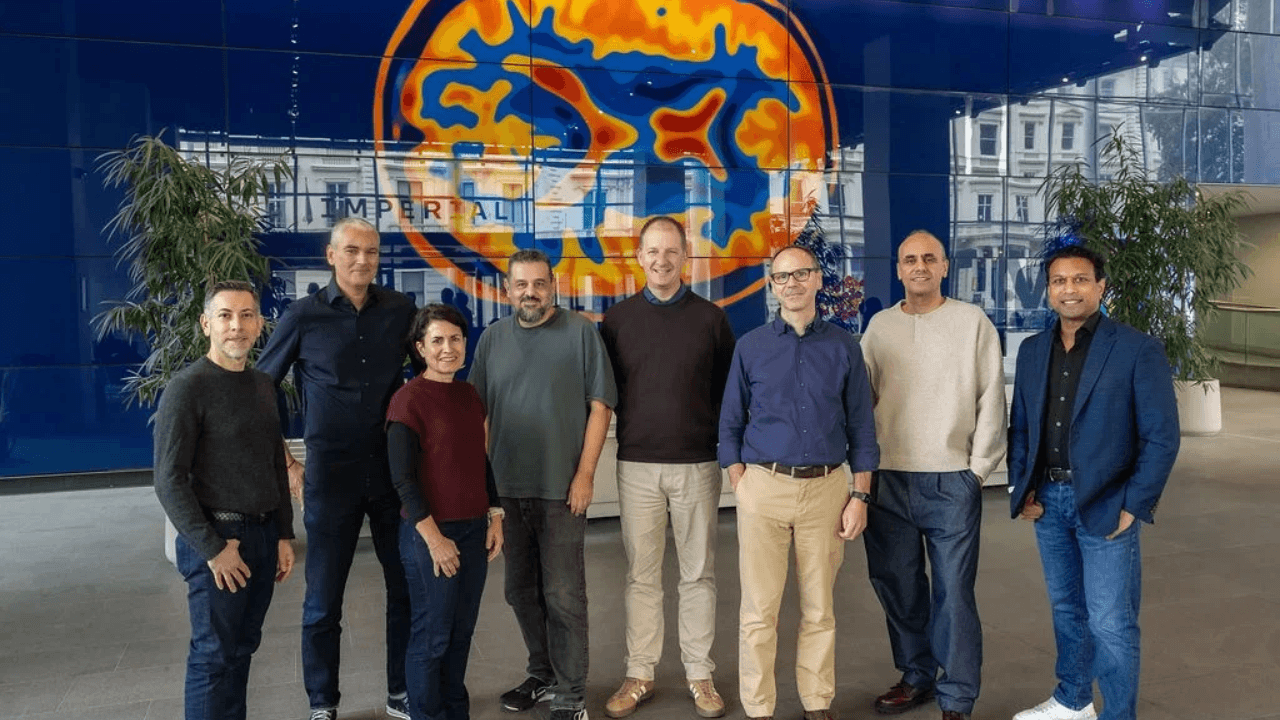
Swiss neurotech Indivi acquires Cogitat to advance AI-powered brain monitoring

Neurotech company Indivi has acquired Cogitat, an Imperial College London spin-out developing cutting-edge deep learning models that decode cognitive function from EEG brain signals. Indivi is a neu...

Read at Tech.eu

arXiv (research papers) Zichen Kong

PVTSizing 2.0: A Fast and Reliable Analog Circuit Sizing Operator for Agentic EDA Workflows

Analog circuit design automation requires both coordinated tool execution and efficient numerical search. Large language models (LLMs) offer new ways to organize tool execution, but finding one sizing that satisfies specifications across process, voltage, and temperature (PVT) corners remains costly. PVTSizing 2.0 addresses these needs through a human-agent workflow built around an independently usable numerical optimizer. An agent carries the designer's approved task…

Read at arXiv (research papers)

YourStory Startups

Instagram fine-tunes recommendation systems in India to curb sexually suggestive, violent content

Meta Platforms said on Tuesday that it has fine-tuned Instagram's content recommendation systems in India to curb the visibility of sexually suggestive material and violent content, deploying more advanced artificial intelligence models to identify and filter unwanted posts before they reach users.

Read at YourStory

VnExpress International

HCMC firms may access public resources to test new technologies

A proposed regulatory sandbox would give businesses in Ho Chi Minh City temporary access to government data, technical infrastructure, laboratories and public assets to test new technologies and business models.

Read at VnExpress International

Android Authority Tushar Mehta Gadgets

The Galaxy S27 Pro and Ultra aren’t out yet, but you can already download their wallpapers

Leaked Galaxy S27 Pro and Ultra subtly hint at a class divide with the base and Plus models.

Read at Android Authority

arXiv (research papers) Weihang Liu Security

Dressed in Authority: Practical Black-Box Jailbreaking of MLLMs via Visual Trust Bias

Multimodal large language models (MLLMs) are rapidly advancing, yet their safety remains a critical concern, especially under jailbreak attempts. Existing MLLM jailbreaks either inject fragile adversarial perturbations into irrelevant images or synthesize toxic visual cues to achieve text-driven attack intents. In contrast, a more practical MLLM jailbreak emphasizes enhancing attack efficacy directly on naturally occurring harmful image-text pairs. We address this problem by…

Read at arXiv (research papers)

YourStory Startups

Elastic{ON} Mumbai: Why context, not the model, is the real AI advantage

At Elastic{ON} Mumbai, CEO Ash Kulkarni argued that every business already owns what AI models lack. The rest of the day showed what it takes to put that context to work.

Read at YourStory

arXiv (research papers) Feng Han SI

Fine-Grained Japanese Clinical Named Entity Recognition: A Controlled Comparison of BERT and Open-Weight Large Language Models

Background: Generative large language models (LLMs) offer an alternative to encoder-based clinical named entity recognition (NER), but their performance on fine-grained Japanese extraction tasks and sensitivity to generation settings remain uncertain. Methods: We compared two fine-tuned BERT-CRF baselines with nine open-weight LLMs on iCorpus, which defines 113 entity categories. The evaluation used 433 sentences from 36 test documents; 1,672 sentences were used for…

Read at arXiv (research papers)

Older stories