Results for “Computing”

The Quantum Insider Mohib Ur Rehman

Classiq Powers Award-Winning Quantum Application Development at Japan’s NEDO Challenge

Insider Brief PRESS RELEASE — Classiq, a quantum computing software company, today announced that its three separate research collaborations – with Shionogi, KDDI Research, Inc. (“KDDI Research”) and SoftBank Corp. – have each received an award in Japan’s NEDO quantum computing challenge, demonstrating the effectiveness of the Classiq platform in developing quantum applications for industry.

Read at The Quantum Insider

The Quantum Insider Matt Swayne

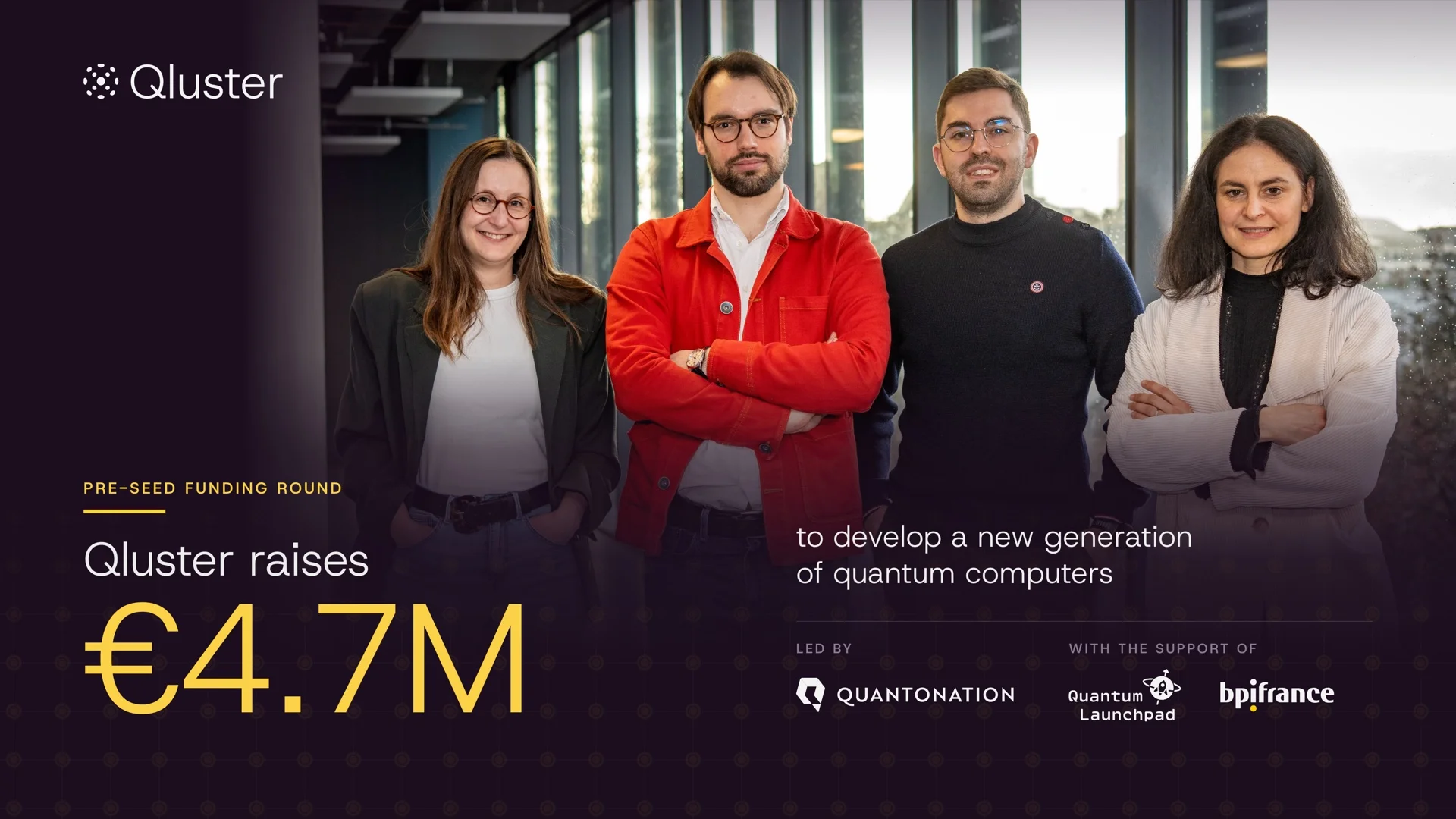
Qluster Raises €4.7 Million to Develop a New Generation of Quantum Computers

Insider Brief PRESS RELEASE — Qluster, a Paris-based startup specializing in quantum computing, announces its first funding round of €4.7 million led by Quantonation, an investment fund specializing in quantum technologies and disruptive physics-based innovations, with the support of Quantum Launchpad and Bpifrance. A spin-off from the prestigious Laboratoire Kastler Brossel, whose history is associated

Read at The Quantum Insider

Tech.eu Tamara Djurickovic Startups

Qluster raises €4.7M to power the next generation of quantum computing

Paris-basedquantum computing startup Qluster has raised €4.7 million in a pre-seed fundinground led by Quantonation, an investment fund specialising in quantumtechnologies and physics-based innovation...

Read at Tech.eu

Asia Times Albert Cleisthenes Wong Geopolitics

Singapore’s AI balancing act exposes ASEAN’s split-stack dilemma

Singapore’s diplomatic maneuvers in Manila this week illustrate the increasingly difficult technology-balancing act facing Southeast Asia: maintaining access to American advanced computing infrastructure while preserving commercial engagement with China. On November 15, Singapore joined the United States and eight other countries in signing the San Francisco Declaration on the Secure Foundations of Enduring Prosperity, under

Read at Asia Times

BBC China

How new US chip restrictions on South East Asia will hit China

The new rules restrict chip exports and also access to their computing power, which China relies on heavily.

Read at BBC China

TechPowerUp AleksandarK SI

U.S. Cracks Down on China Renting AI GPUs Through Overseas Data Centers

Yesterday, the U.S. Commerce Department's Bureau of Industry and Security (BIS) released an interim final rule to address remote access to advanced AI chips and servers. This rule significantly addresses a long-standing gap in U.S. export controls, where Chinese companies that are barred from accessing NVIDIA's latest GPUs have been renting overseas computing power instead of purchasing the chips outright. Notably, BIS states that the rule was written by and at the direction…

Read at TechPowerUp

South China Morning Post Howard Liu Geopolitics

US details criminal probe into Nvidia customer Megaspeed over potential chip diversion

The US Justice Department is leading a criminal investigation into Megaspeed, a Singapore-based cloud computing company and Nvidia customer, over possible violations of US chip export controls, US authorities said on Monday. The Commerce Department opened its investigation in 2024 after officials detected suspicious activity while monitoring for possible diversion of sensitive semiconductors, the Commerce and Justice departments said in a joint statement. Investigators…

Read at South China Morning Post

The Quantum Insider Matt Swayne

DOE Seeks Input on Cryogenic and Quantum Supercomputing Testbeds

Insider Brief Building a useful quantum computer will likely mean building systems around it — systems that rely on classical computing resources that help it operate and the connections that allow them to work together. The U.S. Department of Energy gets it. The department is seeking industry and research input on two interconnected testbed initiatives

Read at The Quantum Insider

The Quantum Insider Mohib Ur Rehman

BlueQubit Selects Eight Teams for Quantum Flywheel Grant Programme

Insider Brief PRESS RELASE — BlueQubit today announced the research teams selected for its Quantum Flywheel grant program, a $150,000 initiative created with support from IBM, Amazon Web Services (AWS), and NVIDIA Accelerated Computing. Awardees receive three months of credits for AI tokens and classical and quantum compute, with awards ranging from $10,000 to $40,000

Read at The Quantum Insider

The Quantum Insider Mohib Ur Rehman

Quantum X and Everest Cloud Partner on Quantum and AI Services in South Asia

Insider Brief PRESS RELEASE — Quantum X, Inc. (OTC: QUTX) (“Quantum X” or the “Company”) today announced a channel partnership with Everest Cloud, the Kathmandu-based cloud services brand of Digital Network Solutions Pvt. Ltd. (“Everest Cloud”), under a Memorandum of Understanding (“MOU”) signed on November 6, 2026. The partnership gives Quantum X’s EntangleX quantum computing solution

Read at The Quantum Insider

arXiv (research papers) Yuwen Zhou Security

A Little Advice Suffices: Diffie-Hellman Is as Hard as Discrete Logarithm

Is computing a Diffie-Hellman key as hard as computing a discrete logarithm? Maurer showed that it is, given a few bits of advice, provided that short intervals contain enough integers with only small prime factors; that proviso has stood for thirty years. We remove it. For every prime $p$ there is an advice string of $O(\log p)$ bits, depending only on $p$, with which discrete logarithms in every group of order $p$ are computed in polynomial time from a Diffie-Hellman…

Read at arXiv (research papers)

TechPowerUp btarunr SI

U.S. Departments of Commerce and Justice Issue Rare Joint-Statement on the NVIDIA-Megaspeed Investigation

The U.S. Department of Commerce and Department of Justice just issued a rare joint-statement on their ongoing investigation into NVIDIA's dealings with Singapore-based Megaspeed Corporation, a cloud computing firm that had been buying cutting-edge AI GPUs and is alleged to have been involved in the diversion of these GPUs to entities in China, in violation of U.S. export controls for AI compute processors. In their statement, the two Government departments provide a brief…

Read at TechPowerUp

arXiv (research papers) Chenyin Sun

Demonstration of a Qubit Control Scheme Compatible with Superconducting Digital Signals

Superconducting quantum computing faces a critical scalability bottleneck arising from the escalating complexity of traditional analog control infrastructure. Single-Flux-Quantum(SFQ) systems operate at cryogenic temperatures and offer a potential route to addressing these challenges. Using microwave signals at qubit-dependent frequencies to trigger SFQ pulses requires many independent analog microwave sources, limiting the potential to reduce control wiring and increase…

Read at arXiv (research papers)

Quantum Computing Report Mohamed Abdel-Kareem

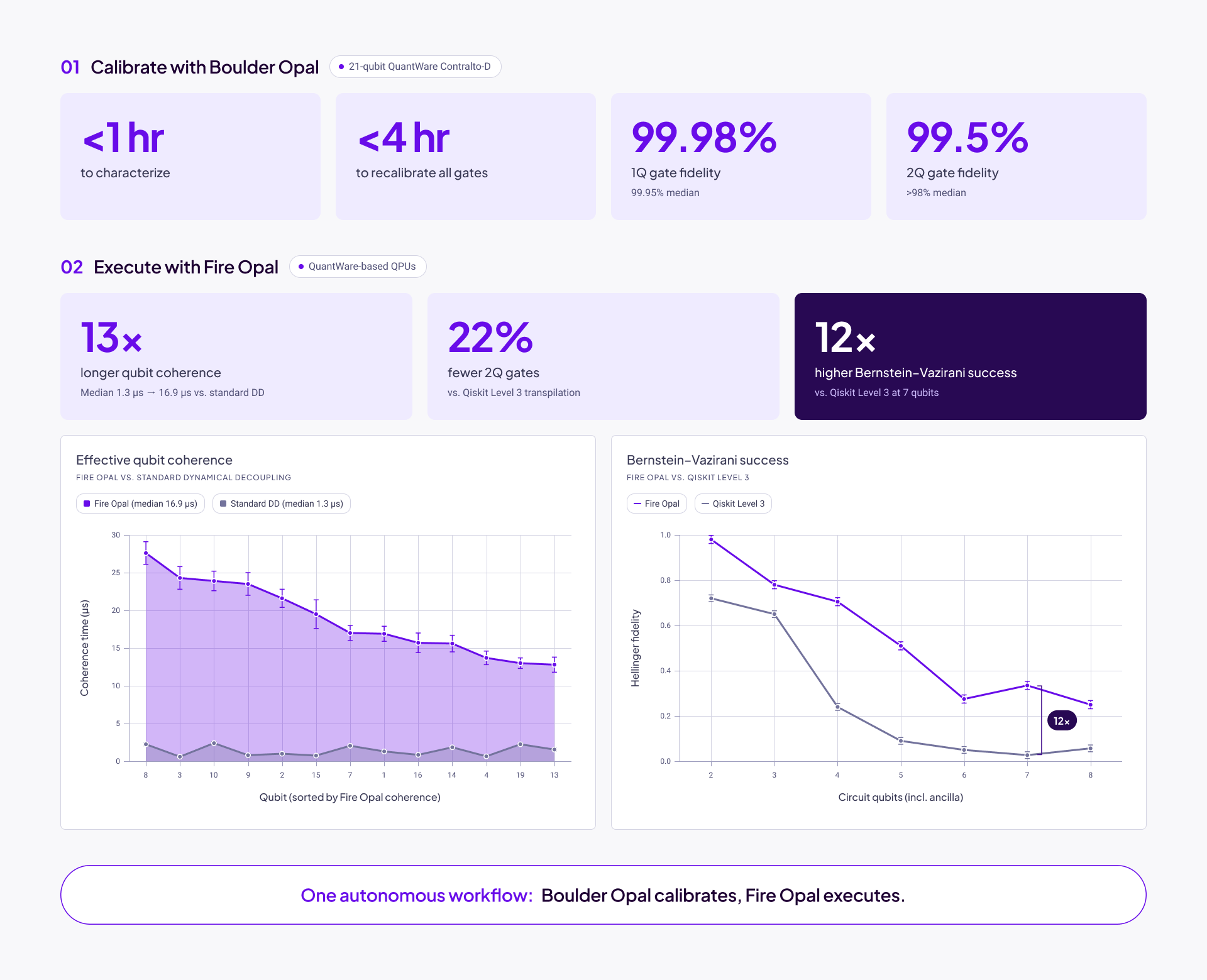
Q-CTRL Unifies Boulder Opal and Fire Opal into Autonomous End-to-End Quantum Infrastructure Software

Q-CTRL has integrated its Boulder Opal and Fire Opal software into a single platform for end-to-end quantum infrastructure. This unified system automates the entire quantum computing lifecycle, from processor bring-up to workload execution, significantly reducing manual effort and improving performance. The technology is currently live on Elevate Quantum’s Q-PAC system and will be accessible via cloud in December 2026.

Read at Quantum Computing Report

arXiv (research papers) Christo Kurisummoottil Thomas SI

Semantic Communication via Analog RF Computing: When the Radio Computes the Meaning

Semantic communication (SC) systems transmit continuous latent representations of meaning, but computing the semantic encoder at resource-constrained edge devices incurs substantial energy and memory costs. To address this challenge, we propose an end-to-end SC framework that executes the semantic encoder in the client's RF receiver front end using analog RF computing. A base station (BS) broadcasts encoder weights as RF waveforms, while each edge device reuses its…

Read at arXiv (research papers)

Quantum Computing Report Mohamed Abdel-Kareem

Türkiye Signs Agreement with IQM Quantum Computers to Deploy 54-Qubit Radiance R3 System at TÜBİTAK in 2027

Türkiye's Scientific and Technological Research Council (TÜBİTAK) has partnered with IQM Quantum Computers to deploy a 54-qubit superconducting quantum computer, the IQM Radiance R3 system, in 2027. This system will provide sovereign quantum computing capacity for Turkish universities, research institutes, and private sectors, integrating with TÜBİTAK's existing high-performance computing environment. The deployment signifies an expansion of Türkiye's quantum infrastructure…

Read at Quantum Computing Report

The Japan Times

U.S. moves to curb China’s remote access to Nvidia’s AI chips

The measure seeks to restrict China and other U.S. adversaries from accessing offshore computing power that uses American-designed processors.

Read at The Japan Times

Phys.org Quantum Physics

Ultracold diamond microwave laser amplifies quantum signals 1,000-fold

Researchers from the Okinawa Institute of Science and Technology (OIST) have created a spin-based microwave amplifier that operates near absolute zero, boosting signals by more than 1,000-fold while adding noise close to the bare minimum required by the laws of physics. As a more robust alternative to current state-of-the-art devices, the OIST device can handle much stronger signals and operate in magnetic fields, paving the way for practical quantum computing and…

Read at Phys.org Quantum Physics

The Quantum Insider Matt Swayne

GenQ Emerges From Stealth to Commercialize Quantum Measurement Technology

Insider Brief PRESS RELEASE — — For decades, practical, scalable applications of quantum technology have been purely aspirational. Now, Generation Quantum (“GenQ”) is taking a different approach to create quantum capabilities that work today. “GenQ completely changed the way I think about quantum computing and its near-term potential,” says Valentina Rodriguez of Wonder Ventures, who

Read at The Quantum Insider

Quantum Computing Report Mohamed Abdel-Kareem

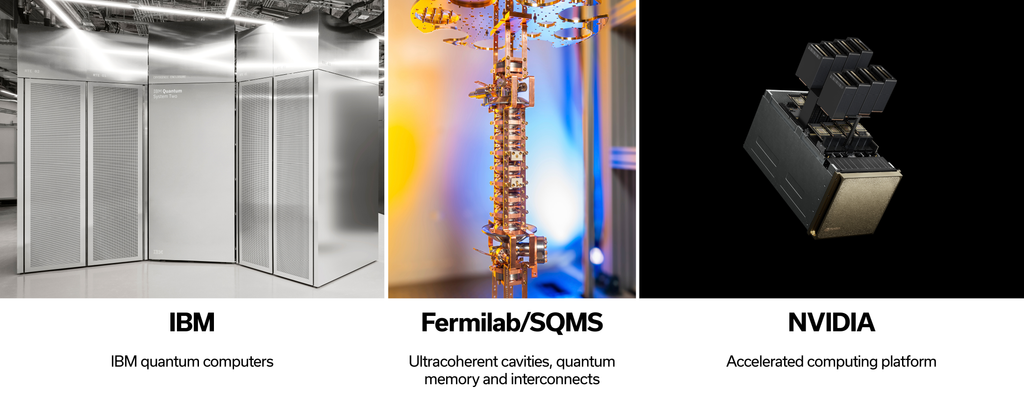
IBM, Fermilab, and NVIDIA Unveil Modular Quantum Co-Design Platform, Slurm HRES Integration, and GPU QEC Tools at SC26

At SC26, IBM, Fermilab, and NVIDIA unveiled a modular quantum-classical co-design platform, integrating GPUs with quantum processors. They also announced native quantum resource scheduling in Slurm 26.11 and new GPU-accelerated quantum error-correction (QEC) software, including the TCBP-JOBS algorithm and CUDA-Q QEC 0.9.0. These advancements aim to improve quantum computing workflows, error correction, and resource management in supercomputing environments.

Read at Quantum Computing Report

Asia Times Jeff Pao Geopolitics

China hoards Nvidia’s AI chips as US curbs remote access

Chinese companies are racing to stockpile Nvidia’s artificial intelligence (AI) chips and secure computing racks overseas as Washington closes loopholes in its export controls and rallies allies to guard sensitive technologies. In China, many fear that Nvidia founder Jensen Huang’s affair will spur Washington to crack down on chip smuggling and pass a bill regulating

Read at Asia Times

ABC News

Trump administration moves to block China from indirect access to American AI technology

The Trump administration has issued new rules to restrict remote access to advanced U.S. computing chips and servers

Read at ABC News

Quantum Computing Report Mohamed Abdel-Kareem

IBM and AMD Open-Source Pelagos GPU Decoder Framework for Large-Scale qLDPC Error Correction Simulations

IBM and AMD have open-sourced Pelagos, a GPU-accelerated quantum error-correction (QEC) decoding framework for evaluating qLDPC codes at supercomputing scale. This release, announced at SC26, aims to advance quantum computing through vendor-neutral, efficient error correction, building on a joint QEC co-design platform. Pelagos offers significant speedups and efficient multi-GPU orchestration, enabling large-scale simulations crucial for fault-tolerant quantum computing.

Read at Quantum Computing Report

arXiv (research papers) José Daniel Viqueira

Benchmarking memory and nonlinear processing capacity of quantum recurrent neural networks for time series prediction

Quantum machine learning has emerged as a promising approach to time series prediction. While quantum reservoir computing has been widely explored for this setting, variational quantum models tailored to sequential data remain comparatively understudied, largely because they are difficult to train. In this work, we present a rigorous benchmark of variational quantum recurrent neural networks (QRNNs) on time series prediction tasks, focusing on two key capabilities: memory…

Read at arXiv (research papers)

The Quantum Insider Mohib Ur Rehman

AQSolotl Reports 6.94-Microsecond Latency in NVIDIA NVQLink Integration Test

Insider Brief PRESS RELEASE — AQSolotl, a developer of quantum control systems, today announced initial results from integrating NVIDIA NVQLink into its Chronos-Q platform. Tests connecting Chronos-Q with NVIDIA DGX Spark recorded a minimum round-trip latency of 6.94 microseconds across 1,000 requests. Quantum processors rely on classical computing to control and fine-tune their operations. NVQLink

Read at The Quantum Insider

The Hill Julia Shapero Geopolitics

Trump administration seeks to restrict China's remote chip access after Nvidia scandal

The Trump administration is placing new restrictions on overseas data centers that provide China with remote access to computing power from advanced AI chips, after a high-profile spy scandal prompted new scrutiny of U.S. export restrictions. The Bureau of Industry and Security (BIS), which manages export controls, announced a new rule Monday aiming to "ensure...

Read at The Hill

The Quantum Insider Mohib Ur Rehman

IBM, NVIDIA and Fermilab Plan Modular Quantum Computing Platform

Insider Brief PRESS RELEASE — IBM (NYSE: IBM) today announced plans to collaborate with NVIDIA and Fermi National Accelerator Laboratory (Fermilab) to advance the integration of quantum and classical computing and explore how these technologies can scale together in the modular architectures that will define fault-tolerant quantum computers. The work will span developing new scientific

Read at The Quantum Insider

NVIDIA Blog Sam Stanwyck SI

NVIDIA Expands Slurm to Bring Quantum Computing Into Supercomputing

Quantum processor deployments at supercomputing centers have grown nearly sevenfold over the past five years, with nearly 30 supercomputing centers around the world now in the process of deploying over 50 quantum processors. Many of these centers use Slurm to run scientific supercomputing workloads, so expanding its support for quantum processors builds on familiar workflows

Read at NVIDIA Blog

NVIDIA Blog Brett Murray SI

CUDA at 20: How the Platform Transformed Scientific Computing

This week at SC26, NVIDIA is marking two decades of CUDA by honoring the researchers, developers and engineers who helped make GPU computing a foundation for modern science and AI. CUDA’s 20th anniversary presents an occasion to reflect across computing eras, from the people who wrote the very first CUDA programs to the AI developers

Read at NVIDIA Blog

arXiv (research papers) Bolin Zhang

SCOPE: A Physical Execution Latency-Guided Quantum Circuit Compilation Framework

Quantum computing requires compilers to translate algorithms represented in the quantum circuit model into unitary operations supported by physical devices. Limited coherence time makes physical execution latency an important compilation objective. Gate fusion can shorten pulses, but gate count and depth do not capture fused targets' control demands. Evaluating every candidate with quantum optimal control (QOC) would embed pulse optimization in structural search. We present…

Read at arXiv (research papers)

Older stories