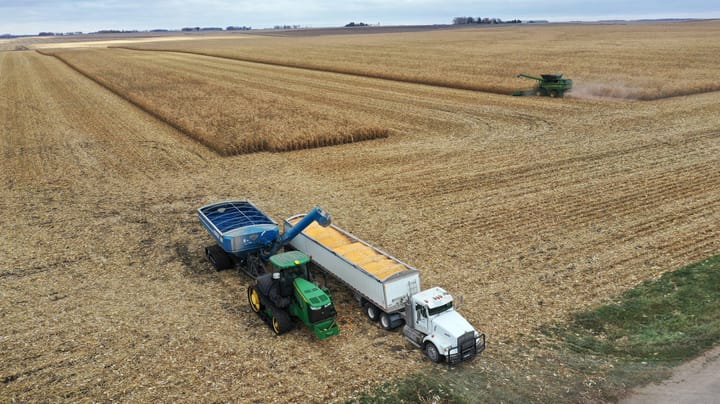
Fields: space, quantum, biotech, agritech, IoT and robotics

Science and technology fields in one place: space, quantum technology, biotechnology, agritech, the Internet of Things and robotics, with news from the specialist press and research from journals and arXiv. Each field has its own page in the Fields menu.

Phys.org Quantum Physics

Repeatable laser measurements reveal 'forbidden' vibrations in single molecules without destroying them

The possibility of controlling "forbidden" excitations of vibrations in molecules could form the basis of extremely accurate clocks, quantum bits and precise tests of the fundamental laws of physics. Researchers at the University of Basel have now identified and controlled such "forbidden" transitions in single isolated nitrogen molecules without destroying them.

Read at Phys.org Quantum Physics

Space.com Joe Rae Space

How to watch 'We Chose to Go to the Moon' online — stream space race stage show from anywhere

How to stream "We Chose to Go to the Moon", a live broadcast of the dazzling new stage retelling of the space race story.

Read at Space.com

Universe Today Evan Gough Space

Automated Assembly in Space is the Future and NOM4D is Showing the Way

The ability to build large structures in space is maturing. The ISS, Mir, and Tiangong were built in space from pre-constructed modules, but a new program called NOM4D is taking space construction to the next level. It recently showed that a simple robot can create truss-like structures in space from premade components. Is the sky the limit for NOM4D?

Read at Universe Today

Space.com Tariq Malik Space

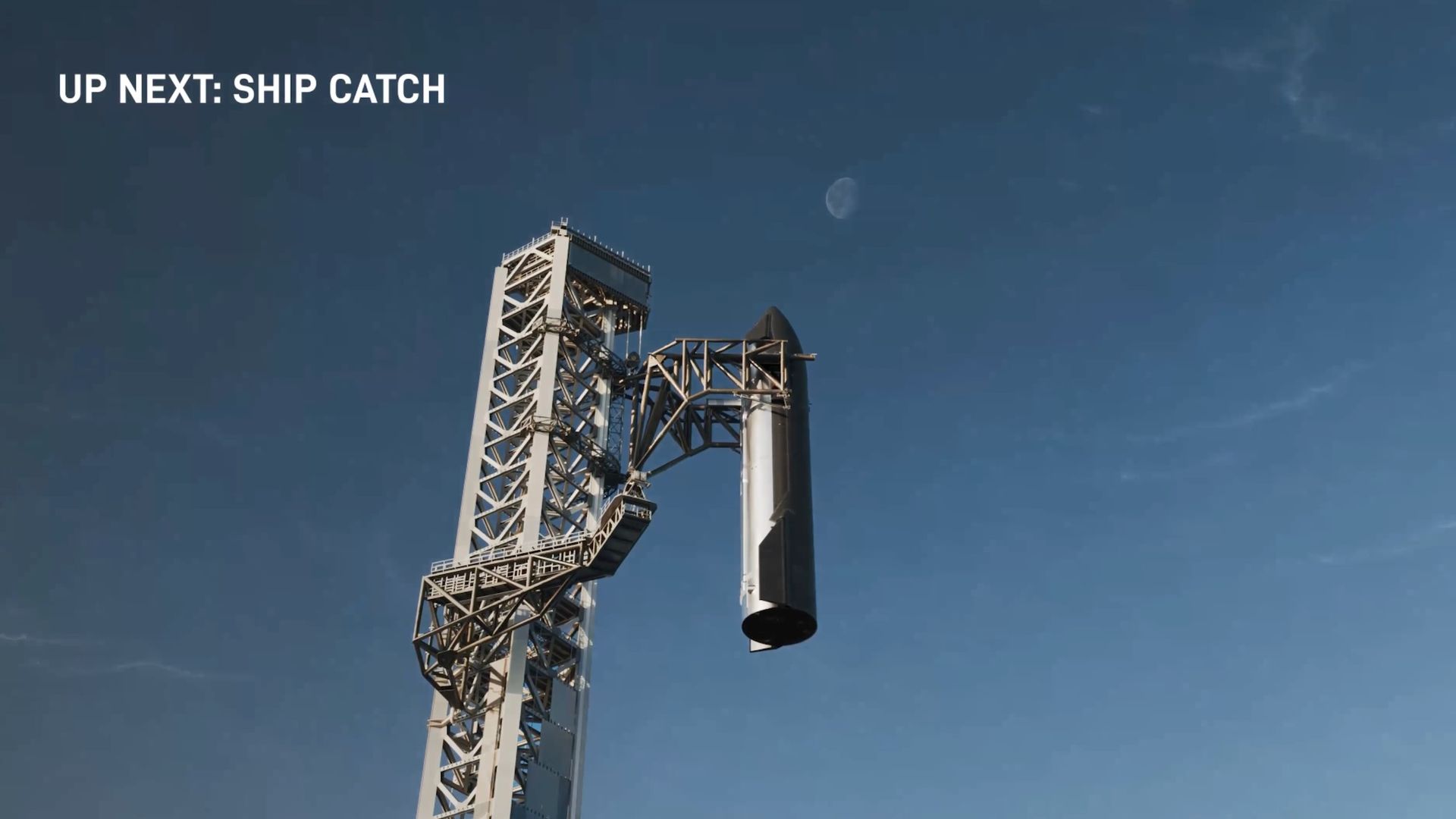
SpaceX Starship Flight 15 live updates: T-2 days to SpaceX's 1st-ever double Starship landing attempt

Follow live updates as SpaceX attempts its Starship Flight 15 test flight with first double landings.

Read at Space.com

Space.com Tariq Malik Space

SpaceX Starship Flight 15 live updates: Super Heavy rocket moved to launch pad for 1st Starship double landing test

Follow live updates as SpaceX attempts its Starship Flight 15 test flight with first double landings.

Read at Space.com

Universe Today Carolyn Collins Petersen Space

ALMA Reveals a Jet of Cool Gas from a Microquasar

There's a strange gamma-ray emitter in the Large Magellanic Cloud that has astronomers stumped about its source. It lies within the ashes left behind by a supernova that created a compact object that's part of the system. The supernova remnant provides some evidence for the emissions, but not the whole story.

Read at Universe Today

NASA Science Space

Microbiology, Spacesuits, and Cargo Mission Preps Keep Crew Busy

Microbiology and spacesuit maintenance kept the Expedition 75 crew busy aboard the International Space Station on Tuesday. The orbital residents are also preparing for upcoming cargo missions at the orbital outpost.

Read at NASA Science

NASA Science Space

NASA Invites Media, Public to Join Voyager 1 One-Light Day Activities

Launched nearly 50 years ago in 1977, NASA’s Voyager 1 on Wednesday, Nov. 18 will have traveled one light-day from Earth, which is more than 16 billion miles (25.9 billion kilometers). Voyager 1 is the most distant human-made object, and any light from Earth would take 24 hours to reach the spacecraft. NASA will highlight

Read at NASA Science

The Verge Andrew Liszewski Space

Starlink Mini 2 adds a swappable battery

SpaceX announced a new version of its all-in-one satellite internet terminal that integrates a dish, Wi-Fi router, and now a battery into a single device about the size of a laptop. According to some users on X who shared screenshots of invitations to order Starlink Mini 2, the dish is priced at $999, which includes

Read at The Verge

Universe Today Matthew Williams Space

First Direct Measurement of Cosmic Hydrogen Could Change How We Map the Universe

The MeerKLASS international collaboration achieves the first direct measurement of the large-scale clustering of cosmic hydrogen in the Universe.

Read at Universe Today

Space.com Keith Cooper Space

Uranus has a weird magnetic field that's stumped scientists for 40 years — we may finally know why

The lopsided magnetic fields of Uranus and Neptune could be the product of extreme conditions inside the planets, increasing the electrical conductivity that enhances the dynamo effect.

Read at Space.com

Payload Victoria Woodburn Space

Rep. Mike Haridopolos on NASA’s Future After the Blue Wave

Rep. Mike Haridopolos survived the Blue Wave—and he’s optimistic bipartisan support for NASA’s Artemis program means the program will survive the political upheaval on Capitol Hill as well.

Read at Payload

BBC World Geopolitics

Makers of GLP-1 drugs ordered to add warnings about rare eye condition that can lead to blindness

The US Food and Drug Administration says Ozempic, Wegovy, and other weight-loss drugs must have labels about the condition, known as NAION.

Read at BBC World

The Decoder Maximilian Schreiner SI

Nvidia's model GR00T 2 watches humans on video, then imagines itself as the robot

Nvidia's new AI model GR00T 2 is designed to teach robots new tasks without laborious teleoperation. Instead, the system transfers human hand movements from videos to robotic arms, trained on about 400,000 hours of video footage. Success rates still vary widely, though, ranging from 10 to 80 percent depending on the task. The article Nvidia's model GR00T 2 watches humans on video, then imagines itself as the robot appeared first on The Decoder.

Read at The Decoder

Farm Progress Eric Braun

Agriculture Future of America celebrates 30 years

AFA has given $11.5M in scholarships, bridging FFA, college and agribusiness careers for students nationwide.

Read at Farm Progress

Quantum Computing Report Mohamed Abdel-Kareem

Quantinuum, RIKEN, and SoftBank Partner to Advance Quantum-AI Supercomputing and Domestic Fault-Tolerant Systems

Quantinuum, RIKEN, and SoftBank have partnered to advance quantum-AI supercomputing and develop fault-tolerant systems in Japan. This collaboration involves commercializing hybrid quantum-AI supercomputing using Quantinuum's Reimei H2 quantum computer, RIKEN's ROQUO GPU system, and Supercomputer Fugaku. The partnership also aims to create a "Made with Japan" fault-tolerant quantum computer and integrate quantum hardware with commercial AI data centers through SoftBank.

Read at Quantum Computing Report

The Quantum Insider Mohib Ur Rehman

Fermilab and CERN Begin Installation Work on DUNE Neutrino Experiment

Insider Brief PRESS RELEASE — Installation crews with the U.S. Department of Energy’s (DOE) Fermi National Accelerator Laboratory (Fermilab) and CERN, the European Organization for Particle Physics, are working alongside the Sanford Underground Research Facility (SURF) to begin building massive cryostats, giant insulated containers designed to hold liquid argon at an extremely cold temperature, for the leading-edge Deep Underground

Read at The Quantum Insider

The Quantum Insider Mohib Ur Rehman

QuiX Quantum Leads National Mission to Develop 100+ Qubit Photonic Quantum Computer

Insider Brief PRESS RELEASE — QuiX Quantum, a Dutch-German developer of universal photonic quantum computers, has been the Photonic Quantum Computing Mission awarded funding under Phase II of the PhotonDelta National Growth Fund (NGF) Integrated Photonics Programme. QuiX Quantum and seven partners awarded the photonic quantum computing mission to solve the challenges of scaling. Running

Read at The Quantum Insider

Farm Progress Ben Potter, Bruce Blythe

Corn prices soar on friendly WASDE data

USDA slashes per-acre yield estimates more severely than expected.

Read at Farm Progress

The Quantum Insider Mohib Ur Rehman

QuEra, Harvard and Anthropic Use AI to Reduce Quantum Circuit Resource Requirements

Insider Brief PRESS RELEASE — QuEra Computing, the leader in fault-tolerant quantum computing, today highlighted research with Harvard University and Anthropic showing that AI can design quantum circuits that require fewer computational resources. The findings show how advances in algorithm design could expand what future fault-tolerant quantum computers can accomplish with a given hardware capacity.

Read at The Quantum Insider

NASA Wendy K. Avedisian Space

NASA to Welcome Expedition 74 Astronauts Home at Space Center Houston

NASA will welcome home the Expedition 74 crew during a public event at Space Center Houston following their return from a long-duration mission aboard the International Space Station. NASA astronauts Jessica Meir, Jack Hathaway, and Chris Williams; ESA (European Space Agency) astronaut Sophie Adenot; and Roscosmos cosmonauts Sergey Kud‑Sverchkov and Sergei Mikaev will share mission

Read at NASA

Quantum Computing Report Mohamed Abdel-Kareem

RIKEN Upgrades Reimei-Fugaku Hybrid Quantum Platform with 56-Qubit Quantinuum H2 Processor

RIKEN has upgraded its Reimei-Fugaku hybrid quantum platform with Quantinuum's 56-qubit System Model H2 trapped-ion quantum computer, replacing the 20-qubit H1. This upgrade enhances physical capacity, gate fidelity, and computational active space, allowing for more complex quantum chemistry simulations. The platform links Quantinuum's quantum computer directly to the Fugaku supercomputer, creating a powerful testbed for hybrid quantum-classical computing.

Read at Quantum Computing Report

Quantum Computing Report Mohamed Abdel-Kareem

Quantinuum and RIKEN Execute End-to-End Hybrid Quantum-HPC Chemistry on Fugaku and Reimei

Quantinuum and RIKEN have successfully integrated Japan's Fugaku supercomputer with Quantinuum's Reimei quantum processor to perform hybrid quantum-classical chemistry simulations. This collaboration, detailed in an arXiv preprint, achieved accurate biomolecular excited-state energy calculations, showcasing a new workflow for complex chemical reactions. The project highlights direct API orchestration, error detection, and hybrid data exchange between a supercomputing center…

Read at Quantum Computing Report

Phys.org Space Space

Tiny solar whirlpools may hold the secret to the sun's blistering corona

For the second time in a few weeks, we're writing about research into the temperature gap between the sun's surface and its corona. More and more data from various missions continue to feed this wave of discovery. A new paper by Katariina Nykyri of Embry-Riddle, recently published in The Astrophysical Journal Letters, adds to this growing body of work. She argues that millions of tiny whirlpools scattered across the sun's surface could be the energetic engine driving that…

Read at Phys.org Space

Phys.org Space Space

Simulated moon dust turned into LEGO-like blocks for settlements

Permanent structures on the moon could start with something already there: lunar dust. New research from the University of Arkansas shows that pure regolith, the loose material that covers the moon, could be 3D-printed into LEGO-like bricks. Using it for construction could reduce what NASA needs to send from Earth as it works toward future lunar settlements.

Read at Phys.org Space

The Quantum Insider Matt Swayne

Draft EU Quantum Act Would Favor European Suppliers, Set Computing and Security Targets

Insider Brief If Winston Churchill were here today, he might say an “ion curtain” is descending across the Continent. Europe’s proposed Quantum Act would generally reserve public purchases of quantum technology and participation in strategic projects for EU-controlled companies, while leaving a door open to qualifying international partners, according to a draft of the document

Read at The Quantum Insider

GEN (Genetic Engineering & Biotechnology News) Sophia Ktori

How Breast Cancer Chemotherapy May Impact Biological Aging and Loss of Healthy Life Years

Chemotherapy helps many women survive breast cancer, but the results of new research suggest that chemotherapy may also accelerate biological aging beyond chronological age and increase the risk of earlier death from other causes.

Read at GEN (Genetic Engineering & Biotechnology News)

Quantum Computing Report Mohamed Abdel-Kareem

UK Unveils £189 Million Quantum Deployment Package Spanning Networking Testbeds, Commercialization, and Procurement

The UK government has announced a £189 million quantum deployment package to advance quantum technologies from research to practical application. This includes £35 million for quantum networking testbeds, a £12 million commercialization consortium called the UK Quantum SuperConnector, and £138 million for cross-government quantum procurement. These initiatives build upon a decade of investment, aiming to establish the UK as a leader in quantum technology with a focus on…

Read at Quantum Computing Report

Universe Today Evan Gough Space

Why Aging Stars Suffer A Sudden Luminosity Dip

When low-mass stars like our Sun age, they leave the main sequence and follow the Red Giant Branch. As they ascend this branch, their luminosity steadily increases. But there's a sort of hiccup in the path called the RGB luminosity bump, where their luminosity suddenly dips. Astrophysicists have struggle to explain this, but one astrophysicist might have the answer.

Read at Universe Today

The Decoder Maximilian Schreiner SI

Google DeepMind's Gemini Robotics 2.5 scores 96 percent sorting metal parts in a Mercedes-Benz assembly pilot

Google Deepmind introduced Gemini Robotics 2.5, a new control model for robots, and tested it with Apptronik on active Mercedes-Benz production lines in Hungary and Germany. The humanoid robot Apollo 2 sorted metal parts there with a reported success rate of 96 percent. The article Google DeepMind's Gemini Robotics 2.5 scores 96 percent sorting metal parts in a Mercedes-Benz assembly pilot appeared first on The Decoder.

Read at The Decoder

Older stories