Fields: space, quantum, biotech, agritech, IoT and robotics
Science and technology fields in one place: space, quantum technology, biotechnology, agritech, the Internet of Things and robotics, with news from the specialist press and research from journals and arXiv. Each field has its own page in the Fields menu.
Daejeon, Republic of Korea – October 14, 2026: South Korean space electric propulsion startup Cosmo Bee plans to conduct an in-orbit flight test of its 10 mN-class Honeybee Hall thruster
Water Lines: A bill working its way through Congress could streamline energy and water projects vital to agriculture, but the clock is ticking on actually getting the bill passed.
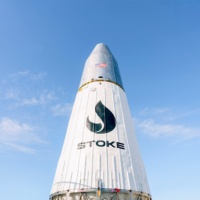
The agreement is expected to give those looking for a ride to space another option, as SpaceX prepares to sunset its Falcon 9 rideshare programs around 2029.
Dark matter continues to evade direct detection. Its slower-moving particles might leave signals too faint for detectors to register, yet be more easily captured by planets and stars. As they accumulate inside these bodies, they could produce effects that existing instruments would allow us to search for.
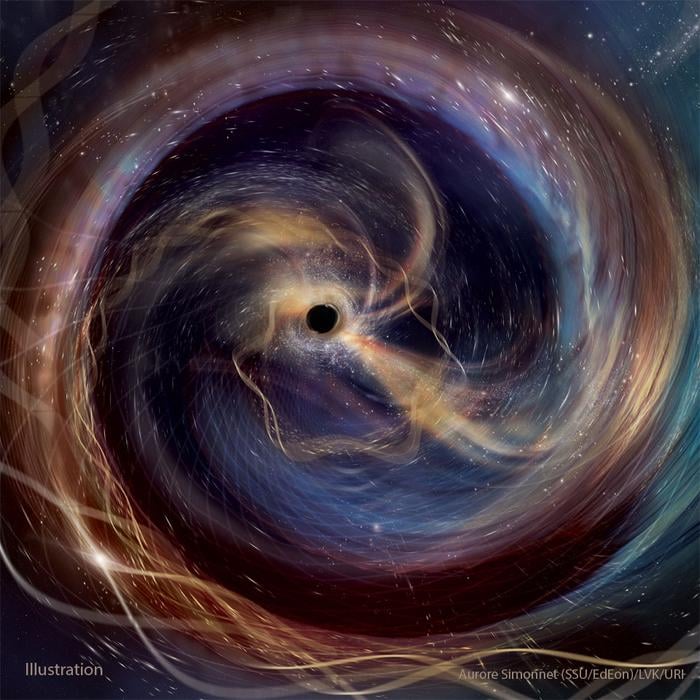
Black holes remain some of the most mysterious and awe-inspiring celestial objects ever studied. This primarily comes from the fact that they literally can’t be observed unless they interact with something in its surrounding environment, most notably a star. Adding to their mystery, several types of black holes exist, including free-floating black holes that drift independently throughout space, stellar-mass and are produced from exploding stars, and supermassive black holes…
Pasqal has developed an integration that allows Slurm 26.11 to schedule jobs across both GPUs and QPUs (quantum processing units), utilizing NVIDIA's Slurm Hierarchical Resources and the Quantum Resource Management Interface (QRMI). This system automates the management of neutral-atom QPUs alongside classical GPUs, enabling multi-stage batch pipelines that can validate quantum simulations on GPUs before executing them on physical quantum hardware. This advancement…
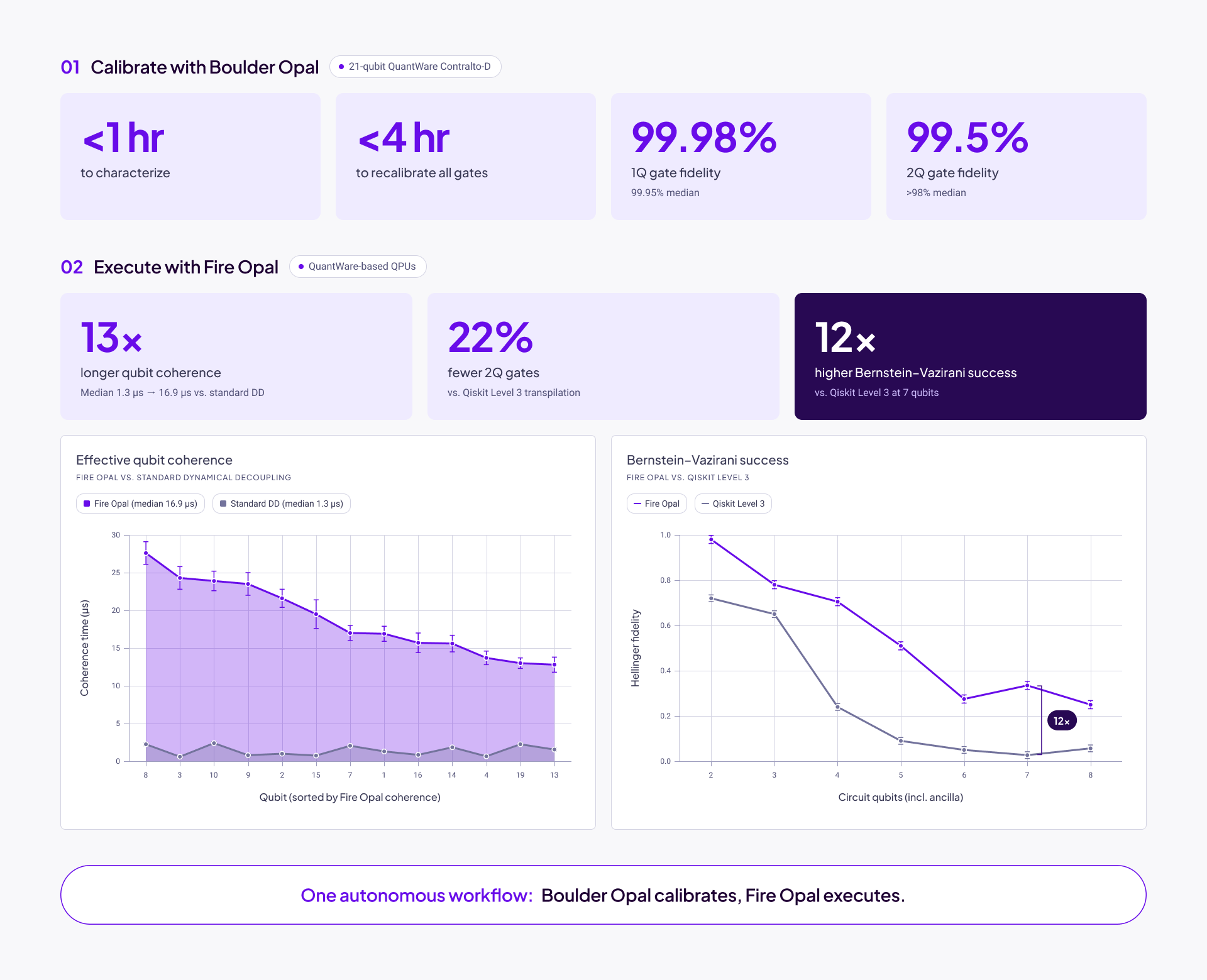
Q-CTRL has integrated its Boulder Opal and Fire Opal software into a single platform for end-to-end quantum infrastructure. This unified system automates the entire quantum computing lifecycle, from processor bring-up to workload execution, significantly reducing manual effort and improving performance. The technology is currently live on Elevate Quantum’s Q-PAC system and will be accessible via cloud in December 2026.
Tesla and SpaceX are targeting Terafab chip production at their planned semiconductor complex in Grimes County, Texas, during the third or fourth quarter of 2028. Elon Musk outlined the timetable during SpaceX’s third-quarter earnings call on 20 October 2026, saying that ASML and other semiconductor equipment suppliers were accelerating deliveries to support the project. Musk
At SC26, Alice & Bob detailed how their cat-qubit quantum processors integrate with NVIDIA’s Slurm 26.11 workload manager via the Quantum Resource Management Interface (QRMI). This collaboration with STFC Hartree Centre, IBM, and Pasqal allows Alice & Bob’s Felis cloud API to connect directly to standard supercomputing schedulers. The new architecture leverages Slurm 26.11's native Hierarchical Resources (HRES) support, enabling seamless quantum hardware integration without…
Quantinuum's Nexus developer platform and Hybrid Workflow Runtime (Tierkreis) integrate quantum programming with supercomputing workload managers like Slurm, as demonstrated at SC26. This integration coordinates multi-stage scientific pipelines, preventing classical node idling while quantum jobs await processing. They also showcased a joint electronic-structure workflow with RIKEN, achieving lower ground-state energies for a 12-atom hydrogen chain through quantum-sampled…
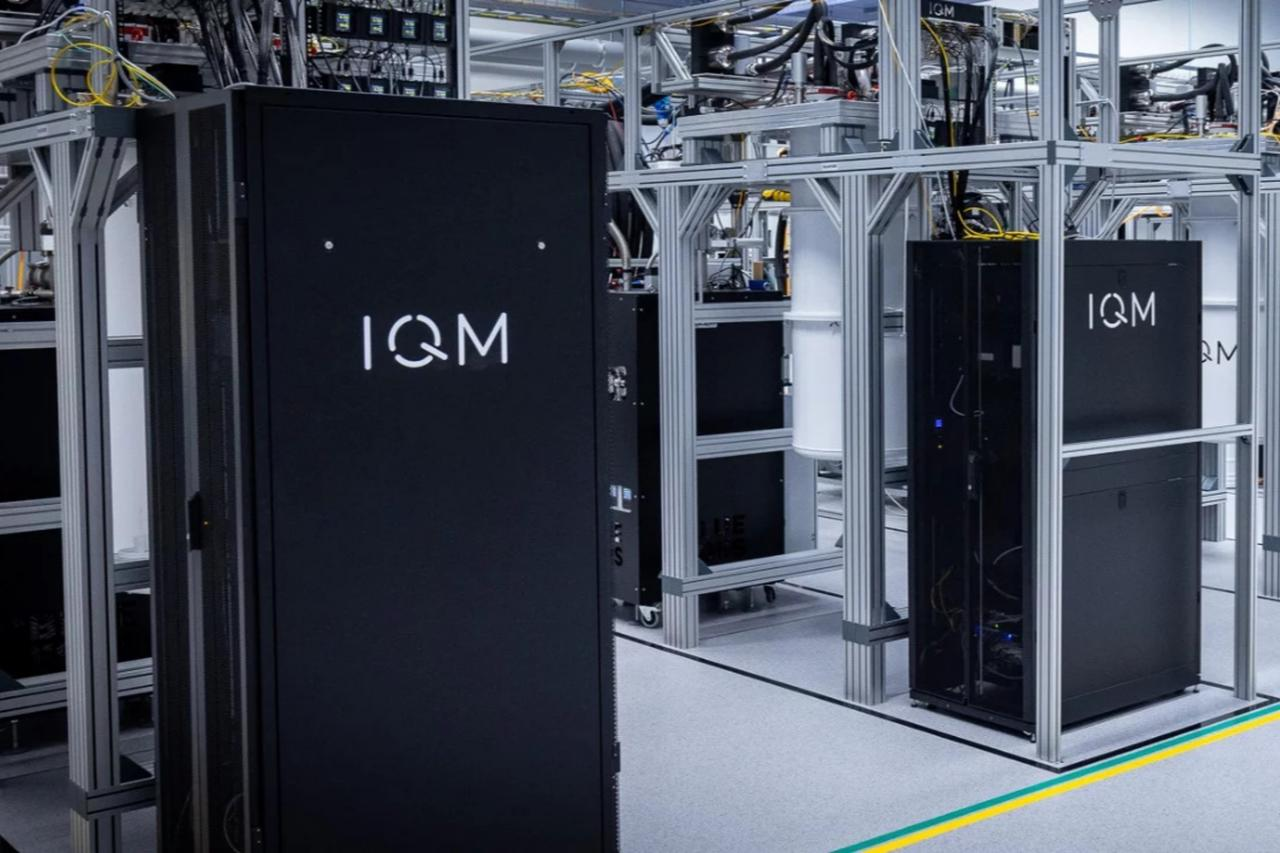
Türkiye's Scientific and Technological Research Council (TÜBİTAK) has partnered with IQM Quantum Computers to deploy a 54-qubit superconducting quantum computer, the IQM Radiance R3 system, in 2027. This system will provide sovereign quantum computing capacity for Turkish universities, research institutes, and private sectors, integrating with TÜBİTAK's existing high-performance computing environment. The deployment signifies an expansion of Türkiye's quantum infrastructure…
IQM Quantum Computers and Munich Quantum Software Company (MQSC) have integrated IQM superconducting processors into NVIDIA’s open-source Slurm 26.11, enabling quantum processing units (QPUs) to be scheduled as native supercomputing resources. This was achieved using Slurm 26.11’s Hierarchical Resources (HRES) plugin framework and the Quantum Device Management Interface (QDMI). This integration simplifies the allocation, reservation, and accounting of QPU access within…
SpaceX brought back its Starship rocket's second stage today for a first-ever midair capture at its launch pad, capping a record-setting orbital flight test.
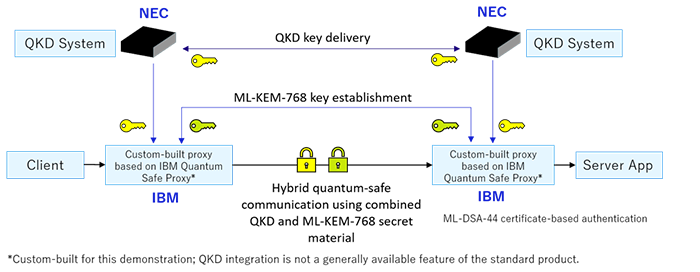
NEC Corporation and IBM Japan successfully demonstrated a hybrid quantum key distribution (QKD) and post-quantum cryptography (PQC) TLS proxy architecture. This trial, conducted between July and September 2026, integrated NEC's QKD hardware with IBM Quantum Safe Proxy, allowing for multi-vendor cryptographic interoperability without modifying existing enterprise applications. The setup combines QKD and PQC for enhanced session security, with future plans for commercial…
When the universe was less than 700 million years old, the supermassive black hole powering a quasar called J0313-1806 had already grown to about 3 billion times the mass of the sun. It is one of the most extreme examples of a puzzle that has occupied astrophysicists for two decades: How did supermassive black holes grow so big so quickly?
In lab-grown human neurons and organoids carrying CHD8 or SCN2A mutations, researchers reduced organoid overgrowth and moved neuronal electrical activity closer to wild-type levels.
Euclid was launched into space in July 2023 to explore two of astronomy's biggest mysteries: dark matter and dark energy. The space telescope's first major data release covers some 1,900 square degrees of the sky, equivalent to around 14% of the area planned for the six-year mission and around 5% of the total sky. It is an unprecedented collection of visible and near-infrared observations.
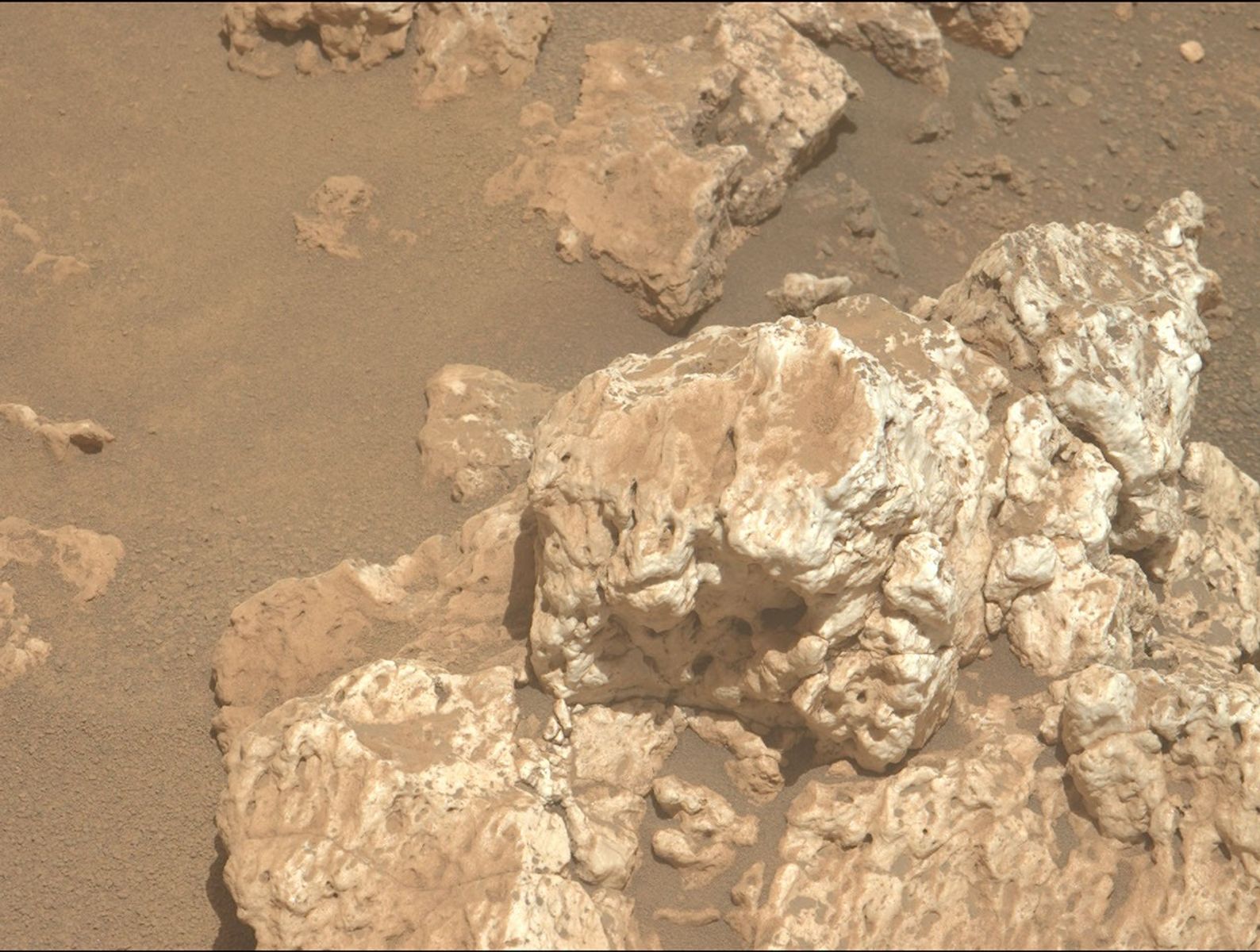
Written by Candice Bedford, Research Scientist at Purdue University Date: Nov. 16, 2026 During the Perseverance rover’s investigation of “Idubi” — an area of ancient Martian crust exposed in the “Lac de Charmes” region, outside of Jezero crater — the Perseverance rover team has been captivated by a cluster of eerily bright, light-toned rocks in
Using high-resolution observations from the New Vacuum Solar Telescope (NVST), a research team from the Yunnan Observatories of the Chinese Academy of Sciences (CAS) has systematically studied the kinematic properties of dynamic fibrils around a sunspot and the mechanisms that drive them. The study was published in The Astrophysical Journal on Nov. 10.
Researchers from the Okinawa Institute of Science and Technology (OIST) have created a spin-based microwave amplifier that operates near absolute zero, boosting signals by more than 1,000-fold while adding noise close to the bare minimum required by the laws of physics. As a more robust alternative to current state-of-the-art devices, the OIST device can handle much stronger signals and operate in magnetic fields, paving the way for practical quantum computing and…
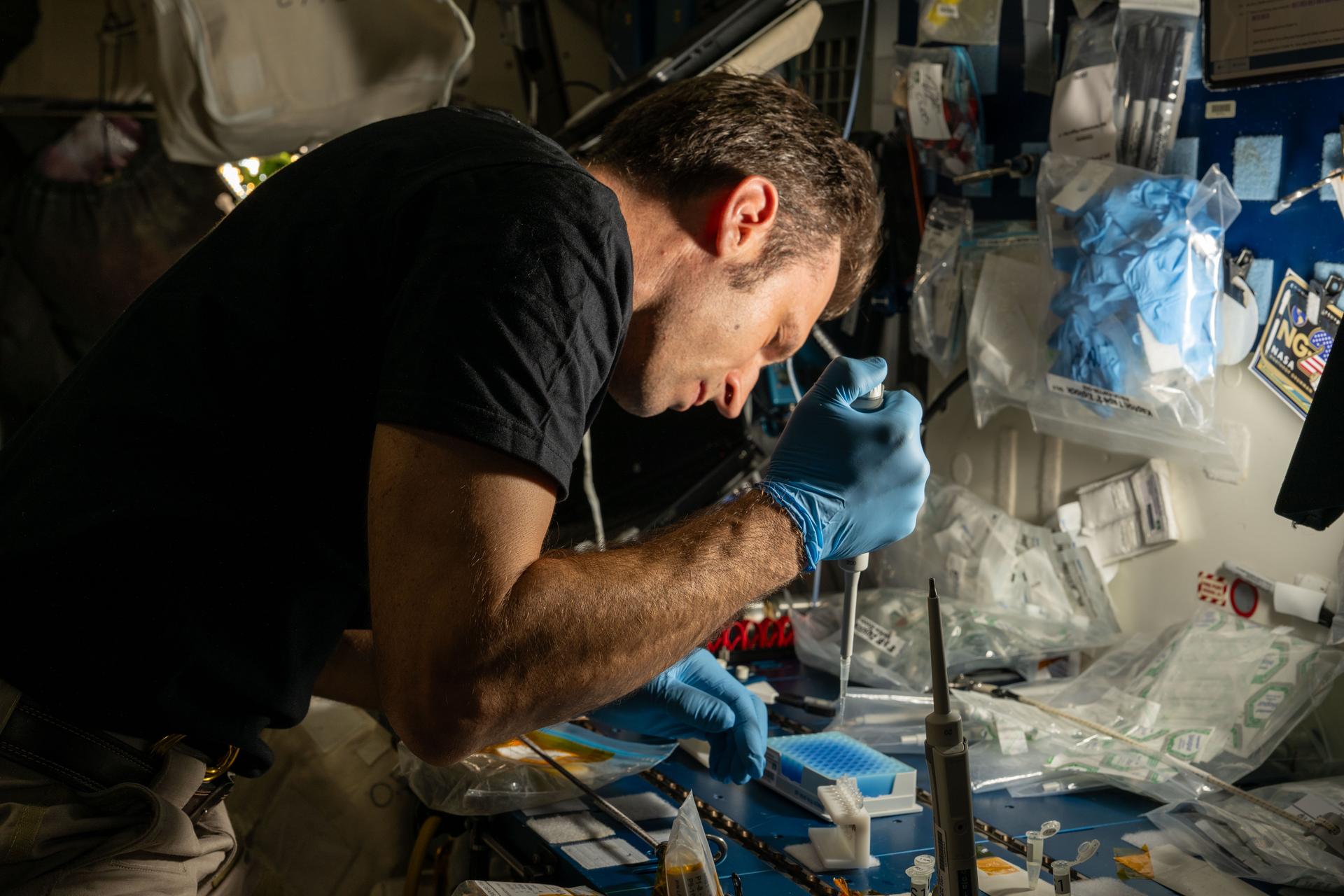
Biotechnology research including growing human lung cells and managing blood flow in space awaited the Expedition 75 crew on Monday. Spacesuit checks, cargo packing, and Earth observations rounded out the busy schedule aboard the International Space Station at the beginning of the week.
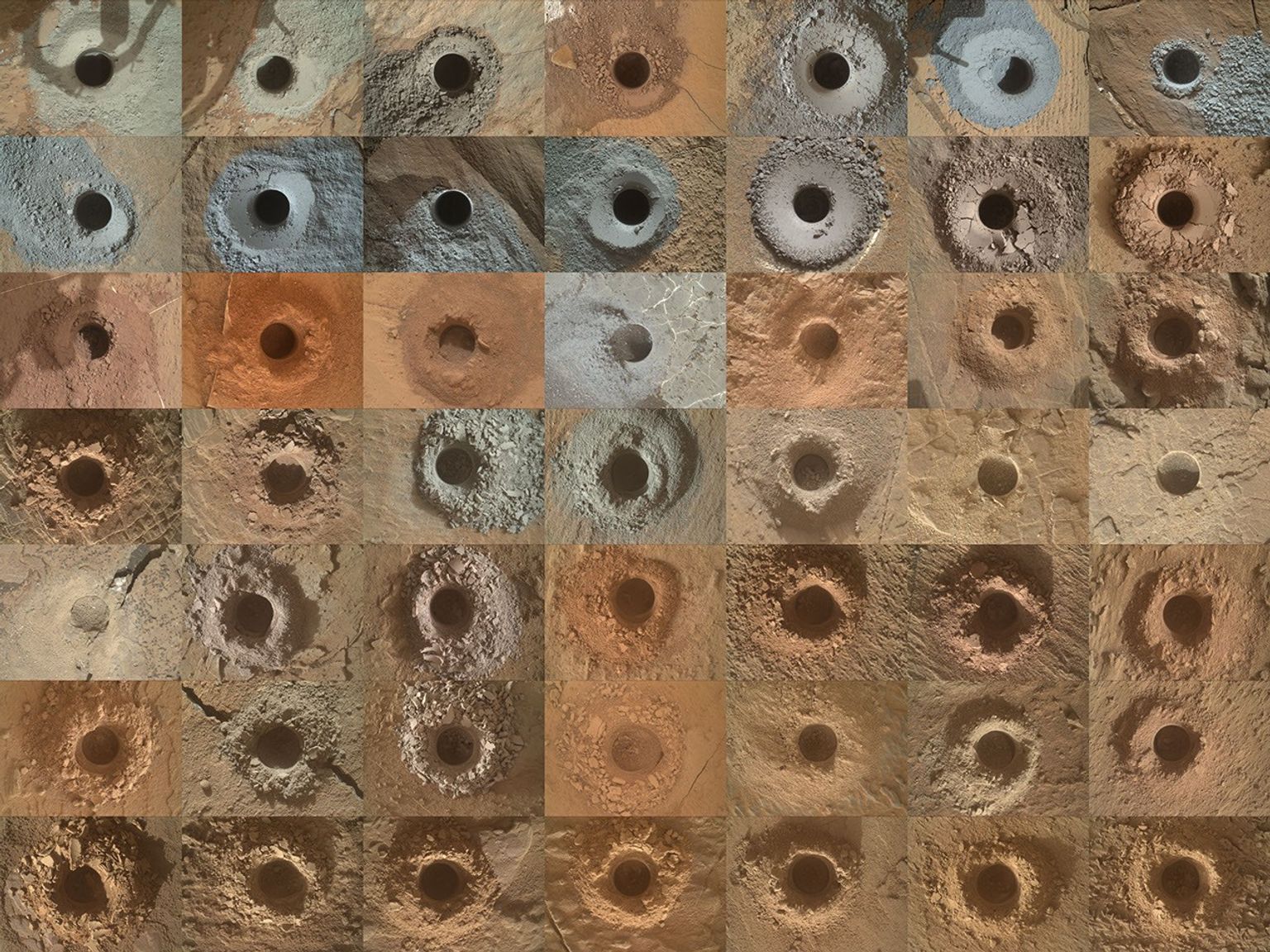
Description This collage shows 49 drill holes captured by NASA’s Curiosity Mars rover as of November 2026. Each hole represents a sample collected from rocks on the Martian surface; Curiosity’s drill, located on the end of its robotic arm, drops pulverized rock samples into instruments in its belly that analyze their composition. These images were
In this GEN podcast, the third in a series, LabVantage’s Denise Bell discusses how laboratories can reduce operational fragmentation and build connected, scalable operations.
Researchers at the UCLA Samueli School of Engineering and Auburn University have achieved a scientific first: They measured atomic vibrations that carry heat and sound waves, and connected them to a quantum property called spin, which is a way of characterizing a subatomic particle's built-in magnetism.