Neoliberalism and its critics: research

172 research items

Journal articles, academic blogs, think-tank reports and papers in this section, newest first. Back to the news.

Verfassungsblog Nahuel Maisley Geopolitics

Resisting the Chainsaw

Since Javier Milei took office in December 2023, the budget of Argentina’s national universities has lost more than a fifth of its value in real terms. University funding has fallen from 0.72% to about 0.53% of GDP, and by May 2026, university salaries had lost more than a third of their purchasing power. These numbers reflect a hostility towards public universities that austerity alone does not explain. Milei, like many of his peers on the new right around the world, treats…
Read at Verfassungsblog

Phenomenal World Isabella Weber Geopolitics

A Politics of Essentials

An excerpt from Isabella Weber’s new book Anti-Fascist Economics. For decades, mainstream economics has diverted attention away from the problems it cannot solve—even a problem as fundamental as survival. In the 1950s, economists researching general equilibrium theory set out to demonstrate that decentralized market decisions, guided only by prices, would lead to a “Pareto optimal”

Read at Phenomenal World

Social Europe Tamara Popic and Alexandru D. Moise Geopolitics

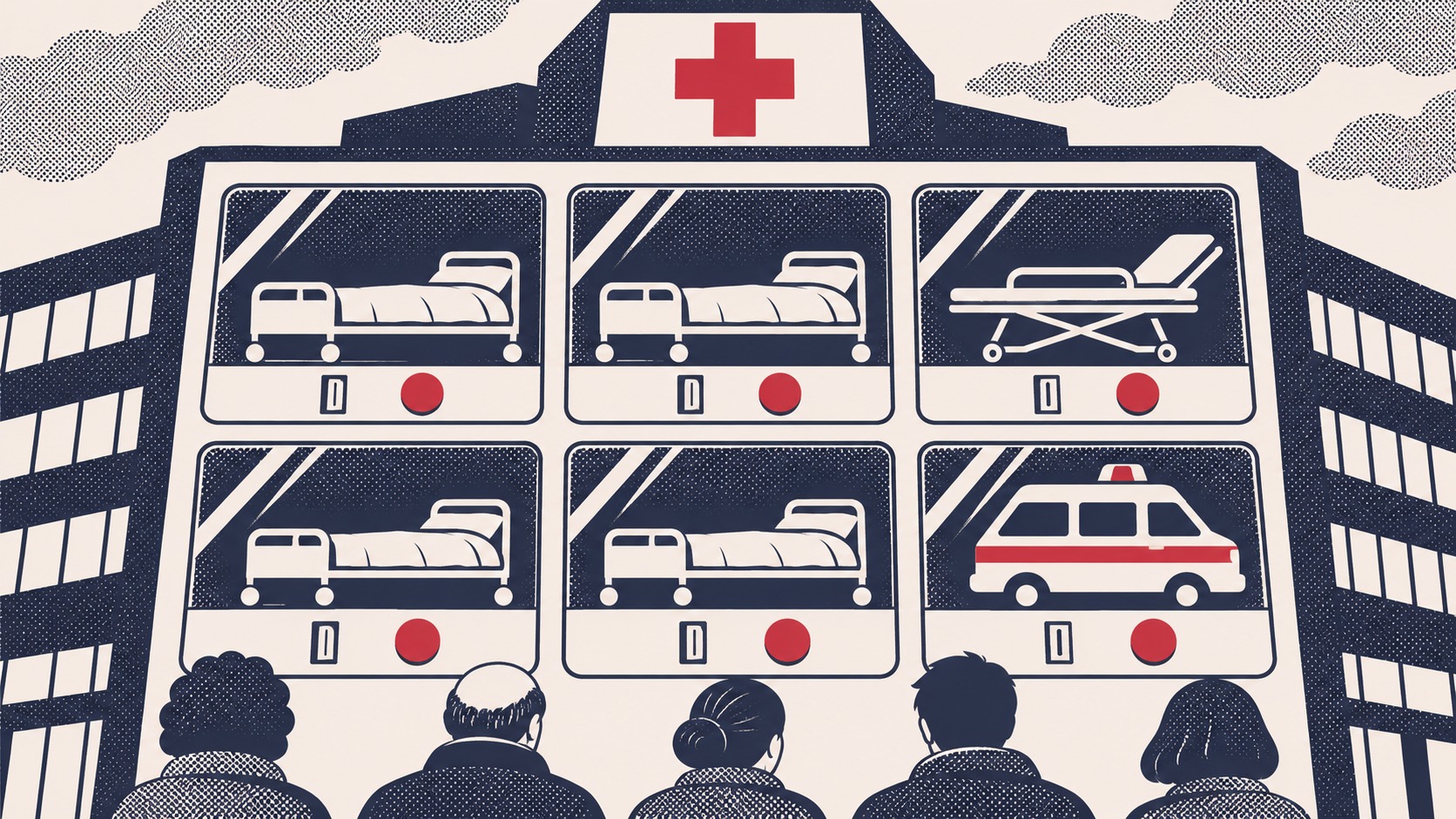
Healthcare Privatisation Leaves a Bitter Aftertaste

Hungarian voters scrapped doctor fees by referendum, and data from 30 countries show why charges sour opinion.

Read at Social Europe

Verfassungsblog Peer Zumbansen Geopolitics

Tech Power’s Violence

As the lament swells around democratic crisis and the rise of the right, with populist moped-riders sweeping elections and traditional political parties left “shocked”, attention increasingly turns to the actual processes and spaces of political deliberation and their corrosion through social media and artificial intelligence (AI). Contentions around “too much screen time”, however, fall short of addressing both the significant place that social media holds in…

Read at Verfassungsblog

Adam Smith Institute (free-market) Madsen Pirie Geopolitics

I'm betting on Poland

It shows good growth achieved by sensible policies and a willingness to work. It is rising faster than most competitors, and will likely soon overtake many of them, including ourselves, in living standards. Poland is a strong bet. Few countries have done so much, so fast, from such a low base. In 1994, Poland’s GDP per capita at purchasing power parity was $7,040, less than a third of Japan’s. By 2024 it stood at $51,263, just behind Japan’s $52,039. The IMF and World Bank…

Read at Adam Smith Institute (free-market)

Journal articles (OpenAlex) Faris Al-Fadhat · Third World Quarterly Geopolitics

Internationalised oligarchy and selective neoliberal reform: the political foundations of Indonesia’s global capitalism

Since the Asian financial crisis, major Indonesian conglomerates have increasingly reorganised accumulation across national boundaries through foreign production, acquisitions, joint ventures and regional corporate networks. Nevertheless, such internationalisation poses a political and commercial problem: how does capital historically constituted through concentrated ownership and privileged relations with state power reproduce itself across different political economies?…

Read at Journal articles (OpenAlex)

Law & Liberty Samuel Gregg Geopolitics

Civilizing Markets

Samuel Gregg discusses the moral foundations necessary to a flourishing commercial society on the Law & Liberty Podcast.

Read at Law & Liberty

Journal articles (OpenAlex) Qiulin Ke, Zhen Ye · Transactions in Planning and Urban Research Geopolitics

C-REITs and infrastructure financialization in China: A conjunctural analysis of state capitalism and state entrepreneurialism

China’s publicly listed infrastructure REITs (C-REITs), launched in 2021, represent an important innovation in infrastructure finance and capital market reform. Their emergence raises important questions about the changing relationship between the state, market creation, and infrastructure financialization in China. Existing studies have variously interpreted C-REITs as an extension of state capitalism, an expression of state entrepreneurialism, or evidence of growing…

Read at Journal articles (OpenAlex)

Stimson Center Kaitlyn Hashem Geopolitics

They Don’t Make Great Powers Like They Used To

An analysis of the unraveling postwar international order, rising great-power competition, and the urgent need for renewed global stewardship and cooperation.

Read at Stimson Center

Adam Smith Institute (free-market) Tim Worstall Geopolitics

Let’s have that glorious poverty of peasantry back!

One of the old lefty tropes is about to have another run: The English peasant died during the enclosure of our common land. Enclosure, codified in a succession of Acts of Parliament through the 17th, 18th and 19th centuries, not only privatised land across England, but installed a mindset in land management that took us away from usufruction (use rights) to dominion (exclusionary ownership rights). It tore to shreds the peasant traditions that valued sustainability…

Read at Adam Smith Institute (free-market)

Journal articles (OpenAlex) Julie Walsh, Maria Teresa Ferazzoli · Social Sciences Geopolitics

Hostile Environments in Times of Austerity: The ‘Generative Consequences’ for UK-Based Social Care Practitioners Working with Members of Migrant Families

Internationally, anti-migrant policy narratives claim that migrants add pressure to a nation’s welfare state provision to legitimise punitive bordering practices that exclude migrants from welfare state services. In this paper, we reject this perspective and argue that, conversely, hostile environments increase pressures on social care agencies providing welfare support to migrant families, pressures exacerbated in inadequately funded welfare states. Studies spanning…

Read at Journal articles (OpenAlex)

Journal articles (OpenAlex) Brad R. Taylor, Anita Louise Wheeldon · Higher Education Quarterly Geopolitics

Neoliberalism Against the Managerial University

ABSTRACT Critical work on higher education policy and governance often conflates neoliberalism and managerialism, reflecting their close association in contemporary universities. The neoliberal drive to produce market‐like outcomes has created the conditions for managerialism to flourish, with centralised accountability and control mechanisms justified on ostensibly neoliberal grounds. However, we draw on foundational neoliberal thinkers to argue that managerial practices…

Read at Journal articles (OpenAlex)

Journal articles (OpenAlex) Sinan Wang · Antipode Geopolitics

Street Furniture as an Assetizing Apparatus: Advertising Concessions, Public Maintenance and the Production of Neoliberal Urban Space in Glasgow

ABSTRACT Across British cities, everyday street infrastructure is increasingly sustained through revenue‐generating concessions that detach maintenance from direct municipal budgets. This article examines how street furniture in Glasgow has been incrementally reorganized as an assetizing apparatus under prolonged austerity. Drawing on micro political‐economic tracing of committee records, procurement documents and transport authority contracts, it shows how maintenance…

Read at Journal articles (OpenAlex)

Journal articles (OpenAlex) Rakhmat Hidayat, Muhammad Ilman Naafi'a · Globalisation Societies and Education Geopolitics

Autonomy by decree, sovereignty withheld: the neoliberal paradox of legal-entity universities in Indonesia

Indonesia’s legal-entity state universities, known as PTN-BH, are officially celebrated as autonomous, yet academics there report denser control than before. This article defines and explains that neoliberal paradox: autonomy expands discretion over institutional means while contracting authority over academic ends. Drawing on Robertson and Dale’s critical cultural political economy of education and Neave’s Evaluative State thesis, it analyses 47 laws, court decisions…

Read at Journal articles (OpenAlex)

Journal articles (OpenAlex) Tamara Metz, Nancy J. Hirschmann · Perspectives on Politics Geopolitics

Possessive Familialism and the Crisis of Democracy in the United States

Amid rising concern over a crisis of democracy in the United States, one point of political alignment across the political spectrum stands out: valorization of the family. This is especially striking because it would seem to conflict with the core ethos of the dominant neoliberal political rationality. We propose that both convergence and crisis are fueled by a logic of possessive familialism. Taking up recent feminist, Marxist, and critical analyses of neoliberalism to…

Read at Journal articles (OpenAlex)

Journal articles (OpenAlex) Huda Al Mulhem, Maura Pilotti, Khadija El Alaoui et al. · World Development Sustainability Geopolitics

David and Goliath: Volunteering and neoliberalism

Objectives Most research has assessed volunteerism in the individualistic socio-economic contexts of the Global North. The present study examines the motives behind volunteering in a country (Saudi Arabia) transitioning from a collectivistic socio-economic order, resting on patriarchy, to one driven by neoliberalism, striving for gender equity. In this mixed socio-economic context, unclear is the extent to which self-oriented motives, reflecting individualism, and…

Read at Journal articles (OpenAlex)

Monthly Review (Marxist) Monthly Review Press Geopolitics

Recently reissued: The Rainbow Challenge (Excerpt)

"Jesse Jackson’s first presidential primary race in 1984 should have been a wakeup call for the Democratic Party...."

Read at Monthly Review (Marxist)

Journal articles (OpenAlex) Janette Habashi · Childhood Geopolitics

Neoliberal criminalization of being a child: [Absence of] moral panic for Palestinian children

This paper analyzes the absence of moral panic surrounding the genocide of Palestinian children, challenging the Human Rights declarations. This absence is structural, produced through the intersection of settler colonialism, necropolitics, and Orientalism/Islamophobia, operating within neoliberalism and Israeli exceptionalism. Palestinian children are positioned within a racialized hierarchy as part of an “elimination project”. This is sustained through Islamophobic logic…

Read at Journal articles (OpenAlex)

Journal articles (OpenAlex) Alper Kasımoğlu, Murat Taşdan · European Journal of Cultural Studies Geopolitics

Political representation of displacement and escape in the neoliberal city: Körfez and Arada in Turkish independent cinema

Focusing on two independent Turkish films, Körfez (2017) and Arada (2018), this article examines how displacement and escape are politically represented in the neoliberal city. It argues that neoliberal urban transformation in Turkey generates not only physical displacement but also alienation and a drive to escape. Using qualitative narrative analysis and close readings, the study shows how both films stage the erosion of belonging in urban life. Körfez portrays a…

Read at Journal articles (OpenAlex)

Phenomenal World Amir Lebdioui Geopolitics

Who Will Create the Jobs?

From the perspective of Brazilian macroeconomic statistics, the economy is doing very well. Since 2023, growth has been around 3 percent, inflation has fallen dramatically from 12.1 to 4.6 percent, and unemployment is at its lowest level on record. But from the perspective of many Brazilian people, the economy is not doing well, their paychecks

Read at Phenomenal World

Journal articles (OpenAlex) Stefani Branilović, Tibor Rutar · Comparative European Politics Geopolitics

Neoliberalism, globalization, and populist voting in Europe: exploring economic and cultural mediators, 1980–2022

Abstract Populist parties have reshaped European politics in recent decades, with many scholars linking their rise to the combined effects of neoliberalism and globalization. Our study examines how these processes relate to populist voting through economic and cultural mediators. Using panel data for 29 European countries, from 1980 to 2022, we employ fixed-effect regressions and panel mediation analyses. Using the TIMBRO measure of populist vote share, neoliberalism…

Read at Journal articles (OpenAlex)

Journal articles (OpenAlex) Alan Chong · Cambridge Review of International Affairs Geopolitics

Singapore and China’s Belt and Road Initiative: Technical support for enhanced capitalism from a small state

Singapore has consistently practiced a strategy of technical support for capitalism since Independence in 1965, and it has emphasised this role vis-à-vis China’s Belt and Road Initiative (BRI). This article thus asks, whether Singapore’s engagement with China’s BRI reflects continuity in terms of its geoeconomic strategy. It also considers the three themes captured in the Introduction of this Special Issue as central to the study of small states’ international political…

Read at Journal articles (OpenAlex)

Journal articles (OpenAlex) Hyunmin Daniel Zoh · Journal of Contemporary Ethnography Geopolitics

Hidden Violence and Everyday Negotiation: An Autoethnography of Neoliberal Precarity in Graduate Life

Universities worldwide increasingly prioritize quantifiable outputs—publication counts, citation metrics, global rankings—as measures of academic success. This neoliberal turn has profoundly affected graduate students, who navigate institutional pressures while managing precarious labor conditions and uncertain futures. Yet scholarship on neoliberal academia rarely centers graduate students’ lived experiences, particularly those of international students caught between…

Read at Journal articles (OpenAlex)

Journal articles (OpenAlex) Patrícia Alves de Matos · Feminist Anthropology Geopolitics

“Knowing how to arrange things”: Reproductive surplus and social reproduction in contemporary capitalism

Abstract This article develops the concept of reproductive surplus to explore how the labor involved in social reproduction generates capacities that both support and exceed capitalist accumulation. Drawing on ethnographic research in the post‐industrial Portuguese city of Setúbal, it examines how households organize survival through networks of care, reciprocity, and institutional negotiation amid deindustrialization, precarious employment, and austerity. While these…

Read at Journal articles (OpenAlex)

Journal articles (OpenAlex) Papesh K. Lenka · Sociological Bulletin Geopolitics

‘If Not Agriculture, Then What?’: Agrarian Change, Welfare Populism and Peasant Farming in Odisha

Indian agriculture has experienced remarkable transformation in both scale and speed in recent decades due to neoliberal reforms, signifying a shift towards an urban–industrial–capitalist economy. This transformation has sparked a renewed discussion on the survival and death of peasantry, a persistent issue in agrarian studies for over a century. While one set of scholars advocates the notion of the peasantry’s demise, another contends that the peasantry persists in rural…

Read at Journal articles (OpenAlex)

Journal articles (OpenAlex) Emiliano López, Eugenia Caronello · Critical Sociology Geopolitics

The power resources of capital and the struggle over development in Argentina (2016–2026)

The Power Resources Approach (PRA) has become a key framework for analysing workers’ collective power, yet it has rarely been applied to the capitalist class. This paper develops a parallel extension of the PRA to map the structural, associational, institutional, and societal power resources of dominant capital fractions. Empirically, we examine Argentina between 2016 and 2026, a period spanning three contrasting political projects: the neoliberal Cambiemos government…

Read at Journal articles (OpenAlex)

Journal articles (OpenAlex) Regis Y. Simo · Global Policy Geopolitics

Africa and the ‘New Washington Consensus’: Green Industrialisation Through a Rethink of International Economic Law Rules

ABSTRACT This article examines how the New Washington Consensus is reshaping industrial policy and international economic law, with particular attention to the implications of unilateral climate‐related trade measures for African countries. Drawing on doctrinal and policy analyses of the European Union's Carbon Border Adjustment Mechanism, the United States Inflation Reduction Act, relevant WTO agreements and African regional instruments, the article identifies a double…

Read at Journal articles (OpenAlex)

Journal articles (OpenAlex) Nils B. Ludwig, Matt Varco · Geographica Helvetica Geopolitics

Home, identity, and populism: far-right housing politics beyond neoliberalism in Germany and the UK

This paper examines far-right policy proposals, ideological positions, and protest strategies around housing to explore how a now well-established far right across Europe may convert its electoral successes into policy platforms which reflect ethno-national agendas and which, crucially, might break with received affinities between the populist right and neoliberalism. To this end we consider two forms of engagement with the housing question on the far right. First, we chart…

Read at Journal articles (OpenAlex)

Older stories