ICYMI: Meta rolls out specialized models for Muse and Meta AI
Meta brings Active Memory and Active Focus to Muse and Meta AI, reporting gains in context recall and task completion with specialized models.
Meta brings Active Memory and Active Focus to Muse and Meta AI, reporting gains in context recall and task completion with specialized models.
We introduce FraudBench, an evaluation of large language models' (LLMs) propensities to recommend, assist, or directly take actions that would constitute fraud under U.S. law. Our evaluation contains a novel dataset of 159 scenarios based on real-world U.S. court cases and validated by legal experts. We present each scenario to LLMs via three tasks at varying levels of autonomy: advising users, drafting messages for users to send, and acting directly on behalf of users (477…
AI systems increasingly appear in criminal investigations as tools, targets, and sources of evidence, yet AI forensics lacks a systematic account of the artifacts they produce: investigators often do not know which traces to look for, and for many traces they do find, no established analysis technique exists. In this paper we first developed the Forensic AI Life Cycle (FALC) that unlike other life cycle models shifts the focus onto the forensic artifacts created during the…
SK Telecom plans to deploy the systems and link them to its AI models and services.
Korea’s Ministry of Science and ICT and NVIDIA hosted the MSIT-NVIDIA AI Startup Partnership Forum at COEX. Representatives from the Ministry of Science and ICT and NVIDIA met with over 20 Korean startups across foundation models, physical AI, AI infrastructure and AI semiconductors. NVIDIA also announced an investment in Korean startup Point2, with additional investments
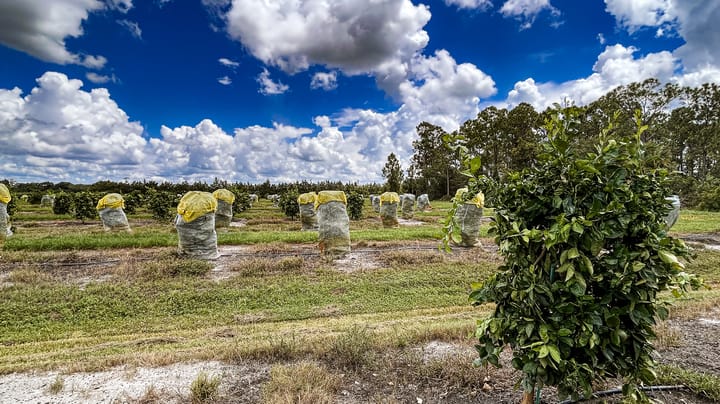
Deadly bacteria wiped out 400,000 acres of Florida citrus. Now, researchers are testing lime-green nets modeled after malaria netting to save what’s left.
CodeRabbit uses OpenAI models to govern and trust AI-generated code and Codex to ship 20 times more software with the same engineering team.
0sec Labs has open-sourced 0, an AI security harness for code review, pentesting, reverse engineering and fixes. It runs locally through a browser console, a headless CLI and an MCP server, with your own model provider.
Chinese scientists have developed a first-of-its-kind purifier capable of removing breakaway tumour cells that circulate through the bloodstream, potentially preventing the recurrence and spread of some cancers. The Shanghai Jiao Tong University-led team said the proof-of-concept platform could lower the risk of metastasis – the leading cause of cancer-related deaths worldwide – in a peer-reviewed research paper published on November 2. When tested in mouse models of breast…
Web agents extend LLMs from text generation to real-world web interaction by relying on execution harnesses that interpret user goals, perceive webpages, plan actions, and ground model decisions into browser operations. While prior work has recognized that agent security depends on more than the backend model alone, how harness design quantitatively shapes web-agent security remains insufficiently measured. To systematically study web-agent harness security, we first…
Street view imagery (SVI) is widely used to audit urban environments remotely. Automated assessments usually assume that each image shows the target building clearly. In practice, an image may lack task-relevant evidence or show a neighboring house. If this goes unchecked, a model's score cannot show whether it judged the correct building. We present a reproducible SVI processing pipeline that makes image suitability and target identity explicit and checkable. We apply it to…
As AI agents take on more work, they need capable open models and security that advances alongside them. Hyundai Motor Group is exploring NVIDIA NemoClaw blueprints and the NVIDIA OpenShell runtime, while AIM Intelligence is integrating its Starfort platform with NVIDIA OpenShell to support secure AI agents for employee productivity and enterprise workflows. A key
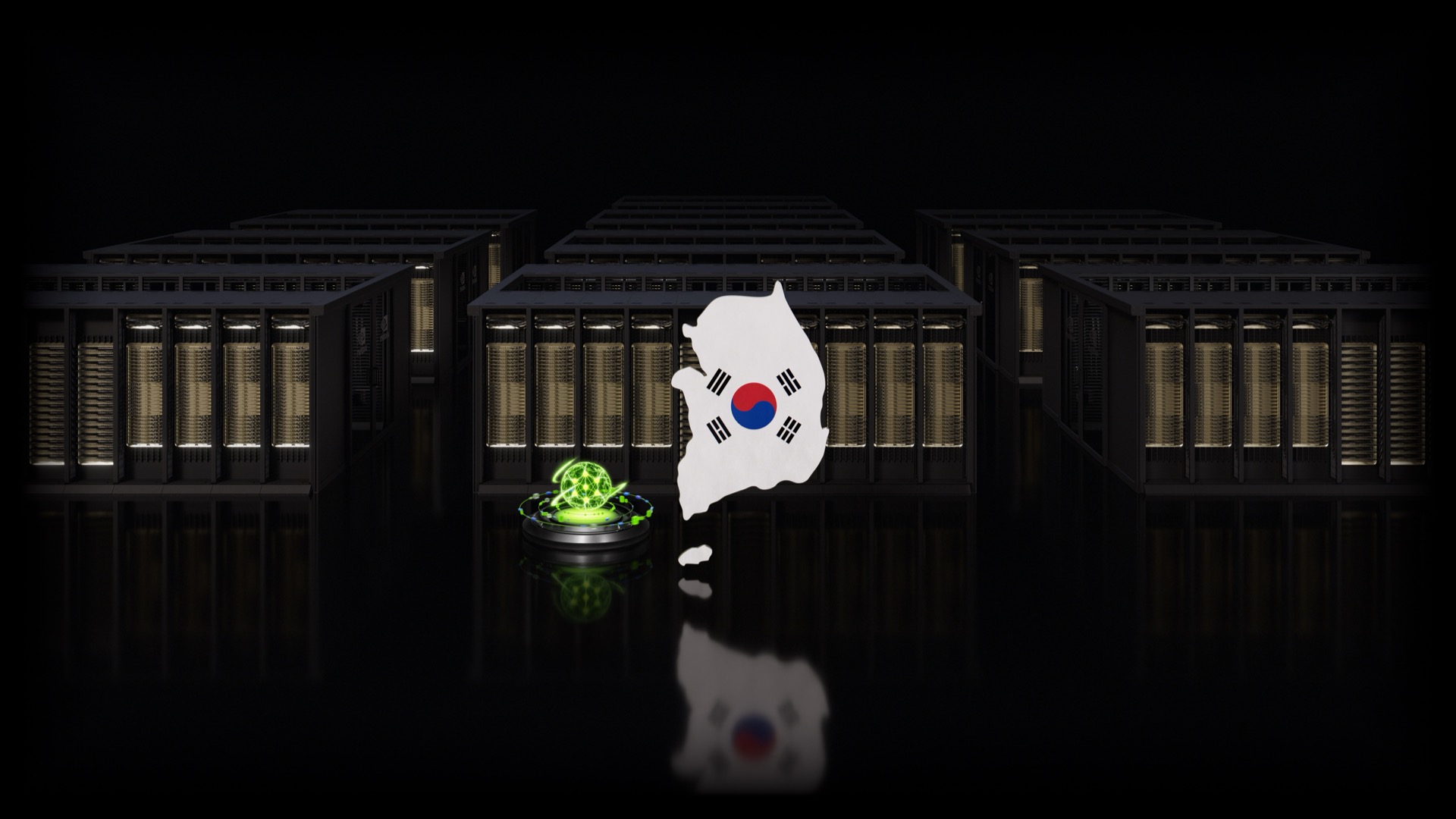
NVIDIA and Korea’s Ministry of Science and ICT (MSIT) are expanding their collaboration across the country’s sovereign AI ecosystem, from AI semiconductors and data center infrastructure to talent, startups, models, agents and security. The collaboration lays the groundwork for Korean NPU and XPU companies to explore participation in the NVIDIA NVLink Fusion ecosystem, and includes
By learning how matter moves, the WorldParticle system could assist with developing soft robots, medicines, and more.
NVIDIA is releasing Dynamo-optimized deployment recipes for Korea’s leading open models: A.X K2 from SK Telecom, K-EXAONE 2.0 from LG AI Research, Solar Open 2 from Upstage and Motif-3 from Motif Technologies. As models grow beyond the capacity of a single GPU, they must be split across multiple GPUs, requiring careful coordination of request routing
Prompt injections have emerged as one of the top security risks faced by AI agents today. Early work in prompt injection attacks looked at simple tool-call agents and static attack payloads, and were saturated since mid-2025. As of Fall 2026, human red-teaming may be nearing saturation, especially on the Gemini family of models. In this work, we argue that despite this apparent plateau, prompt injection attacks are still possible and continued effort into prompt injection…
Melissa Goh breaks down Cohere’s decision to decouple AI models from the cost of infrastructure and if this offers a more sustainable way of scaling.
Beijing-based Zhipu, also known as Z.ai, has received funding from a Chinese state firm.
Small fermentation datasets can yield high apparent model fit without supporting prediction at experimental conditions that were never run. We audited four related central composite datasets comprising 78 numerical inhibition-zone records for Lactococcus lactis MT186647 and Limosilactobacillus fermentum MT186598, with 14 or 15 distinct conditions and six center records per dataset. 10 model configurations were evaluated using leave-one-record-out and leave-one-condition-out…
Accurate extraction of surface water is of great significance for water resource management, ecological conservation, and flood disaster monitoring. However, water bodies in high-resolution remote sensing imagery are often obscured by building shadows, vegetation, complex backgrounds, or spectral confusion. Consequently, traditional semantic segmentation methods frequently struggle with global feature modeling and the preservation of boundary details. To address these…
Accurate estimation of soil infiltration characteristics is fundamental for irrigation design, hydrological modeling, and sustainable soil and water management. However, the nonlinear interactions among soil physical, hydraulic, and chemical properties make reliable prediction of cumulative infiltration (It) and basic infiltration rate (Ib) challenging using conventional statistical approaches. This study evaluated the predictive performance of artificial neural networks…
Remote sensing image-to-online map translation (RSMT) represents a critical research frontier in geographic information processing. With the rapid development of deep learning, generative models have attracted increasing attention for automatic map generation. However, existing methods incur substantial computational overhead when modeling global contextual information. Recently, Mamba has been widely adopted in remote sensing for capturing global dependencies with linear…
Purpose This study examines how advertising message framing influences consumer participation in adoption agriculture, an emerging agri-food service model. Design/methodology/approach Drawing on message framing theory and the stimulus-organism-response (S-O-R) framework, we developed a mediation model with regulatory focus and context-specific trust as two proposed moderators. A one-factor between-subjects experiment was conducted with Chinese consumers after pretesting…
IntroductionCarbon management in agricultural enterprises is deeply embedded in the agricultural industrial ecosystem. The policy of green development in agriculture provides a key path to solve the predicament of carbon reduction in agriculture.MethodsThis paper, based on the microdata of 245 listed agricultural enterprises in China from 2011 to 2024, uses a dual machine learning model to investigate the impact of agricultural green development policies on the carbon…
Alternative Food Network (AFN) supports the transition toward more sustainable food systems through shorter supply chains and closer interactions between producers and consumers. However, limited evidence explains how technology acceptance and electronic word-of-mouth (eWOM) adoption jointly shape consumers’ purchase intention toward agri-fresh produce in digital AFN. This study examines this relationship using an extended Technology Acceptance Model that incorporates eWOM…
Abstract The rapid proliferation of serverless computing in heterogeneous edge environments has introduced critical challenges in task scheduling, load balancing, energy efficiency, and orchestration, particularly due to the absence of centralized control and the resource-constrained nature of edge nodes. Existing approaches partially address these issues but often suffer from high latency, inefficient energy utilization, suboptimal load distribution, and limited…
We explore the symmetry properties of Stinespring dilations of single-qubit Pauli channels, addressing both the generic case and the specific examples of phase damping and depolarizing channels. For each scenario, we derive the representation of the Pauli group acting on the Hilbert space of the environment. We then focus on dilations that are continuous in time and driven by a time-independent Hamiltonian, and on collision models that generate a Pauli dynamical semigroup in…
Quantum simulations of many-body systems offer novel methods for probing the dynamics of the Standard Model and its constituent gauge theories. Extracting low-energy predictions from such simulations rely on formulating systematically-improvable representations of lattice gauge theory Hamiltonians that are efficient at all values of the gauge coupling. One such candidate representation for SU(2) is the fully gauge-fixed Hamiltonian defined in the mixed basis. This work…
This study examines how algorithmic personalisation relates to platform trust among Generation Z users in India. It proposes cultural congruence, the perceived fit between recommendations and a user’s cultural identity, as a construct that may link personalisation to trust, tests whether it also conditions that link, and models a parallel privacy pathway. Survey data from 302 platform users were analysed with covariance-based structural equation modelling and moderated…