Vietnam’s FPT cloud with Nvidia GPUs speeds industrial AI 2.9x
FPT said that was about 2.9x faster than Chimes AI’s previous graphics processing unit environment.
FPT said that was about 2.9x faster than Chimes AI’s previous graphics processing unit environment.
The U.S. Cybersecurity and Infrastructure Security Agency (CISA) on Monday added four security flaws impacting GPUStack, SignalWire FreeSwitch, OpenBSD OpenSSH, and IBM Aspera Faspex to its Known Exploited Vulnerabilities (KEV) catalog, citing evidence of active exploitation. The vulnerabilities are listed below - CVE-2026-123218 (CVSS score: 9.8) - An incorrect authorization vulnerability
Second-order Epstein-Nesbet perturbation theory (EN-PT2) is an important tool for improving selected configuration interaction (SCI) energies, but the large external determinant space creates substantial memory and communication costs on GPU clusters. We develop a fully GPU-accelerated implementation of distributed semistochastic EN-PT2, fusing excitation generation, screening, and PT2 weighting in a single kernel traversal. Fixed-size random-phase CountSketch arrays limit…
Gaming PCs sitting idle could one day earn their owners credits, or even cash, by training AI models, at least if a newly published Microsoft patent application ever becomes a product. Titled "Opportunistic Micro-training on Edge Devices Using Spare GPU Utilization," the filing US-20260349820-A1 from Microsoft Technology Licensing was submitted in April 2025 and made public on November 5. It describes chopping large training jobs into small micro-tasks sized to what each…
For several years, the conversation about enterprise artificial intelligence has focused on capability: which model is smartest and which GPU is fastest. That made sense when technology was the constraint. It isn’t anymore. AI can now do far more than most organizations will allow, and the gap is trust. That’s the core finding of “Permission
AMD has admitted a bug within its External Events Utility is wearing out SSDs, and promises a fix.
Log-based anomaly detection is increasingly dominated by large pretrained models, from BERT-scale encoders to 8B-parameter language models, which require GPUs at inference time and are difficult to deploy on the monitoring nodes where logs are produced. We present LogCDM, a compact detector that scores each log session using three complementary signals: the next-event surprise of a small causal Transformer, the distance between a graph-attention embedding of the session's…
Serving systems choose a weight format for each model and deployment. A low-cost screen predicts the resulting KL divergence from the unquantized model's Fisher information using $\tfrac12Δ^\top FΔ$, the expansion underlying Hessian-aware and second-order post-training quantizers. We assess the reliability of this screen in GPU batches with channel-wise int8, per-tensor fp8 and group-wise int4 on Qwen3-8B, Qwen3-4B, OLMo-2-7B, Qwen3-32B and Qwen3-30B-A3B. Relative…
Alice Huang boasted of having access to Nvidia GPUs and her connection to Alibaba
In a bid to limit China’s AI capabilities, the United States imposed restrictions in 2022 on the export of certain advanced chips to China. But throughout the AI boom those chips have kept turning up in China anyway. On 1 October 2026, the U.S. arrested a man on charges of sending over US $300 million worth of GPU-equipped servers to China using paperwork intended for shipments to Malaysia and Singapore. As chip smuggling and diversion continues, the United States is…
Google is expanding its TPU 8 family with two specialized variants: the TPU 8tx keeps sensitive data encrypted even during processing, while the TPU 8i Max doubles compute power and memory by placing two chips on a single package. With nearly 100 external customers now on board, Google is increasingly positioning its in-house chips as an alternative to Nvidia's GPUs. The article Google ships four TPU variants in one year as it ramps up competition with Nvidia appeared first…
CISA has added four new vulnerabilities to its Known Exploited Vulnerabilities (KEV) Catalog, based on evidence of active exploitation. CVE-2026-102895 GPUStack Improper Authentication Vulnerability CVE-2026-116779 SignalWire FreeSwitch Code Injection Vulnerability CVE-2026-123158 OpenBSD OpenSSH Unexpected Status Code or Return Value Vulnerability CVE-2026-123218 IBM Aspera Faspex Incorrect Authorization Vulnerability These types of vulnerabilities are a frequent attack…
Training a neural network under homomorphic encryption requires transposes, batch reductions, optimizer updates, and repeated refreshes in addition to forward matrix products. We combine rectangular diagonal packing, feature-major SIMD mini-batch lanes, baby-step giant-step evaluation, and compact optimizer state in an MIT-licensed Rust CKKS implementation. Its CUDA path keeps training and bootstrap ciphertext arithmetic on the GPU, while retaining host key generation and…
NVIDIA is releasing Dynamo-optimized deployment recipes for Korea’s leading open models: A.X K2 from SK Telecom, K-EXAONE 2.0 from LG AI Research, Solar Open 2 from Upstage and Motif-3 from Motif Technologies. As models grow beyond the capacity of a single GPU, they must be split across multiple GPUs, requiring careful coordination of request routing
Admits to affair after company board opens probe into alleged contact with possible Chinese asset who bought GPUs in bulk
Admits to affair after company board opens probe into alleged contact with Chinese asset who bought GPUs in bulk
In expert-parallel Mixture-of-Experts serving, a layer finishes only when the most loaded GPU of its group does. Token routing shifts at every decode step and concentrates on a few experts, so most of the group's reserved GPU time waits on stragglers. Recovering that time means re-deciding, at every layer of every decode step, how each replicated expert's tokens divide between its copies. The exact linear-program solvers that make this decision optimally take longer than…
Maxsun has shared full specifications for the SK-PTLNAS and SK-WCLAIO, two NAS-focused MoDT (Mobile on Desktop) motherboards built around Intel's Panther Lake and Wildcat Lake chips. Both were first shown at Computex 2026 and are expected to launch this month, though pricing is still unknown. The SK-PTLNAS now tops out at the Core Ultra 9 386H, a 16-core chip with four Xe3 GPU cores, a 25 W base power and up to 80 W of turbo power. The Computex listing mentioned options up…
Can high-bandwidth flash (HBF) make LLM inference cheaper than adding GPUs? By storing weights closer to the GPU than SSD, HBF may reduce the number of GPUs needed for model capacity. However, this integration is only justified if it meets service targets and its cost is recovered. We simulate this integration using public component data across nine dense and mixture-of-experts (MoE) models, five workloads, two GPU platforms, and 1--100 GPUs. At fixed demand, HBF reduces the…
Technical debt shoveled aside to make large-scale AI training more resilient
Amazon SageMaker Inference now supports GPU partitioning with NVIDIA Multi-Instance GPU (MIG), which divides one GPU into hardware-isolated partitions so you can run a different model in each or take a right-sized fraction of a newer accelerator. This post shows how two optional API fields place one model per partition, and what we measured against a whole older GPU.
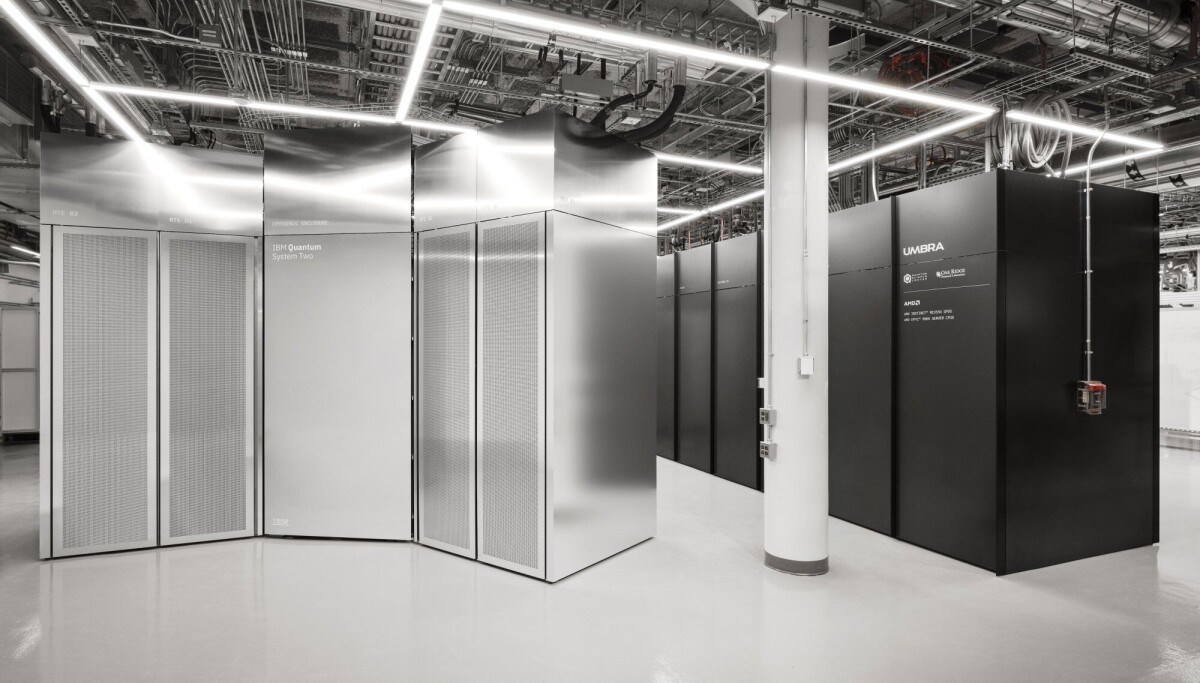
Co-design platform for quantum error correction melds IBM quantum kit with AMD CPUs and GPUs
Modern AI models are opening up new possibilities at the edge. Turning those possibilities into responsive, efficient applications, however, requires more than choosing hardware with an impressive TOPS figure. Developers need to understand how models behave on their target devices, where performance is lost, and which optimisations…
Turns out throwing billions at GPUs doesn't automatically mean everyone gets more done
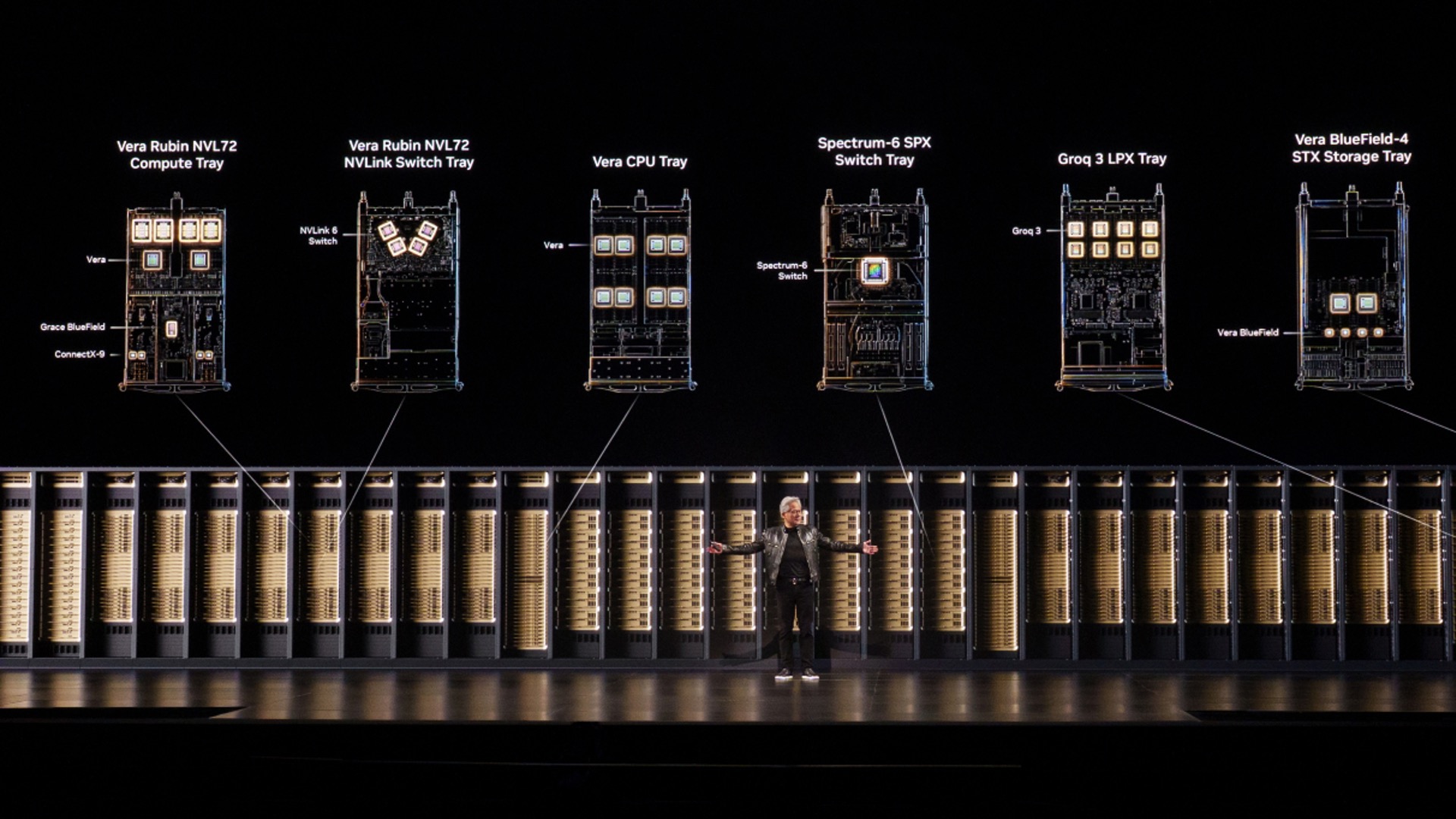
AI agents do more than generate answers. They search for information, query databases, write and test code and take action. Each of those steps relies on a CPU, with agents moving between GPU reasoning and CPU execution throughout a task. As businesses put more agents to work, AI factories need CPUs that can execute those
Together AI is putting AI coding agents to work on the GPU code that runs its inference infrastructure, automating performance
MeitY Secretary S. Krishnan says India plans to develop its own GPU under Semiconductor Mission 2.0, with a target of approximately two years. The country is also looking to commercialize its SHAKTI and VEGA RISC-V processors, expand domestic server production, and attract more semiconductor investment. Krishnan sees the AI boom as a potential repeat of the Y2K-era opportunity that helped India's IT services industry grow
Using a capture card and open source software to run PS5 video through a PC GPU.
Larger models, longer contexts and agentic applications are increasing GPU memory pressure while supply tightens and prices rise — a trend expected to continue through the near term. NVIDIA works closely with memory partners to rapidly adopt the latest memory technologies. NVIDIA was first to adopt HBM3e and HBM4 technologies into an accelerated computing stack.
A reusable optimization mindset for engineers building GPU compute kernels.