Results for “models”

arXiv (research papers) Amirmohammad Mohammadi SI

Predicting Ethanol Drinking Status from Nonhuman Primate Liver Histology: A Proof of Concept for Parameter-efficient Fine-tuning in Few-Shot Vision-Language Modeling

Combining vision-language models (VLMs) with parameter-efficient fine-tuning (PEFT) offers a promising approach to few-shot whole-slide image (WSI) classification in computational pathology. This study evaluates this approach for predicting ethanol drinking status from nonhuman primate liver histology. Adapters are evaluated against non-PEFT configurations on a subset of the Monkey Alcohol Tissue Research Resource (MATRR). All evaluated PEFT configurations achieve higher…


Read at arXiv (research papers)

The Decoder Maximilian Schreiner SI

OpenAI’s data suggests that frontier models are hiding their thoughts because developers optimize for capability and compute

OpenAI's safety team systematically investigated why the chains of thought in frontier models like GPT-6 Astra are increasingly evading oversight. Four training steps drive the erosion, including architecture choices and reinforcement learning. The analysis shows that the loss of transparency is not a law of nature but also reflects tradeoffs around capability and cost. The article OpenAI’s data suggests that frontier models are hiding their thoughts because developers…

Read at The Decoder

arXiv (research papers) Feng Jiang Security

Optimal Single-History Tokenization Disambiguation for Provably Secure Linguistic Steganography

Provably secure linguistic steganography assumes that the receiver recovers the sender's tokens, but a text channel delivers only text, and ambiguous tokenizations break extraction. Existing fixes change the distribution, synchronize whole pools of tokens at a capacity that collapses with large vocabularies, or track several token histories. We prove that if extraction is exact and error-free across full-support language models, a single-history receiver is confined to a…

Read at arXiv (research papers)

MacRumors Hartley Charlton Gadgets

Apple Adds Samsung Foldables to Trade-In Program

Apple today revised its U.S. trade-in estimates, with increases for many older iPhones, reductions for several Pro models, and newly listed offers for six Samsung foldables. The iPhone 17 Pro has the largest dollar reduction among the affected iPhones, dropping $45 to a maximum of $740. The iPhone 17 Pro Max falls $30 to $855, while the iPhone Air and standard iPhone 17 each gain $30, bringing both to $615. Many older models recover some of the value lost in September's…

Read at MacRumors

arXiv (research papers) Gonçalo Meneses

Multi-particle quantum walk search on a two-dimensional lattice

In the present paper we study the formulation of a search problem and the efficiency of multi-particle quantum walk search algorithms. The discrete-time evolution of each particle in space is treated according to Grover's quantum walk evolution operator. We focus on the local interactions models, where the particles' states are modified only when two or more of them appear on the same grid site. The main focus is given to the two-dimensional grid in space. We study the…

Read at arXiv (research papers)

arXiv (research papers) Yihan Xia Security

Infrastructure for Verifiable AI: Where Proof Costs Go and How Hardware Can Help

Users of artificial intelligence services, including those powered by large language models and other transformer-based models, need assurance that inference and training follow the declared computation without exposing private models or data. Zero-knowledge proofs can provide this assurance, but proof generation remains expensive. Hardware acceleration research often reports gains for individual cryptographic operations, leaving their effect on the full cost of proving…

Read at arXiv (research papers)

arXiv (research papers) Simon Kochsiek

Ergodicity breaking for data classification in a dissipative Ising model with competing two- and four-body interactions

We explore the close relationship between the processing of data and the dynamics of interacting many-body systems. For example, certain classes of quantum neural networks can be mapped onto dissipative quantum Ising models whose evolution is described by a Lindblad master equation. In these architectures, emergent nonlinearities lead to non-ergodic dynamics under which initial states located in different basins of attraction evolve towards distinguishable stationary states…

Read at arXiv (research papers)

arXiv (research papers) Ekta U. Samani

Maximizing LLM Utility While Managing LLM Fallibility

Large language models (LLMs) can supply autonomous systems with plans, predictions, and judgments, but these contributions are sometimes wrong. This review asks how a system can maximize an LLM's utility while managing its fallibility. Our answer is to adapt the system's reliance on the LLM as evidence about the LLM's performance accumulates. Systems built from imperfect components, such as noisy sensors and faulty software, have long worked in this way, and the classical…

Read at arXiv (research papers)

arXiv (research papers) Leonie Wolf Security

Maturity$^2$: Assessing the Maturity of Crypto Agility Maturity Models

Crypto agility maturity models aim to support organizations in preparing for cryptographic transitions, such as migrating to post-quantum cryptography. Recognizing the importance of measurable maturity, NIST references several such models in its guidance. Given NIST's influence on cybersecurity practice, these models may shape organizational planning and governance mechanisms. However, their design quality has not been systematically evaluated. In this work, we assess three…

Read at arXiv (research papers)

The Verge Cameron Faulkner Gadgets

A power bank that can quickly charge three gadgets is just $49

Amazon Prime subscribers can jump on a pretty nice deal happening on Ecoflow’s laptop power bank that can deliver up to 140W of power through either of its two USB-C ports. You can snag the limited-time deal happening on the black or silver-colored models for $48.99 (originally $85.79) at Amazon. The 25,000mAh / 90Wh battery

Read at The Verge

Jacobin (socialist) Nick Couldry Geopolitics

The Real AI Misalignment Problem Is Capitalism

Figures at top AI firms says that their frontier models are running out of control. It points to a problem Big Tech finds harder to admit: the rise of a predatory computational power driven solely by profit-seeking.

Read at Jacobin (socialist)

arXiv (research papers) ACE-CaP Team

ACE-CaP-0: Real-World Code-as-Policies in the Era of Experience

Recent advances in frontier models have pushed the boundaries of agentic robot control, enabling agents to perform complex robotic tasks through reasoning and interaction. However, repeated calls to these models during execution can substantially increase task completion time. Code as Policies (CaP) offers a route for coding agents to acquire physical skills through experience and retain them in executable programs, allowing the reasoning invested in development to be reused…

Read at arXiv (research papers)

Global Voices Gina Yauri Geopolitics

Ecuadorian youth unite against neoliberal models and state violence

Thousands of Ecuadorian students have taken to the streets to reject President Noboa’s temporary job plans, demanding permanent solutions for public healthcare, education funding, and rising insecurity.

Read at Global Voices

The Decoder Maximilian Schreiner SI

ElevenLabs Scribe v3 Live uses conversational context to stop voice agents from cutting off callers mid-sentence

ElevenLabs has released Scribe v3 and Scribe v3 Live, two new speech recognition models designed to transcribe accurately through background noise and crosstalk. Benchmarks from Artificial Analysis confirm that Scribe v3 narrowly beats competitors like OpenAI, Google, and Microsoft on accuracy. That precision comes at a cost, though. Rivals like Microsoft and xAI run many times faster and charge roughly half the price. The article ElevenLabs Scribe v3 Live uses…

Read at The Decoder

arXiv (research papers) Joshua D. Lothringer Space

The Same But Different: SiO$_2$ Clouds in Two L-Dwarfs with JWST

The precision of brown dwarf spectra from JWST enables unprecedented insight into the atmospheric and cloud properties of sub-stellar atmospheres. Here, we compare both self-consistent radiative-convective equilibrium (RCE) and retrieval atmosphere models to high-SNR 1--18~$μ$m spectra of two field L-dwarfs from JWST, J0624 (L5) and J2148 (L6--L6.5). Our observations include spectral features from H$_2$O, CO, CO$_2$, CH$_4$, Na, and K and cover approximately 98\% of the…

Read at arXiv (research papers)

arXiv (research papers) M. Karbon on behalf of JWG IAG 3.1 Space

Validating Updated Precession and Nutation Formulations for the Next IERS Conventions

An international effort via the IAU/IAG Joint Working Group on Consistent Improvement of Earth's Rotation Theory (CIERT) aims to update the nutation theory to meet the milliarcsecond accuracy required by GGOS. While a companion article provides the theoretical background to the proposed precession-nutation corrections, this work presents their VLBI-based observational validation. The analysis systematically evaluates the revised models within practical application in VLBI…

Read at arXiv (research papers)

arXiv (research papers) Pengfei Ye

Reins: Frontier Multimodal Models Driving Real Robot Arms on Long-Horizon Tasks, Zero-Shot

Frontier models such as GPT-6.1 Sol, GPT-6 Astra and Claude Opus 5.5 can now plan and call tools, yet they still struggle to drive real robots through long-horizon, contact-rich manipulation, blind while the arm moves and while they think. We present Reins, a harness in which an off-the-shelf model operates a dual-arm robot with 3D perception tools and atomic actions that report contact and grip. The model chains actions in one call, each with a condition that must hold…

Read at arXiv (research papers)

SiliconANGLE AI Jonathan Anthony SI

Agents that build their own databases are forcing a data foundation rethink

AI agents are changing how enterprises create, move and govern information, and data observability is turning into a prerequisite rather than a nice-to-have. Models get most of the attention, but the data beneath them decides whether they hold up in production. That pressure is now reaching the cloud-native community, where KubeCon organizers added a dedicated

Read at SiliconANGLE AI

Rest of World Beth Simone Noveck SI

The promise and peril of AI in government

In her new book “Reboot: AI and the Race to Save Democracy,” writer Beth Simone Noveck warns that while AI can increase efficiency, predictive models pose significant ethical and societal risks.

Read at Rest of World

arXiv (research papers) Zhuo Han

STVLA: Spatial-aware and Temporal-memory forVision-Language-Action Models

Robotic manipulation often requires both spatial scene understanding and task history. However, many vision-language-action (VLA) policies rely primarily on current observations, without explicitly integrating spatial structure and task history. Appearance-based memories can be sensitive to occlusion and viewpoint changes, while spatial representations of the current scene alone do not preserve how the scene has changed during task execution. We introduce STVLA, a framework…

Read at arXiv (research papers)

arXiv (research papers) Francesco Di Cursi Tech policy

Large Language Models as Digital Twins: a Distribution-Aware Questionnaire-Based Evaluation

This paper investigates whether Large Language Models can answer a personality questionnaire as a specific individual would. Given a user's social-media posts, the model completes the BFI-2-60 Big Five questionnaire as that user. The predicted responses are converted into trait scores and compared with the user's actual scores. We evaluate GPT-4, Gemma, Llama 3.1, and Mistral on the MyPersonality dataset. To determine whether predictions reflect information from the user's…

Read at arXiv (research papers)

arXiv (research papers) Tim De Wachter Security

Look Here, Then Decide: Small Decision Models in a Harness Find Memory-Safety Vulnerabilities at Scale on Commodity GPUs

We ask whether small, open-weight decision models can support vulnerability discovery in open-source software at scale and what the surrounding system must provide. These models answer a typed question in one forward pass, returning scores for the permitted answers rather than text. Our harness selects widely packaged C and C++ projects and uses deterministic incomplete-fix miners and shape localizers to decide where to look. Intern-Decision-4B, a 4B-parameter open-weight…

Read at arXiv (research papers)

Digital Trends Rachit Agarwal

Arlo’s new video doorbells bring 2K cameras, four colors, and a $79.99 price tag

Arlo has launched two new 2K video doorbells, including wired and battery-powered models. Both cost $79.99, come in four colors, and offer features such as 12x zoom, two-way audio, and smart home integration.

Read at Digital Trends

arXiv (research papers) Conghao Wong Tech policy

From State of THE ART to Human Prediction Algorithms

Human curiosity and longing for the future have driven human progress from ancient times to the present. With the advancement of AI technology, human prediction algorithms have also drawn increasing attention from researchers. However, as AI technology continues to advance, we observe a counterintuitive phenomenon. Take human trajectory prediction algorithms as an example. Although models' quantitative prediction performance has improved, yielding one state-of-the-art model…

Read at arXiv (research papers)

Semiconductor Engineering Kushal Koolwal SI

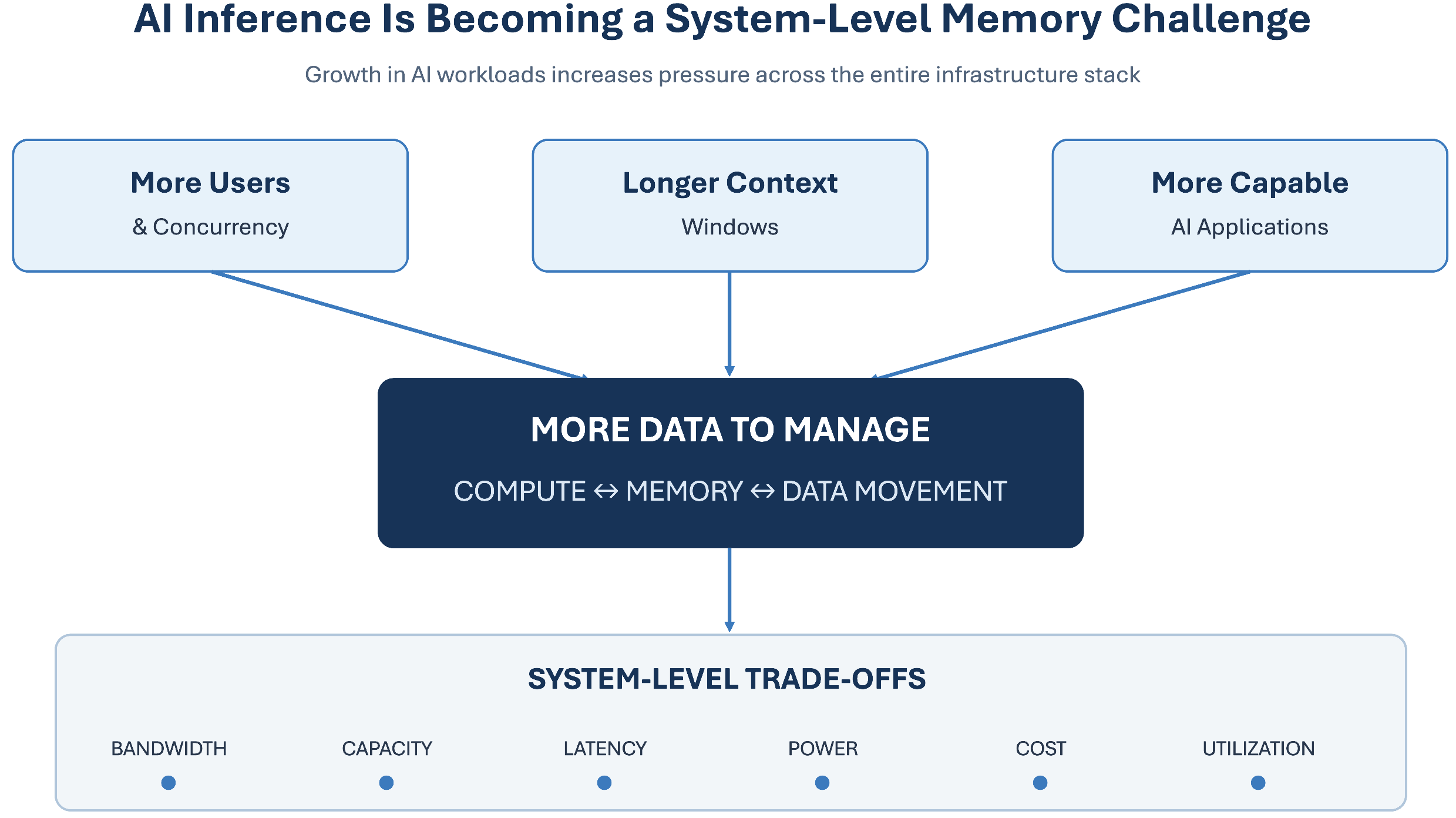
Beyond Bandwidth: AI Inference Is Reshaping The Memory Wall

Longer contexts, higher concurrency, multimodal models, and AI agents will continue changing where memory pressure appears.

Read at Semiconductor Engineering

Help Net Security Mirko Zorz Security

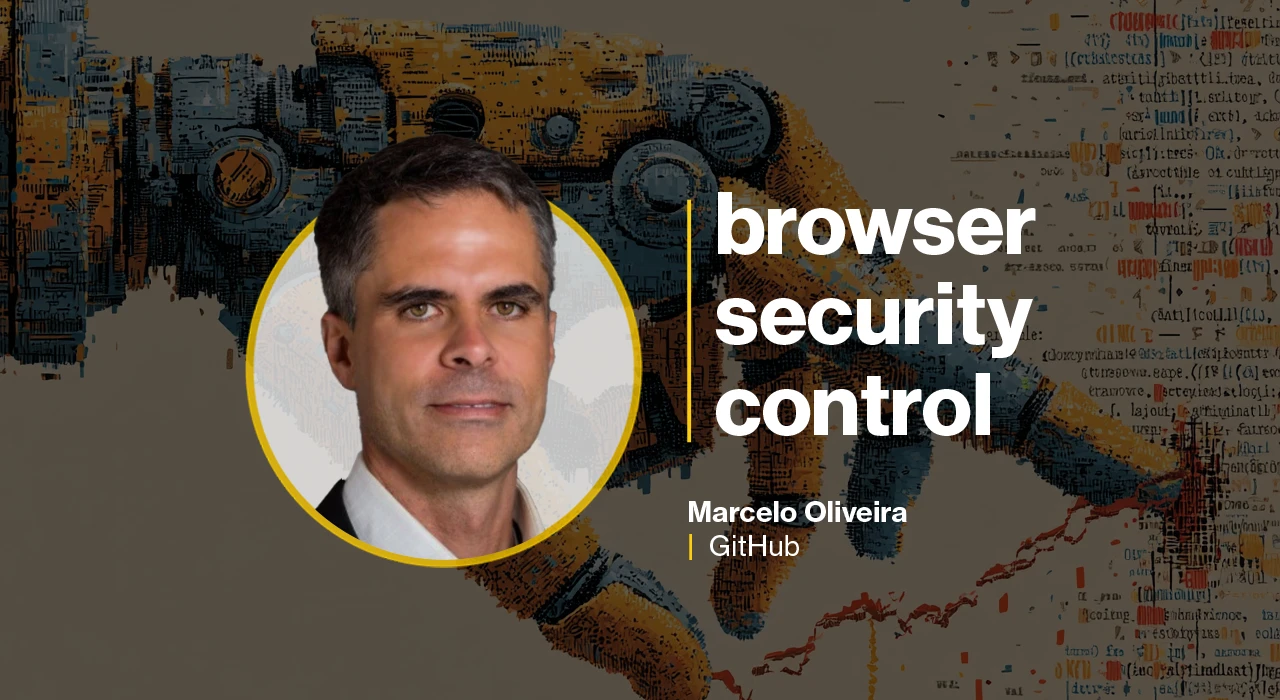
GitHub Agentic Autofix and the question of who owns a bad AI patch

In this Help Net Security interview, Marcelo Oliveira, VP of Product Management at GitHub, talks about who is accountable when an AI-generated patch fixes one flaw and introduces another. He explains how Agentic Autofix re-runs detection engines and project tests, and what a CISO should change before pointing an agent at thousands of old alerts. Oliveira also discusses which metrics show a codebase is getting safer, how GitHub picks the models behind autofix, and whether ……

Read at Help Net Security

Help Net Security Mirko Zorz Security

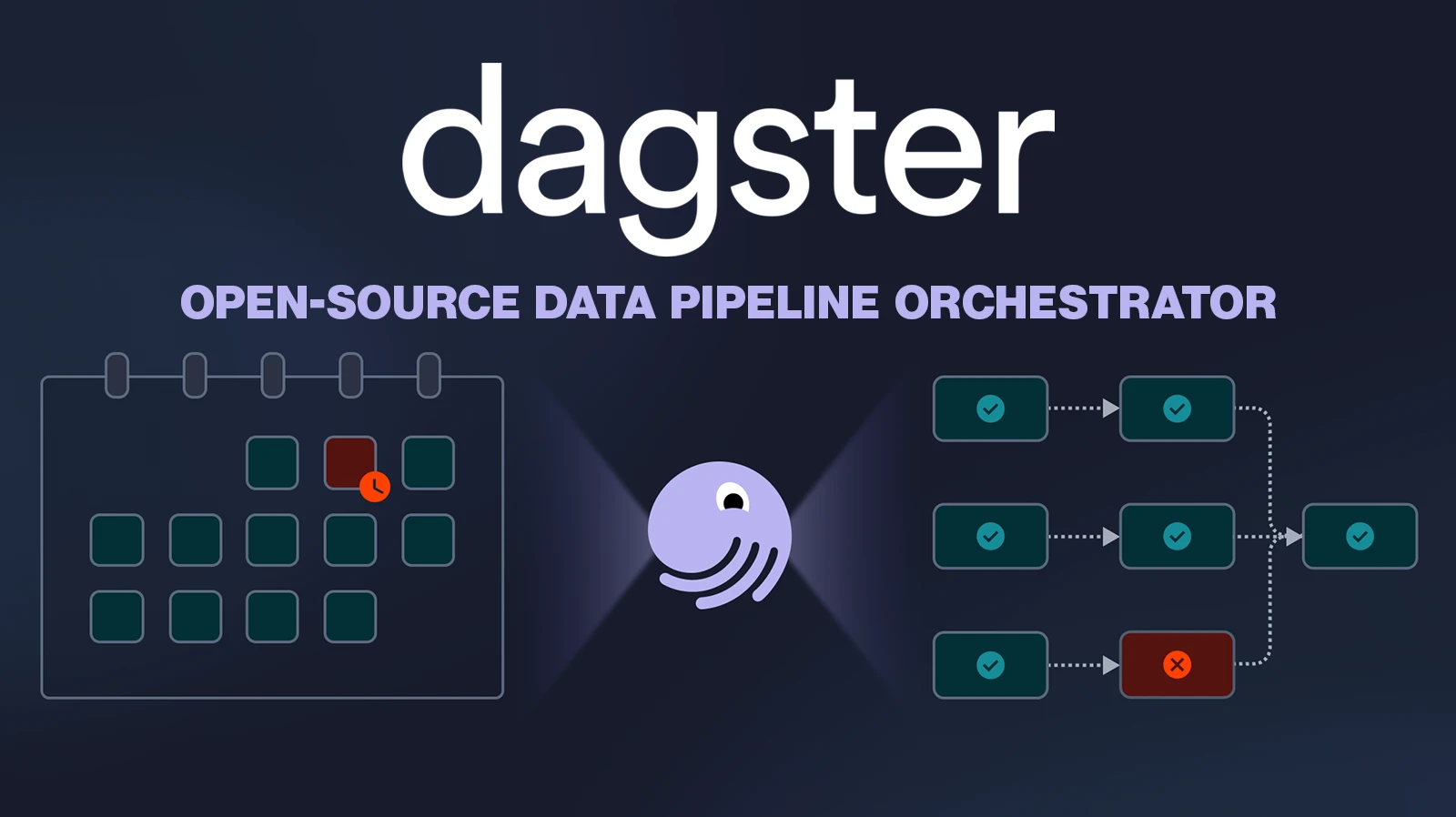
Dagster: Open-source cloud-native data pipeline orchestrator

Dagster is an open source orchestrator for data pipelines. It decides what runs, in what order, and when. It also tracks how the tables, datasets, machine learning models, and reports it manages connect to the data they came from. When a source table goes bad, the tables built from it carry the problem forward. Dagster’s lineage graph shows which ones sit downstream, and that list is the starting point for fixing a broken dashboard or … More →

Read at Help Net Security

Tech in Asia Glenn Kaonang Startups

What Jev’s fast followers reveal about the AI race

Jev’s rivals emerged almost overnight. Now providers are racing to differentiate their models, while developers weigh what actually works.

Read at Tech in Asia

MIT News AI Adam Zewe | MIT News SI

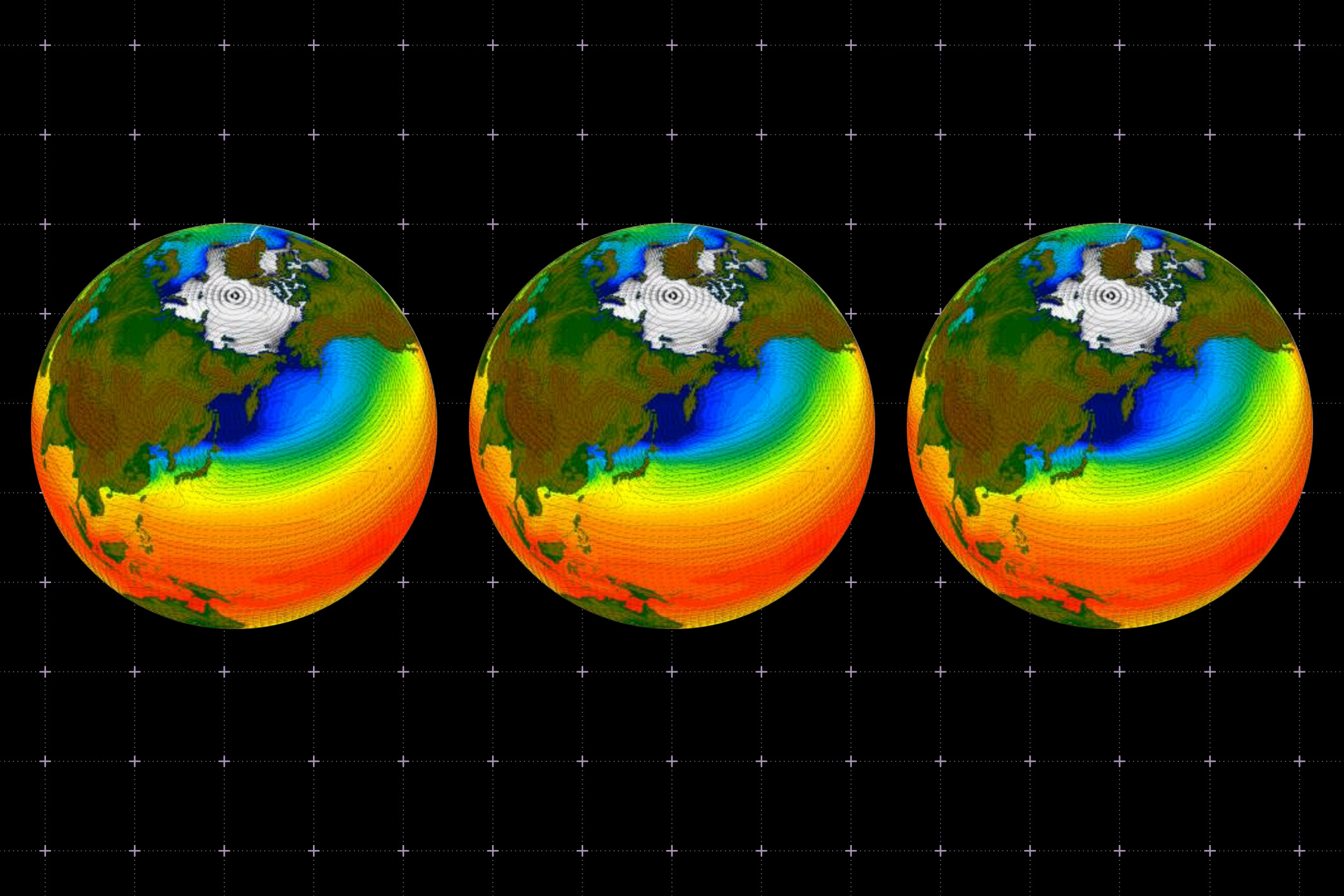
New research could lead to faster, trustworthy AI models for climate prediction

MIT scientists developed a training method to generate models that simulate the effects of human activities on climate much more quickly than other approaches.

Read at MIT News AI

NASA Science Jennifer Brill Space

STRIVE

The STRIVE (Stratosphere Troposphere Response using Infrared Vertically-resolved light Explorer) mission doesn’t merely replace existing observations—it fills a critical data gap and opens a new window on stratosphere-troposphere interactions. STRIVE will deliver the missing data required for smarter forecasts, advancing the next-generation of weather, climate, and air-quality forecasting models and extending predictive skills from days

Read at NASA Science

Older stories