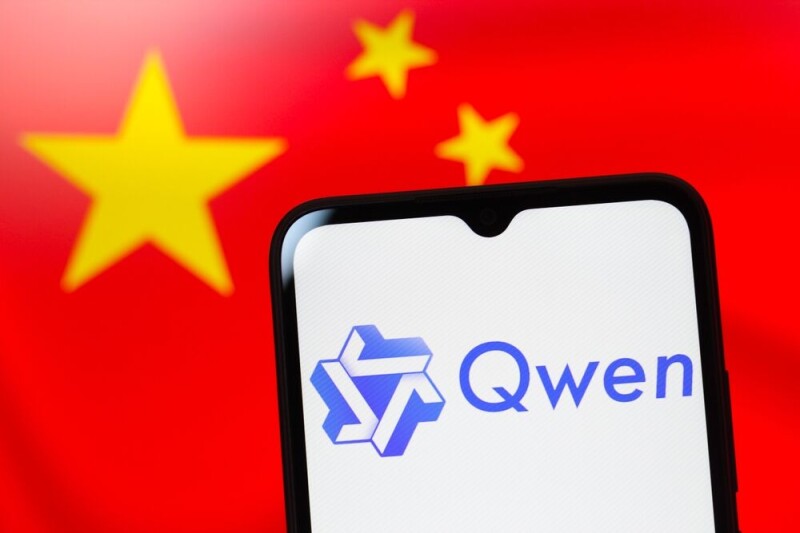
Alibaba's Qwen3.8 re-educated with a more Western worldview
Open weight model can now say things Chinese authorities don't like
Open weight model can now say things Chinese authorities don't like
Kipu Quantum has launched its Rimay quantum feature extraction service on the IBM Quantum Functions Catalog, allowing IBM Quantum users to access quantum-enhanced machine learning for feature engineering. This service, which operates as a preprocessing layer for classical machine learning models, has demonstrated improved recall and AUC scores in credit risk classification. It's designed to provide enriched data matrices for use with standard frameworks like scikit-learn.
The provision of legal advice has long been in the exclusive jurisdiction of licensed attorneys-a boundary that unauthorized practice of law (UPL) doctrine maintains to protect the public from incompetent counsel. We argue that this boundary is being redrawn, not by courts or bar authorities, but by frontier AI companies. While early chat models were trained to avoid dispensing legal advice, modern models have been reconfigured to reduce refusals and prioritize helpfulness…
The company said it was a faster Gemini model for coding and other agent-based tasks.
Jensen Huang is out at Nvidia. Meanwhile, we zoom in on the race Jev sparked among AI decision models.
Cassava mosaic disease (CMD) remains a major constraint to cassava production in sub-Saharan Africa, particularly in Togo, where it continues to limit productivity and undermine the food security of rural households. In this study, the impact of adopting cassava mosaic disease (CMD) management practices on cassava productivity among smallholder farmers in Togo was evaluated. A Multinomial Endogenous Switching Regression (MESR) model was employed to account for selection bias…
Using net greenhouse gas (GHG) balances from the DESTiny biogenic carbon model (https://assetresearch.org.za/on-farm-carbon-capture-and-storage-capacity/) together with detailed farm financial accounts, this exploratory case study examines how profitability and net GHG balance co-vary on twelve pasture-based dairy farms in the Garden Route region of South Africa. Net GHG balances, the annual net flux of emissions and removals within the farm boundary, include enteric…
An upcoming tvOS 27.2.1 update will bring Siri AI to the 2nd- and 3rd-generation Apple TV 4K models, according to Apple. A support document outlining ‌Siri‌ AI requirements across Apple products says tvOS 27.2.1 supports ‌Siri‌ AI on the ‌Apple TV‌ 4K (2nd generation and later), but the software hasn't yet been released. While older ‌Apple TV‌ models will need tvOS 27.2.1 for ‌Siri‌ AI, Apple appears to have a special…
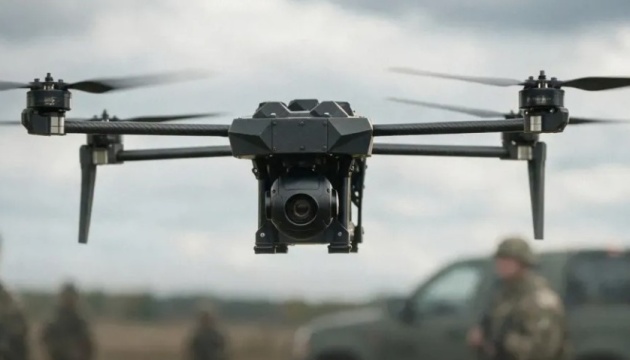
The Brave1 defense innovation cluster, together with Ukraine’s Ministry of Defense, has tested reconnaissance drones of the Mavic type from nine Ukrainian manufacturers to assess whether the aircraft meet the military’s actual needs and the conditions of the modern battlefield.
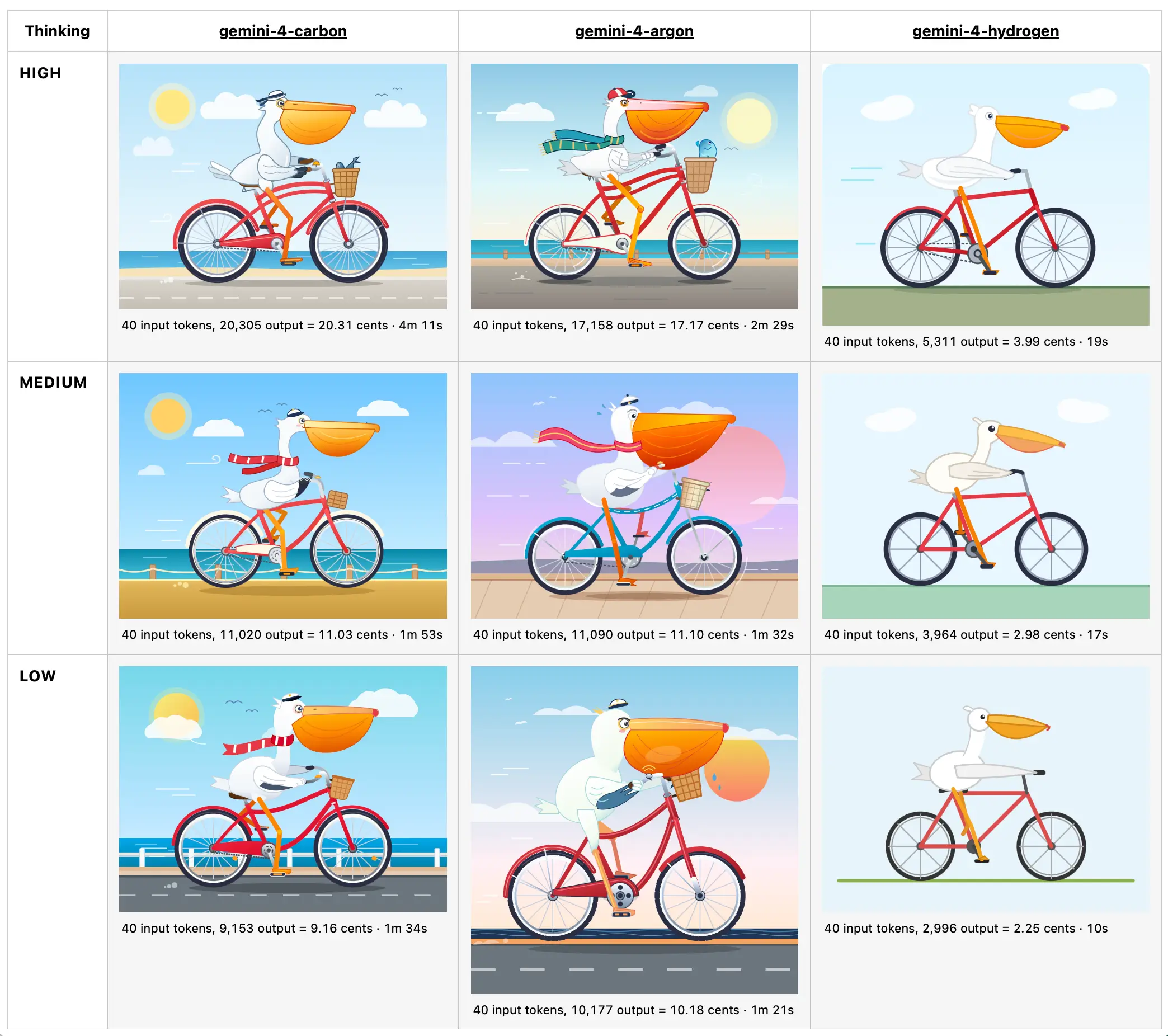
Release: llm-gemini 0.37 Google launched Gemini 4 Hydrogen today - the lowest cost member of the Gemini 4 family. It's actually not too far off the price of its much bigger siblings, Carbon and Argon. I'm finding Gemini 4's pricing really confusing. Here's the pricing scheme: Model Dates Input ($/M) Cached input Output Gemini 4 Carbon Through Nov 30, 2026 $2.00 $0.10 $10.00 From Dec 1, 2026 $4.00 $0.20 $20.00 Gemini 4 Argon Through Nov 30, 2026 $2.00 $0.10 $10.00 From Dec 1…
Google LLC today released Gemini 4 Hydrogen, a lower-cost model in its Gemini 4 artificial intelligence family said to outscore Google’s frontier Gemini 4 Argon model on an independent intelligence ranking. Measured on the Artificial Analysis Intelligence Index at its default high thinking level, Hydrogen scored 51 to Argon’s 50, according to Google. A fourth
Safety in robotics does not solely depend on geometric constraints, but also on semantics: the given task, environment properties, and interactions between objects in the scene. We present a framework based on vision-language models (VLMs) to infer task- and scene-dependent safety constraints for robot manipulation. We provide the VLM a structured safety tool based on an RGB-D observation and a natural-language task instruction that first decides whether the task should be…
Multi-turn conversational human-robot interaction (HRI) continues to be a challenging problem in robotics, as many existing systems rely on rigid, command-driven interfaces that can be unintuitive for users. Recent advances in Large Language Models (LLMs) provide a promising direction, given their ability to process natural language, generate structured outputs, and support tool-based reasoning, all of which are relevant for interpreting user intent in robotic settings…
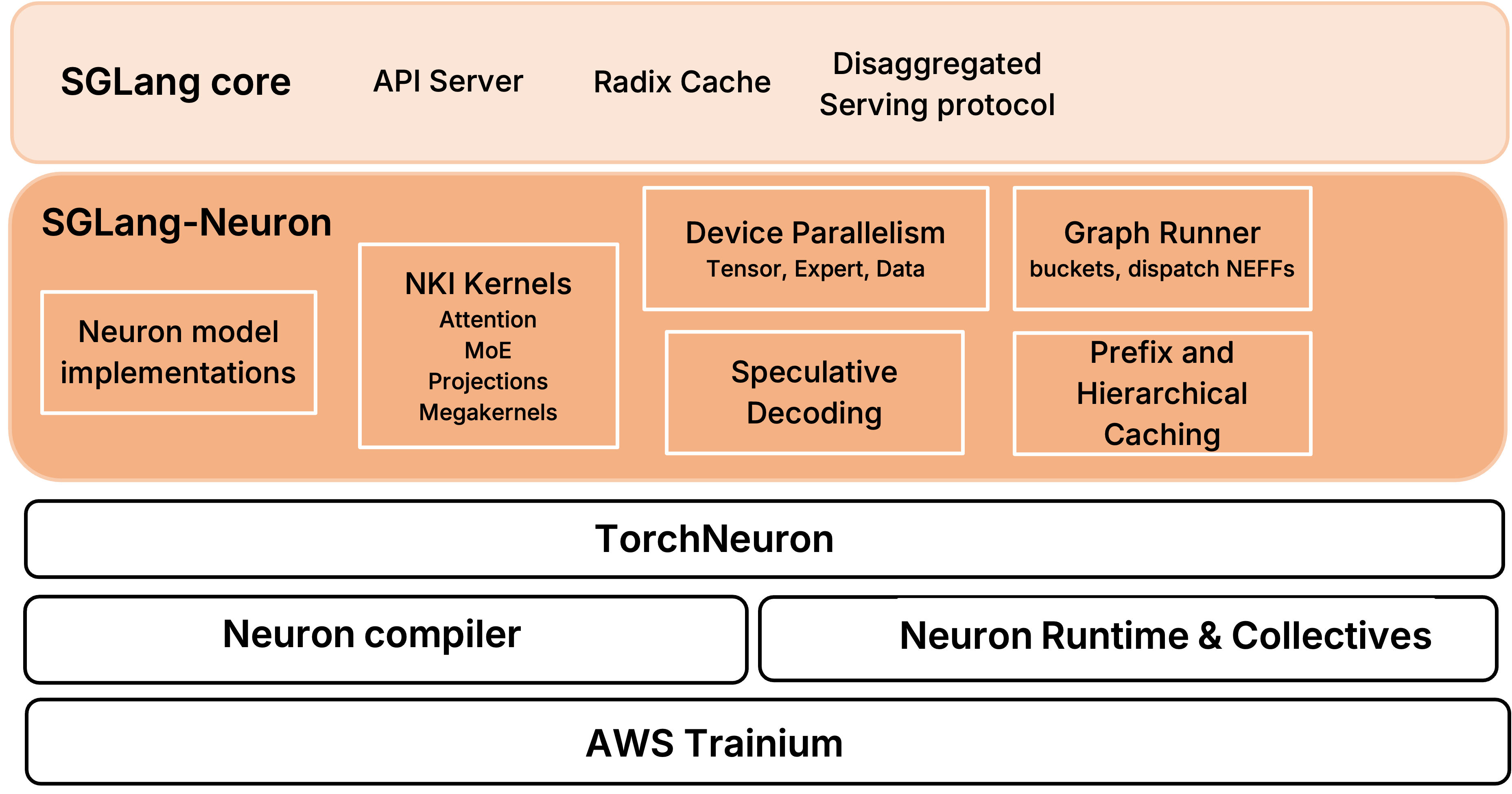
SGLang-Neuron is now publicly available through an AWS Deep Learning Container. With SGLang-Neuron, you can serve models and generate reinforcement learning rollouts with SGLang on AWS Trainium using the same SGLang interface you already know, all running on native PyTorch.
Google says its new Gemini 4 Hydrogen model can give more helpful answers to complex questions, including "questions with multiple parts, hard-to-understand typos, or highly specific requests." The new model can break down your questions and address each part in its responses. It's available starting today in search, the Gemini app, all tiers of Google
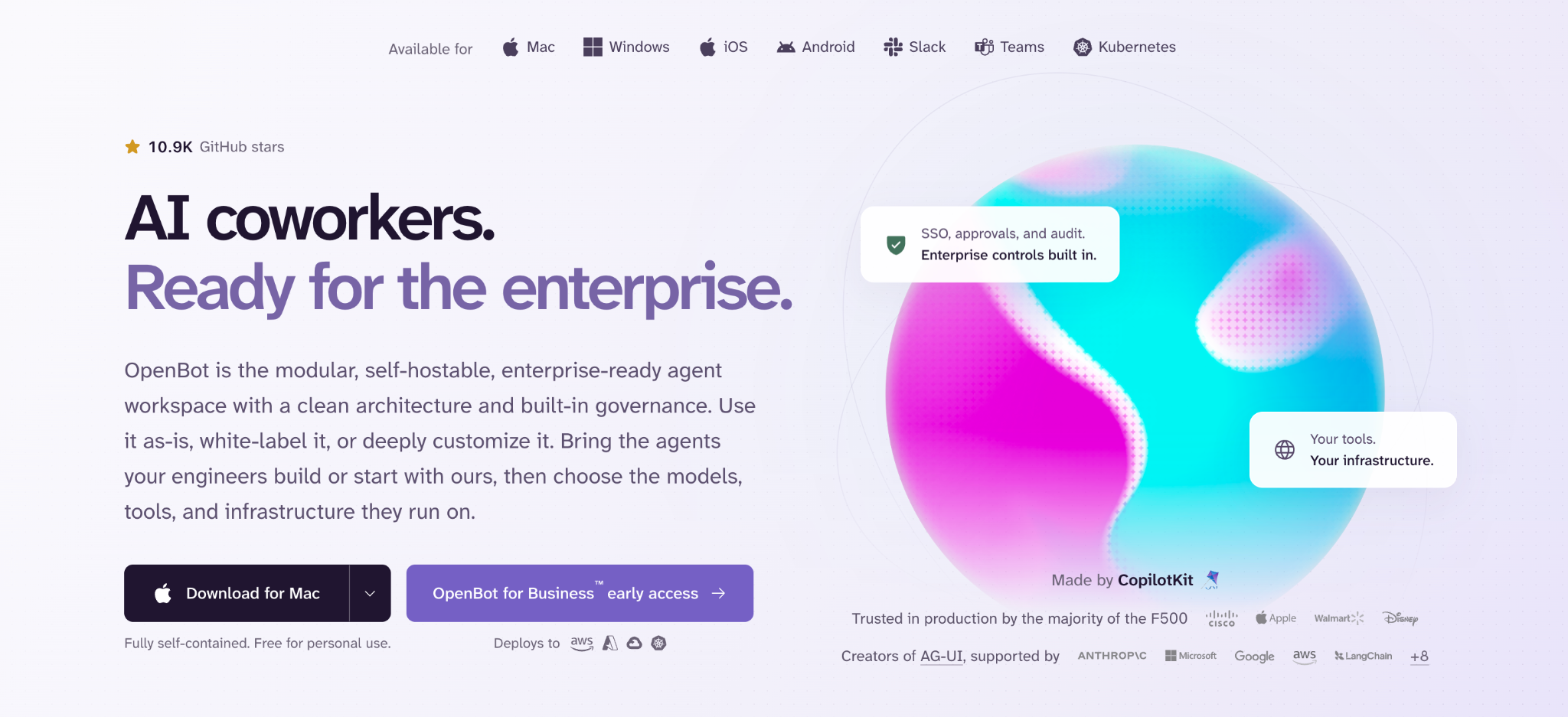
CopilotKit released OpenBot 1.0, an MIT-licensed, self-hostable AI coworker workspace. Companies bring their own agents, models and infrastructure, while every Bot action passes a policy check and lands in an audit trail.
The previous-generation Oura Ring 4 is on sale for as low as $249 at Amazon, Best Buy, and Target, $100 off the retail price, and the first big discount on the device since July. The price varies a bit by size and color, with most silver and black models in stock at the lowest price
Image-goal planning with a frozen visual world model depends on how predicted observations are scored against the goal. Mean-squared error (MSE) between embeddings from a pretrained visual encoder can provide a useful signal near a goal, yet favor states across an obstacle that are visually similar to the goal and difficult to reach. We fit a small residual adapter on top of frozen I-JEPA embeddings to improve this latent goal cost. Starting near each goal, a planner…
Nebius plans to fund its $40 billion AI infrastructure expansion through customer prepayments and loans, even as delays at a Microsoft data center raise questions about its financing model.
Google launched Gemini 4 Hydrogen on Thursday alongside a new system that changes how coding agents use AI models. Rather
Unusually red L dwarfs (URLDs) probe extreme atmospheric conditions in the substellar regime, where enhanced dust opacity, cloud structure, and surface gravity effects challenge standard brown dwarf models. As free-floating analogues of young giant exoplanets, they provide key benchmarks for interpreting low-resolution infrared spectra from current and future wide-field space missions. The goal is to identify new red L dwarf candidates both photometrically and…
The rise of agentic AI systems is giving Kubernetes, long valued for its reliability and predictability, an unexpected second act. As AI spending shifts from training models toward serving them and running agents, the open-source community is developing tools to handle the growing volume of inference requests. The orchestration platform was built from the start
Built primarily on OpenAI models, Amplitude’s proactive product agent, Wave, identifies what to build, helps teams ship changes with coding agents, and measures the impact.
Built primarily on OpenAI models, Amplitude’s proactive product agent, Wave, identifies what to build, helps teams ship changes with coding agents, and measures the impact.
California lawsuit demands freeze training on 'catastrophic' artificial intelligence models.
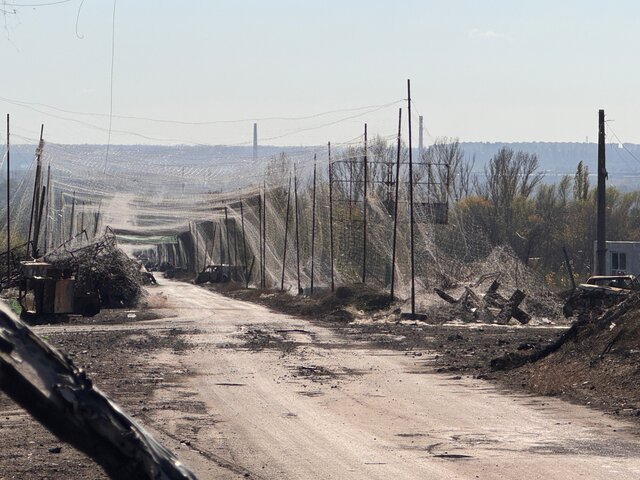
Ahead of his meeting with U.S. presidential envoys Steve Witkoff and Jared Kushner, Russian President Vladimir Putin proposed a humanitarian operation in Kostiantynivka, in Ukraine’s Donetsk region, modeled on a similar mission recently carried out in Oleshky. According to Putin, “about 400 to 500 civilians” remain in the city.
A rescue robot entering a building with thirty seconds on the clock should sprint toward the single most promising room; given ten minutes, it should instead explore a broader tour. Yet vision-language-navigation (VLN) models are typically evaluated under a fixed episode limit that the policy never observes, even though time-critical missions require behavior to adapt to the available budget. We study budget-conditioned object search: given a target category and an explicit…
Light can manipulate magnetic order and its excitations on ultrafast timescales, including through resonantly driven phonons. In antiferromagnets, light can also create correlated magnon pairs, or bimagnons. Unlike single magnons, whose damping has been measured and modeled in detail, little is known about the lifetime, interactions and decay of such correlated pairs: prior two-magnon measurements show broad linewidths or coherences that dephase within 200 fs. Here we pump…
Vision language navigation (VLN) is very challenging for Unmanned Aerial Vehicles (UAVs) since small errors in 3D motion prediction can lead to navigation errors and collisions. Unable to fathom execution outcomes in 3D environments, existing methods often struggle to predict accurate navigation waypoints from language instructions. To solve this, we introduce the Prototypical Visual Imagination framework, shortened as ProtoVis-Nav, which forces the model to imagine an…
The blood-brain barrier keeps most proteins in the bloodstream out of the brain, but not all. The pathways that import them are damaged early in Alzheimer’s disease models, hinting at new ways to treat the disease.