Results for “oPt”

Quantum Computing Report Mohamed Abdel-Kareem

Unitary Foundation Releases 2026 Quantum Open Source Survey Covering SDK Adoption, Hybrid HPC Workflows, and AI Tooling

The 2026 Quantum Open Source Survey, with over 1,800 respondents, reveals key trends in quantum software adoption, hybrid workflows, and AI tooling. Qiskit leads in SDKs, IBM Quantum in cloud services, and Anthropic Claude Code in AI assistants. The survey also highlights the growing use of Python and C/C++, challenges in QEC and HPC, and cautious optimism regarding AI's role in quantum development.

Read at Quantum Computing Report

South China Morning Post Lam Ka-sing Geopolitics

Could New World rescue plan put Airport Authority’s 11 Skies sweetener at risk?

New World Development’s proposed rights issue could erode the value of the Airport Authority’s option to buy 750 million shares in the embattled Hong Kong developer, analysts have warned. The option was included as a sweetener in the September agreement under which New World handed over the massive 11 Skies retail and entertainment project to the authority. The actual impact, the analysts said, hinged on whether the authority secured an anti-dilution clause in the agreement…

Read at South China Morning Post

TechPowerUp Nomad76

(PR) EVE Vanguard, Assetto Corsa Rally, Lightyear Frontier 1.0 & Teardown Adds NVIDIA DLSS 4.5

NVIDIA DLSS gives GeForce RTX and RTX Spark the highest levels of image quality, and a range of options for accelerating performance. This week, we're highlighting the launch of EVE Vanguard's 24/7 alpha, which is accelerated and enhanced by DLSS 4.5, and bringing you news of DLSS 4.5 upgrades and additions for Assetto Corsa Rally, Blender, Lightyear Frontier, and Teardown. Additionally, gamers can now download Marvel Rivals Season 11, which adds native support for RTX Spark…

Read at TechPowerUp

OpenAI News SI

Advancing chip design with OpenAI models

OpenAI models optimized circuits used in Jalapeño silicon and improved RISC‑V core designs, showing progress in AI-assisted chip design with GPT‑6 Astra.

Read at OpenAI News

9to5Mac Marcus Mendes Gadgets

WhatsApp’s first-party chat history backup service moves ahead

Select WhatsApp beta testers on iOS are now seeing an option to use the app’s own backup service as an alternative to iCloud. Here are the details.

Read at 9to5Mac

The Register Tobias Mann

GPU giants throw HPC users some tasty crumbs

Nvidia unveils an HPC-optimized Rubin GPU to challenge AMD's 288 teraFLOPS MI430X

Read at The Register

Dark Reading Jai Vijayan Security

Optimizely Malware Attacks Highlight Third-Party Vendor Risks

At least 178 organizations, including several major brands, unwittingly exposed website visitors to hydra-like malware via a third-party platform.

Read at Dark Reading

TechCrunch AI Julie Bort SI

Amazon and Google will together own nearly 30% of Anthropic after its IPO

Amazon will own just under 15% of Anthropic after the IPO, with the option to go much higher. Google is a close second with holdings of nearly 14%.

Read at TechCrunch AI

arXiv (research papers) Md Rakibul Islam Prince

LuxTac: A Flexible, Scalable, and Open-Source Optical Taxel Array with Distributed Three-Axis Force Sensing for Tactile Robot Learning

Low-cost tactile arrays have made touch a practical input for robot learning, but piezoresistive designs sense only pressure, while camera-based sensors that also resolve shear are too bulky to tile over a gripper. To solve this problem, we present LuxTac, a flexible, scalable optical taxel array, about 3.5 mm thick and built from off-the-shelf parts. Each taxel is a digital RGBC light-to-digital converter under a translucent white silicone layer capped by an opaque black…

Read at arXiv (research papers)

arXiv (research papers) Sehyeon Lee

Towards Fair Resource Sharing in Agentic LLM Serving

As LLM agents increasingly execute complex, multi-step tasks on shared inference infrastructure, resource contention across the end-to-end LLM serving stack causes severe and uneven slowdowns across agents. Existing agentic serving systems primarily optimize throughput and latency, with comparatively limited attention to fairness among concurrent agents. Although fairness has been studied in conventional LLM serving at the token and request levels, these approaches do not…

Read at arXiv (research papers)

NBC News Harry Rabinowitz

6 e-readers that could make hard book lovers make the switch

NBC Selected editors tested popular e-readers from Amazon Kindle, Rakuten Kobo and more. Shop our favorite black-and-white, color and note-taking options.

Read at NBC News

Android Authority Ryan McNeal Gadgets

Google now lets Gemini users opt out of AI training while keeping their chat history

You can now keep your Gemini chat history while opting out of data training.

Read at Android Authority

The Hill Mira Bhakta Geopolitics

Duffy on $50B request: 'I'll take what I can get'

Transportation Secretary Sean Duffy said he would “take what I can get” regarding his $50 billion request to upgrade copper wiring systems the Federal Aviation Administration (FAA) relied on. When asked at a Tuesday press conference at Congress if the FAA would opt to do a gradual approach to upgrade systems if the agency doesn’t...

Read at The Hill

The Record Security

Website management platform Optimizely confirms hackers put malicious code into customer sites

Researchers said they found malicious JavaScript code on 178 different widely visited websites run through the Optimizely Web experimentation platform. The company confirmed the breach.

Read at The Record

Semiconductor Digest Shannon Davis

Lambda Announces World’s First Large-Scale CPO Deployment of NVIDIA Photonics Switches

Lambda, the Superintelligence Cloud, today announced the world’s first large-scale deployment of co-packaged optics (CPO) networking, connecting 10,000+ NVIDIA Blackwell Ultra GPUs using NVIDIA Photonics networking switches at its Quebec campus.

Read at Semiconductor Digest

AWS Machine Learning Blog Meghan Kothari SI

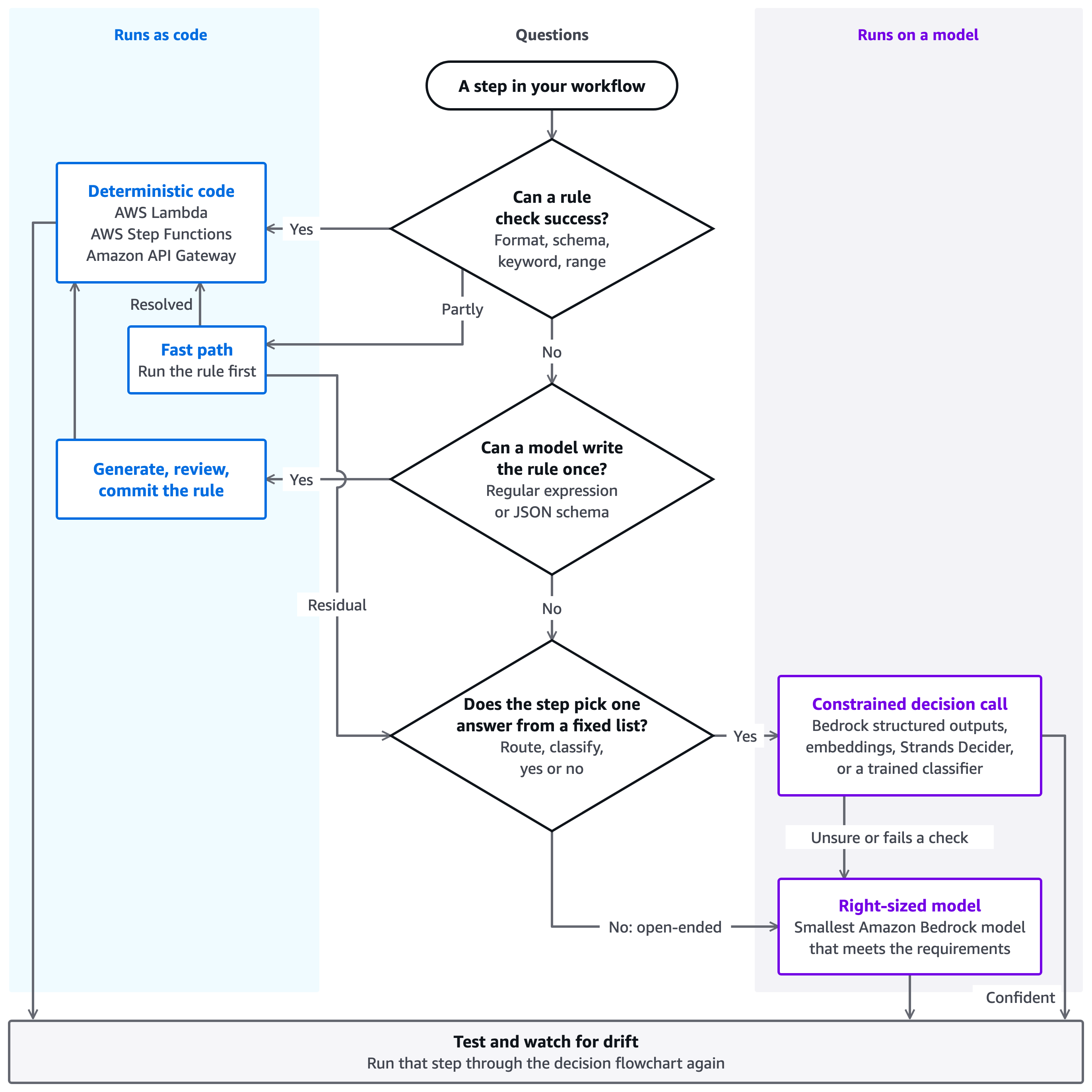
Cut generative AI costs: Code for rules, models for judgment

The biggest cost lever in a generative AI system is whether you call a model at all. Learn how to decide whether each workflow step needs a model, and map each option to AWS: deterministic code, a constrained decision call, or a right-sized model on Amazon Bedrock.

Read at AWS Machine Learning Blog

Unit 42 (Palo Alto Networks) Sherrod DeGrippo Security

Borrowed Code, Real Consequences: What OPTIMJACK Teaches Us

The OPTIMJACK supply chain attack demonstrates how a compromised vendor script can expose websites, highlighting the need for strict segmentation.

Read at Unit 42 (Palo Alto Networks)

BBC Politics Geopolitics

Burnham to set out options next month for long-term EU relationship

The prime minister says he will set out options for the future "alongside" his 10-year economic plan.

Read at BBC Politics

Al Jazeera Geopolitics

Jeffries shifts strategy amid growing Democratic divisions in US House

The lawmaker is opting to put progressive opponents on record as he vies to become the chamber's first Black speaker.

Read at Al Jazeera

arXiv (research papers) G. Bargiacchi Space

Lunar laser ranging analyses of NGLR-1 data with PEP and prospects for MPAc: towards one millimeter range precision

Since 1969, Lunar Laser Ranging (LLR) has provided critical data for investigating Earth-Moon dynamics, lunar internal structure, and tests of General Relativity (GR). However, the measurement precision of historical arrays (such as those from Apollo and Lunokhod missions) is inherently limited by laser pulse broadening induced by lunar librations. To overcome this limit, next-generation single Cube Corner Retroreflectors (CCRs) of large optical diameter have been developed…

Read at arXiv (research papers)

9to5Google Ben Schoon Gadgets

WhatsApp starts rolling out built-in cloud backup on Android, and it’s free

Meta’s WhatsApp is making a huge change to chat backups, with a new built-in cloud backup option on Android that doesn’t rely on Google, and is free.

Read at 9to5Google

arXiv (research papers) Shobhita Sundaram SI

Do LLM Agents Still Need to Be Told How to Self-Improve?

LLM agents increasingly drive their own learning. Self-improvement methods delegate various components of model optimization to the models themselves. As models become more capable, this motivates a basic question: do these increasingly capable models still need us to specify how they should self-improve? In this paper we study an autonomous paradigm in which, given basic primitives, resources, and a general goal for self-improvement, agents construct their own self-learning…

Read at arXiv (research papers)

Quantum Computing Report Mohamed Abdel-Kareem

Aqarios Launches Constraint-Native Quantum Optimizer in the IBM Qiskit Functions Catalog

Aqarios GmbH has launched its Constraint-Native Quantum Optimizer in the IBM Qiskit Functions Catalog, offering a managed solver for discrete combinatorial optimization. This optimizer uses Iterative Warm-Start XY-Mixer QAOA (IWS-QAOA) to enforce constraints natively at the circuit level, reducing QPU compute times significantly. Benchmarks on IBM Heron processors demonstrate its ability to find optimal solutions for complex problems with high feasibility and reduced runtime.

Read at Quantum Computing Report

arXiv (research papers) Hansang Lee SI

Say Less, Hallucinate Less? Diagnosing and Restoring Object Coverage in Preference-Optimized Vision-Language Models

Preference optimization (PO) is the standard way to reduce object hallucination in large vision-language models. We find that four public PO checkpoints of LLaVA-1.5-7B also lower object coverage. They name fewer object categories, and their lower hallucination rates bring no significant gain in set-level object F1 on CHAIR. We therefore ask how much of the PO gain the base model can reproduce by stopping earlier. A positive end-of-sequence (EOS) logit bias lets the base…

Read at arXiv (research papers)

ZDNET AI Lance Whitney SI

Google is making it easier to opt out of Gemini AI model training – here’s how

You’ll soon be able to turn off Gemini model training but still retain access to your previous chats with Google’s AI.

Read at ZDNET AI

SemiWiki Moh Kolb SI

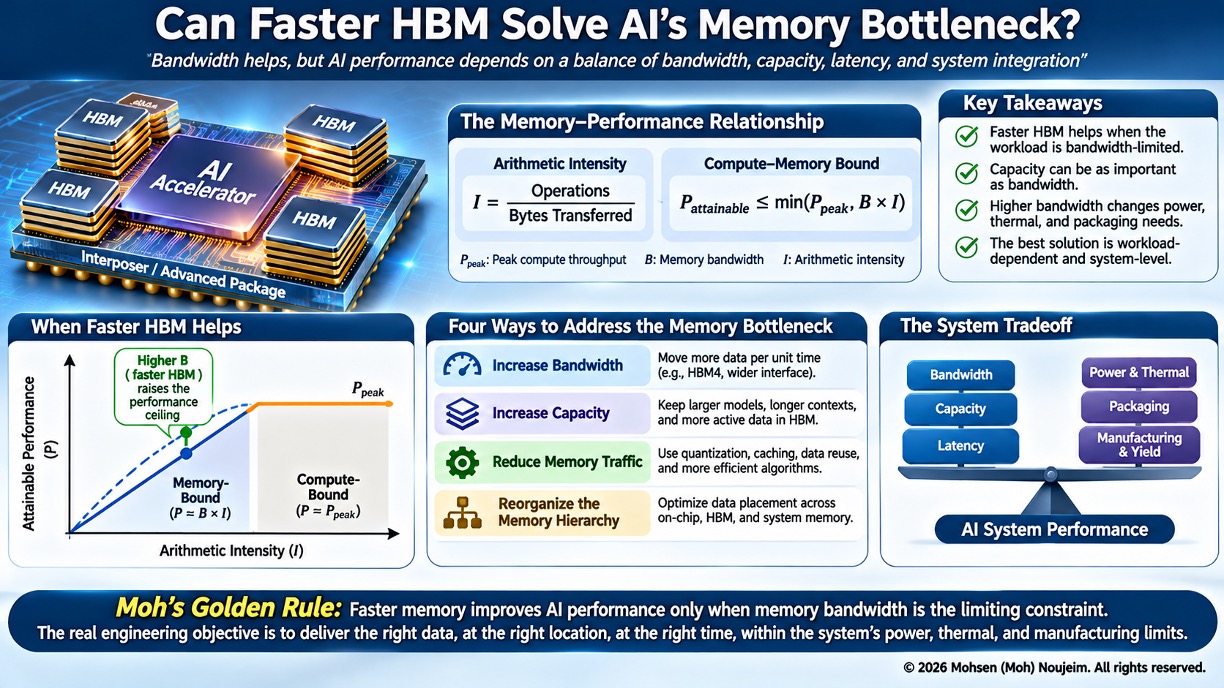
Can Faster HBM Solve AI’s Memory Bottleneck?

Why bandwidth alone cannot determine the performance of the next generation of AI accelerators High-bandwidth memory is entering another phase of rapid development. HBM4 increases interface width and available bandwidth, while custom HBM architectures create opportunities to optimize how memory connects to AI accelerators.…

Read at SemiWiki

The Quantum Insider Matt Swayne

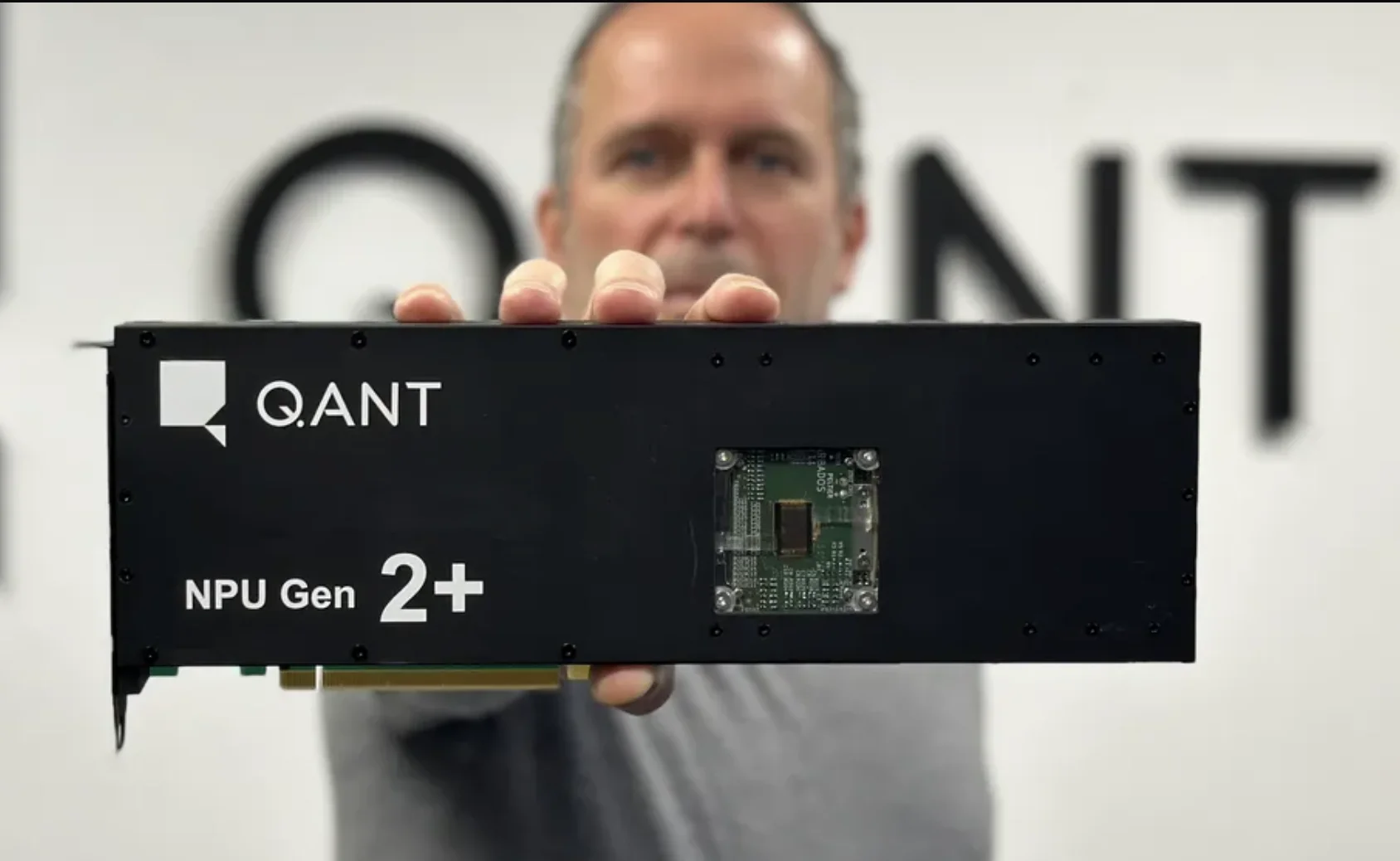
Q.ANT Demonstrates Hybrid Photonic-GPU System for Language Models

Insider Brief PRESS RELEASE — Q.ANT, the pioneer in commercial photonic computing, today unveiled the NPU Gen 2+, the latest generation of its Native Processing Unit (NPU) technology, at SC26 in Chicago. The NPU Gen 2+ adds optical Discrete Fourier Transforms (DFTs), which expands the set of mathematical functions developers can run directly in light

Read at The Quantum Insider

Semiconductor Engineering Technical Paper Link

Defect-Aware Chiplet Matching For Heterogeneous Integration Yield (ASU, Ampere)

Researchers at Arizona State University and Ampere Computing published “DT-MATCH: Defect- and Topology-Aware Chiplet Matching for Yield Optimization in Heterogeneous Integration.” Abstract “Heterogeneous integration (HI) and advanced packaging enable chiplet-based system-on-chip (SoC) designs; however, they also introduce new yield challenges arising from manufacturing defects and complex die-to-die (D2D) interconnect constraints. In particular, lane-level defects…

Read at Semiconductor Engineering

arXiv (research papers) Qisheng Wang

Optimal Min-Entropy Estimation with High Probability

Min-entropy plays a fundamental role in assessing the unpredictability of randomness sources. In particular, NIST SP 800-90B specifies min-entropy estimation as a key procedure for entropy sources used in cryptographic random bit generators, illustrating the practical importance of reliable min-entropy estimation. In this paper, we settle the sample complexity of min-entropy estimation with high probability in both the classical and quantum cases. Specifically, for…

Read at arXiv (research papers)

arXiv (research papers) Katia Hakem

Performance of Fusion-Based Quantum Computing with Imperfect Photon Indistinguishability

Fusion-based quantum computation (FBQC) is a promising route to fault-tolerant photonic quantum computing, connecting small entangled resource states through linear-optical fusion measurements. While logical encoding can substantially improve resilience to photon loss, whether these benefits extend to other noise remain an open question. In this work, we show that this is not generally the case when accounting for partial photon distinguishability during resource state…

Read at arXiv (research papers)

Older stories