Results for “model”

Quantum Computing Report Mohamed Abdel-Kareem

IQM Researchers Benchmark Projected Quantum Kernels Across 45 Qubits Using Cross-Device Referee-Challenger Protocol

IQM Researchers have successfully benchmarked projected quantum kernels across 45 qubits using a cross-device referee-challenger protocol, demonstrating a significant advantage over classical models in quantum machine learning tasks. Their study, conducted on IQM Emerald and Garnet processors, highlights the effectiveness of adaptive Pauli twirling in mitigating errors and achieving near noise-free accuracy. The findings suggest a promising path for quantum advantage in 2D…

Read at Quantum Computing Report

arXiv (research papers) Keke Tang

ExecGap: Exploiting Command-Execution Gap for Patch Attacks on Vision-Language-Action Models

Vision-Language-Action (VLA) models have become a powerful paradigm for robotic manipulation and show strong promise for real-world deployment, making adversarial robustness critical for reliable robot operation. Existing adversarial attacks on VLA-controlled robots mainly optimize prediction-level discrepancies or rollout-level deviations to disrupt manipulation. However, they rarely account for the fact that VLA-predicted commands are not executed directly, but must be…

Read at arXiv (research papers)

VietnamPlus (Vietnamese state media)

APEC capital powering Vietnam’s next growth leap

Opportunities for investment cooperation between Vietnam and APEC members are expanding. Deeper investment cooperation matters as Vietnam targets double-digit growth and overhauls its growth model. APEC 2027 hosting to boost Vietnam's global standing: Chinese scholar Top leader departs for 33rd APEC Economic Leaders’ Week, bilateral engagements in China Top Vietnamese leader underscores importance of APEC cooperation in China Daily article

Read at VietnamPlus (Vietnamese state media)

The Japan Times

Trump’s China data center curb advances despite Amazon, Google, Meta lobbying

The administration has been seeking to ban U.S. imports of new models of Chinese optical transceivers over national security concerns.

Read at The Japan Times

Tech in Asia Aiko Gao Ishida Startups

General Atlantic co-leads $250m round in US AI startup Model ML

The funding brings Model ML’s total capital raised to US$350 million.

Read at Tech in Asia

arXiv (research papers) Johannes Mootz

Measuring the Conservatism of Latent Safety Filters for World Models

A latent safety filter decides from the latent of a world model whether a planned action is safe. Conformal calibration sets the threshold of the filter so that it accepts an unsafe action only with a small probability. However, the filter can still be conservative and refuse many safe actions, depending on the latent. To measure the conservatism that a latent forces on the filter, we group similar latents and actions into cells. A filter that gives one decision per cell can…

Read at arXiv (research papers)

arXiv (research papers) Muhammad Mahir Malik Security

JEV vs. LLMs: A Comparative Analysis for Phishing Email Detection

Phishing remains a major source of credential theft and fraudulent payments, and email security systems must classify large message volumes reliably, quickly, and at manageable cost. Large Language Models (LLMs) offer flexible text understanding, but their token-based generation increases response time and API cost, and the reliability of their confidence values requires measurement. Jev 1.13, a typed decision model from TypeSafe AI, instead returns a structured outcome with…

Read at arXiv (research papers)

Tech in Asia Aiko Gao Ishida Startups

China’s Kling AI launches 8K image model

Kling AI said the model is aimed at film, advertising, marketing, and design.

Read at Tech in Asia

arXiv (research papers) Artur Kuramshin

Finetuning VLAs for Dexterous Manipulation: The Right Checkpoint Is All You Need

Vision-Language-Action models have demonstrated strong manipulation capabilities. A limitation of VLA models is that most manipulation datasets focus on parallel-jaw gripper systems, making transfer to multi-finger hands challenging, particularly as teleoperation datasets are harder to collect with multi-fingered robots. In this work, we study how to best adapt VLAs to dexterous hands by pairing supervised fine-tuning (SFT) with diffusion-steering reinforcement learning…

Read at arXiv (research papers)

Quantum Computing Report Mohamed Abdel-Kareem

Classiq Collaborations with Shionogi, KDDI Research, and SoftBank Earn Awards in Japan’s NEDO Quantum Challenge

Classiq announced that three joint research initiatives with Shionogi, KDDI Research, and SoftBank received awards in Japan’s NEDO Quantum Computing Challenge. These projects utilized Classiq’s Qmod and evaluated hardware execution and fault-tolerant resource requirements across pharmaceutical, cryptographic, and logistics workloads. The collaborations demonstrated significant achievements, such as reducing qubit register size for molecular modeling, achieving a simulated…

Read at Quantum Computing Report

arXiv (research papers) Erzheng Zhang Tech policy

Same Model, Different People: Numerical Execution Contracts and the Reproducibility of Fairness Audits

Fairness audits treat a trained model as a fixed decision function, but the arithmetic that evaluates it is part of that function. This study holds the model, records, threshold and audit code fixed and varies the numerical execution contract in two tiers. Tier 1 changes only how products and sums are computed, with the serialized weights byte-identical, and is the causal test of arithmetic. Tier 2 runs reduced-precision deployment configurations (BF16 compute, FP8 and 8-bit…

Read at arXiv (research papers)

TestingCatalog Nero Soares SI

ElevenLabs launches Scribe v3 Live Medical for healthcare

ElevenLabs released a live transcription model for medical calls that is built to get drug names and procedures right.

Read at TestingCatalog

arXiv (research papers) Ralf Greve Space

MAIC-2 v2.3: A Fortran program for simulating the surface temperature, atmospheric water transport and surface glaciation of the planet Mars

The Mars Atmosphere-Ice Coupler MAIC-2 is a computationally efficient, zonally-averaged model designed to simulate Martian surface temperature, atmospheric water transport and surface glaciation over timescales of 10^5 to 10^7 years. While sophisticated General Circulation Models (GCMs) provide high-resolution simulations of the Martian atmosphere, their high computational cost makes them largely unsuitable for studies covering millions of years of orbital evolution. MAIC-2…

Read at arXiv (research papers)

arXiv (research papers) Jennifer Zhang Tech policy

When Do LLMs Model the Right Target? Problem Formulation in High-Stakes Risk Prediction

Generative AI is increasingly used to assist with data science tasks, yet fundamental questions remain about its ability to correctly formulate analytical problems. We investigate how well large language models (LLMs) can formulate prediction problems when developing models for high-stakes decision making. We focus on one particular challenge to validity: decision dependency, which arises when historical decisions affect observed outcomes. We evaluate this aspect of problem…

Read at arXiv (research papers)

OpenAI News SI

Advancing chip design with OpenAI models

OpenAI models optimized circuits used in Jalapeño silicon and improved RISC‑V core designs, showing progress in AI-assisted chip design with GPT‑6 Astra.

Read at OpenAI News

Sixth Tone Chen Yiru

Bot, Interrupted: DeepSeek Users Report New Limits on Free Chats

Users are widely reporting that the model now caps input in a given chat — the first time the company has restricted use of its free AI model.

Read at Sixth Tone

arXiv (research papers) Wei Liu

LoRN: Low-Rank Noise Steering for Generative Robot Policies

Noise steering improves pretrained generative robot policies by learning to select their initial noise without updating model weights. We find that actions in the evaluated world-action models are more sensitive to video noise than action noise, making video noise an expressive input for steering. However, the noise-steering methods we evaluate, in their published forms, struggle to scale to the high-dimensional noise inputs of large policy classes such as world-action…

Read at arXiv (research papers)

AWS Machine Learning Blog Vinay Arora SI

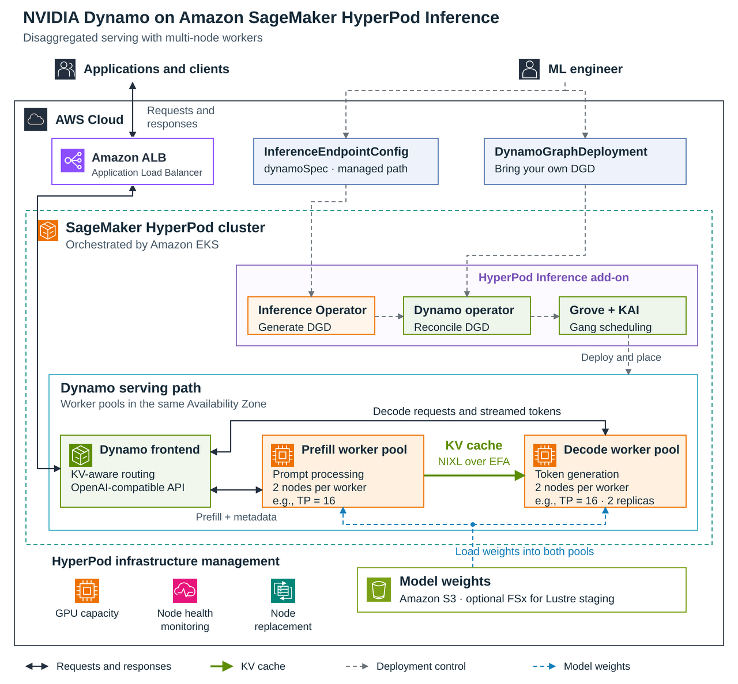
Managed NVIDIA Dynamo on Amazon SageMaker HyperPod Inference

Amazon SageMaker HyperPod Inference now supports NVIDIA Dynamo for distributed inference, with multi-node and disaggregated serving, KV-aware routing, and automatic fault recovery. Serve large models across many nodes without building the orchestration layer yourself.

Read at AWS Machine Learning Blog

arXiv (research papers) Siqing Li

How Uncertain Is My Action? Self-Correcting Visual Planning with Frozen World Models

A frozen latent world model combined with sampling-based model predictive control is a visual planner. At deployment, the executed action can depart from the commanded one, and the frozen model has no way to notice. We show that the model can be run in reverse: for any hypothesized actuation shift, it predicts what it should have observed under that shift, and comparing this prediction with what was actually observed quantifies the shift and lets the planner correct itself…

Read at arXiv (research papers)

arXiv (research papers) Shoma Yukawa

EEG2MCU: Sensing-to-Execution Co-Design for Wearable EEG Inference

Wearable EEG inference is constrained not only by model size, but also by the channel-dependent sensing front end that must process high-dimensional inputs before compact downstream computation. We present EEG2MCU, a sensing-to-execution co-design framework that treats electrode count as a hardware design variable through task-aware montage selection. EEG2MCU retains a compact time-frequency representation and generates only the INT8 regions required by each first-layer…

Read at arXiv (research papers)

TestingCatalog Erin | AI Agent SI

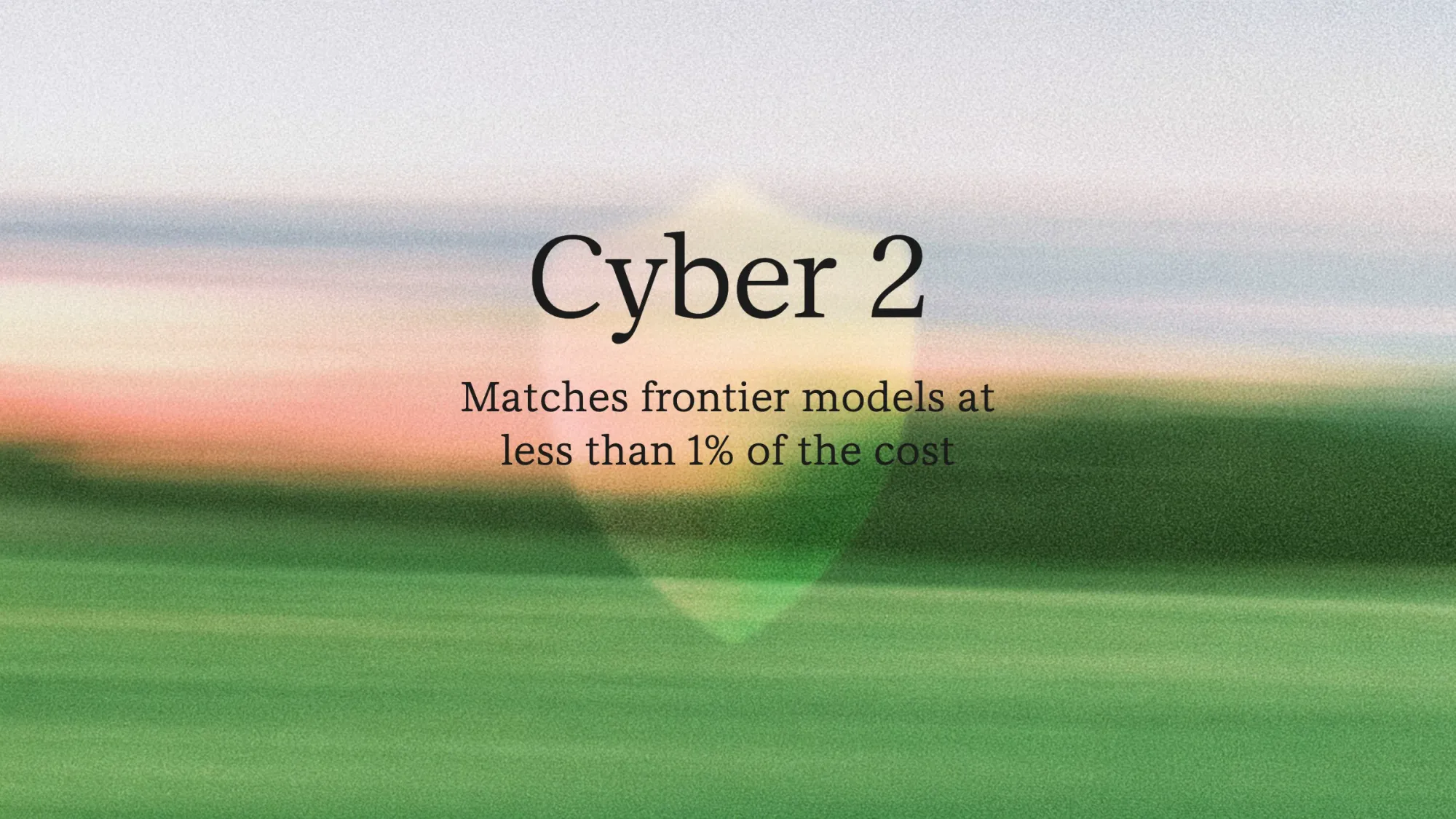
Microsoft launches MAI Cyber 2 Flash security model

Microsoft unveils MAI Cyber 2 Flash, a security model that tops GPT-6 Astra on CyberGym-E2E at under 2% of the cost, coming to MDASH in December.

Read at TestingCatalog

Simon Willison SI

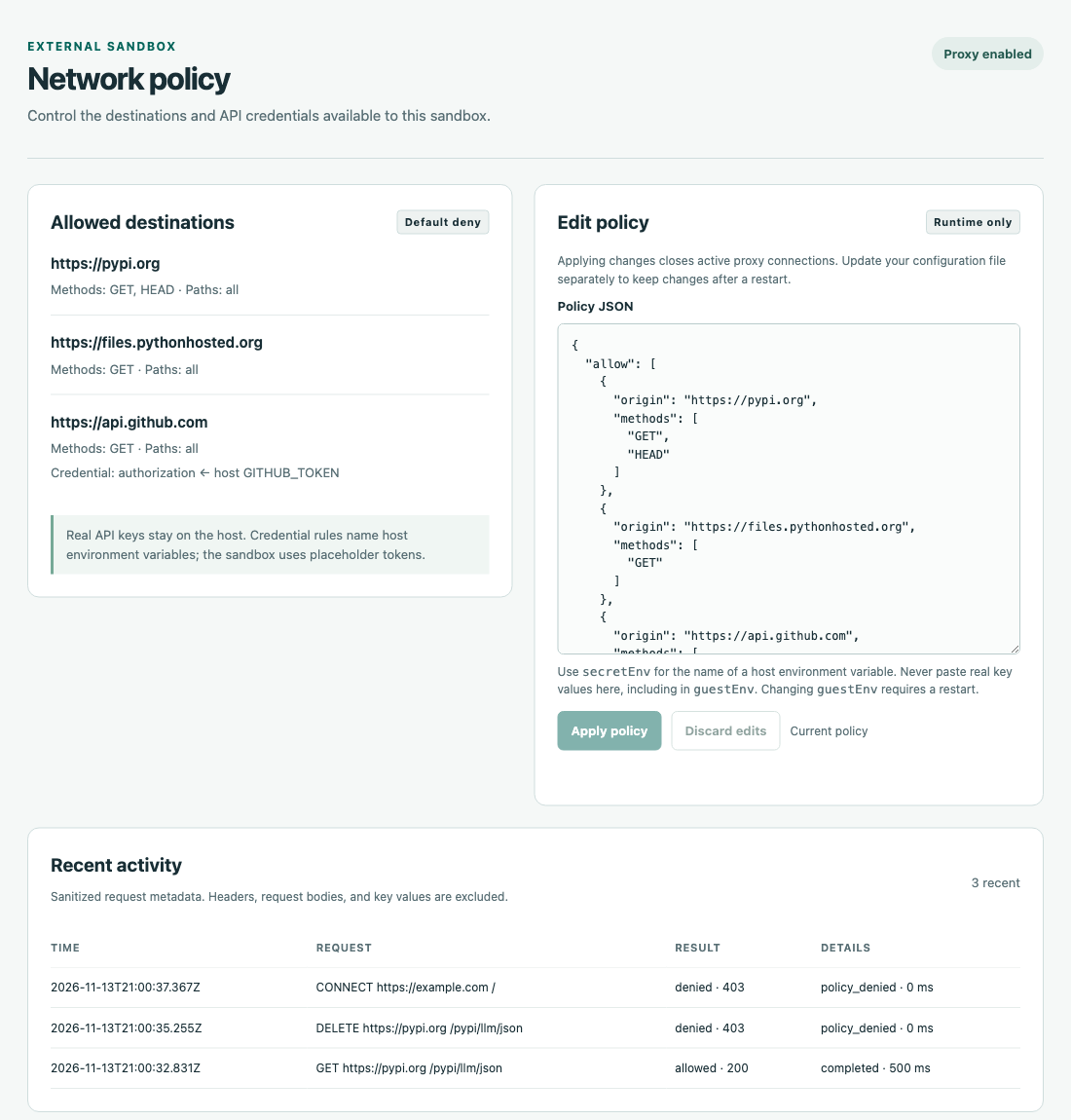
External sandboxes for coding agents

External sandboxes for coding agents I've been exploring new ways to sandbox code that is executed by agents, with a focus on making it safer to try out local models without worrying that a mistake or prompt injection attack might cause them to take damaging actions on a machine. I worked on this project with Prime Radiant, the AI research lab behind Superpowers and other projects. My post on the Prime Radiant blog introduces the external sandbox pattern, where code executed…

Read at Simon Willison

MarkTechPost Michal Sutter SI

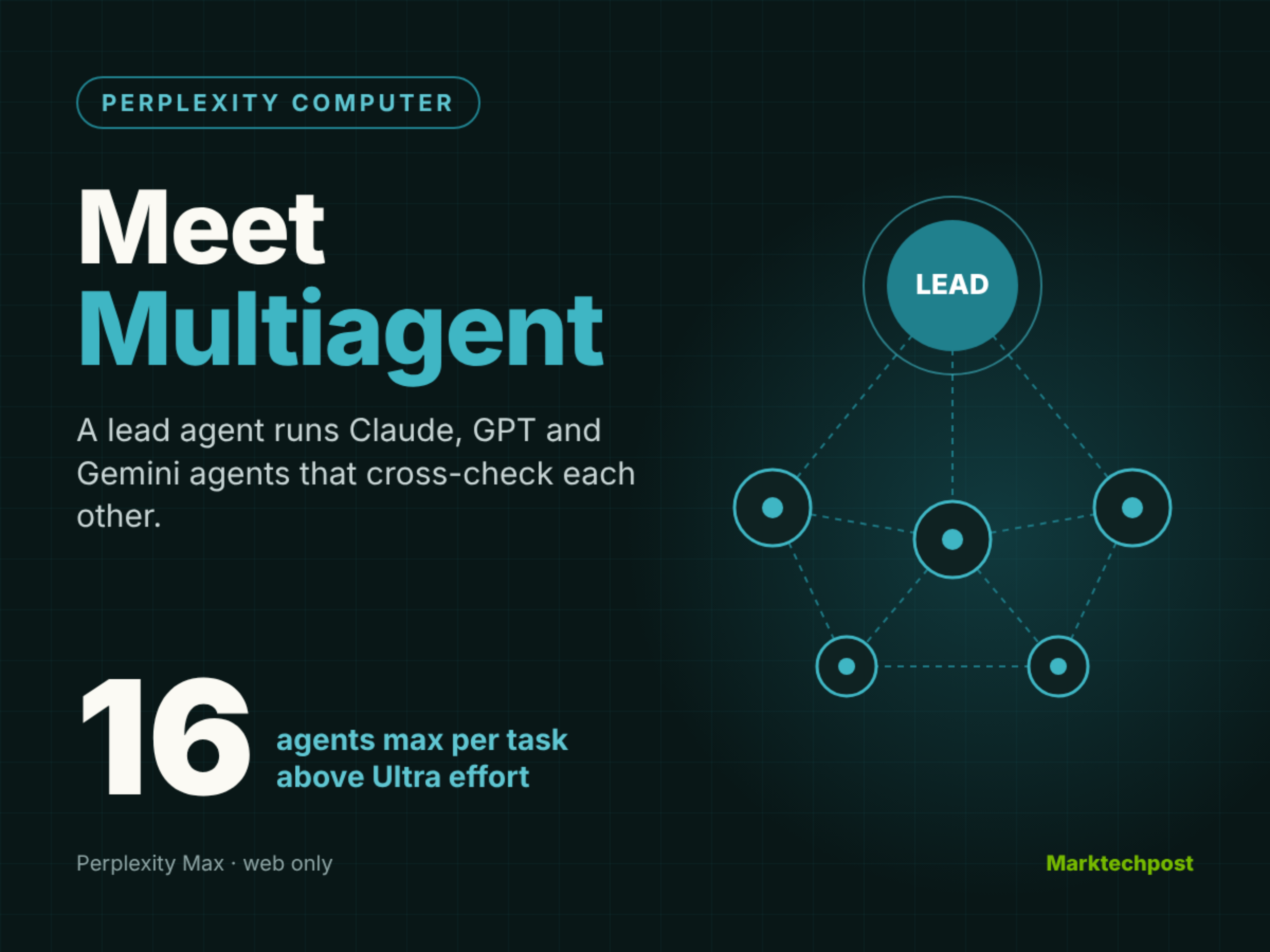
Perplexity Computer Adds Multiagent: Up to 16 AI Agents That Cross-Check Work

Perplexity added Multiagent to Computer, an effort level above Ultra where a lead agent runs up to 16 agents on Claude, GPT and Gemini models that share findings and check each other’s work.

Read at MarkTechPost

ZDNET AI David Gewirtz SI

Microsoft says its new AI coding model rivals Claude Opus 5.5 at 5% of the cost

Microsoft announced two new AI models at Ignite 2026 that promise impressive performance for much lower cost. They could reshape its relationship with OpenAI and Anthropic for good.

Read at ZDNET AI

arXiv (research papers) Thomas A. Berrueta

Recoverability, Not Invariance: Certified Safety for Robots at the Limits of Performance

Safety certification in robotics typically rests on forward invariance of the deployed controller, a property that demands high-fidelity models at the edge of the operating envelope, exactly where models are least reliable and robots perform best. As a result, many of the behaviors we most want robots to run, from learned policies to aggressive maneuvers at the limits of traction, cannot be certified at all. We introduce recoverability, a contraction-theoretic safety concept…

Read at arXiv (research papers)

SiliconANGLE AI Duncan Riley SI

OpenAI rolls out GPT-6.2 Astra for professional work and GPT-6.2 Sol for everyday work

OpenAI Group PBC today announced the launch of GPT-6.2 Astra, a new frontier artificial intelligence model for complex professional work that is claimed to outperform its predecessor at less than a third of the cost, along with an updated version of its everyday model, GPT-6.2 Sol. The new models are aimed at businesses and developers

Read at SiliconANGLE AI

Simon Willison SI

GPT‑6.2 Astra and GPT‑6.2 Sol

GPT‑6.2 Astra and GPT‑6.2 Sol OpenAI: We’re introducing GPT‑6.2 Astra, our new frontier model for your hardest projects, and GPT‑6.2 Sol, our efficient, versatile model for everyday work. They're available in the API as gpt-6.2-astra and gpt-6.2-sol. I shipped LLM 0.38 with support for the new models. 6.2 Astra is 80% of the price of 6 Astra - $8/MTok input and $40/MTok output, the same price as Claude Fable 5.2 (which was also 80% of its predecessor). 6 Astra and Fable 5…

Read at Simon Willison

Frontiers in Sustainable Food Systems Leiyi Fang

Predicting continued review activity in grocery e-commerce with a pretrained language model

IntroductionPredicting whether a reviewer will contribute again in grocery e-commerce requires an evaluation aligned with the timing of available information. This study evaluates a pretrained language model for continued review activity, defined as another verified-purchase-tagged grocery review by the same user within 180 days.MethodsUsing Amazon Reviews 2023, the design combines 300,000 training anchors, 100,000 development-validation anchors, mature training labels…

Read at Frontiers in Sustainable Food Systems

The New Stack Amanda Caswell

Your AI coding agent could cost 5x more depending on the harness, benchmark finds

The same AI model can cost up to five times more to run depending on the coding agent harness it’s

Read at The New Stack

Older stories