Results for “Data”

Kyiv Post Kyiv Post

Ukrainian Battlefield Data Will Train Denmark’s AI

Danish armed forces will receive huge quantities of battlefield data and images from Ukraine with which it will train its own warfighting AI models. The Danish defense ministry announced that the two countries had signed an agreement on Tuesday.

Read at Kyiv Post

Tech in Asia Young Zhan Heng Startups

US chip rules favor American data centers in Singapore

Two firms in the same Singapore building could face different chip rules, depending on where they’re headquartered, as new US export curbs take hold.

Read at Tech in Asia

Digital Trends Shimul Sood

Proton’s AI assistant just got a lot smarter, and it promises to keep your data private

With new desktop apps, automated tasks, and integrations with popular services, Proton is turning Lumo into a more capable AI assistant while keeping privacy at the center of the experience.

Read at Digital Trends

South China Morning Post Iman Muttaqin Yusof Geopolitics

‘000000’ dethrones ‘123456’ as Malaysians’ top password despite surging hacking fears

The password “000000” turned up more than 120,000 times among online users in Malaysia over a year to September, according to a global study, overtaking “123456” as the country’s most common exposed password amid a recent wave of data leaks. The findings come as Prime Minister Anwar Ibrahim calls for a review of cybersecurity across government agencies, banks and state-linked companies. Malaysia raised its national cyber threat level from low to medium earlier this month…

Read at South China Morning Post

arXiv (research papers) Eliot J. Kim Space

Enabling joint chemical and meteorological data assimilation with an atmospheric foundation model

The hydroxyl radical (OH) is the main oxidant in the troposphere and accounts for 88% of the methane sink, yet its abundance and trends remain poorly constrained. Satellites observe many of the chemical and meteorological drivers of OH, but assimilating both requires a model that represents chemistry and meteorology together. Existing chemistry-climate models are too expensive for joint data assimilation. Here, we present AuroraChem, a fine-tuned version of the Aurora…

Read at arXiv (research papers)

Semiconductor Engineering Jesse Allen SI

Blog Review: Nov. 18

PCIe and trust; rack-scale co-design; heterogeneous scaling; AI data center primer; on-device balancing; EU semi trends.

Read at Semiconductor Engineering

ReliefWeb Qatar Charity

World: Qatar Charity’s Information and Crisis Management Center Supports Faster Humanitarian Response [EN/AR]

Country: World Source: Qatar Charity Please refer to the attached files. As natural disasters and conflicts drive displacement and increase relief needs, Qatar Charity has established an Information and Crisis Management Center to support its humanitarian operations. Launched in June 2026, the Center is one of the organization’s major humanitarian digital transformation initiatives. According to a report published on the Ghiras website, the Centre brings together data…

Read at ReliefWeb

arXiv (research papers) Keming Fan

ReCIM-HD: A 40 nm On-Device Learning Accelerator with Hyperdimensional Computing via Importance-Based Hybrid Digital-ReRAM CIM

ReCIM-HD is an on-device learning (ODL) accelerator that integrates gradient-free hyperdimensional computing (HDC) with resistive RAM (ReRAM)-based analog compute-in-memory (CIM). ReCIM-HD introduces three key techniques: (1) ultra-low-power HDC-based edge ODL without costly back-propagation operations; (2) non-volatile ReRAM-based storage for class hypervectors and CIM similarity search, enabling energy-efficient inference and power-gating during idle periods without data…

Read at arXiv (research papers)

Securelist (Kaspersky) Vladimir Nestor Security

The forced audit: how AuditTeam’s OpsAgent framework masks ransomware as consulting

How does a ransomware gang sell a “forced audit”? We break down AuditTeam’s OpsAgent implant, its Rust rewrite, and the extortion model demanding a consulting fee to delete stolen data.

Read at Securelist (Kaspersky)

Help Net Security Mirko Zorz Security

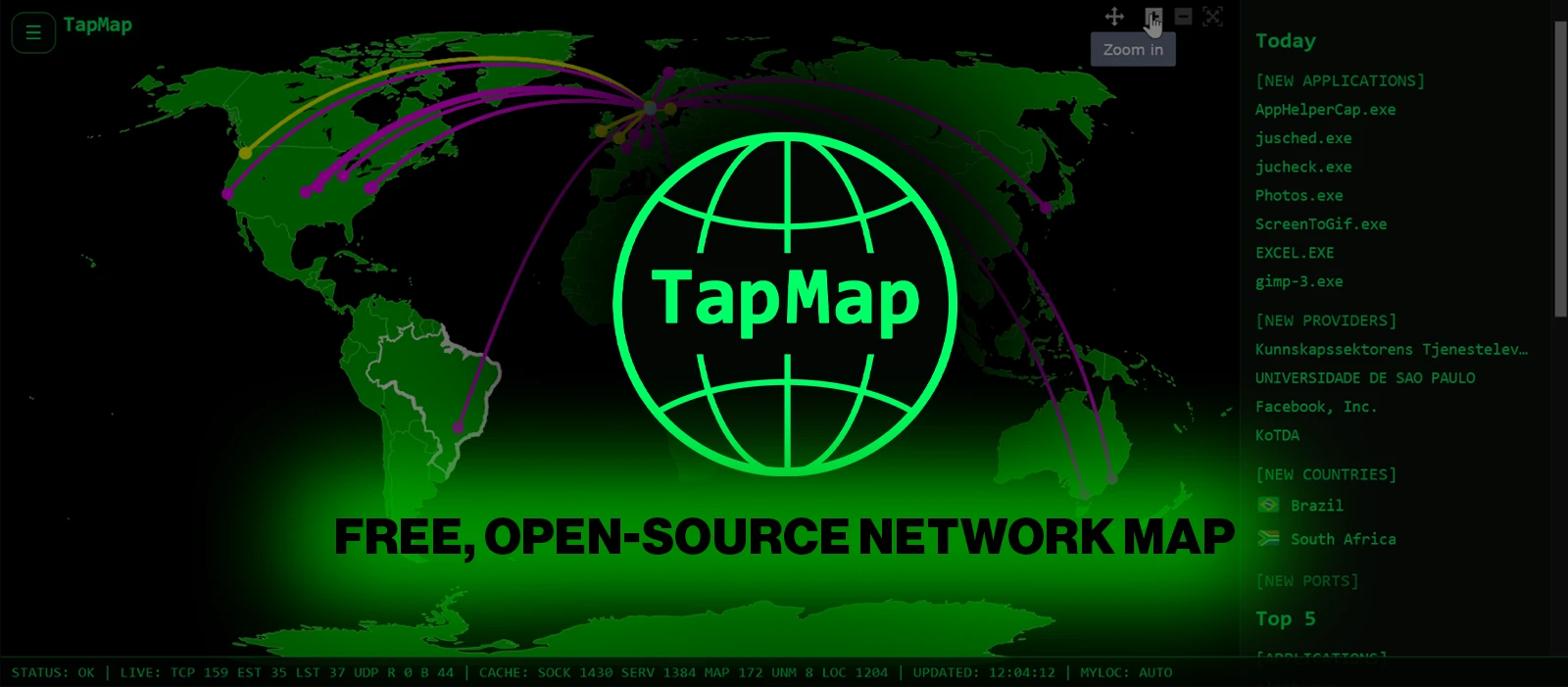
TapMap: Free, open-source network map

TapMap is a free, open-source desktop app that plots a computer’s active network connections on an interactive world map. It scans open sockets, pulls out the remote IP addresses and looks each one up in a local GeoIP database. Then it draws the result in the browser, with the application behind each connection a click away. “Locations are based on IP geolocation data and are approximate. TapMap does not independently determine or verify the physical … More →

Read at Help Net Security

Electronics Weekly David Manners

Nvidia Q3 sparkles. Chairman says no return for Jensen

Nvidia’s Q3 revenue was $115.8 billion at a gross margin of 74.8%. Net profit was $65.3 billion. Datacentre revenue was up 110% at $107.6 billion. Nvidia expects Q4 revenue of

Read at Electronics Weekly

The Guardian World Andrew Gregory Health editor Geopolitics

‘Deeply concerning’: NHS in England reports more than 3,000 incidents of staff snooping on patients’ records

Campaign groups and regulators say data breaches are distressing for patients and families and erode trust in the health service The NHS in England has recorded more than 3,000 incidents of staff inappropriately snooping on patients’ medical records in the last five years. Patient campaign groups and regulators said the figures were “deeply concerning” and distressing for patients and families, and eroded trust in the health service. A lack of transparency from NHS…

Read at The Guardian World

South China Morning Post The Star Geopolitics

Malaysians lose US$1.6 billion to scams since 2023, love fraud ranks lowest

Online scammers have siphoned off 6.95 billion ringgit (US$1.6 billion) from victims in Malaysia between 2023 and August 2026, with non-existent investment schemes accounting for the biggest financial losses, according to the home ministry. In a parliamentary written reply dated Monday, the ministry said police data recorded 181,750 online scam cases over the period, including 45,683 cases involving losses of 1.18 billion ringgit in the first eight months of 2026 alone…

Read at South China Morning Post

The Hacker News Security

Russian COLD RELIC Hackers Use Stolen Google Workspace Data to Breach Second U.S. Organization

The Russia-linked cyber espionage group known as Cold Relic (formerly COLDRIVER and UNC4057) has been observed weaponizing a single cloud compromise into a launchpad for a series of linked intrusions resulting in third-party compromise. Google's Mandiant and Threat Intelligence Group (GTIG) said it investigated a 2026 compromise at a U.S.-based organization in which the adversary leveraged

Read at The Hacker News

arXiv (research papers) Yingbo Zhang Tech policy

AI Surge Accelerates the Transition to Liquid Cooling: Rethinking Energy and Water Use in Data Center Cooling

The power density of AI workloads is rapidly driving shifts to liquid cooling. This study rethinks and assesses the global impact on energy and water demand of this cooling transformation. Results suggest that liquid cooling can reduce cooling energy use by 25-56% relative to air cooling, offering substantial energy savings for GW-scale AI data centers. Best-practice PUE values could be as low as 1.07-1.08 for today's systems and 1.03-1.04 for emerging designs, and WUE…

Read at arXiv (research papers)

arXiv (research papers) Zhiheng Chen

HETEROVLM: Edge Multi-Request Vision-Language Model Serving on a Heterogeneous Versal SoC with AI Engines and Programmable Logic

Edge devices in vehicles and robots serve concurrent requests with different deadlines to a vision-language model (VLM), each mixing a compute-bound encoder and prefill with a memory-bound decode. GPU serving targets datacenter throughput with per-iteration host scheduling: an urgent request waits for the running iteration, and small-batch decode costs much energy per token. Prior accelerators on Versal AI Engine (AIE) SoCs map one model onto a fixed AIE dataflow graph for…

Read at arXiv (research papers)

arXiv (research papers) Ghadi Nehme

RoboBuilder: Agentic Robot Co-Design with Real-world Video Feedback in the Loop

Can AI agents design robots that work in the real world? We introduce RoboBuilder, a benchmark in which coding agents co-design a robot's hardware and program from standard parts, motors and a custom 3D-printed part, and every design that passes in simulation is built and tested on a physical course. Simulation alone is not enough: under public part data, none of 15 initial passing designs crossed the real course, so an agent learns the simulator from measurements it…

Read at arXiv (research papers)

Tech in Asia Aiko Gao Ishida Startups

Solana Foundation takes majority stake in Malaysia-based CoinGecko

In a similar deal in 2020, crypto exchange Binance acquired rival data site CoinMarketCap.

Read at Tech in Asia

Ukrainska Pravda Iryna Vakuliuk

Russia loses 1,970 soldiers. 34 artillery systems and one bridge over past day

Ukraine's General Staff has updated data on Russian losses: Russia lost 1,970 soldiers killed and wounded over the past day.

Read at Ukrainska Pravda

arXiv (research papers) Abdulaziz Abdulghaffar Security

Slice Isolation-as-a-Service: An Isolation Mechanism to Proactively Defend Cross-Slice Attacks in 5G-Advanced and Beyond

As cellular networks transition toward 5G-Advanced and Sixth Generation (6G) architectures, Network Slicing (NS) remains essential for multiplexing heterogeneous services over shared physical infrastructure. However, deploying critical Ultra-Reliable Low Latency Communications (URLLC) alongside standard broadband introduces severe cross-slice vulnerabilities. The implicit assumption that logical slicing inherently guarantees security fails against data plane exploits, as…

Read at arXiv (research papers)

arXiv (research papers) Ming-Fong Sie Security

Authenticating IoT Data on Ethereum after Pectra and Fusaka: A Cost Study of Signature Schemes, Batching and Anchoring for Agricultural Supply Chain Finance

Blockchain-based supply chain finance can turn the sensor-recorded production history of smallholder farms into verifiable credit evidence, but only if every record is authenticated and anchored at a cost that scales to large device fleets. Ethereum's 2025 Pectra and Fusaka upgrades changed this cost landscape: they added precompiles for BLS12-381 and P-256, repriced calldata and MODEXP, and capped transaction gas at $2^{24}$. We organize the authentication and anchoring of…

Read at arXiv (research papers)

Krebs on Security BrianKrebs Security

Attackers Used Optimizely to A/B Test Malware on Top Websites

At least 178 top web destinations unwittingly served a variety of malware exploits against visitors over the past 24 hours thanks to a security vulnerability involving Optimizely, a company that helps websites customize user experiences and test out new features. Experts say the incident, which saw data-stealing malicious software silently injected into sites like the BBC, CNN, Equifax, Ledger and Zoom, was exacerbated by the reality that few popular websites enforce strict…

Read at Krebs on Security

Tech in Asia Diya Lal Startups

US database firm MongoDB acquires analytics startup Firebolt

Founded in 2019, Firebolt raised about US$270 million and was valued at US$1.4 billion in 2022.

Read at Tech in Asia

Tech in Asia Grace Priscilla Teo Startups

Khosla Ventures leads $500m round for robotic firm Genesis AI

Genesis said it trained its models on sensor data collected from more than 100 workers.

Read at Tech in Asia

arXiv (research papers) Yangang Ren

Improving While Deployed: Learning Proactive End-to-End Driving from Imperfect Human Takeover Data

Once deployed on vehicles, end-to-end driving models continuously encounter challenging scenarios, generating valuable human takeover data that capture both model outputs and human behaviors. However, human interventions are often imperfect, as drivers may intervene too late or unnecessarily. Consequently, direct imitation can reinforce late responses or discourage otherwise appropriate maneuvers. To address this challenge, we propose an offline post-training framework that…

Read at arXiv (research papers)

Tech in Asia Glenn Kaonang Startups

Who gets to use America’s AI chips now?

The US tightens its grip on rented GPUs. Also: Anthropic’s costly compute commitments and a Databricks executive on AI adoption in Southeast Asia.

Read at Tech in Asia

Fulcrum (ISEAS–Yusof Ishak Institute) yeosiewhan Geopolitics

Malaysia’s Data Centres and Renewable Energy: Enjoying The Boom, Avoiding the Bust

Data centres in Malaysia are enjoying a boom, driven by the rise of AI-driven applications. But they also carry an element of risk.

Read at Fulcrum (ISEAS–Yusof Ishak Institute)

The Japan Times

Trump’s China data center curb advances despite Amazon, Google, Meta lobbying

The administration has been seeking to ban U.S. imports of new models of Chinese optical transceivers over national security concerns.

Read at The Japan Times

arXiv (research papers) Tingxuan Han Security

Data Poisoning Attacks to Locally Differentially Private Triangle Counting Protocols

Local differential privacy (LDP) has become a crucial paradigm for privacy-preserving graph analytics, enabling graph analytics tasks such as subgraph counting without requiring a trusted curator. However, while LDP provides strong privacy guarantees, the integrity and robustness of LDP subgraph counting protocols in the presence of malicious participants remain poorly understood. In particular, since data are randomized locally before collection, it is inherently difficult…

Read at arXiv (research papers)

Quantum Computing Report Mohamed Abdel-Kareem

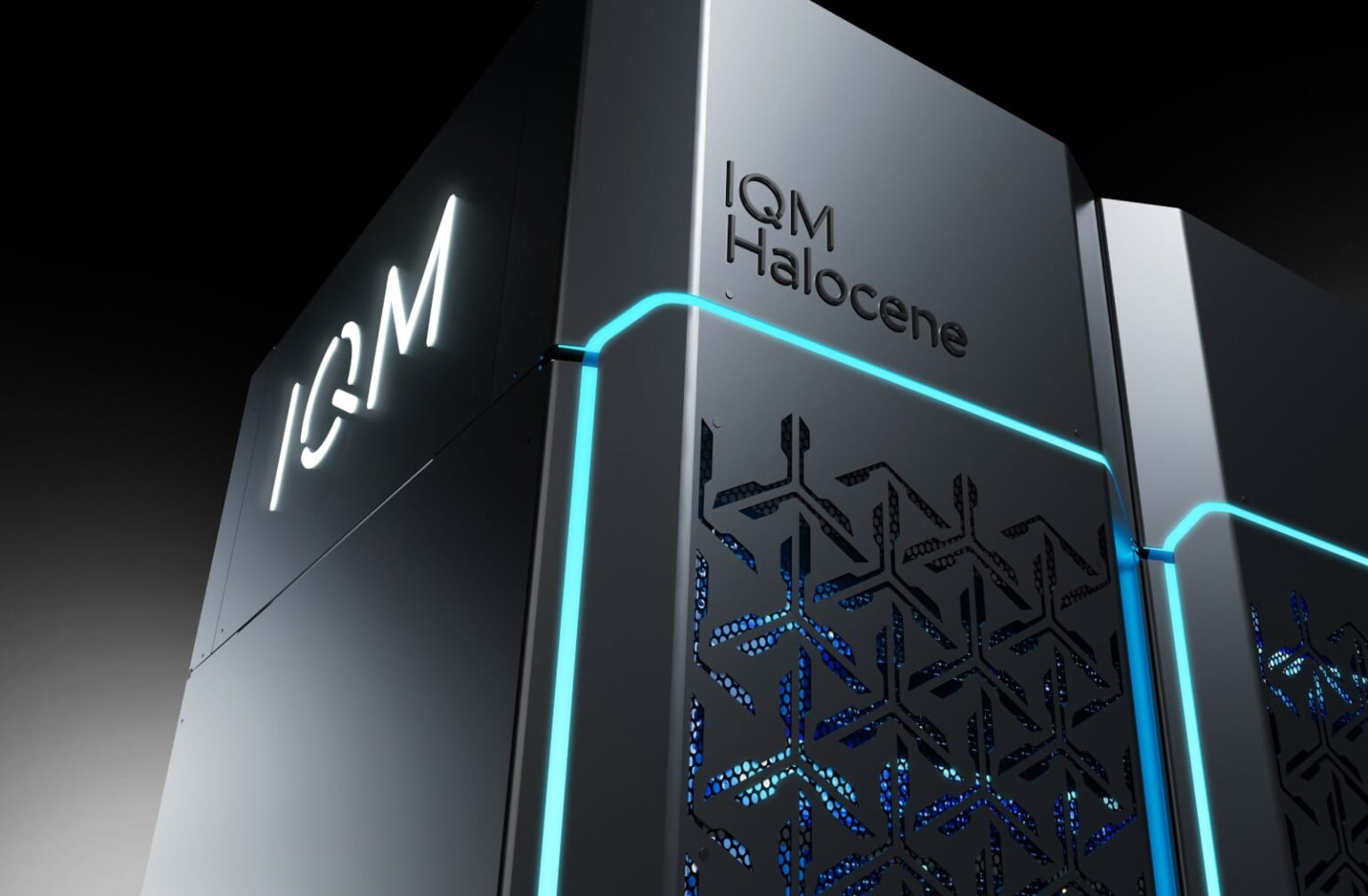
IQM Announces Zero-Downtime Upgrade Program for Halocene Product Line Scaling Past 1,000 Qubits

IQM Quantum Computers has launched a zero-downtime upgrade program for its Halocene quantum error-correction product line, enabling a seamless transition from 150-qubit processors to systems exceeding 1,000 qubits. This program, designed for HPC and enterprise data centers, ensures continuous operation during hardware upgrades by installing new units alongside existing ones. It also integrates with current software toolchains and allows for hybrid AI and simulation workflows…

Read at Quantum Computing Report

Older stories