Results for “Computing”

arXiv (research papers) Aleksandra Świerkowska

QuFrame: Pauli Frame Tracking for Fault-Tolerant Quantum Control

Fault-tolerant quantum computing requires continuous quantum error correction (QEC) to suppress physical noise. While Clifford-only workloads can defer corrections to software post-processing, universal computation breaks this paradigm: executing non-Clifford gates via magic-state gadgets introduces hard, real-time control-flow dependencies on error-corrected measurements. Consequently, the controller must extract syndromes, decode them, and update the Pauli frame in real…

Read at arXiv (research papers)

The Quantum Insider Matt Swayne

Zapata Quantum Launches Open Challenge to Verify AI-Generated Quantum Research

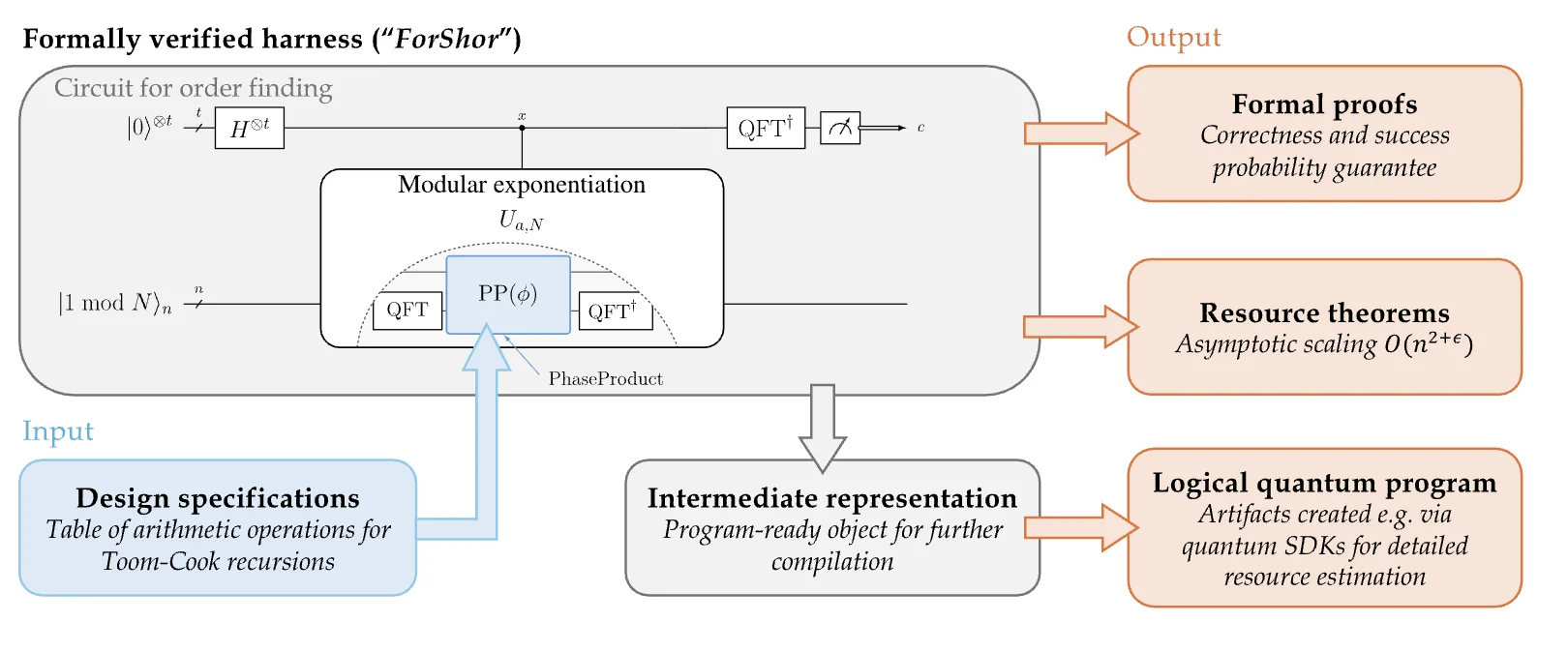
Insider Brief PRESS RELEASE — As AI accelerates scientific discovery, it has become increasingly critical that new results be both provably correct and explainable to humans. Zapata Quantum (OTCQB: ZPTA) (“Zapata”, “Zapata Quantum” or the “Company”), a pioneer in quantum computing application and algorithm development, today announced ForShor.ai, an open challenge that demonstrates a new

Read at The Quantum Insider

The Quantum Insider Matt Swayne

Alice & Bob’s Updated Roadmap Targets 200 Logical Qubits From 3,600 Physical Qubits by 2030

Insider Brief PRESS RELEASE — Alice & Bob, a leader in fault-tolerant quantum computing, today unveiled an updated, modular roadmap. The company targets 200 logical qubits as soon as 2030, double its previous target, with Carbon, which will be built from just 3,600 physical cat qubits. “Cat qubits give an efficient path to fault tolerance. They

Read at The Quantum Insider

Electronics Weekly Alun Williams Startups

Micron backs space computing startup in Series B funding round

Ramon.Space, a space computing infrastructure company, has raised $124 million in a Series B funding round. The round included investment from Micron Technology. The funding was led by equity firm

Read at Electronics Weekly

IoT Insider Lucy Barnard

Our pick: five must-watch electronica 2026 interviews for the IoT industry

From LoRa connectivity and Edge AI to Physical AI and intelligent embedded systems, exhibitors at electronica 2026 had a lot offer in terms of the technologies shaping the next generation of connected devices. The growing convergence of connectivity, artificial intelligence and embedded computing was a recurring theme at the show, as semiconductor manufacturers and technology…

Read at IoT Insider

South China Morning Post Iris Deng Geopolitics

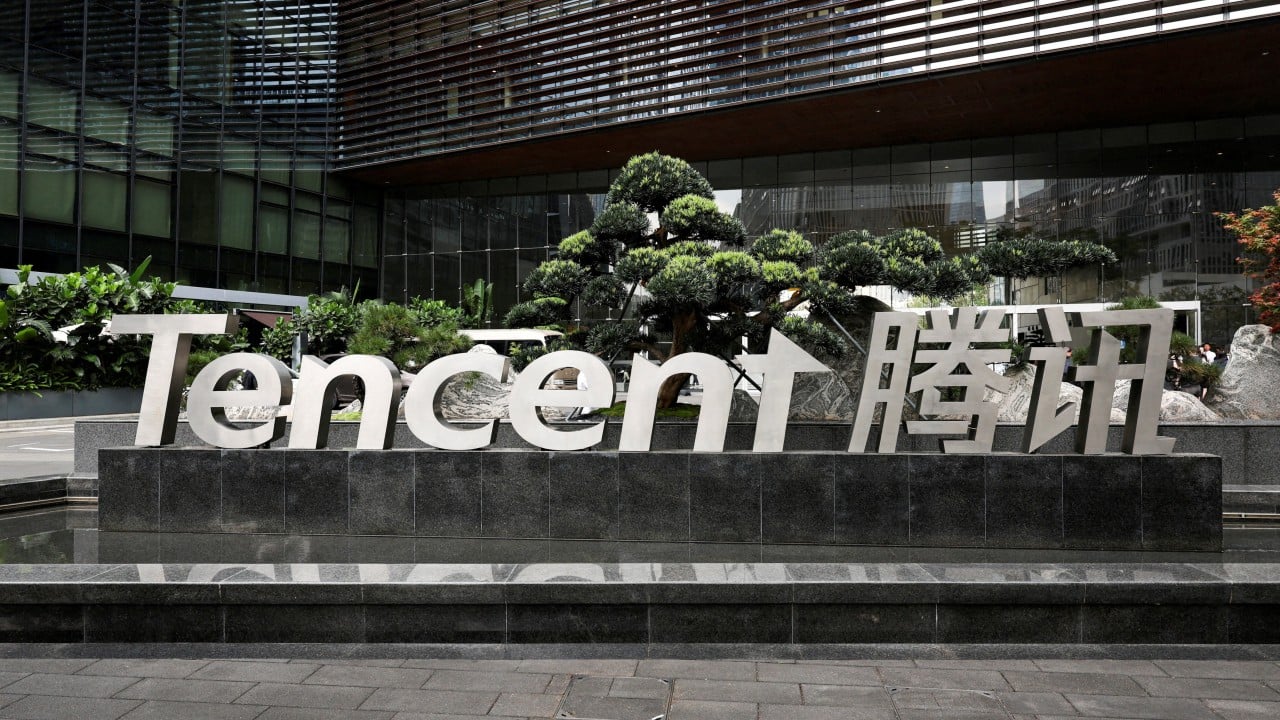
Tencent profit dips as sixfold increase in AI infrastructure spending sacrifices margin

Tencent Holdings ramped up capital spending more than sixfold in the third quarter to above US$12 billion, weighing on profit and free cash flow as the Chinese tech giant poured money into computing power to catch up in the country’s cutthroat artificial intelligence race. Adjusted net income for the three months ended September 30 fell 6 per cent year on year to 66.5 billion yuan (US$10 billion), matching the consensus estimate of analysts polled by Bloomberg. Revenue rose…

Read at South China Morning Post

arXiv (research papers) Zhi-Lei Zhang

Topological Quantum Reservoir Computing

Scaling universal quantum computation and implementing quantum machine learning with protected logical qubits remain challenging. To harness the computational potential of existing fault-tolerant quantum platforms, we introduce topological quantum reservoir computing, a novel approach using protected degrees of freedom for storage and the host system's intrinsic dynamics for information processing. Using a one-dimensional Kitaev chain, we show how long-lived Majorana edge…

Read at arXiv (research papers)

arXiv (research papers) Keming Fan

ReCIM-HD: A 40 nm On-Device Learning Accelerator with Hyperdimensional Computing via Importance-Based Hybrid Digital-ReRAM CIM

ReCIM-HD is an on-device learning (ODL) accelerator that integrates gradient-free hyperdimensional computing (HDC) with resistive RAM (ReRAM)-based analog compute-in-memory (CIM). ReCIM-HD introduces three key techniques: (1) ultra-low-power HDC-based edge ODL without costly back-propagation operations; (2) non-volatile ReRAM-based storage for class hypervectors and CIM similarity search, enabling energy-efficient inference and power-gating during idle periods without data…

Read at arXiv (research papers)

EE Times Pat Brans SI

Edge AI Moves Agricultural Intelligence from the Cloud to the Field

NXP and Nvidia tackle the challenges of delivering computing power, energy efficiency, and safety as agricultural machinery becomes autonomous.

Read at EE Times

The Hill Finya Swai Geopolitics

Huang agrees to testify before Senate Banking panel

Former Nvidia CEO Jensen Huang has agreed to testify before the Senate Banking Committee, a spokesperson for Chair Tim Scott (R-S.C.) confirmed Tuesday. Lawmakers have ramped up scrutiny of Huang’s alleged extramarital affair with suspected Chinese spy Alice Huang, who worked as an executive at computing company Megaspeed, over concerns that China may have gained...

Read at The Hill

YourStory Startups

Emerging cryptographic requirements and the transition to quantum-resistant security

Encryption forms the backbone of our everyday digital lives including banking transactions, healthcare and communication. However, the rise of quantum computing is challenging our assumptions about how long certain types of security will remain effective.

Read at YourStory

Quantum Computing Report Mohamed Abdel-Kareem

Classiq Collaborations with Shionogi, KDDI Research, and SoftBank Earn Awards in Japan’s NEDO Quantum Challenge

Classiq announced that three joint research initiatives with Shionogi, KDDI Research, and SoftBank received awards in Japan’s NEDO Quantum Computing Challenge. These projects utilized Classiq’s Qmod and evaluated hardware execution and fault-tolerant resource requirements across pharmaceutical, cryptographic, and logistics workloads. The collaborations demonstrated significant achievements, such as reducing qubit register size for molecular modeling, achieving a simulated…

Read at Quantum Computing Report

TechPowerUp Nomad76 SI

(PR) ASUS Showcases Full-Stack AI Infrastructure at SC26, Featuring Intel and AMD Platforms

At SC26, ASUS unveils a unified AI Factory blueprint that gives enterprises the flexibility to build AI infrastructure around their workloads, performance targets, and deployment needs. Spanning AMD, Intel and NVIDIA platforms—from rack-scale AI systems and enterprise servers to edge computing—ASUS brings architectural choice together with integrated engineering, automated manufacturing, rigorous validation, and lifecycle support. With volume shipments of its latest…

Read at TechPowerUp

SiliconANGLE AI Zeus Kerravala SI

Nvidia at SC26: Agents are the new scientists, and they need a lab

For most of its history, the high-performance computing market measured progress the same way: how fast a machine could solve a fixed problem. Rankings rose, a new system took the top spot, and the cycle started over. Raw performance remains the foundation of scientific computing, and Nvidia Corp. brought plenty of it to SC26. But

Read at SiliconANGLE AI

arXiv (research papers) Qirui Zhang

Compute Before You Digitize: ADC-less Mixed-Signal Processing for Scalable Cryogenic Qubit Readout

We introduce DIRAC, an ADC-less in-cryostat qubit readout architecture that uses analog computing to redraw the analog-digital boundary. Directly operating on the front-end's analog output, passive complex mixers perform the equivalent of digital demodulation, ping-pong active-RC integrators average their outputs into down-sampled per-qubit traces, and a time-domain stage digitizes them, eliminating Nyquist-rate ADCs. A TX-RX co-design derives the mixers' local oscillators…

Read at arXiv (research papers)

The Quantum Insider Mohib Ur Rehman

IQM Introduces Upgrade Programme for Halocene Quantum Systems

Insider Brief PRESS RELEASE — IQM Quantum Computers (Nasdaq: IQMX), a global leader in integrated quantum computing, today announced an upgrade program for IQM Halocene, its error-correction product line, that gives customers a path from the 150-qubit system of today to the over 1,000-qubit system of the future. Customers can run hybrid workloads today alongside

Read at The Quantum Insider

Quantum Computing Report Mohamed Abdel-Kareem

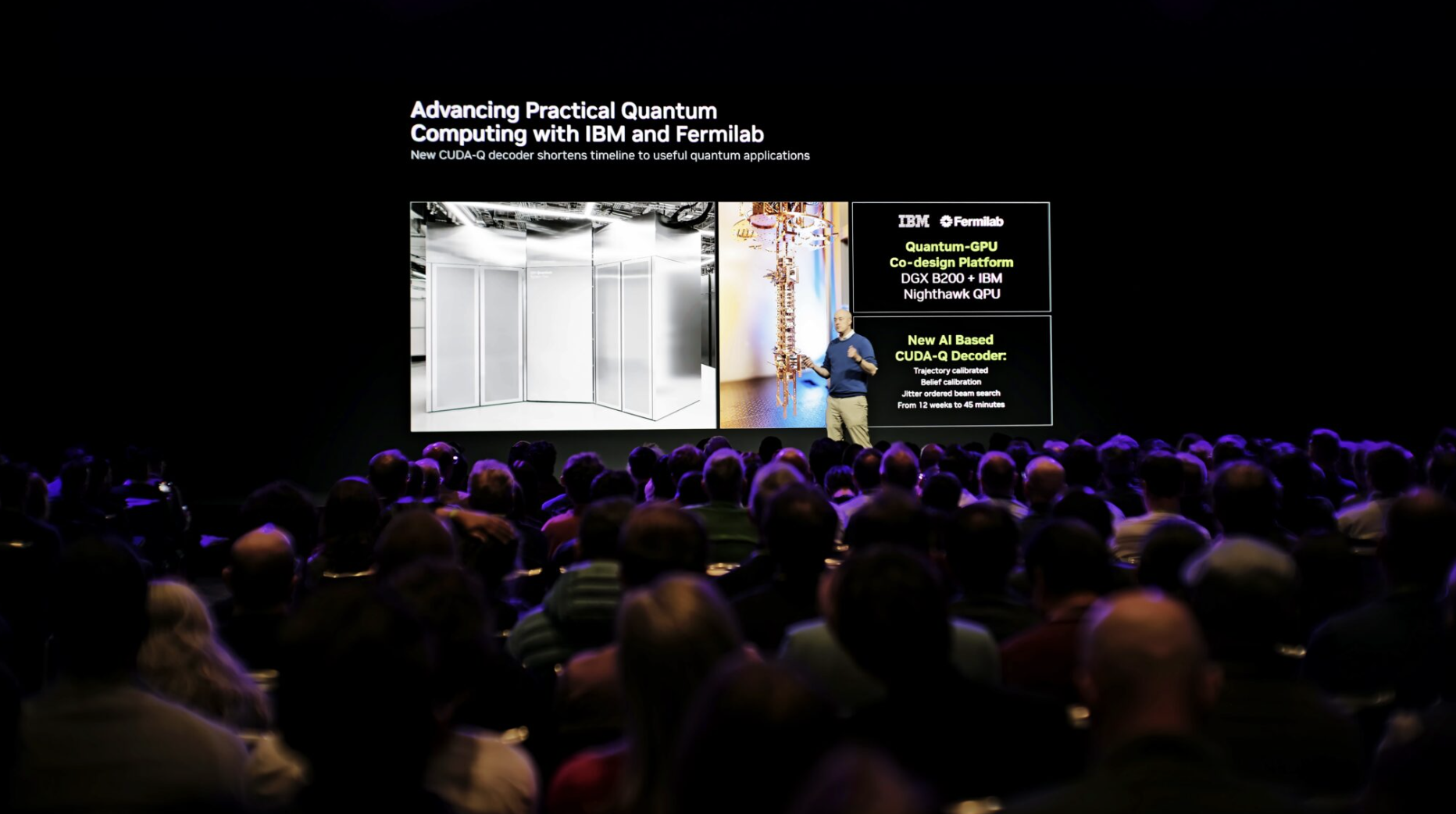
QUDORA Integrates NVIDIA CUDA-Q into Qamelion Emulator and Launches German-Funded QUANDA HPC Energy Consortium

QUDORA Technologies has integrated NVIDIA CUDA-Q into its Qamelion emulator, allowing developers to execute hybrid quantum-classical workflows and benchmark circuits under realistic trapped-ion noise. Additionally, QUDORA launched the QUANDA consortium, a German-funded project to automate trapped-ion access within high-performance computing centers for quantum machine learning applications in the energy sector.

Read at Quantum Computing Report

arXiv (research papers) Hansol Noh David

Nonlinearity-preserving quantum simulation of flows in the early fault-tolerant regime

Ensemble prediction of nonlinear dynamics propagates a probability density whose linear transport equation retains the nonlinear drift, but grid-dependent circuit costs leave end-to-end feasibility in early fault-tolerant quantum computing unresolved. We couple polynomial reduced-order models fitted by sparse identification of nonlinear dynamics to Walsh-synthesized Koopman-von Neumann (KvN) transport and surface-code resource estimation. At fixed model dimension and drift…

Read at arXiv (research papers)

The Quantum Insider Matt Swayne

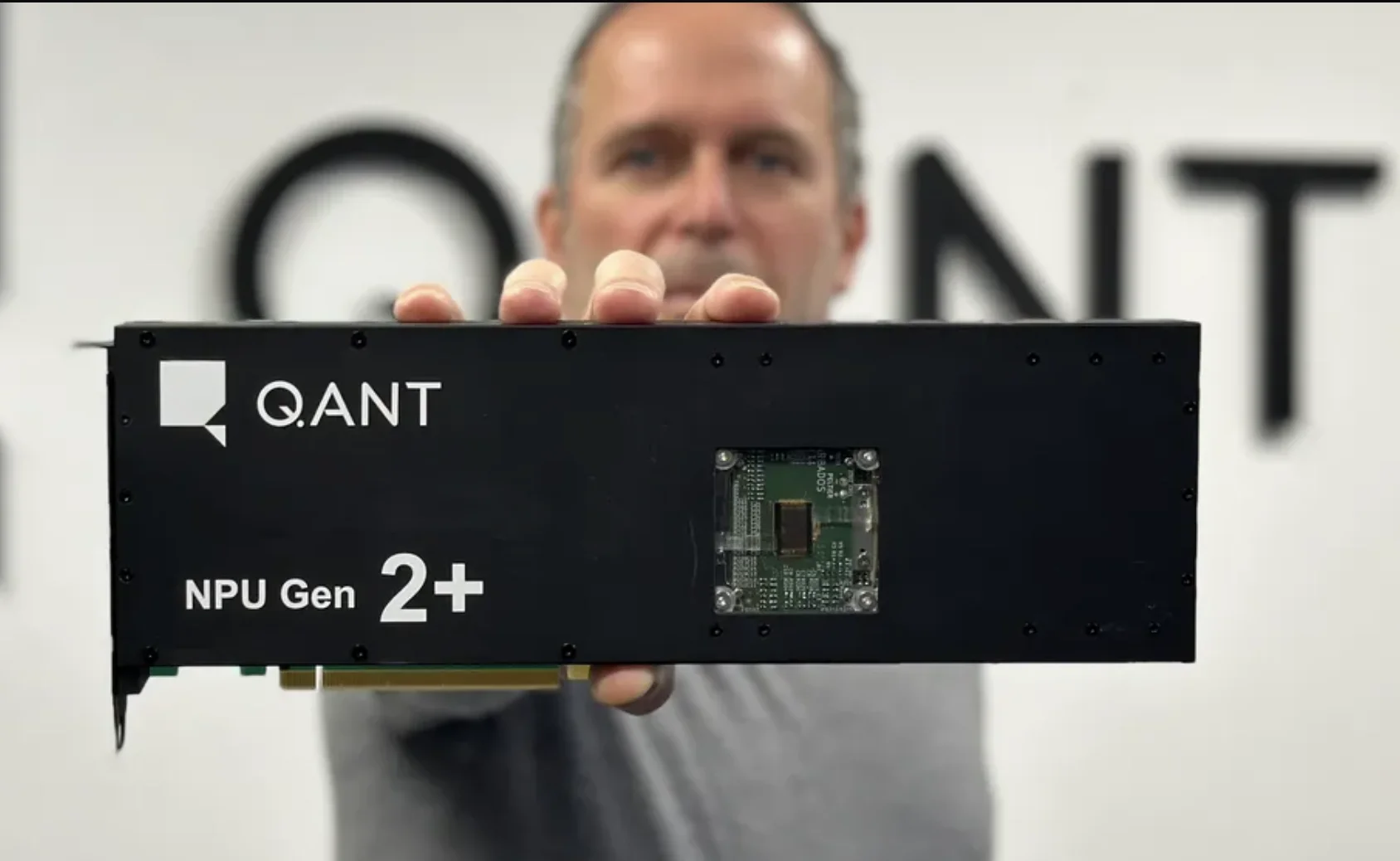
Q.ANT Demonstrates Hybrid Photonic-GPU System for Language Models

Insider Brief PRESS RELEASE — Q.ANT, the pioneer in commercial photonic computing, today unveiled the NPU Gen 2+, the latest generation of its Native Processing Unit (NPU) technology, at SC26 in Chicago. The NPU Gen 2+ adds optical Discrete Fourier Transforms (DFTs), which expands the set of mathematical functions developers can run directly in light

Read at The Quantum Insider

Semiconductor Engineering Technical Paper Link

Defect-Aware Chiplet Matching For Heterogeneous Integration Yield (ASU, Ampere)

Researchers at Arizona State University and Ampere Computing published “DT-MATCH: Defect- and Topology-Aware Chiplet Matching for Yield Optimization in Heterogeneous Integration.” Abstract “Heterogeneous integration (HI) and advanced packaging enable chiplet-based system-on-chip (SoC) designs; however, they also introduce new yield challenges arising from manufacturing defects and complex die-to-die (D2D) interconnect constraints. In particular, lane-level defects…

Read at Semiconductor Engineering

arXiv (research papers) Katia Hakem

Performance of Fusion-Based Quantum Computing with Imperfect Photon Indistinguishability

Fusion-based quantum computation (FBQC) is a promising route to fault-tolerant photonic quantum computing, connecting small entangled resource states through linear-optical fusion measurements. While logical encoding can substantially improve resilience to photon loss, whether these benefits extend to other noise remain an open question. In this work, we show that this is not generally the case when accounting for partial photon distinguishability during resource state…

Read at arXiv (research papers)

arXiv (research papers) Lucas G. Zangari Tech policy

WIP: Exploring Student-Created AI Agents and Instructional Videos to Foster Engagement in Computing Education

This work-in-progress (WIP) research-to-practice study examines the use of student-created artifacts to promote active learning in a large undergraduate Software Design and Engineering (SWE) course. Active learning strategies have been shown to significantly enhance student engagement, comprehension, and motivation, particularly in computing education. In this work, we explore the use of student-created artifacts to foster student engagement in higher-level Computer Science…

Read at arXiv (research papers)

Quantum Computing Report Mohamed Abdel-Kareem

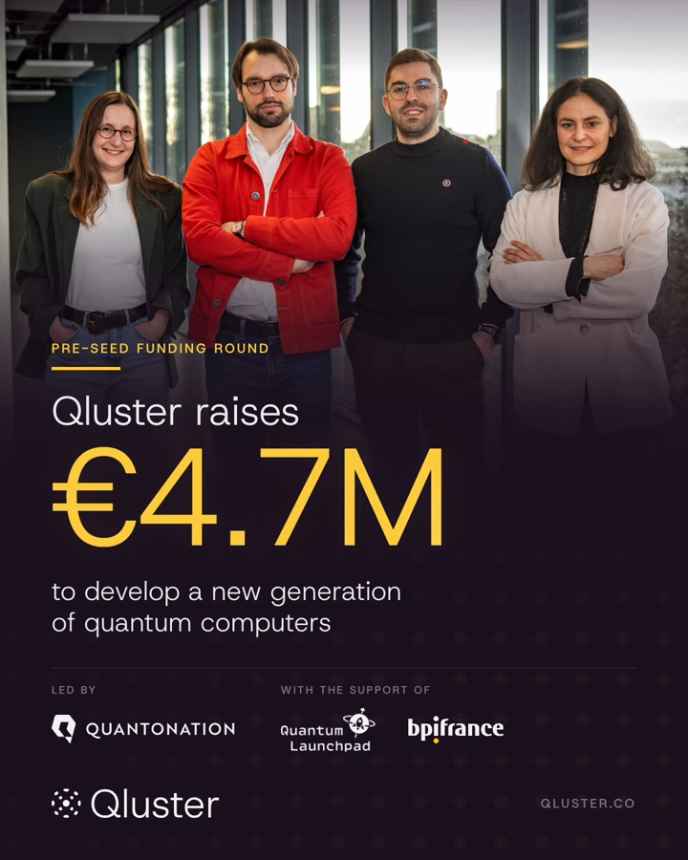
Qluster Raises €4.7 Million Pre-Seed Round Led by Quantonation to Build Continuous-Variable Photonic Quantum Computers

Qluster, a Paris-based photonic quantum computing startup, has secured €4.7 million in pre-seed funding. Led by Quantonation, the investment will be used to establish an R&D laboratory and expand its teams. Qluster's technology utilizes continuous-variable cluster states with the goal of eliminating cryogenic infrastructure and simplifying data-center integration, aiming for an intermediate-scale quantum system by 2032 and a large-scale fault-tolerant universal processor by…

Read at Quantum Computing Report

SemiWiki Daniel Nenni

Why Agile Post-Quantum Cryptography Matters for Long-Lived Chip Designs

Quantum computing opens exciting possibilities for solving difficult problems, advancing research, and enabling new technologies. Preparing security for that future is an opportunity to strengthen the digital foundations supporting everyday life. Synopsys’ Agile PQC Public Key Accelerators offer chip designers a practical…

Read at SemiWiki

The Verge Andrew Liszewski Geopolitics

You can now preorder the Flipper One that puts a Linux computer in your pocket

After first announcing its Flipper One last May, which the company describes as an "open Linux multi-tool built for high-performance computing and IP networking," Flipper Devices has launched a Kickstarter crowdfunding campaign where you can preorder the device for $399 with shipping expected to start in July 2027. The Flipper One is more expensive than

Read at The Verge

The Quantum Insider Matt Swayne

SAXON Q Announces ‘Quantum Watchdog,’ to Detect When Quantum Computers Fail

Insider Brief PRESS RELEASE — SAXON Q, a leader in NV-center quantum computing, today announced the Quantum Watchdog, a patented safety system that monitors a quantum computer and puts it into a safe mode if it fails. The system is designed for quantum computers operating in research environments and upcoming industrial applications — including robotics,

Read at The Quantum Insider

arXiv (research papers) Patrick Iff

LASH-PAT: Deadlock-Free Adaptive Shortest-Path Routing for Inter-Chiplet Interconnects

With the slowdown of transistor scaling, chipletbased systems, and in particular chiplet-based wafer-scale integration, have emerged as a promising approach to sustain growth in computing capability per cost for modern processors and accelerators. In recent years, many specialized inter-chiplet interconnect topologies have been proposed. In these topologies, the simple, well-established, and deadlock-free dimension-order routing scheme is not applicable due to its reliance…

Read at arXiv (research papers)

IEEE Spectrum Dina Genkina SI

AI Is Giving Optical Computing Another Shot

The idea of computing with light has been around for over 70 years, but until recently it’s remained largely in the realm of research. Over the past few years, though, optical computing has emerged as a fast-growing industry: Market valuation of companies in this sector now totals US $2.22 billion, up from $0.4 billion in 2022. One projection suggests that the market will continue to grow exponentially in the coming years. The reason for this sudden surge will surprise no…

Read at IEEE Spectrum

TechPowerUp TheLostSwede SI

(PR) Q.ANT Unveils NPU Gen 2+: Photonic Fourier Transforms Power Large Language Model

Q.ANT, the pioneer in commercial photonic computing, today unveiled the NPU Gen 2+, the latest generation of its Native Processing Unit (NPU) technology, at SC26 in Chicago. The NPU Gen 2+ adds optical Discrete Fourier Transforms (DFTs), which expands the set of mathematical functions developers can run directly in light with photonic computing. With it, developers can build faster, leaner AI models and high-performance computing (HPC) applications. Advanced functions like…

Read at TechPowerUp

Payload Victoria Woodburn Space

Ramon.Space Raises $124M in Series B Funding

Space computing company Ramon.Space raised $124M in Series B funding, the company announced today.

Read at Payload

Older stories