Results for “IBM”

Quantum Computing Report Mohamed Abdel-Kareem

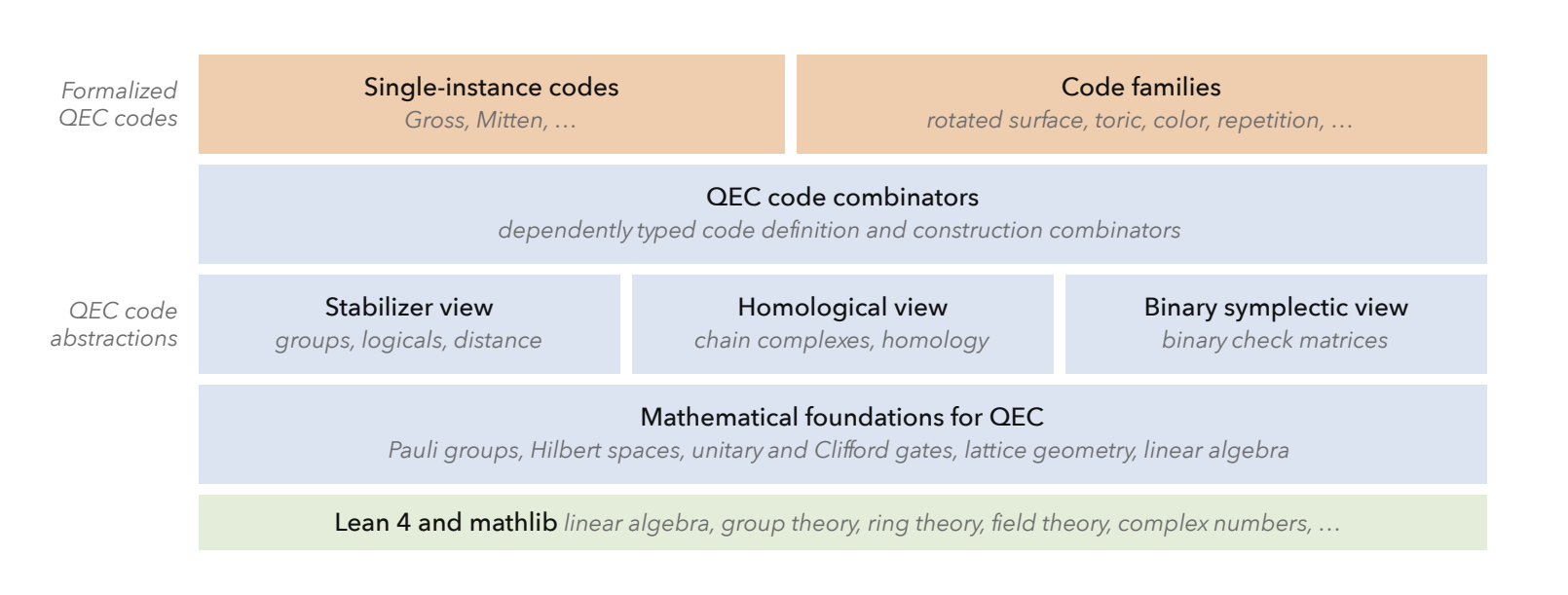
Researchers Introduce QECLean Framework to Formally Verify Quantum Error-Correcting Codes in Lean 4

Researchers have developed QECLean, an open-source framework using Lean 4 to formally verify quantum error-correcting codes, addressing the difficulty of verifying complex, algorithmically discovered codes. It has successfully verified parameters for several significant QEC codes, including an IBM 360-qubit code and infinite planar code families. QECLean aims to validate AI-discovered codes and future quantum compilers by linking different mathematical representations within…
Read at Quantum Computing Report

Quantum Computing Report Mohamed Abdel-Kareem

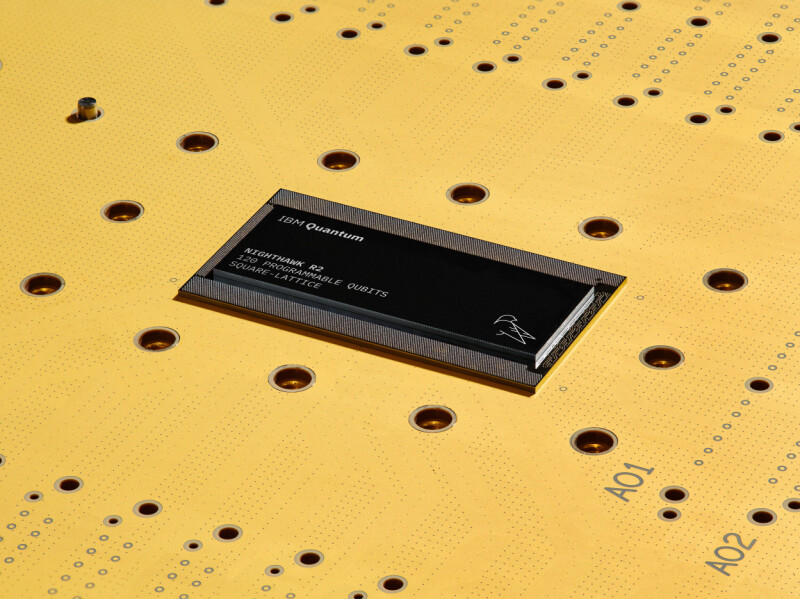
BMO Demonstrates Quantum Utility in Game-Theoretic Machine Learning Feature Selection on IBM Nighthawk r2

BMO Financial Group, in collaboration with DUTH and IBM, has demonstrated a quantum machine learning feature-selection workflow on IBM quantum processors. They applied quantum game theory to identify high-value predictive variables in financial datasets, achieving comparable quality to classical methods with significantly fewer algorithmic samples. This milestone builds on BMO's earlier entry into the IBM Quantum Network and the launch of their AI & Quantum Institute.

Read at Quantum Computing Report

The Quantum Insider Matt Swayne

BMO Reports Quantum Utility in Machine Learning Application Using IBM Quantum Computers

Insider Brief PRESS RELEASE — BMO today announced it has demonstrated quantum utility in a machine learning application using IBM quantum computers, meaning the work was performed reliably at a scale beyond what exact traditional computing methods can practically reproduce. The work explores how quantum computing could help AI models identify which information matters most

Read at The Quantum Insider

Quantum Computing Report Mohamed Abdel-Kareem

Unitary Foundation Releases 2026 Quantum Open Source Survey Covering SDK Adoption, Hybrid HPC Workflows, and AI Tooling

The 2026 Quantum Open Source Survey, with over 1,800 respondents, reveals key trends in quantum software adoption, hybrid workflows, and AI tooling. Qiskit leads in SDKs, IBM Quantum in cloud services, and Anthropic Claude Code in AI assistants. The survey also highlights the growing use of Python and C/C++, challenges in QEC and HPC, and cautious optimism regarding AI's role in quantum development.

Read at Quantum Computing Report

Quantum Computing Report Mohamed Abdel-Kareem

Aqarios Launches Constraint-Native Quantum Optimizer in the IBM Qiskit Functions Catalog

Aqarios GmbH has launched its Constraint-Native Quantum Optimizer in the IBM Qiskit Functions Catalog, offering a managed solver for discrete combinatorial optimization. This optimizer uses Iterative Warm-Start XY-Mixer QAOA (IWS-QAOA) to enforce constraints natively at the circuit level, reducing QPU compute times significantly. Benchmarks on IBM Heron processors demonstrate its ability to find optimal solutions for complex problems with high feasibility and reduced runtime.

Read at Quantum Computing Report

The Quantum Insider Mohib Ur Rehman

BlueQubit Selects Eight Teams for Quantum Flywheel Grant Programme

Insider Brief PRESS RELASE — BlueQubit today announced the research teams selected for its Quantum Flywheel grant program, a $150,000 initiative created with support from IBM, Amazon Web Services (AWS), and NVIDIA Accelerated Computing. Awardees receive three months of credits for AI tokens and classical and quantum compute, with awards ranging from $10,000 to $40,000

Read at The Quantum Insider

The Quantum Insider Mohib Ur Rehman

NEC and IBM Japan Demonstrate Integrated QKD and PQC Communications

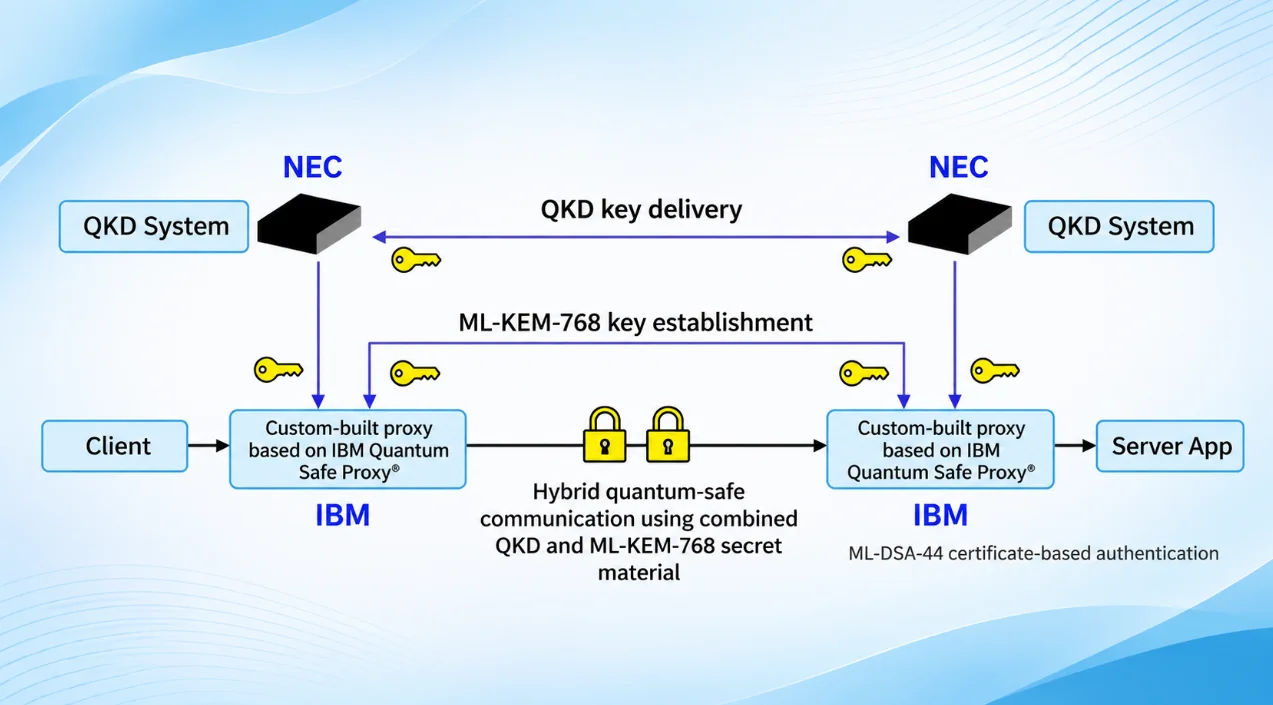
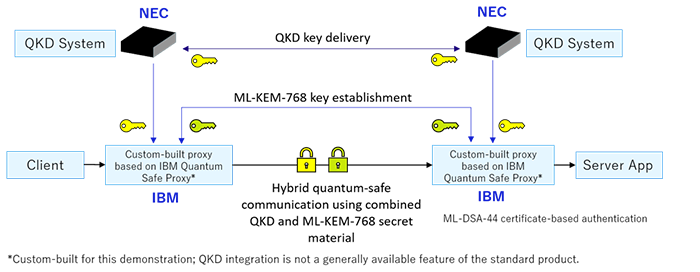
Insider Brief PRESS RELEASE — NEC Corporation (“NEC“) and IBM Japan, Ltd. (“IBM Japan”) announced that they successfully completed Japan’s first demonstration of a hybrid quantum-safe communication technology combining quantum key distribution (QKD) and post-quantum cryptography (PQC). Specifically, NEC‘s QKD equipment was connected to a proxy-based validation environment utilizing a custom-built version of IBM Quantum

Read at The Quantum Insider

Quantum Computing Report Mohamed Abdel-Kareem

Alice & Bob Details QRMI and Slurm 26.11 Hierarchical Resource Integration for Cat-Qubit Systems at SC26

At SC26, Alice & Bob detailed how their cat-qubit quantum processors integrate with NVIDIA’s Slurm 26.11 workload manager via the Quantum Resource Management Interface (QRMI). This collaboration with STFC Hartree Centre, IBM, and Pasqal allows Alice & Bob’s Felis cloud API to connect directly to standard supercomputing schedulers. The new architecture leverages Slurm 26.11's native Hierarchical Resources (HRES) support, enabling seamless quantum hardware integration without…

Read at Quantum Computing Report

Quantum Computing Report Mohamed Abdel-Kareem

NEC and IBM Japan Demonstrate Hybrid QKD and Post-Quantum Cryptography TLS Proxy Architecture

NEC Corporation and IBM Japan successfully demonstrated a hybrid quantum key distribution (QKD) and post-quantum cryptography (PQC) TLS proxy architecture. This trial, conducted between July and September 2026, integrated NEC's QKD hardware with IBM Quantum Safe Proxy, allowing for multi-vendor cryptographic interoperability without modifying existing enterprise applications. The setup combines QKD and PQC for enhanced session security, with future plans for commercial…

Read at Quantum Computing Report

arXiv (research papers) Haoran Liao

Magic state cultivation with lattice-surgery escape on superconducting hardware

Magic state cultivation (MSC) is a low-overhead protocol for fault-tolerantly preparing logical magic states. In this work, we implement two MSC variants to prepare a magic state in a distance-5 code on a publicly available IBM Nighthawk processor. The first is a lattice-surgery escape, recently proposed by Hirano et al. and experimentally studied here for the first time. The second is a grafting escape, previously demonstrated by Rosenfeld et al., and extended here by…

Read at arXiv (research papers)

Quantum Computing Report Mohamed Abdel-Kareem

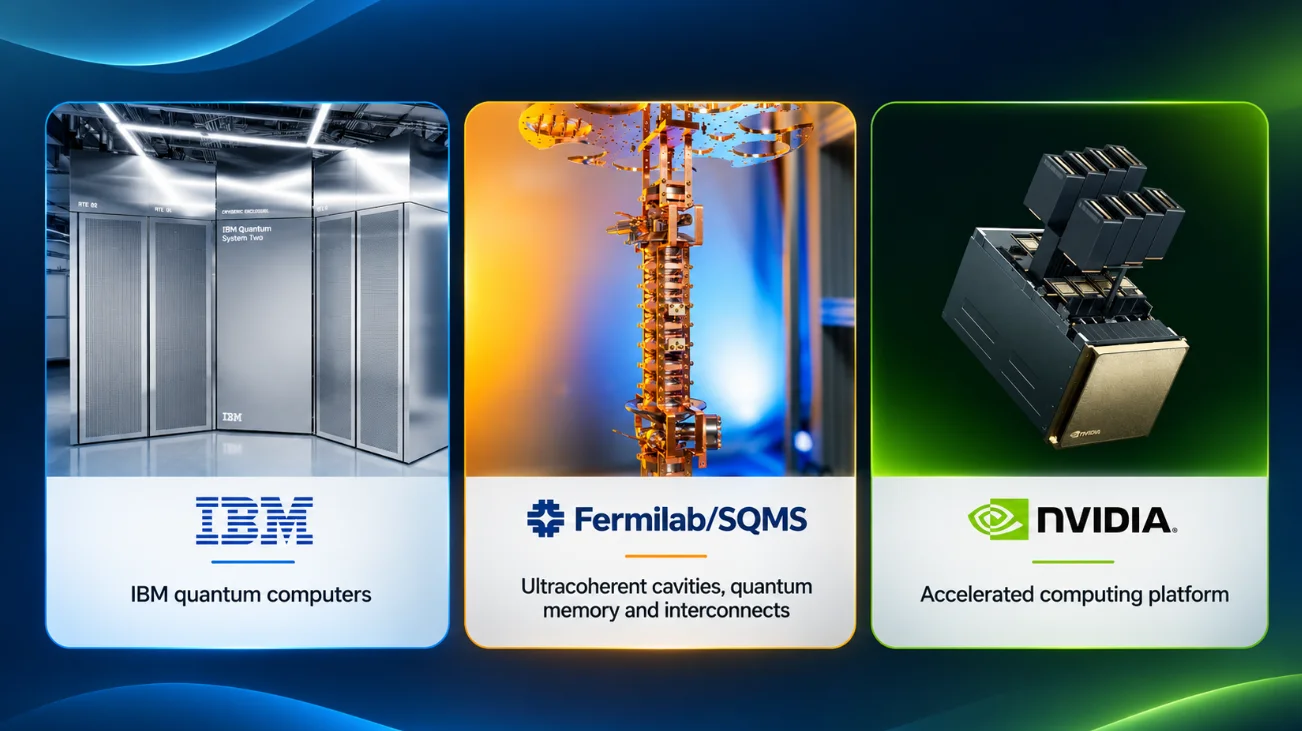
IBM, Fermilab, and NVIDIA Unveil Modular Quantum Co-Design Platform, Slurm HRES Integration, and GPU QEC Tools at SC26

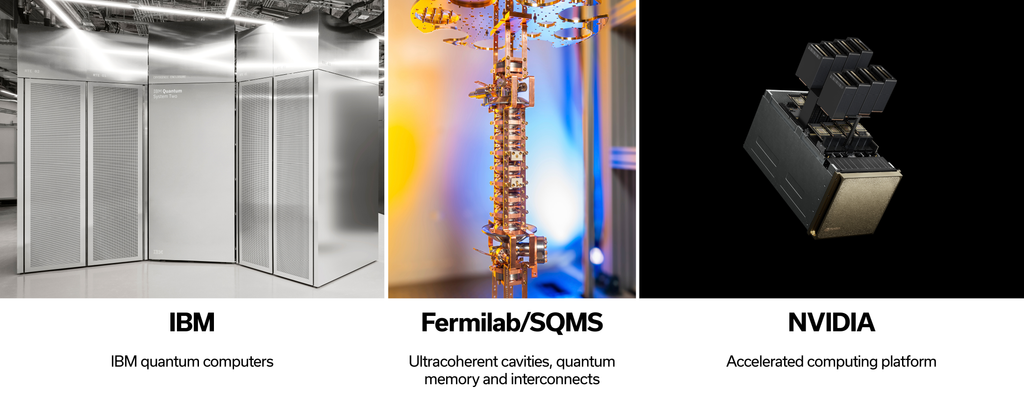
At SC26, IBM, Fermilab, and NVIDIA unveiled a modular quantum-classical co-design platform, integrating GPUs with quantum processors. They also announced native quantum resource scheduling in Slurm 26.11 and new GPU-accelerated quantum error-correction (QEC) software, including the TCBP-JOBS algorithm and CUDA-Q QEC 0.9.0. These advancements aim to improve quantum computing workflows, error correction, and resource management in supercomputing environments.

Read at Quantum Computing Report

Quantum Computing Report Mohamed Abdel-Kareem

IBM, RIKEN, and NVIDIA Achieve 79x Accuracy Gain in Quantum-Classical Simulations of Iron-Sulfur Clusters

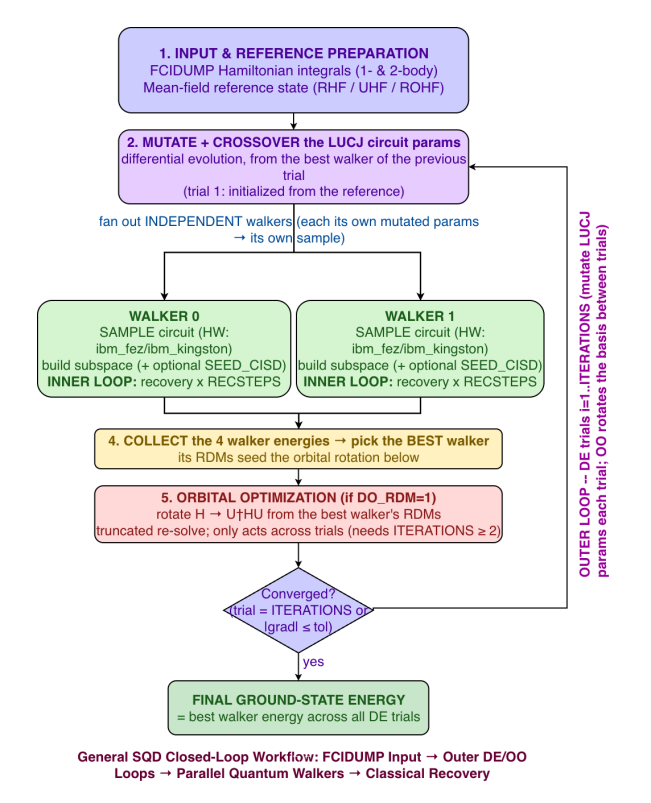
Researchers from IBM Quantum, RIKEN, and NVIDIA have achieved a 79-fold improvement in energy accuracy for quantum-classical simulations of iron-sulfur clusters. This was done by initializing Sample-Based Quantum Diagonalization (SQD) with broken-symmetry unrestricted Hartree-Fock (BS-UHF) reference states, bringing ground-state energy estimates for a 72-qubit [Fe4S4(SCH3)4]2− active space within 4.3 millihartree of high-precision classical benchmarks. The study highlights…

Read at Quantum Computing Report

Quantum Computing Report Mohamed Abdel-Kareem

IBM and AMD Open-Source Pelagos GPU Decoder Framework for Large-Scale qLDPC Error Correction Simulations

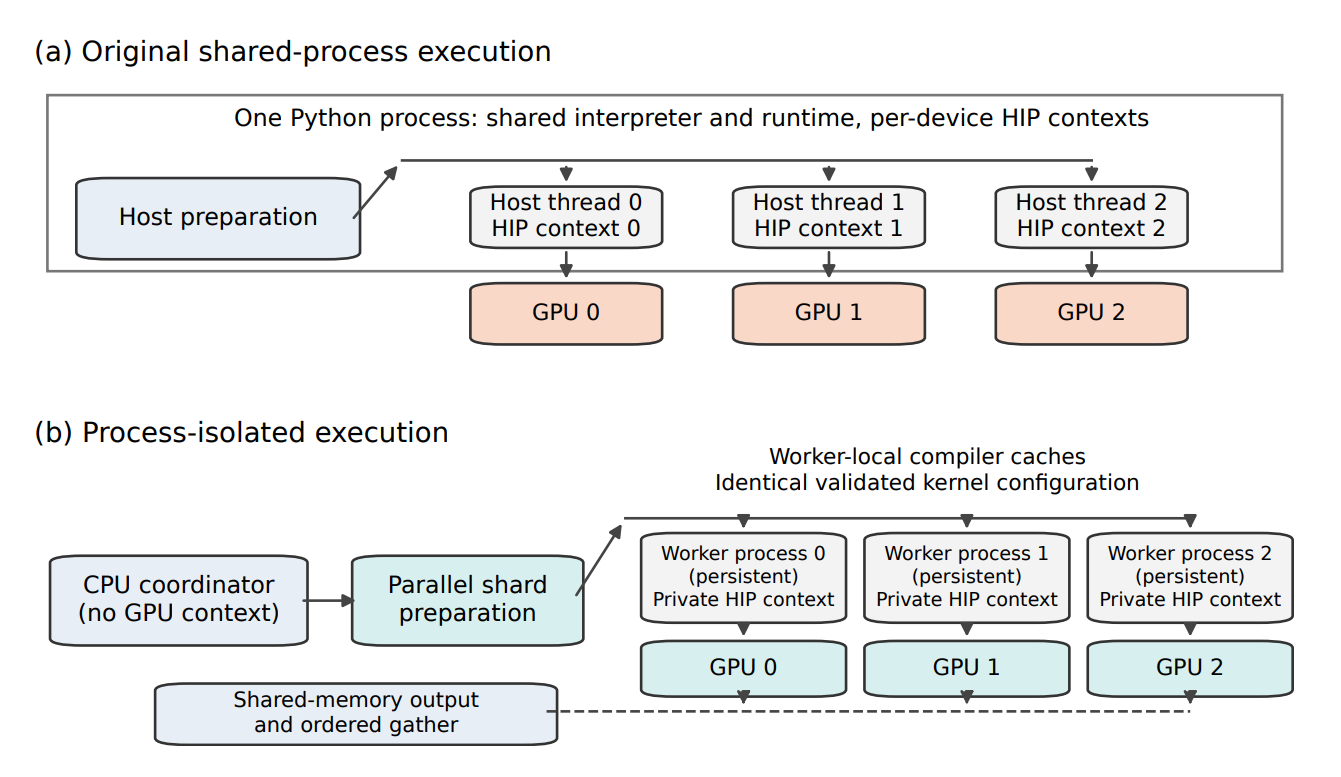
IBM and AMD have open-sourced Pelagos, a GPU-accelerated quantum error-correction (QEC) decoding framework for evaluating qLDPC codes at supercomputing scale. This release, announced at SC26, aims to advance quantum computing through vendor-neutral, efficient error correction, building on a joint QEC co-design platform. Pelagos offers significant speedups and efficient multi-GPU orchestration, enabling large-scale simulations crucial for fault-tolerant quantum computing.

Read at Quantum Computing Report

The Quantum Insider Mohib Ur Rehman

IBM, NVIDIA and Fermilab Plan Modular Quantum Computing Platform

Insider Brief PRESS RELEASE — IBM (NYSE: IBM) today announced plans to collaborate with NVIDIA and Fermi National Accelerator Laboratory (Fermilab) to advance the integration of quantum and classical computing and explore how these technologies can scale together in the modular architectures that will define fault-tolerant quantum computers. The work will span developing new scientific

Read at The Quantum Insider

The Quantum Insider Matt Swayne

From Cat Pictures to DNA, Moth Quantum Reports Progress on Getting Everyday Data Into Quantum Computers

Insider Brief Moth Quantum says it has used an entire IBM quantum processor to load and recover data equivalent to two small grayscale images. That may not sound like much, but the company says the method, called Tessa, addresses getting conventional data onto the machines without adding excessive errors, a basic obstacle to quantum computing,

Read at The Quantum Insider

Quantum Computing Report Mohamed Abdel-Kareem

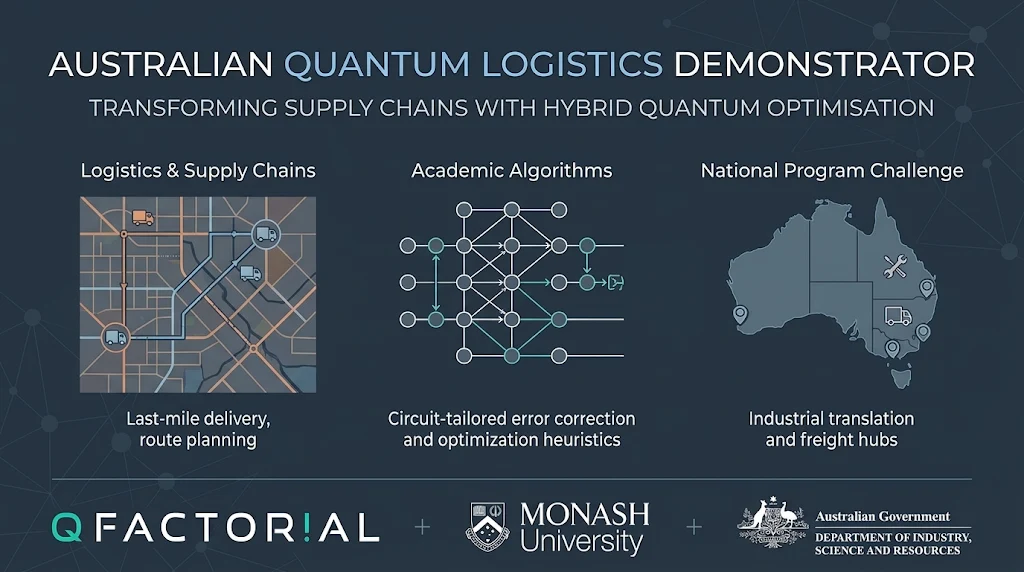
QFactorial and Monash University Secure A$1.12 Million ($$758.6K USD) Australian Government Grant for Quantum Logistics Optimization

QFactorial and Monash University have received a A$1.12 million Australian government grant to develop a hybrid quantum-classical optimization solver for freight and last-mile delivery. The 15-month project aims to advance QFactorial's routing and fleet-utilization platform. This initiative, part of the Critical Technologies Challenge Program, involves a consortium including IBM Quantum, AWS, and Fujitsu, and seeks to overcome limitations of classical solvers in large-scale…

Read at Quantum Computing Report

Quantum Computing Report Mohamed Abdel-Kareem

JIJ Launches SQOA Solver in IBM Quantum Functions Catalog to Tackle Combinatorial Optimization Beyond Qubit Counts

JIJ Inc. has launched its SQOA Solver in the IBM Quantum Functions Catalog, allowing users to tackle complex optimization problems with more variables than available qubits. This solver utilizes a novel approach that combines variable-compression encoding and classical subspace diagonalization, eliminating the need for iterative quantum hardware optimization. It has demonstrated success in solving large-scale problems like 384-node MaxCut and 200-node Maximum Independent Set…

Read at Quantum Computing Report

Quantum Computing Report Mohamed Abdel-Kareem

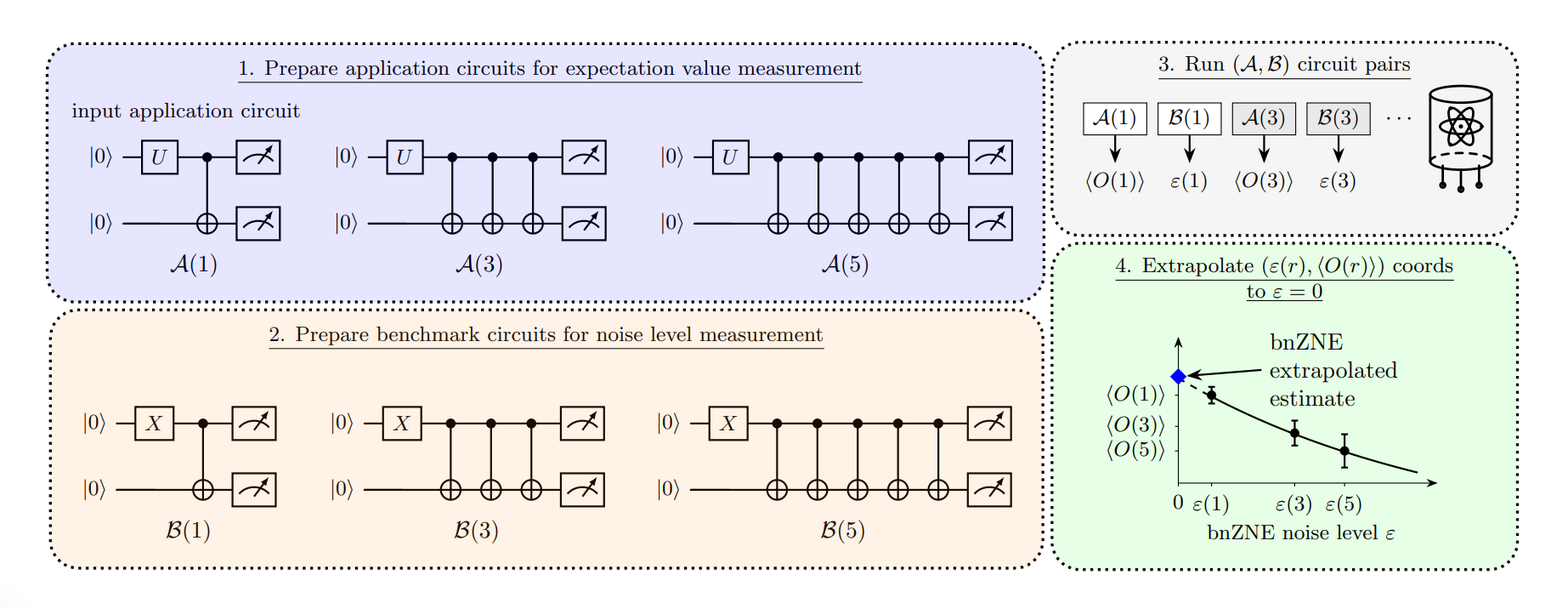
German Aerospace Center (DLR) Researchers Demonstrate Low-Cost Benchmarked-Noise Error Mitigation Across 100-Qubit IBM and IQM Processors

Researchers at the German Aerospace Center (DLR) have developed an improved quantum error mitigation protocol, randomized benchmarked-noise zero-noise extrapolation (bnZNE). This method enhances expectation-value accuracy without increasing measurement shot budgets, validated on 100-qubit IBM and IQM processors. The bnZNE protocol incorporates Pauli twirling, dynamical decoupling, and twirled readout error extinction (TREX), outperforming standard zero-noise extrapolation…

Read at Quantum Computing Report

Quantum Computing Report Mohamed Abdel-Kareem

QodeX Quantum, NVIDIA, RTX BBN, and U.S. Navy Researchers Forecast Unstructured PDEs on 52-Qubit IBM Hardware

A research team from QodeX Quantum, NVIDIA, RTX BBN, and U.S. Navy researchers successfully demonstrated gradient-free forecasting of nonlinear partial differential equations (PDEs) on unstructured engineering meshes using up to 52 qubits on an IBM Quantum Heron r3 processor. Their hybrid quantum reservoir network (QRN) achieved significant error reduction compared to classical baselines and executed circuits far longer than typical qubit coherence times. This advancement…

Read at Quantum Computing Report

arXiv (research papers) Daniel Bultrini

Tessa: Encoding Classical Data Across an Entire Quantum Processor

We present Tessa, a hardware-aware, device-wide scheme to encode classical data on quantum computers. We use it to experimentally encode and decode up to $1568$ real values using IBM's Phoenix and Fez quantum computers on a variety of data. Tessa's construction is an extension of QPIXL and QCrank. However, it checkerboards address and data qubits across a coupling graph with neighbouring data qubits sharing only a subset of address qubits. When using the device's coupling…

Read at arXiv (research papers)

Help Net Security Anamarija Pogorelec Security

Digital sovereignty leaves enterprises chasing their own audit trails

94% of surveyed enterprises experienced at least one digital sovereignty challenge in the past three years, according to IBM’s Digital Sovereignty Index. Of those affected, 91% were required to demonstrate that they retained control during their most challenging event, and 81% had to provide formal evidence to regulators, auditors, customers or internal stakeholders. The report defines digital sovereignty as an organization’s ability to retain control and provide credible…

Read at Help Net Security

Quantum Computing Report Mohamed Abdel-Kareem

Qunova Computing Achieves Chemical Accuracy at 80 Qubits on Iron-Sulfur Cluster Using IBM Quantum System Two and Fugaku

Qunova Computing achieved a breakthrough in quantum chemistry by simulating an 80-qubit iron-sulfur cluster with chemical accuracy using a hybrid approach combining IBM Quantum System Two and the Fugaku supercomputer. Their HI-VQE algorithm reduced classical computing costs by approximately 300x while matching classical benchmarks. This advancement has significant implications for understanding complex biological and industrial processes.

Read at Quantum Computing Report

Quantum Computing Report Mohamed Abdel-Kareem

Cleveland Clinic, RIKEN, and IBM Cross 12,000-Atom Barrier in Heterogeneous Quantum-Classical Drug Binding Simulations

A collaboration between Cleveland Clinic, RIKEN, and IBM Quantum has achieved the largest heterogeneous quantum-classical (HQC) electronic-structure calculation to date, simulating protein-ligand complexes exceeding 12,000 atoms. This research utilized 156-qubit IBM Heron r2 processors and leadership supercomputers to significantly advance molecular size and fragment energy accuracy in drug binding simulations. The team developed an Embedded Wavefunction (EWF) formalism and…

Read at Quantum Computing Report

Quantum Computing Report Mohamed Abdel-Kareem

LTM Becomes First Global Systems Integrator to Launch Function in IBM Quantum Functions Catalog with AI-QEM

LTM has launched its AI-QEM software in the IBM Quantum Functions Catalog, becoming the first global systems integrator to do so. This software utilizes an AI-powered approach to mitigate hardware noise in quantum circuits without additional quantum processing unit (QPU) runtime. It has demonstrated high accuracy on up to 100-qubit circuits and provides a more efficient alternative to conventional error-mitigation protocols.

Read at Quantum Computing Report

Quantum Computing Report Mohamed Abdel-Kareem

Kipu Quantum Launches Rimay Quantum Feature Extraction in IBM Quantum Functions Catalog

Kipu Quantum has launched its Rimay quantum feature extraction service on the IBM Quantum Functions Catalog, allowing IBM Quantum users to access quantum-enhanced machine learning for feature engineering. This service, which operates as a preprocessing layer for classical machine learning models, has demonstrated improved recall and AUC scores in credit risk classification. It's designed to provide enriched data matrices for use with standard frameworks like scikit-learn.

Read at Quantum Computing Report

The Register Dan Robinson

Quantum leap: IBM plans to scale beyond 1,000 qubits in 2027 with Nighthawk r3 processor

New unit sports more qubits and is planned to be part of future fault-tolerant rig

Read at The Register

Analytics India Magazine Mukundan Sivaraj SI

LTM Integrates AI Tool to Fix Quantum Computing Errors on IBM

LTM's AI-QEM technology uses classical post-processing to address device-specific errors, with tests involving quantum circuits of more than 100 qubits.

Read at Analytics India Magazine

MarkTechPost Michal Sutter SI

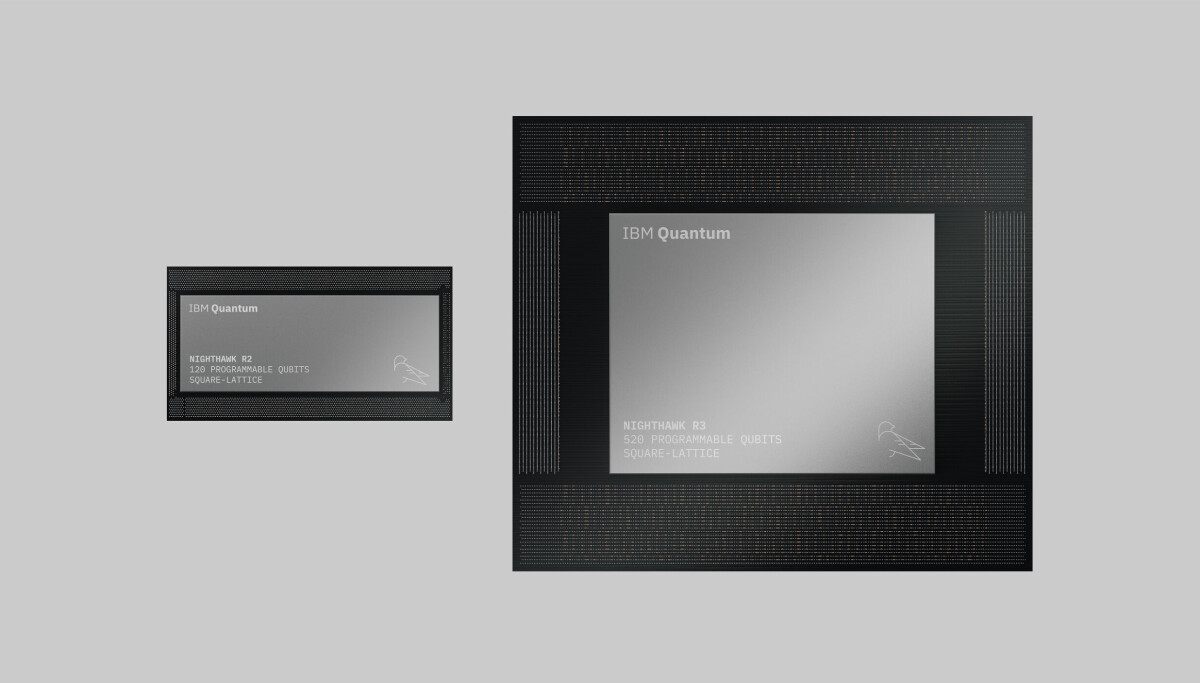
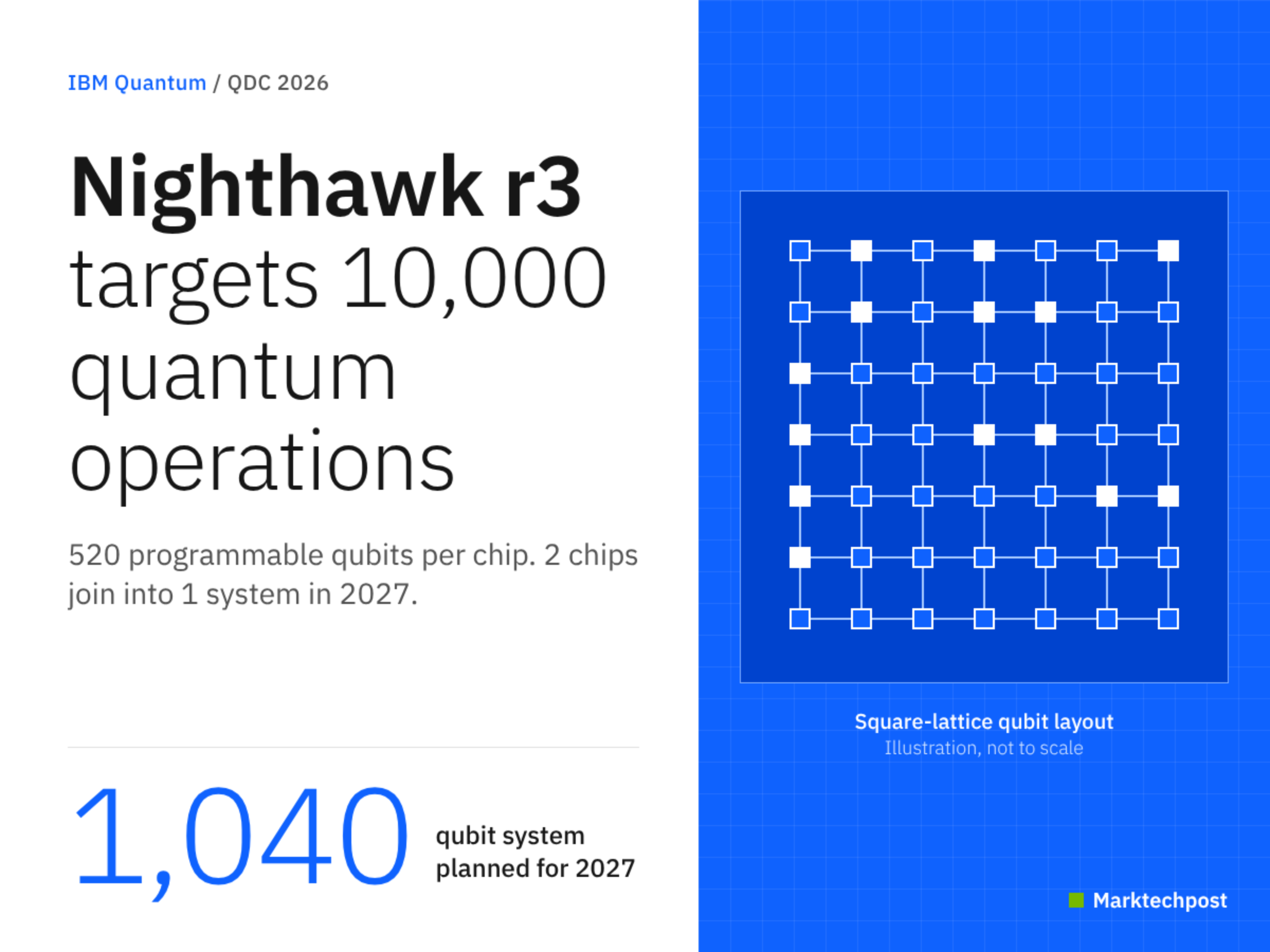
IBM Announces IBM Quantum Nighthawk r3: A New Processor to Support 10k Quantum Operations on 520 Programmable Qubits

IBM announced Quantum Nighthawk r3, a 520-qubit processor designed for 10,000 quantum operations. 2 r3 chips will link into a 1,040-qubit system in 2027, while Nighthawk r2 already posts up to 19x speedups over Heron.

Read at MarkTechPost

Quantum Computing Report Mohamed Abdel-Kareem

IBM Unveils 520-Qubit Nighthawk r3 Processor, 1,040-Qubit Linked Roadmap, and Managed Hybrid Workflows at QDC 2026

IBM introduced the Nighthawk r3 processor with 520 programmable qubits and a roadmap to 1,040 qubits by 2027, demonstrating advancements in quantum computing hardware and software. The company also unveiled an expanded software stack, including Managed Workflows, and reported significant speedups and circuit executions with its Nighthawk r2 processors. These developments are geared towards achieving fault-tolerant quantum systems and addressing complex applications in…

Read at Quantum Computing Report

Older stories