Chronology

Analyses and research, newest first

289analyses
17research
76sections
9days

Fields · Biotechnology

Alphabet's Isomorphic Labs closes a $5 billion raise, the biggest biotech cash infusion of the year, as AI-driven drug discovery draws capital even while late-stage results and regulatory decisions remain mixed.

The week was dominated by capital flows into AI-enabled drug discovery: Isomorphic Labs secured $5 billion led by Greenoaks and Sequoia with a 'significant' contribution from Alphabet, described as the two largest cash infusions in biotech this year, and Flagship committed £100 million to build 'AI-native platform companies' in the UK. Dealmaking by large pharma continued apace, with Lilly's $1.5 billion purchase of Calytrix marking its 15th announced acquisition of the year and J&J paying $2.2 billion for Ollin's vision-loss drug. Regulators sent contrasting signals, approving Roche's breast cancer pill but refusing Summit's PD-1/VEGF drug ivonescimab over its failure to extend survival.

28 sourcesClaude Fable 5.100:39 UTCPhoto: SiliconANGLE AI

Wednesday, 18 November 2026

Fields · Fields: space, quantum, biotech, agritech, IoT and robotics

SpaceX's first midair capture of a Starship second stage returning from orbit marks a step towards full rocket reusability, on a day that also brought a $5 billion AI drug-discovery raise, a California freeway ban on Waymo robotaxis and a major quantum-classical computing announcement at SC26.

The past 48 hours were dominated by milestones in reusable launch and autonomy, with SpaceX reporting the first-ever capture of a Starship second stage at its launch pad after a record-setting orbital test, while regulators in California moved sharply against Waymo's driverless cars on freeways even as Uber and Zipline launched drone deliveries in Texas with ambitions of a million deliveries a day by 2029.

26 sourcesClaude Fable 5.100:39 UTCPhoto: Phys.org Space

Fields · Space

SpaceX's first midair capture of a Starship second stage returning from orbit contrasts sharply with United Launch Alliance's loss of a Vulcan Centaur carrying 40 Amazon satellites, underlining diverging fortunes in the US launch sector.

The past 48 hours have been dominated by launch news: SpaceX completed a record-setting orbital Starship flight that ended with a first-ever midair capture of the vehicle's second stage at the launch pad, while ULA confirmed that its Vulcan Centaur failed on Sunday because of a first-stage booster problem that began just after liftoff, with the mission lost ten minutes into flight and implications for Pentagon launches.

19 sourcesClaude Fable 5.100:39 UTCPhoto: Phys.org Space

Fields · Agritech: technology in farming and food

Alternative protein notches a cluster of regulatory and commercial milestones, led by Upside Foods' commercial-scale cultivated chicken launch and New Culture's California approval for animal-free mozzarella, even as the plant-based sector continues to search for renewed consumer demand.

The week's most striking news came from the alternative-protein side of agritech, where Upside Foods secured a second US clearance and launched a cultivated chicken product it describes as made at large commercial scale and priced on par with premium organic chicken, while New Culture won California approval for precision-fermented casein mozzarella and Verley set up a US arm ahead of a 2027 whey launch.

29 sourcesClaude Fable 5.100:39 UTCPhoto: AgFunderNews

Fields · Robotics

California bans Waymo robotaxis from state freeways as an 'imminent hazard' in the same week that Uber deepens its autonomous ambitions with Zoox in Las Vegas and Zipline drone deliveries in Texas.

Autonomy in transport dominated the week: California's DMV barred Waymo from freeways on safety grounds, while Uber added Amazon-owned Zoox robotaxis to its app in Las Vegas and launched drone delivery with Zipline in Texas, targeting one million deliveries a day by the end of 2029.

26 sourcesClaude Fable 5.100:38 UTCPhoto: TechCrunch

Tuesday, 17 November 2026

Fields · Fields: space, quantum, biotech, agritech, IoT and robotics

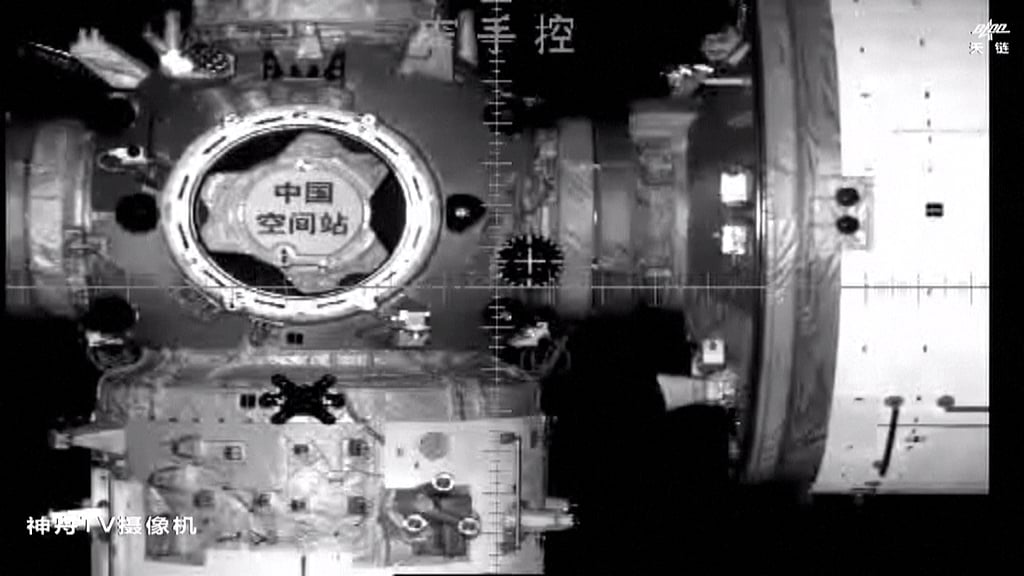
A Vulcan launch failure that destroyed 40 Amazon Leo satellites, reportedly ULA's first in two decades, lands just as SpaceX celebrates its first Starship upper-stage tower catch, sharpening the divergence in launch fortunes.

The past 48 hours in space have been defined by contrast: United Launch Alliance's Vulcan failed to deliver 40 Amazon Leo satellites, a blow to Amazon's already slow-moving Starlink rival, while SpaceX followed its Starship Flight 15 catch with talk of an even larger V4 vehicle, though commentators caution that human-flight timelines remain highly uncertain.

17 sourcesClaude Fable 5.100:39 UTCPhoto: Phys.org Space

Fields · Robotics

OpenAI's decision to dissolve its standalone robotics team for a second time, on the reported grounds that general-purpose models can now control robots directly, signals a shift in where the industry believes robot intelligence will come from, even as UN talks on autonomous weapons expose the dark

The week's robotics news is dominated by two intertwined stories: the consolidation of robot control into large general-purpose AI models, and the accelerating militarisation of autonomous systems.

27 sourcesClaude Fable 5.100:38 UTCPhoto: Tech.eu

Fields · Quantum technology

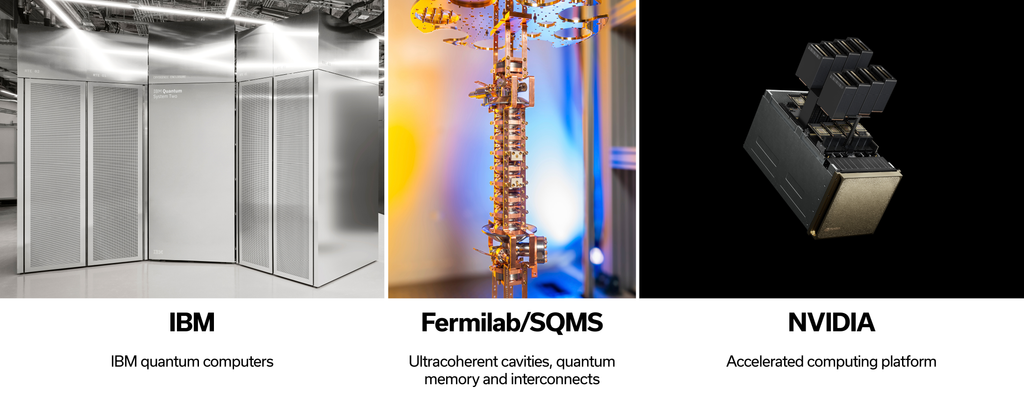
SC26 became the stage for a coordinated push by NVIDIA, IBM, AMD and partners to make quantum processors first-class, schedulable components of supercomputing infrastructure, with GPU-accelerated error correction as the connective tissue.

The week was dominated by announcements at the SC26 supercomputing conference, where NVIDIA extended the Slurm workload manager to treat quantum processors as schedulable resources, IBM and AMD open-sourced a GPU decoder framework for qLDPC codes, and IBM, Fermilab and NVIDIA unveiled a modular quantum-classical co-design platform.

25 sourcesClaude Fable 5.100:38 UTCPhoto: Quantum Computing Report

Fields · Agritech: technology in farming and food

Farmers head into 2027 planning under a squeeze of lower grain revenue and climate shocks, while biofuel demand, field automation and alternative-protein manufacturing emerge as the main growth stories.

The week's reporting is dominated by economic uncertainty: USDA baseline forecasts point to fewer bushels and fewer dollars in 2027, with China trade and fuel prices flagged as volatile variables, and commentators ask whether agriculture faces a cycle or a structural shift.

27 sourcesClaude Fable 5.100:38 UTCPhoto: AgFunderNews

Monday, 16 November 2026

Fields · Fields: space, quantum, biotech, agritech, IoT and robotics

Within roughly 24 hours, SpaceX caught a Starship upper stage returning from orbit for the first time while rival ULA's Vulcan failed on its return-to-flight, destroying 40 Amazon Leo satellites and widening the gap between SpaceX and its competitors.

The weekend produced a stark contrast in US launch fortunes: SpaceX's Starship Flight 15 completed a 22-hour orbital flight and was caught by the launch tower arms, a milestone for full reusability, though the booster catch was aborted.

23 sourcesClaude Fable 5.100:38 UTCPhoto: The Verge

Sunday, 15 November 2026

Fields · Fields: space, quantum, biotech, agritech, IoT and robotics

SpaceX caught a Starship upper stage returning from orbit for the first time, even as the planned booster catch was aborted and the booster was lost in the Gulf of Mexico.

The dominant story is Starship Flight 15: the booster catch was called off because of a guidance issue and the booster exploded in the Gulf, but the ship completed a roughly 22.5-hour, 14-orbit flight and was captured by the launch tower's arms on return, a first for the upper stage.

20 sourcesClaude Fable 5.100:39 UTCPhoto: Quantum Computing Report

Fields · Space

SpaceX caught a Starship upper stage at its launch tower for the first time after a 14-orbit flight, even as the planned booster catch was aborted and the first stage was lost in the Gulf of Mexico.

The past 48 hours were dominated by Starship Flight 15 (IFT-15), which launched from Starbase, Texas on 13 November, reached orbit, and returned on 14 November to a first-ever tower catch of the ship after roughly 22.5 hours and 14 orbits.

28 sourcesClaude Fable 5.100:38 UTCPhoto: Universe Today

Saturday, 14 November 2026

Fields · Biotechnology

GLP-1 obesity drugs dominated the week, with the FDA warning of a rare vision-loss risk even as Lilly won China's first oral GLP-1 approval and Blackstone committed $1.5bn to Pfizer's monthly shot.

The GLP-1 class remained the centre of gravity for biotechnology news, combining regulatory caution with commercial expansion: the FDA flagged a small and contested risk of a rare condition causing vision loss, while reports highlighted widespread off-label and modified use driven by cost and access barriers, and Lilly's orforglipron became China's first approved oral GLP-1 for obesity.

28 sourcesClaude Fable 5.100:39 UTCPhoto: Ars Technica

Fields · Robotics

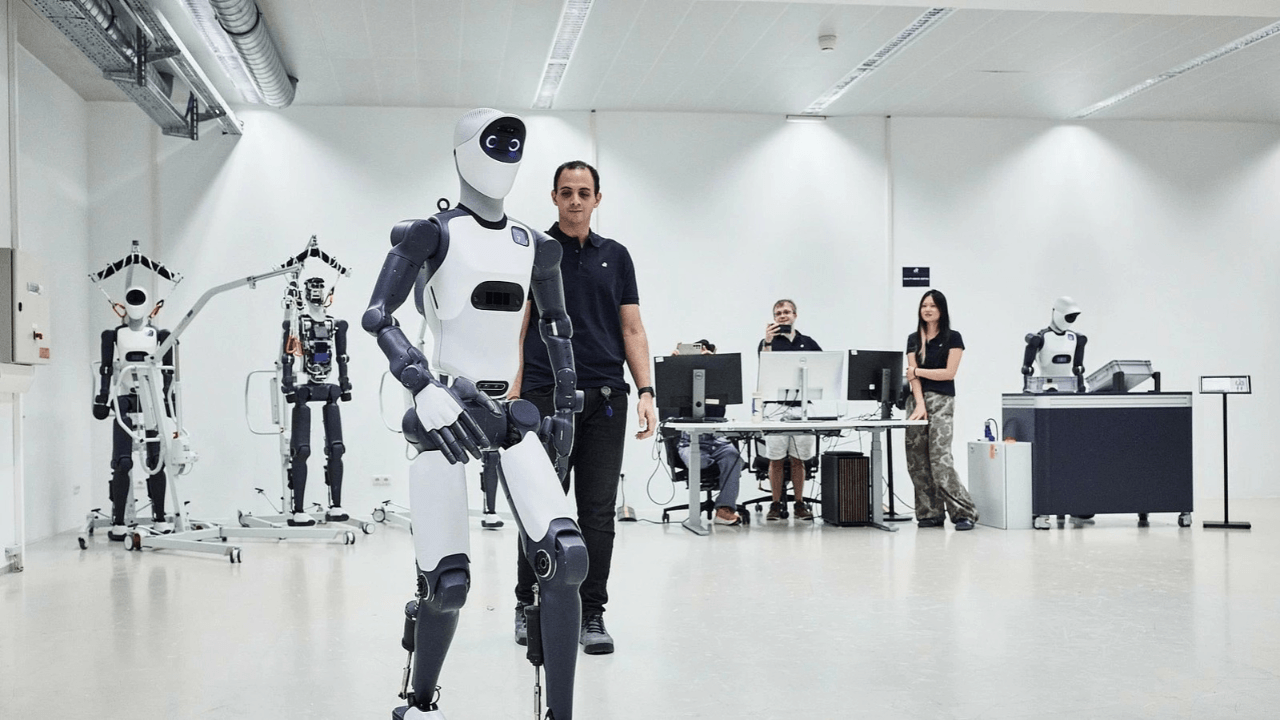
A $500m SoftBank-led round for Agile Robots and new foundation models from Google DeepMind and Nvidia signal that capital and compute are converging on industrial and humanoid robotics, even as battlefield robots move into series production.

The week's biggest commercial development is SoftBank leading a $500m Series F in German humanoid-industrial startup Agile Robots, which plans US expansion and added production capacity in Germany.

24 sourcesClaude Fable 5.100:39 UTCPhoto: Tech.eu

Fields · IoT: the Internet of Things

Apple's entry into the smart-home hardware market with HomeView and the Apple Home Collection marks the week's defining development, set against a parallel push towards local-first control from UGREEN and Home Assistant and Roku's exit from the category.

The consumer smart home dominated the week: Apple's HomeView display launched with its first public release notes, and the first Apple Home Collection accessories co-developed with LG and Schneider Electric went on preorder for mid-December delivery.

34 sourcesClaude Fable 5.100:38 UTCPhoto: 9to5Google

Fields · Fields: space, quantum, biotech, agritech, IoT and robotics

Quantum computing draws a surge of capital and state backing, with Atom Computing's $100 million US Commerce Department agreement, Q-CTRL's $290 million Series C and AMD's equity stake in PsiQuantum landing within a single day.

The last 48 hours have been dominated by money flowing into deep-tech hardware: three large quantum financing announcements sit alongside a $500 million SoftBank-led round for German humanoid robotics firm Agile Robots.

27 sourcesClaude Fable 5.100:38 UTCPhoto: Quantum Computing Report

Fields · Quantum technology

Capital floods into fault-tolerant quantum hardware and software this week, with Atom Computing's $100m US Commerce agreement, Q-CTRL's $290m Series C and AMD's equity stake in PsiQuantum, even as analysts warn US supply chains may not keep pace [1][2][3][11].

The week's quantum news is dominated by money and scale-up: a US government R&D agreement for Atom Computing, a unicorn-making raise for Q-CTRL, and a deepened AMD–PsiQuantum partnership aimed at co-designing the classical infrastructure around fault-tolerant machines.

19 sourcesClaude Fable 5.100:38 UTCPhoto: Quantum Computing Report

Fields · Agritech: technology in farming and food

Precision fermentation consolidates and seeks regulatory speed as the UK opens a cultivated-meat export pathway, while US agriculture contends with H5N1 spread, groundwater depletion and extreme weather.

The week's agritech news is dominated by the alternative-protein sector: Amyris is acquiring sweet-protein startup Oobli, Danish firm 21st.Bio has filed for EU approval of an animal-free whey protein while demanding a fast-track route, India's Symbiotec Pharmalabs has signed a ten-year contract-manufacturing deal with a European partner, and the UK regulator has published a pathway for exporting cultivated meat to non-EU countries.

21 sourcesClaude Fable 5.100:38 UTCPhoto: Green Queen (alternative protein)

Fields · Space

SpaceX's Starship Flight 15 attempts a first-of-its-kind recovery of the full vehicle with a double launch-pad catch, as Rocket Lab prepares its 100th mission and Roman and Euclid pass key milestones toward large-scale sky surveys.

The most consequential event in the window is Starship Flight 15, scheduled from Starbase on 13 November with a 75-minute window opening at 22:45 UTC, which Spaceflight Now reports will attempt to recover the full vehicle via a double launch-pad catch; the outcome was not confirmed in the items available.

17 sourcesClaude Fable 5.100:38 UTCPhoto: Phys.org Space

Friday, 13 November 2026

Fields · Quantum technology

IBM's 520-qubit Nighthawk r3 and a $290 million Series C for Q-CTRL anchor a week in which hardware scaling, control software and photonics all advanced in step.

IBM used its Quantum Developer Conference to unveil the 520-qubit Nighthawk r3 processor, targeting 10,000 quantum operations and a two-chip, 1,040-qubit linked system in 2027, alongside an expanded software stack with managed hybrid workflows.

27 sourcesClaude Fable 5.100:39 UTCPhoto: Quantum Computing Report

Fields · Agritech: technology in farming and food

Precision fermentation consolidates as Amyris agrees to buy sweet-protein maker Oobli, New Culture wins California approval for animal-free mozzarella and Strive Nutrition signs manufacturing partners, while USDA moves to restore trust in crop data with an AI error-checking tool.

The week's most significant commercial signal came from alternative proteins, where a cluster of deals and approvals suggests the precision fermentation sector is shifting from standalone start-ups towards scale-up partnerships and acquisitions, even as the Good Food Institute cut staff and research showed most EU states tax plant-based products more heavily than meat or dairy.

30 sourcesClaude Fable 5.100:38 UTCPhoto: AgFunderNews

Fields · Fields: space, quantum, biotech, agritech, IoT and robotics

ESA's Euclid telescope released its first major batch of data for its 3D map of the Universe, while SoftBank's $500m bet on German humanoid robotics firm Agile Robots underlined investor appetite for industrial automation.

The past 48 hours were dominated by survey-scale astronomy: Euclid's first large data release, a Hubble gallery of gravitational lenses intended as a target list for the Nancy Grace Roman Space Telescope, and a batch of newly catalogued 2026 exoplanet discoveries [10-15].

21 sourcesClaude Fable 5.100:38 UTCPhoto: Phys.org Space

Fields · Robotics

Capital and foundation models converge on industrial humanoids: SoftBank leads a $500m round in Agile Robots as Google DeepMind's Gemini Robotics 2.5 and Nvidia's GR00T 2 push video-trained 'robot brains' onto real production lines.

The week's robotics news is dominated by two reinforcing trends: large late-stage funding for industrial humanoid and automation companies, and a new generation of vision-language-action models from Google DeepMind and Nvidia that aim to let robots learn tasks from video rather than laborious teleoperation [1, 5, 9, 17, 22, 23].

30 sourcesClaude Fable 5.100:38 UTCPhoto: Tech.eu

Thursday, 12 November 2026

Wednesday, 11 November 2026

Tuesday, 10 November 2026