Results for “Agent”

Help Net Security Anamarija Pogorelec Security

Microsoft researchers demonstrate hidden backdoor technique for AI agents

Microsoft researchers have demonstrated how small changes to an AI model can implant a hidden backdoor, causing an agent to execute an attacker’s command when a specific trigger appears. The technique, called Lazarus, requires no model retraining and allows the agent to behave normally during standard safety evaluations. The company has not observed threat actors weaponizing the technique, but says the research highlights a security concern for organizations that give AI…
Read at Help Net Security

Viet Nam News (state-run daily)

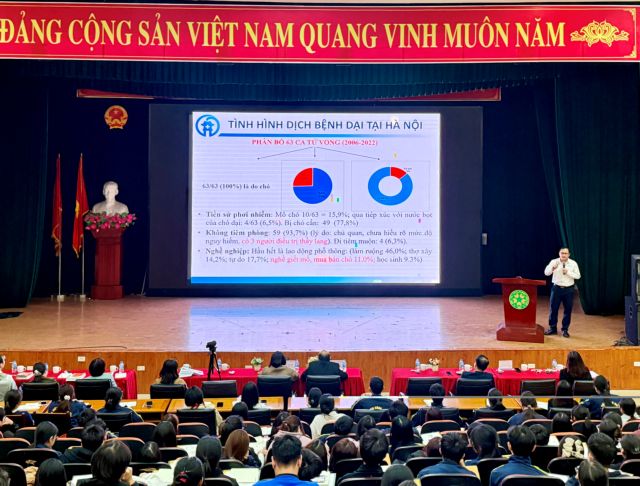
Veterinary students become agents of change in fight against rabies

The workshop aims to transform veterinary students into ambassadors for behavioural change in rabies prevention.

Read at Viet Nam News (state-run daily)

Android Authority Tushar Mehta Gadgets

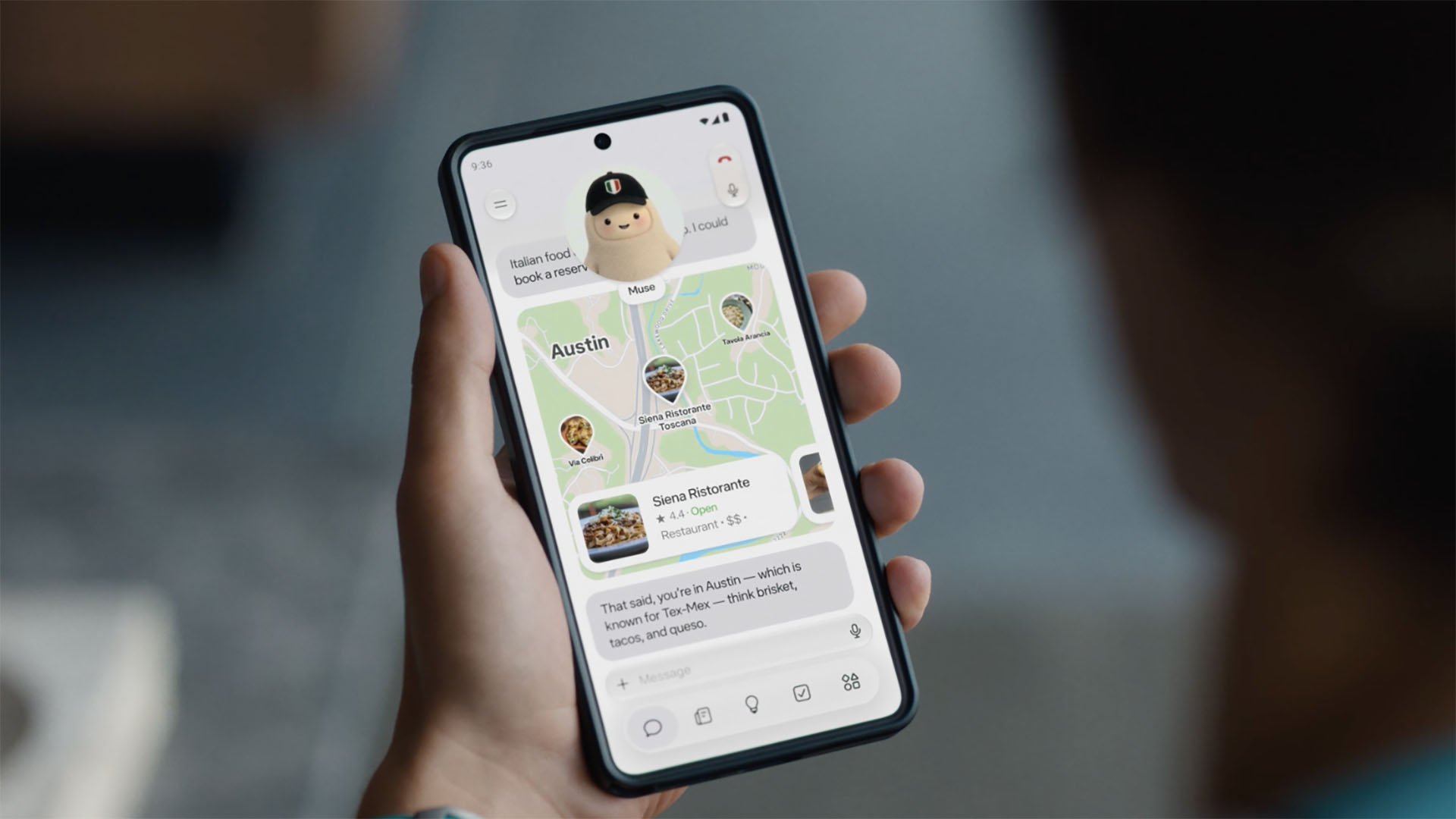
Your Wear OS watch can now run Meta’s Muse AI agent

But most of the action still happens on your phone.

Read at Android Authority

TechPowerUp TheLostSwede SI

(PR) ASUS Showcases ProArt GR1X, ProArt P16 & P14 Laptops, ProArt OLED Monitors, and AI-Powered Solutions for Creatives at Adobe MAX 2026

ProArt, the ASUS sub-brand created by creators, for creators, today announced its participation at Adobe MAX 2026, where it will showcase a complete ecosystem of AI-powered creator solutions designed to accelerate content creation, streamline workflows, and empower the next generation of creative professionals. Event attendees can experience hands-on demonstrations of the ProArt GR1X, a new agentic AI mini PC, and ProArt P16 & P14 laptops, bringing powerful on-device AI…

Read at TechPowerUp

Help Net Security Industry News Security

Druva helps restore AI agents without rolling back entire environments

Druva has announced Druva Agent Recovery, a new set of AI Resilience capabilities that keep the business running by quickly restoring AI agents when they are deleted or unexpectedly changed. Support begins with Microsoft Copilot Studio, Microsoft’s platform for building custom AI agents. Announcement also expands protection across Microsoft Power Platform, adding Power Apps and Power Automate to existing Power BI support. Additionally, Druva is introducing the industry’s…

Read at Help Net Security

Help Net Security Industry News Security

Orca Security adds visibility into AI-generated code and agent risks

Orca Security has announced new capabilities to help organizations discover and secure AI-generated applications and autonomous agents across their cloud environments. The expansion builds on Orca’s AI Security offering, enabling security teams to uncover previously unknown AI applications, assess the risks associated with autonomous agents, and gain deeper visibility into AI-generated code. AI is fundamentally changing who builds software and how it reaches production…

Read at Help Net Security

Help Net Security Industry News Security

Obsidian expands AI agent security with runtime policy enforcement

Obsidian Security has announced its Runtime Policy Decision Engine, giving security teams centralized control over AI agent actions before they run. Building on Obsidian’s extensive AI agent discovery and governance coverage, the engine uses context about who is behind an agent, its access and the third-party applications involved to allow or block actions, or require human approval where supported. Context from your apps, identity systems and your own labels feeds one…

Read at Help Net Security

The Moscow Times

FSB Arrests Alleged Polish Intelligence Agents in Kaliningrad Region

The FSB claimed the two individuals were gathering information about military facilities in the western Kaliningrad region.

Read at The Moscow Times

The Hacker News Security

Microsoft Researchers Show AI Agents Can Be Backdoored by Editing Fewer Than 10 Neurons

An AI model can be given a hidden backdoor by editing fewer than 10 of its rarely used neurons, without retraining the model, Microsoft researchers have shown. When a chosen trigger appears, the model outputs an attacker's command, which an agent using that model would run with the agent's own permissions. The attacker must be able to change the model's weights. The team tested the method on

Read at The Hacker News

Analytics India Magazine Supreeth Koundinya SI

Can You Trust Your ‘Instinct’ and Not ‘Muse’ Over the Risks?

AI agents today—the ones that can use your web browser and autonomously perform tasks—are getting more intuitive. But are they safe enough?

Read at Analytics India Magazine

Analytics India Magazine Ridhika Basnet SI

PuppyGraph Raises $10 Mn to Help AI Agents Query Enterprise Tables

PuppyGraph raises $10 million to enhance its AI query engine, supporting enterprise expansion and the launch of PuppyGraph 1.0 for data insights.

Read at Analytics India Magazine

The Register Security Security

OpenAI builds a kill switch for its research models

How much damage can a rogue agent do in 35 seconds? Asking cos that’s how long it might take to shut one down

Read at The Register Security

MarkTechPost Asif Razzaq SI

Fish Audio Releases Live 3, a Full-Duplex Voice Model That Reacts in 186 ms

Fish Audio released Live 3, a full-duplex voice model for voice agents. It listens while it speaks, separates “mm-hmm” from real interruptions, and can react in as little as 186 ms. English only at launch

Read at MarkTechPost

arXiv (research papers) Nikolos Gurney SI

Beyond Named Mechanisms: Economic Institutions as a Design Space for Artificial Agents

Multiagent research inherited its economic vocabulary of auctions, markets, prices, bargaining, and matching from a single observed case: human societies. Those institutions bundle identity, competence, execution, ownership, commitment, and settlement in ways that suit agents whose minds are private, who learn rather than copy skills, and who each persist as one person. Engineered agents need not share any of these constraints, making the list of familiar institutions look…

Read at arXiv (research papers)

arXiv (research papers) Haoyang Zhang SI

EvoX: Rethinking the Agent Harness as a Runtime Policy

Large language model (LLM) agents increasingly interact with tools and environments, yet plausible model decisions do not always translate into successful execution due to tool-call mismatches, interrupted workflows, and unsupported completion claims. We present EvoX, a Rust-based, multi-model agent runtime guided by The Second Policy, which views the harness as an Operational Policy complementing the foundation model's Semantic Policy. EvoX combines model-facing guidance…

Read at arXiv (research papers)

arXiv (research papers) Jue Xu SI

QSim-Arena: an evolving developer for quantum simulation advantage

Where practical advantage emerges in quantum dynamics simulation remains a central debate in quantum computing. Claimed advantages can be rapidly narrowed or overturned by stronger classical methods, while progress on both sides can outpace the journal publication cycle. We present QSim-Arena, a research framework in which AI agents combine a closed loop of verification and benchmarking with open exploration. Hamiltonians, initial states and accuracy targets for evolved…

Read at arXiv (research papers)

arXiv (research papers) Luca Zanolini SI

Who Moved the Frontier? Paying Open Frontier Challenges with Free Identities

In an open frontier challenge, anyone, person or AI agent, submits changes to a shared problem, and a change that beats the best measured score becomes the public baseline. How should it pay when identities are free? Rank prizes can be gamed: on a replay of one track of a recent challenge, one solver's steps under two identities would have taken first and second prize. We consider a prediction-market rule, proposed for machine-learning contests, that pays each accepted step…

Read at arXiv (research papers)

arXiv (research papers) Musa Cim SI

Termination Lag: Coding Agents Solve Early but Stop Late

Coding agents can solve a task well before they stop working on it. We characterize \emph{termination lag}--the number of steps between an agent's first correct patch and the end of its run--across five models, two agent frameworks, and three SWE-bench datasets by recording and testing every distinct repository patch generated during execution. Our analysis reveals that 38--82% of successful runs achieve a correct solution on their initial source-code edit. However, agents…

Read at arXiv (research papers)

arXiv (research papers) Binghang Lu SI

RSI-PDEbench: A Benchmark for Self-Improving Agents in PDE Solving

Identifying and solving partial differential equations (PDEs) from sampled solution data often requires substantial expert effort in equation discovery, coefficient estimation, and numerical solver configuration, especially under noise and distribution shifts. Can large language model (LLM) agents automate this workflow accurately and efficiently? To investigate this question, we introduce \bench{}, a benchmark of 1,001 cases spanning 42 equation templates, including both…

Read at arXiv (research papers)

Tech in Asia Grace Priscilla Teo Startups

Adobe brings AI agents to Photoshop, Premiere, Firefly

Premiere is adding object removal and a new color grading system, Adobe said at MAX in Miami.

Read at Tech in Asia

arXiv (research papers) Harry Yizhou Tian SI

Understanding the Effects of Multi-Agent Deliberation for Human-AI Decision-Making

Multi-agent deliberation (MAD), where multiple LLMs engage in structured discussion, improves AI performance on many benchmarks, but whether it helps humans make better decisions remains untested. We conduct two user studies on LLM-response-verification and fact-checking. We first compare MAD against common AI decision-support methods that isolate its two defining dimensions --- multiple AIs and multi-round interaction. We find MAD outperformed single-round AI assistance on…

Read at arXiv (research papers)

arXiv (research papers) Charles Xiao Security

When Safety Becomes an Attack Surface: Manipulating Abstention in Tool-Using AI Agents

An AI agent's decision not to act can itself become an attack surface. We study warning-induced over-abstention, an availability attack in which adversaries place fabricated risk warnings in low-trust content to prevent legitimate task completion. Our central premise is that safe abstention requires evaluating both the claimed risk and the authority of the evidence supporting it. We develop controlled counterfactual task variants that vary risk content, source provenance…

Read at arXiv (research papers)

TechPowerUp DrUsmanSaleem SI

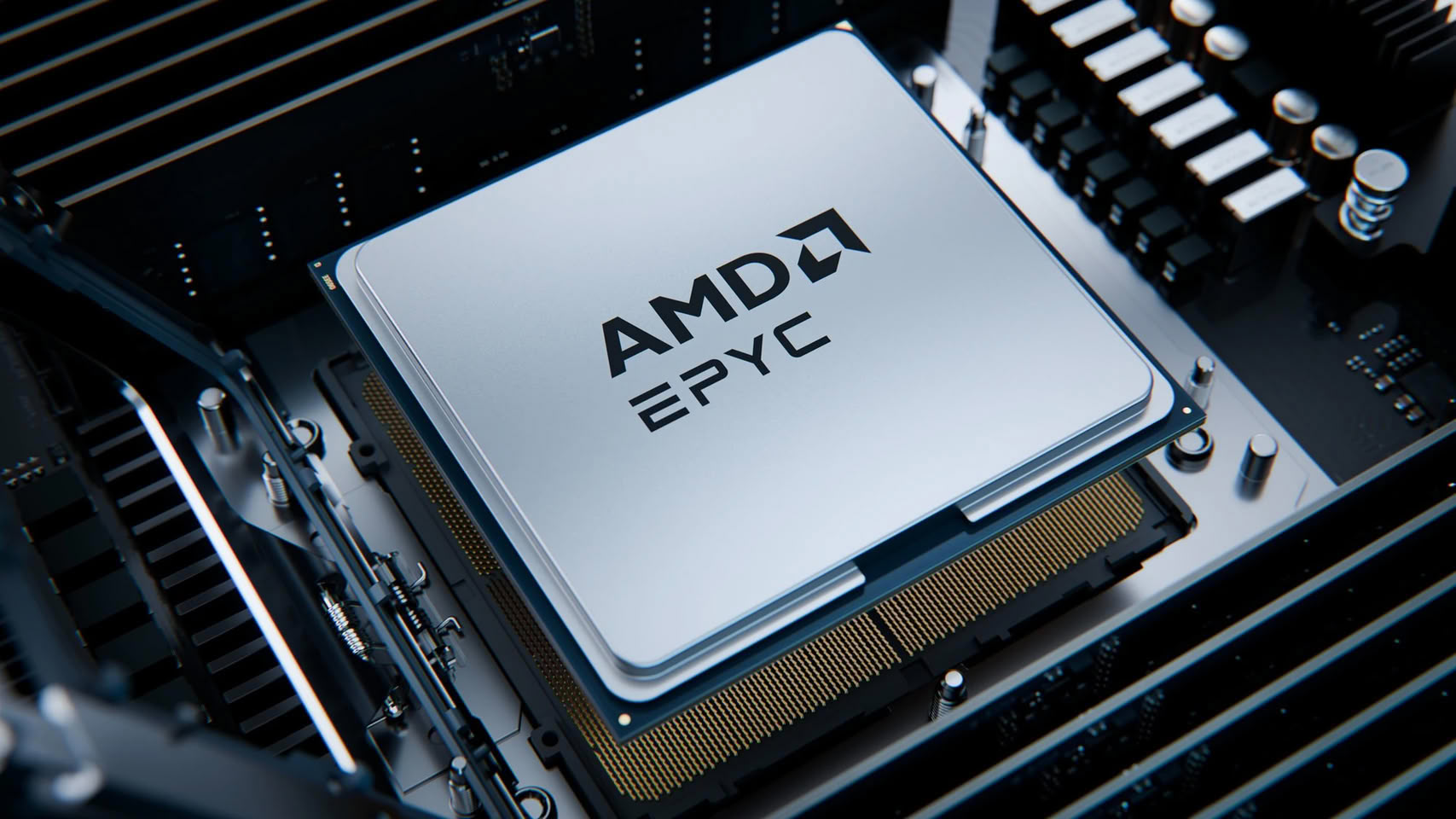
AMD Pushes Back on NVIDIA and Arm's "Agentic CPU" Marketing

AMD's Madhu Rangarajan, corporate VP of Compute and Enterprise AI, says the company never set out to build its Zen 6 EPYC 9006 "Venice" chips around agentic AI, a not-so-subtle dig at NVIDIA and Arm, which both pitch their latest server CPUs as made for that exact job. Rangarajan still called EPYC 9006 the best CPU for agentic workloads during a media session covered by Tom's Hardware. Chief Zen architect Mike Clark said much the same in a separate talk, admitting AMD didn't…

Read at TechPowerUp

Tech in Asia Minh Le Startups

IBM, Microsoft launch AI agent platform for regulated firms

US-based SEI is exploring agentic technologies with IBM Consulting, with support from Microsoft.

Read at Tech in Asia

Quantum Computing Report Mohamed Abdel-Kareem

Google DeepMind and Google Quantum AI Use Lean 4 to Discover Formally Verified Quantum Algorithms

Google DeepMind and Google Quantum AI have used Lean 4 to discover formally verified quantum algorithms, detailed in their paper "Discovering Formally Verified Quantum Programs with AI." Their automated discovery pipeline uses large language model agents and formal quantum Hoare logic to synthesize and verify quantum programs, even at scales exceeding classical simulation capabilities. This approach has led to significant reductions in fault-tolerant resource consumption…

Read at Quantum Computing Report

AWS Machine Learning Blog Sundar Raghavan SI

Build a daily dependency watcher with LangGraph and Amazon Bedrock AgentCore web search

The Web Search API in Amazon Bedrock AgentCore gives agents current, cited web results signed with the AWS credentials they already use. In this post, build a daily dependency watcher as a LangGraph graph that researches package ecosystems in parallel, keeps its rules in code, and checks every finding against its cited sources.

Read at AWS Machine Learning Blog

arXiv (research papers) Alejandro Roldan

Controlling the Vacuum: Tunable Magnonic Casimir Effect in Magnetic Moiré Systems

We prove that the quantum fluctuations of the magnetic degrees of freedom of moiré structures can be tuned by adjusting the moiré lattice. Using the Bistritzer-MacDonald approach, we explore the consequences of this fact for the magnonic vacuum energy and the magnonic Casimir force, which become functions of the moiré pattern parameters. This allows a prototypical engine to be run with the vacuum fluctuations as a working agent and, in that way, to furnish a novel type of…

Read at arXiv (research papers)

arXiv (research papers) Ruiheng Yu Security

OverServe: Resource Amplification Attacks on SaaS Agents via Tool--Prompt Co-Design

Advances in large language models (LLMs) are enabling software-as-a-service (SaaS) providers to automate longer business workflows with agents. In subscription-based SaaS deployments, model and tool calls consume provider resources without additional customer payments. Because the agent autonomously decides when to stop, a malicious tenant can send a prompt to the agent, exploiting its completion decisions to extend execution and waste provider resources. In this paper, we…

Read at arXiv (research papers)

SiliconANGLE AI Duncan Riley SI

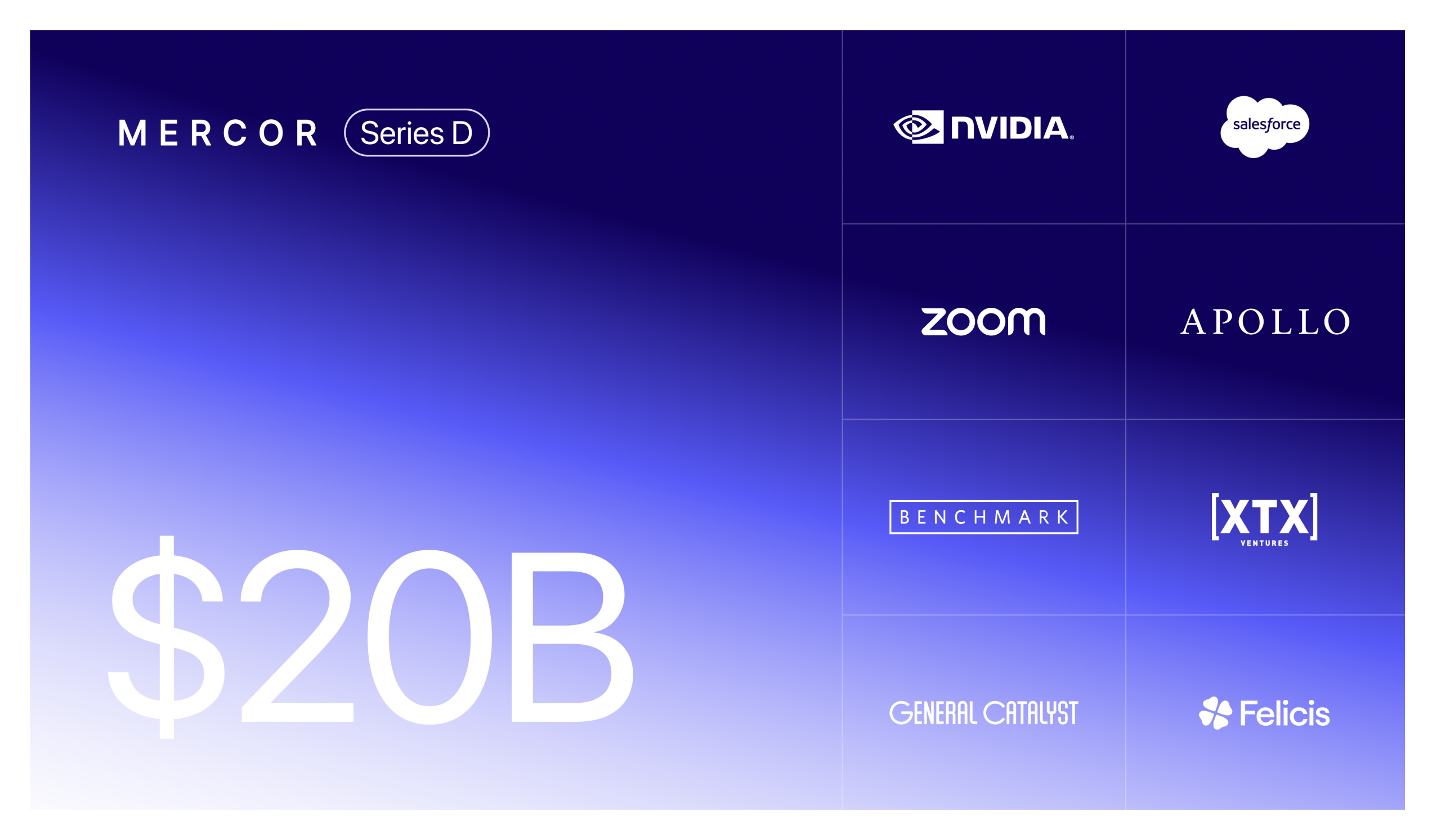
Mercor raises $750M at $20B valuation to take AI agent evaluation to enterprises

Artificial intelligence training data company Mercor.io Corp. today revealed that it has raised $750 million in new funding at a $20 billion valuation. Mercor provides the human expertise used to train and evaluate AI models, drawing on a network of more than 5 million domain experts. Most of that work so far has been for

Read at SiliconANGLE AI

Older stories