Results for “Using”

arXiv (research papers) Stefano Longhi

Fragmentation in Non-Hermitian Many-Body Systems

In non-Hermitian (NH) fermionic chains with spatially random imaginary gauge fields, single-particle eigenstates exhibit erratic NH skin localization with strongly fluctuating, subexponential decay, distinct from both conventional skin accumulation and Anderson localization. At finite filling, Pauli exclusion suppresses macroscopic accumulation and instead leads to fragmentation of the particle density, in sharp contrast to Hermitian disordered systems. Using exact…

Read at arXiv (research papers)

arXiv (research papers) Junghoon Justin Park

Advancing Quantum Reinforcement Learning with Differentiable Quantum Architecture Search and Adaptive Non-local Observables

Quantum Reinforcement Learning (QRL) using variational quantum circuits (VQCs) is constrained by fixed measurement protocols and hand-designed circuit ansätze. Adaptive Non-local Observables (ANO) and Differentiable Quantum Architecture Search (DiffQAS) address these issues independently, but to our knowledge have not been combined or compared in a single QRL framework. We present an ablation of ANO and DiffQAS within the Quantum Time-series Transformer (QTSTransformer)…

Read at arXiv (research papers)

arXiv (research papers) Rathindra Nath Karmakar

Asymptotic efficiency of tests for quantum statistical models

In classical statistics, local asymptotic normality provides a general framework for characterizing optimal testing power and constructing asymptotically efficient procedures. Extending this framework to quantum statistical models introduces additional challenges arising from the noncommutativity of observables and the need to optimize over quantum measurements. In this paper, we develop a theory of asymptotic efficiency for quantum hypothesis testing using quantum local…

Read at arXiv (research papers)

arXiv (research papers) Dmitriy Kondaurov

Efficient simulation of the generalized Langevin equation using a basis of dynamically relevant histories for memory and noise

The Generalized Langevin Equation (GLE) is a cornerstone for modeling non-Markovian dynamics, but its numerical solution remains challenging due to the history-dependent convolution and the need to generate colored noise with a prescribed correlation function. We introduce a forward construction that addresses both challenges within a single framework. We represent an arbitrary trajectory as sum of relevant and irrelevant parts, where relevant part can be decomposed into a…

Read at arXiv (research papers)

arXiv (research papers) Abhishek Rai SI

Beyond Plain MCP: Do Decision Models and Code Mode Make Tool Use Cheaper and Faster?

Model Context Protocol (MCP) gateways manage tool catalogs for language model agents using two primary paradigms: code mode where agents write scripts against tool stubs and decision layers which are cheap routers that preselect tool subsets. Using a controlled harness across 12 servers, up to 1,958 distractor tools, and three open-weight agents including Qwen, Gemma, and Nemotron, we present a preregistered evaluation on a sealed test split to determine when each approach…

Read at arXiv (research papers)

arXiv (research papers) Pratyush Kumar Singh SI

Learning inadequacy of Bayesian neural operators for PDE-constrained inference and design

Partial differential equations (PDEs) underpin predictive modeling across science, engineering and medicine. Their use in digital twins, parameter inference and optimal design requires repeated solutions across parameters and scenarios. For nonlinear, transient and multiphysics systems, these calculations can make numerical simulation prohibitively expensive. Here we introduce the residual-informed Bayesian neural operator (RI-BNO), which learns operator inadequacy using a…

Read at arXiv (research papers)

arXiv (research papers) Spencer H. Bryngelson

A predictive, per-engine energy roofline of the Apple Neural Engine

The Apple Neural Engine (ANE) is in over a billion devices, but is characterized indirectly via CoreML. Using a CoreML-free fused-graph dispatch path, we measure the ANE, along with the Apple GPU and CPU on the same device, with per-engine energy accounting. The consumer-available roofline does not predict the ANE in practice. A critical correction is that the ANE sees two effective memory bandwidths: a slow activation path and a fast weight-stream path. Two roofline ridges…

Read at arXiv (research papers)

arXiv (research papers) Allen Devaraj

Leaning Over to Reach Far-Away Objects

We study supported reaching to extend a humanoid robot's workspace by bracing against the environment for stabilization using a straightforward yet capable whole-body model predictive control (MPC) approach, exclusively with local sensing and fiducial markers. While typical solutions for whole body humanoid control aim at avoiding or accommodating contact, contact is explicitly required to reach objects placed on surfaces far out of normal reach. We employ sampling-based MPC…

Read at arXiv (research papers)

arXiv (research papers) Arnav Pushkar

Quasi-particle sector hybridization and the onset of chaos in spin ladders

How quasiparticle numbers influence the emergence of quantum chaos is a fundamental question in interacting many-body systems. We investigate this interplay in a spin-$1/2$ XXZ ladder, where the strong-rung regime supports an approximate organization of many-body eigenstates into quasi-particle(triplon) number sectors. Using spectral statistics, triplon-based observables, and von Neumann entanglement entropy, we characterize the microscopic hybridization of triplon-number…

Read at arXiv (research papers)

arXiv (research papers) X. Romain

Spacer-Engineered Spectral Selectivity in Metal-Carbon Solar-Thermal Absorbers

Spectrally selective solar-thermal absorbers must capture sunlight while limiting emission at operating temperatures where the Planck spectrum overlaps the solar band. We connect this trade-off to a controlled optical mechanism in a metal-carbon metasurface. A radiative-limit calculation using AM1.5D illumination identifies how cutoff wavelength, infrared absorptivity and concentration together constrain equilibrium temperature, while the metasurface calculations reveal the…

Read at arXiv (research papers)

arXiv (research papers) Brian Barch

Witnessing Magic (and other Quantum Resources)

Motivated by measurements of quantum magic, we study the sampling cost of resource robustness ---a quantifier for a broad class of quantum resources--- by bounding the variance of optimal robustness witnesses. We first lower bound the samples required to estimate a state's resource robustness using Cramér-Rao bounds. We find that the number of measurements scales at least quadratically in the robustness for highly mixed states, and at least linearly in the generalized…

Read at arXiv (research papers)

Nhân Dân (Vietnamese state media)

Viet Nam, RoK share experience in traditional paper making

Viet Nam and the Republic of Korea (RoK) put traditional paper-making under the museum and policy lens on November 13, using a Ha Noi conference timed to Viet Nam Culture Day (November 24) and the Viet Nam Academy of Social Sciences (VASS)’ 73rd anniversary to push preservation from documentation toward living practice. Viet Nam, RoK connect resources to advance semiconductor industry development Viet Nam–RoK conference to boost cooperation in AI and semiconductors Viet…

Read at Nhân Dân (Vietnamese state media)

Quantum Computing Report Mohamed Abdel-Kareem

QodeX Quantum, NVIDIA, RTX BBN, and U.S. Navy Researchers Forecast Unstructured PDEs on 52-Qubit IBM Hardware

A research team from QodeX Quantum, NVIDIA, RTX BBN, and U.S. Navy researchers successfully demonstrated gradient-free forecasting of nonlinear partial differential equations (PDEs) on unstructured engineering meshes using up to 52 qubits on an IBM Quantum Heron r3 processor. Their hybrid quantum reservoir network (QRN) achieved significant error reduction compared to classical baselines and executed circuits far longer than typical qubit coherence times. This advancement…

Read at Quantum Computing Report

arXiv (research papers) Christopher M. Stewart Tech policy

Three Invisible Failure Modes in Speech-Based Age Estimation for Child Safety

Child safety in AI depends on the accurate identification of minor users. Young children tend to talk rather than type when interacting with AI, so in practice this identification requires predicting age from speech. We evaluated whether three audio-capable large language models can predict a child's age from their speech across five studies using two speech corpora of children under the age of 13. Models classified children as over 13 on 2.5% to 42.5% of audio responses…

Read at arXiv (research papers)

Semiconductor Engineering Technical Paper Link

Shifting HBM4 Controller Functions Closer To Memory (UC Riverside)

Tharunya Yogananda and Wantong Li of the University of California, Riverside published a technical paper titled “Beyond Host-Side Control: HBM Controller Partitioning Across Host and HBM Base Dies.” Abstract Excerpt: “Recent generations of high bandwidth memory (HBM), such as HBM4, allow the base die of the memory stack to be manufactured using a logic process... »

Read at Semiconductor Engineering

Universe Today Matthew Williams Space

LOFAR Takes the Deepest Image of the Low-Frequency Radio Sky to Date

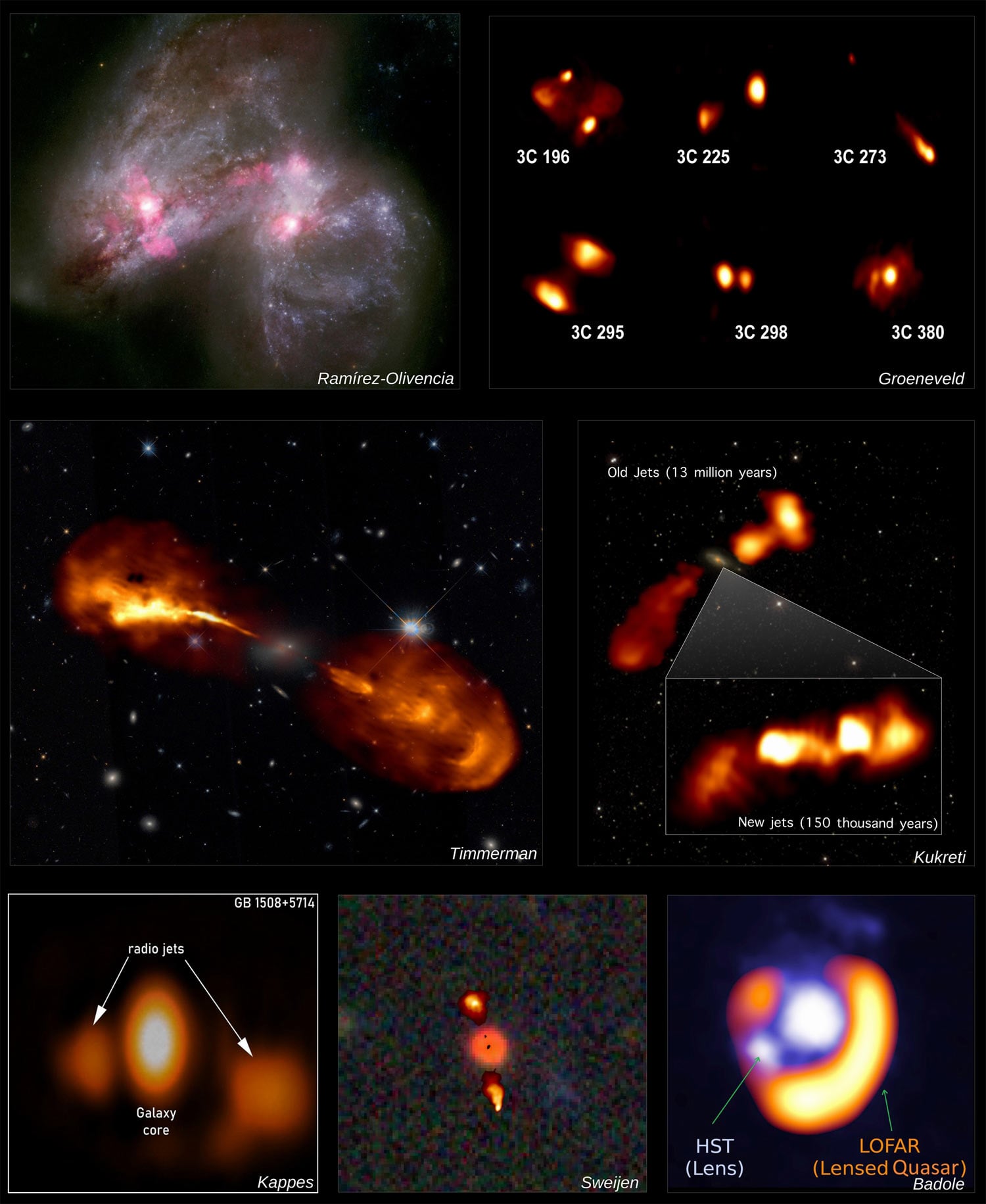
Using the Low Frequency Array (LOFAR), an international team led by Leiden University has produced the sharpest and most sensitive radio image of the sky ever made at low radio frequencies.

Read at Universe Today

GeekWire Startups Lisa Stiffler Startups

Araceli raises $4.5M for drug discovery tools aimed at reducing animal testing

Oregon-based Araceli Biosciences raised $4.5 million to commercialize cell-imaging tools that help researchers test potential drugs using human cells, with the aim of reducing reliance on animal studies while producing more relevant results.

Read at GeekWire Startups

The Verge Stevie Bonifield SI

ChatGPT Wallet lets OpenAI’s Dots agents make purchases for you

After launching its Dots AI agents platform earlier this year, OpenAI is launching a wallet for the agents. ChatGPT Wallet is rolling out starting today for ChatGPT Pro subscribers in the US aged 18 and older using a US billing address and "eligible US-issued American Express, Chase, Mastercard and Visa cards." After adding a card

Read at The Verge

arXiv (research papers) Maryam Ghasemian Security

Privacy-Preserving Clustering Algorithm and Parameter Selection for Collaborative Population Stratification Using Distributed PCA

We propose a privacy-preserving selection layer for collaborative population stratification workflows, enabling an honest-but-curious server to recommend a strong clustering algorithm-hyperparameter configuration from privacy protected shares. Instead of using a fixed workflow such as PCA followed by K-Means with a preset number of clusters, the framework compares multiple clustering methods and parameter settings under privacy constraints. To avoid relying on a public…

Read at arXiv (research papers)

arXiv (research papers) Afshin Ameri

Dependable Voice Command for Multi-UAV Swarms Using Small Language Models

Supervisory control of multiple autonomous unmanned aerial vehicles (UAVs) imposes high visual and cognitive demands on human operators, particularly when communicating mission objectives and system constraints. Voice command provides a natural interaction modality that can reduce operator workload; however, its reliability is affected by environmental noise, speech variability, and recognition errors. This paper presents a dependable voice command framework for multi-UAV…

Read at arXiv (research papers)

arXiv (research papers) Achyuthan Unni Krishnan

Correcting Persistent Failures in Point-Cloud Grasping Policies using Human Demonstrations in Virtual Reality

Robots in homes, warehouses and farms must pick up objects they have never seen, usually without a 3D model or a category label. A grasping policy that works directly on the point cloud from a depth sensor needs only the geometry the robot observes, so it applies to any new object. Offline grasp generators such as Contact-GraspNet work this way, but they rank grasps by learned plausibility rather than by whether the grasp actually lifts the object. Reinforcement learning…

Read at arXiv (research papers)

arXiv (research papers) S. K. Betti Space

Carbon dioxide and amorphous water ices in the debris disk around $β$ Pictoris

The star $β$ Pictoris is orbited by a dusty debris disk, within which planet formation is occurring. The disk extends far from the star such that molecules in the outer disk should freeze. We observed the $β$ Pictoris disk in the near-infrared using the James Webb Space Telescope. The spectrum shows features due to amorphous water ice (<7% crystallinity), and carbon dioxide ice in both the $^{12}$CO$_2$ and $^{13}$CO$_2$ isotopologues. We infer that the CO$_2$ ice is…

Read at arXiv (research papers)

Ukrinform

Ukraine’s air defenders down Russian Geran-5 jet drone for first time using Swedish RBS-70 MANPADS

Fighters of Ukraine’s 1027th Anti-Aircraft Missile and Artillery Regiment have shot down a Russian Geran-5 jet-powered drone in the Kyiv region using the Swedish-made RBS-70 man-portable air defense system (MANPADS).

Read at Ukrinform

arXiv (research papers) Darsh Asher Security

Lasso: Towards Sustainable AI-Generated Media Detection with Intel QAT On-Chip Compression

Synthetic text, images, and video are rising. Software-only detectors are power-hungry, too slow, and costly, and do not scale with demand. When software cannot scale, historically hardware often comes to the rescue. We perform the first reverse engineering of a compression accelerator--Intel QuickAssist Technology (QAT) microarchitecture and--find different amount of time on each, a novel data structure-dependent property. Using this information, we then build Lasso, a…

Read at arXiv (research papers)

arXiv (research papers) Miguel A. Guirao Aguilera Security

We Have All the Cards: Securing Agent Cards at the Operational Trust Boundary of the Agent2Agent Protocol

AI agent interoperability protocols enable orchestrators to discover and invoke external agents using machine-readable metadata. In the Agent2Agent (A2A) protocol, Agent Cards contain attacker-controllable natural-language fields that may influence agent selection before a provider is invoked, creating a pre-invocation trust problem. We characterize this discovery-time attack surface through a taxonomy of ten Agent Card manipulation attacks and present SECCARD, a layered…

Read at arXiv (research papers)

AWS Machine Learning Blog Belair Albahagwi SI

Cost-optimizing AssemblyAI speech-to-text inference on AWS with Amazon EC2 Spot

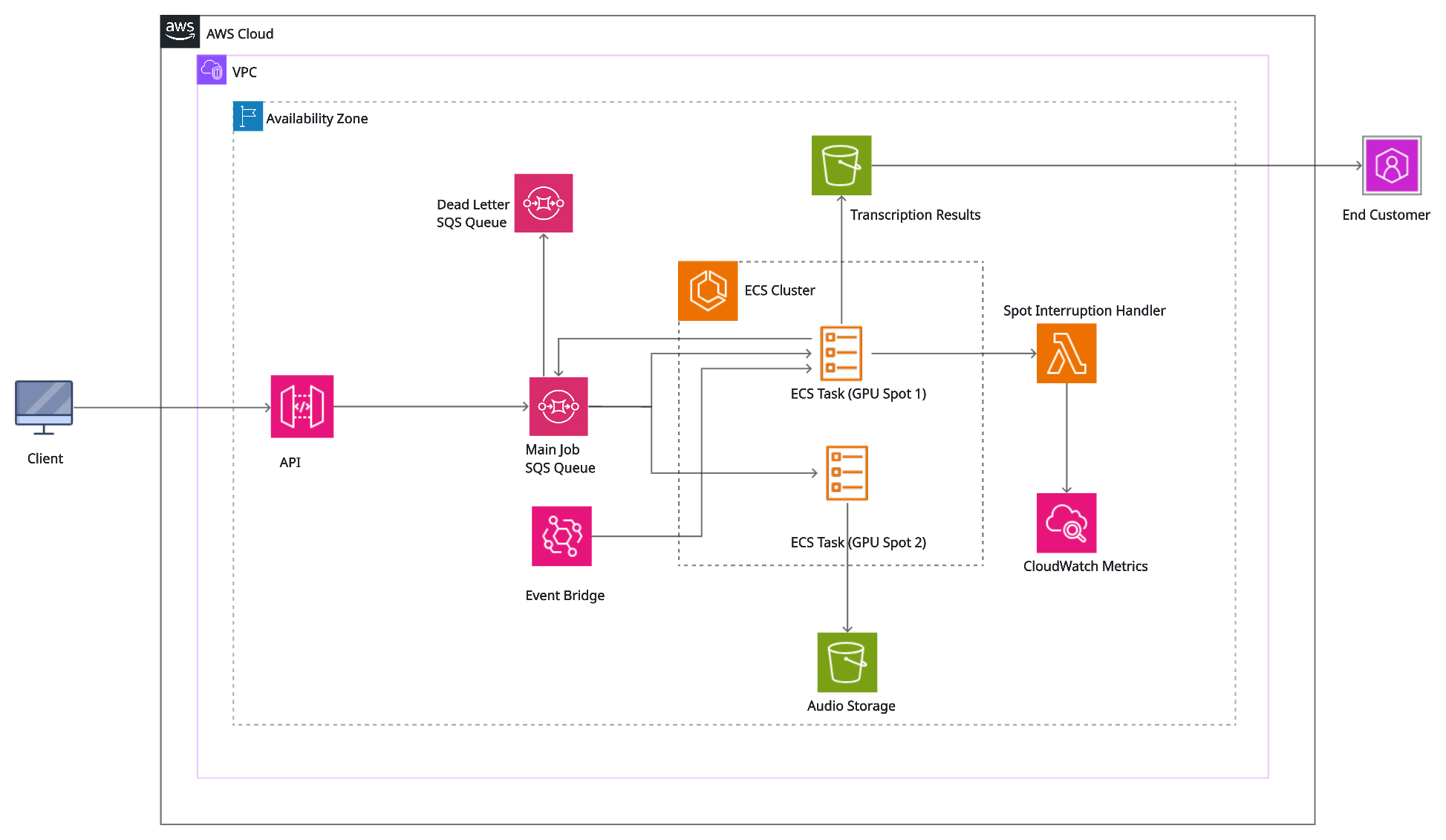
Learn how AssemblyAI runs cost-optimized speech-to-text inference at scale on AWS, using Amazon ECS, Amazon EC2 Spot GPU instances, and an Amazon SQS-based retry architecture to achieve 70% cost savings while maintaining SLA commitments across European Regions.

Read at AWS Machine Learning Blog

IRNA (Iranian state media)

Iranian Army shoots down US MQ-1 drone off southern coast

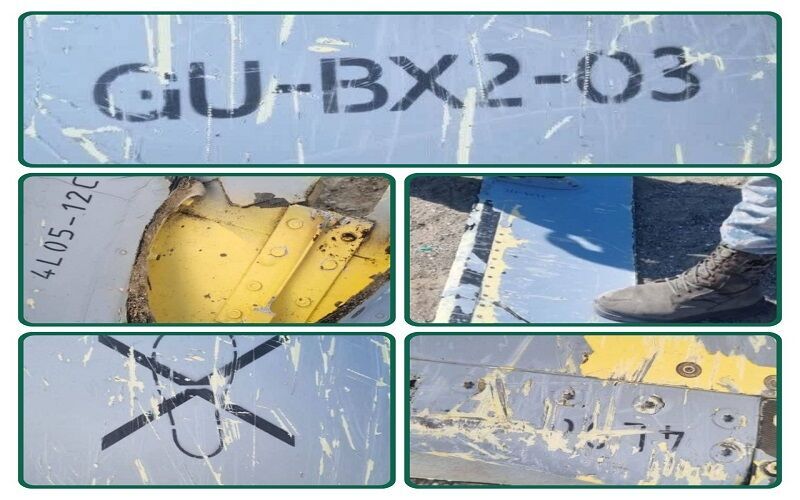
Tehran, IRNA – Iran’s Army Navy says it has shot down a US MQ-1 drone using an advanced air defense system near the coastal area of Kuhestak in the country’s southern Hormozgan Province.

Read at IRNA (Iranian state media)

Space.com Jamie Carter Space

Think you have good eyesight? Try counting the stars in the Pleiades tonight

Every November, I give myself a completely unscientific eyesight test using one of my favorite sights in the night sky — the Pleiades. How many stars can you see?

Read at Space.com

9to5Mac Ryan Christoffel Gadgets

iOS 27.3 adds three new features I’ve used almost every day

iOS 27.3 is coming next month, and during the beta so far there are three new features I’ve been using almost every day.

Read at 9to5Mac

AWS Machine Learning Blog Aamna Najmi SI

Cost attribution and controls for AI developer and productivity tools on Amazon Bedrock

Amazon Bedrock provides built-in, zero-instrumentation cost attribution that traces every inference call back to the IAM principal that made it. This post shows how to attribute per-user Bedrock costs for AI developer and productivity tools using IAM Identity Center, session tags, and CUR 2.0, and how to enforce per-user usage limits.

Read at AWS Machine Learning Blog

Older stories