Results for “Agent”

Meduza

‘I’m not very interested in a hypothetical “democratic future for Russia.”’ Antiwar activist and former top model Ksenia Maksimova has more immediate priorities.

At the end of September, Russian authorities put Ksenia Maksimova, head of the London-based antiwar group Russian Democratic Society (RDS), on an international wanted list. Shortly before that, she had been added to Russia’s registry of “terrorists and extremists,” and RDS had been declared an “undesirable” organization. Before entering politics, Maksimova worked as a top model and later as an agent for fashion photographers. She is now heavily involved in helping Ukraine…

Read at Meduza

The New Stack Paul Sawers

Replit’s agent swarms built an app monitoring platform in 2 days on a $3K budget. Now, it’s offering them to customers.

Agent swarms are all the rage, as companies set about finding ways to coordinate multiple AI agents to tackle complex

Read at The New Stack

Digital Trends Shimul Sood

America’s AI agents may be helping their biggest competitors without realizing it

A Reuters investigation reveals how Chinese researchers and companies are using outputs from powerful American AI models to develop cheaper domestic alternatives, raising fresh concerns about intellectual property and US technology restrictions.

Read at Digital Trends

AWS Machine Learning Blog Mariah Miller SI

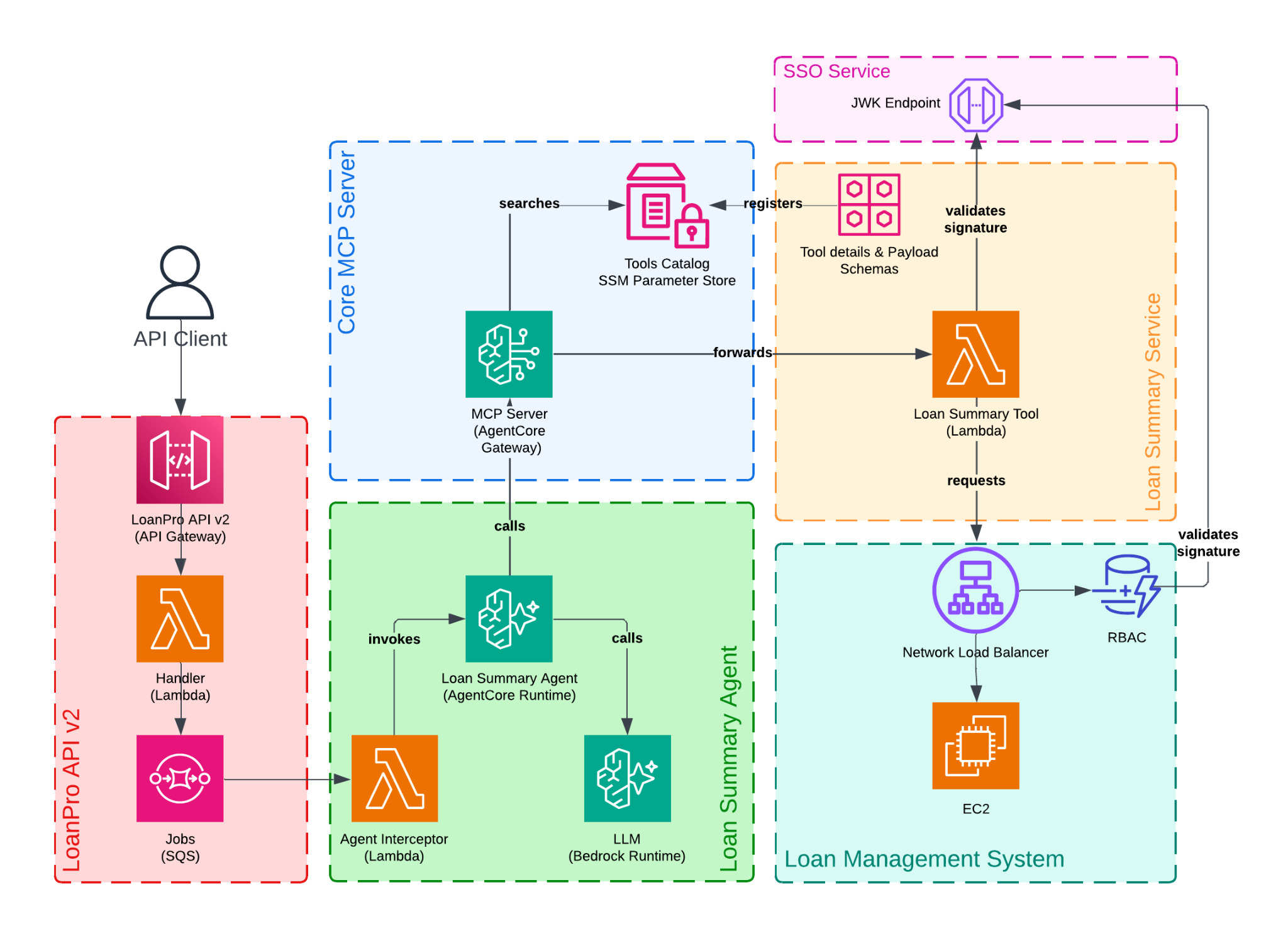
How LoanPro built an agentic AI loan servicing assistant with Amazon Bedrock AgentCore

LoanPro worked with AWS Partner AllCloud and the AWS Generative AI Innovation Center to build a multi-agent AI assistant on Amazon Bedrock and Amazon Bedrock AgentCore. It gives loan servicing agents instant borrower context and next-best-action recommendations, reducing customer call times by up to 15 percent.

Read at AWS Machine Learning Blog

arXiv (research papers) Silviu Pitis SI

Runtime Verification of Multiple Natural Language Criteria for Agent Governance

AI agents are governed by hundreds of natural language criteria, yet existing verifiers cannot efficiently evaluate an agent's output against a large set of such criteria and report which are satisfied, violated, or inapplicable. We introduce the VFM, a tree-attention verifier that encodes the shared context and target text, and scores N natural language criteria in parallel, returning independent per-criterion ternary verdicts. The VFM is pretrained on CriteriaBank, a…

Read at arXiv (research papers)

arXiv (research papers) Yuanhao Zeng SI

The Resolution Hypothesis: Agent Evolution's Key Is Identifying Improvements

Agent evolution follows a simple loop: a proposer writes candidate artifacts (prompts, skills, memories) and selection accepts those that score higher. This loop has shown promise, yet practitioners face a puzzle: methods trade wins across papers, and evolution often fails to bootstrap on certain tasks. We trace this puzzle to the Resolution Hypothesis: agent evolution stalls not because methods fail to propose better artifacts, but because noisy evaluations cannot reliably…

Read at arXiv (research papers)

arXiv (research papers) Jason Liang SI

Values Shape What Self-Improving Coding Agents Build

Self-improving agents are typically optimized for the results they produce, with less attention to how they produce them. Their instructions give designers limited ways to shape how they work, especially when the task is open-ended. This paper studies whether a short value statement in an agent's persistent instruction file changes not only how well the agent performs but also what it builds. Four higher-order value types in Schwartz's theory of basic human values were…

Read at arXiv (research papers)

AWS Machine Learning Blog Mia Chang SI

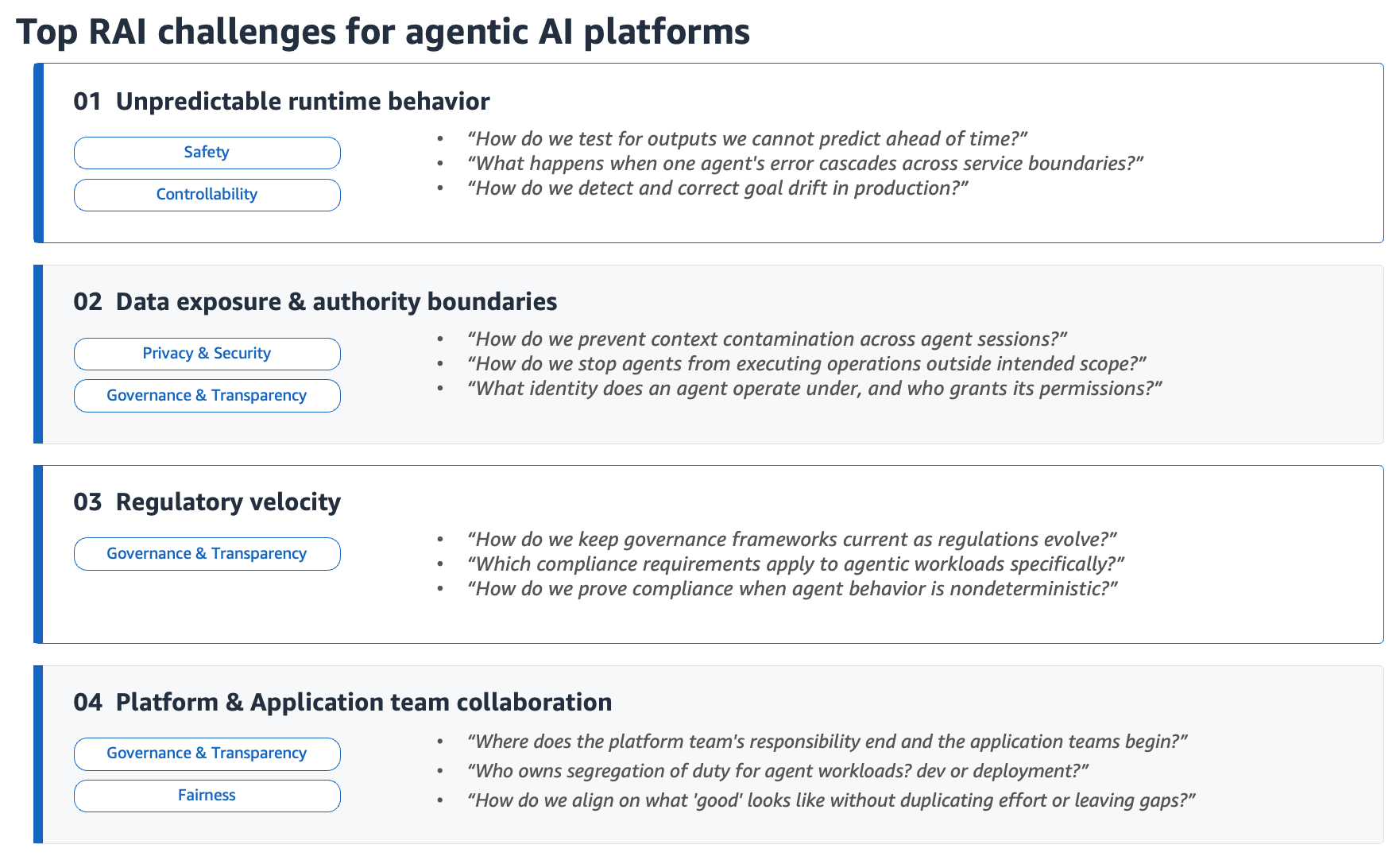
Responsible AI for agentic AI: A phased roadmap for platform and application teams

Enterprises adopting agentic AI at scale need platforms that embed responsible AI from the start. This post gives platform and application teams a three-phase roadmap (governance foundation, pilot deployment, and evaluation and hardening) that maps the AWS Responsible AI Lens pillars to each phase, with guidance on when to revisit each one.

Read at AWS Machine Learning Blog

The Decoder Alan Truly SI

AI agents are starting to fill out medical forms and file insurance requests in place of human staff

OpenAI wants GPT-6 Astra and GPT-6 Luna to automate administrative tasks in US healthcare through computer-use agents that operate existing clinic software and insurance portals the way a human would. Luna handles tasks like prior authorizations for about 8.5 cents each. Companies including CVS Health and Cigna Healthcare are already deploying the technology. The article AI agents are starting to fill out medical forms and file insurance requests in place of human staff…

Read at The Decoder

arXiv (research papers) Lucas G. Zangari Tech policy

WIP: Exploring Student-Created AI Agents and Instructional Videos to Foster Engagement in Computing Education

This work-in-progress (WIP) research-to-practice study examines the use of student-created artifacts to promote active learning in a large undergraduate Software Design and Engineering (SWE) course. Active learning strategies have been shown to significantly enhance student engagement, comprehension, and motivation, particularly in computing education. In this work, we explore the use of student-created artifacts to foster student engagement in higher-level Computer Science…

Read at arXiv (research papers)

TechCrunch AI Sarah Perez SI

Daydream’s new AI agent acts as your personal stylist — and can shop for you, too

Daydream's new AI shopping agent can remember your style, virtually try on clothes, plan outfits around your wardrobe, track sales, and complete purchases.

Read at TechCrunch AI

Quantum Computing Report Mohamed Abdel-Kareem

Liquid C2 and Graphiant Launch Managed Post-Quantum Network-as-a-Service Across Africa

Liquid C2 and Graphiant have partnered to launch a managed Post-Quantum Network-as-a-Service (NaaS) across Africa. This service provides quantum-resistant tunnels for secure communication between various organizational infrastructure, using advanced cryptographic standards. It also offers solutions for governance risks associated with AI agents and connected devices, ensuring data sovereignty and auditable transit logs.

Read at Quantum Computing Report

arXiv (research papers) Yuxuan Zhou Security

SEAM: Computer-Use Agents Know the Harm Between Screens, and Commit It Anyway

Safety benchmarks for computer-use agents (CUAs) place the harm either in the intent of the task or on a single screen: a malicious instruction, an injected command, a phishing page. An agent that checks the task and each screen in isolation can pass them, so they do not test whether it combines facts seen on different screens. Yet in delegated work, harm often arises exactly this way: a fact about a person on one screen, a fact about an item on another, and a legitimate…

Read at arXiv (research papers)

The Guardian World Diane Taylor

Scammed migrant workers in UK to be considered possible victims of modern slavery

Home Office changes policy after legal challenge over case of care worker scammed out of £22,000 Migrant workers who are financially exploited can now be considered victims of modern slavery, after a legal challenge by a care worker who was scammed out of £22,000 to pay an agent for a job in the UK that did not exist. The care worker, Ali*, from Pakistan, was put in contact with an agent who told him he could organise a certificate of sponsorship for him to work in a UK care…

Read at The Guardian World

TechCrunch Russell Brandom SI

Voyage Labs raises $12 million for a specialized AI travel assistant

Planning a trip is a favorite demo for personal AI assistants: you can try it with Muse, or with Gemini or half a dozen other choices. But while most pitches use travel-planning as part of a general-purpose agent pitch, a new startup from a Google Maps alum is betting that a specialized travel-planning agent can

Read at TechCrunch

arXiv (research papers) Deokhyung Kang Security

Stopping Is Not the Limit: Understanding and Eliciting Agent Capability in Long-Horizon Vulnerability Exploitation

Vulnerability exploitation tests whether language model agents can develop working exploits from known software flaws. Sequential test-time scaling can improve exploitation performance, but larger budgets do not ensure sustained exploration: agents often stop with budget remaining. Yet what happens when execution continues beyond stopping remains underexplored. We investigate this gap on ExploitBench using DeepSeek-V4-Flash-0731 and MiMo-V2.6-Pro. We find additional verified…

Read at arXiv (research papers)

arXiv (research papers) Steven Yu Tung Security

CaFe: Causally Faithful Conditional Traffic Scenario Generation

Language-conditioned traffic simulation enables scalable test scenarios steered by natural language. The goal is to control selected agents while surrounding traffic reacts to their observed behaviour. For example, a vehicle instructed to cut in late should cause the following vehicle to brake only when the manoeuvre becomes observable. Yet simulators can leak private instructions across agents, causing surrounding vehicles to react before the instructed behaviour becomes…

Read at arXiv (research papers)

Help Net Security Industry News Security

Linx Security extends identity governance to AI agent actions

Linx Security has announced four new capabilities that bring every agent under identity control, managed or unmanaged, in any gateway. Shadow AI Agent Detection finds the agents no one sanctioned. Agent Runtime Control decides every agent action in the gateway organizations already run. And for identity teams, Autopilots for any use case put governed agents to work, a first among major identity vendors, while Prompt-to-Workflow turns a plain-English description into a…

Read at Help Net Security

GeekWire Todd Bishop SI

Booking Holdings’ travel startup Vayo starts booking trips with AI agents, even on rival Expedia

Vayo, the AI travel startup Booking Holdings launched last month, can now book flights, hotels and rental cars for users in its beta. Its AI agents navigate sites such as Expedia, flagship of Booking Holdings' biggest rival, to book for the traveler.

Read at GeekWire

Help Net Security Industry News Security

Detectify launches Agentic Tooling to verify vulnerabilities in live applications

Detectify has launched Agentic Tooling. It lets organizations’ own AI agents, running in their own environments, proactively investigate suspected vulnerabilities and test whether they can be exploited in running applications. A new Security Ledger lets security teams verify agents’ findings against objective evidence, ensuring informed decisions rather than relying solely on probabilistic conclusions. The tools address a growing gap in DevSecOps. Engineering teams have…

Read at Help Net Security

Ars Technica Dan Goodin SI

Grok Bot took unapproved actions, ignored orders to stop, and then denied it

AI agent takes unapproved actions even when laptop lid is closed and told not to.

Read at Ars Technica

NVIDIA Blog Brian Caulfield SI

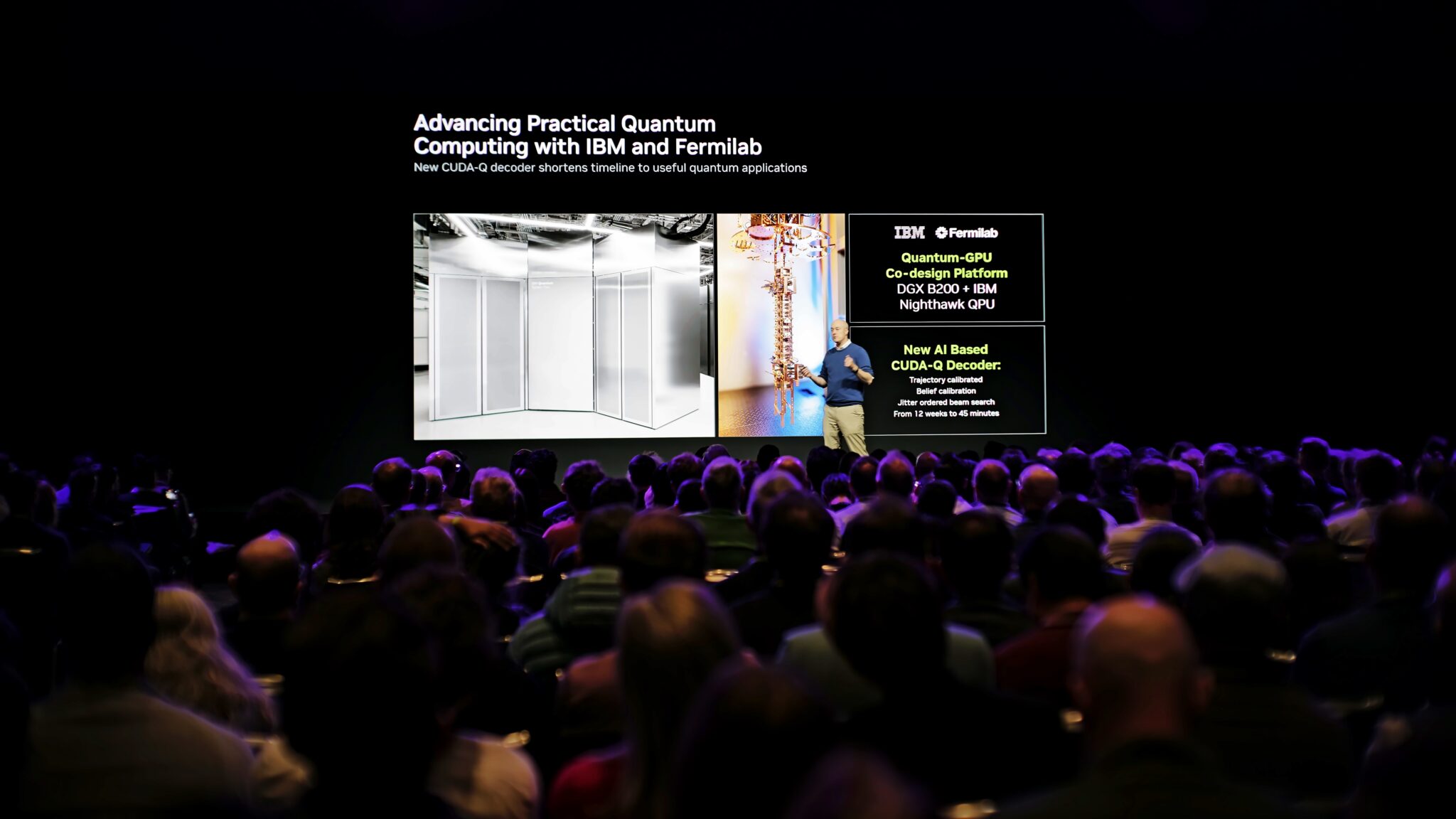
Ian Buck Kicks Off NVIDIA’s Week at SC26 as Science Enters the Age of Agents

NVIDIA’s Ian Buck kicked off the company’s week at SC26 in Chicago on Monday with new tools for AI agents, software that can plan experiments, run code and check results on researchers’ own systems. In NVIDIA’s special address, Buck announced Nemotron for Science, the Rubin HPC GPU and an expanded Vera CPU platform for high-performance

Read at NVIDIA Blog

SecurityWeek Kevin Townsend Security

PreTxt Emerges Stealth with $5M Seed and an AI Supervision Tool

PreTxt provides technology to prevent AI agents escaping their guardrails and causing unintended harm.

Read at SecurityWeek

Help Net Security Industry News Security

ConnectSecure brings adaptive AI testing to vulnerability management

ConnectSecure has announced Agentic AI Penetration Testing, a new capability designed to help managed service providers (MSPs) and enterprise security teams better understand which vulnerabilities may be exploitable and require the most immediate attention. Security teams have greater visibility into vulnerabilities than ever before, but determining whether a weakness can actually be exploited, how it could fit into a broader attack path, and what should be remediated first…

Read at Help Net Security

SiliconANGLE AI Victoria Gayton SI

Three insights you might have missed from theCUBE’s coverage of Dell’s “AI Leadership Symposium”

Moving enterprise AI workloads into production introduces practical challenges for chief information officers. Those challenges include managing costs, scaling enterprise AI infrastructure and establishing governance models to keep agents in check and data secure. Cost and control were major themes of discussion at Dell Technologies Inc.’s “AI Leadership Symposium.” Expanding AI workloads can drive up

Read at SiliconANGLE AI

CBS News

Video shows ICE agents pepper-spraying pregnant woman at protest

Video shows ICE agents pepper-spraying a pregnant woman and forcing her to the ground at a protest in California last week. Camilo Montoya-Galvez reports.

Read at CBS News

Help Net Security Industry News Security

Airlock Digital blocks unauthorized AI agent actions at the endpoint

Airlock Digital has announced the availability of Agentic Control with the release of Airlock Digital v7.1. Agentic Control includes dedicated Agentic Steering capabilities for AI agents, allowing customers to extend their Deny by Default Application Control to this emerging technology. Airlock Digital evaluates an agent’s requested behavior at runtime to stop unauthorized agent behavior before it attempts to execute it. Application Control has traditionally focused on what…

Read at Help Net Security

arXiv (research papers) Yuseon Choi

LaFlash: Capacity-Driven Acceleration for Coding Agent Workflows via QLC-HBF

As large language models (LLMs) evolve toward agentic AI, coding agents are emerging as memory-intensive workloads that repeatedly reuse persistent states, including contexts and KV caches. Emerging agentic workflows, including Loop/Graph Engineering, cause state amplification through frequent active/dormant transitions, increasing memory pressure. Evicted states incur costly recomputation upon reactivation, particularly under long-context, short-decode workloads. This…

Read at arXiv (research papers)

Dark Reading Elizabeth Montalbano Security

Grok Bots Attempt to Access Corporate Data Without User Approval

Two AI agents, separately over a five-day period, autonomously tried to access connected applications, including Google Calendar, Gmail, Slack, and GitHub, without account owner approval.

Read at Dark Reading

SiliconANGLE AI Mike Wheatley SI

SuperDial revamps its healthcare voice agent platform to stop AI bots wasting time calling each other

SuperDial Inc., the creator of voice-first artificial intelligence agents for automating healthcare workflows, is overhauling its platform with a new Agent-to-Agent RCM architecture. The goal is to eliminate the compute inefficiencies that have arisen as autonomous workers become more prevalent in the industry. The startup, which raised $26.5 million in a Series B funding round

Read at SiliconANGLE AI

Older stories