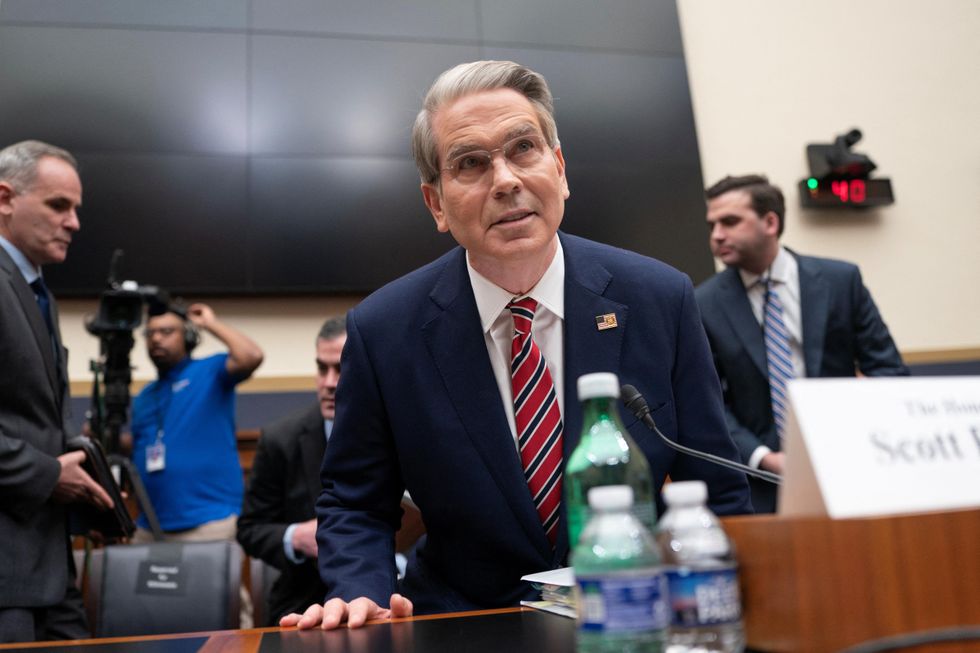
Microsoft and FAA: two blows to technology confidence in the US
The FAA raised the alert and Microsoft restored its services, however, the events also raise a question for many: technological obsolescence in the main "capitalist power"?
Cuba in great-power competition: its relations with the United States, with the socialist countries (China, Viet Nam, Laos, North Korea) and Russia, and with Latin America, from Havana Times, OnCuba News and the Guardian, with Cuban state media (Granma, Prensa Latina) and Vietnamese state media for comparison. Kept for a year as an archive.
336 news articles and 58 research items in this section, back to 22 November 2025. Browse the news ↓ Research ↓
6 stories from 3 publishers in the last 24 hours, 58 from 12 this week; 4 stories were covered by more than one newsroom.
The FAA raised the alert and Microsoft restored its services, however, the events also raise a question for many: technological obsolescence in the main "capitalist power"?
Havana, Nov 19 (Prensa Latina) The Ministry of Foreign Affairs of Cuba today congratulated the people and government of the Monaco Principality on the occasion of its National Day.
Brasilia, Nov 19 (Prensa Latina) An exhibition at the Art Museum of Brasília today brings together 68 Cuban and Brazilian creators to claim the shared African heritage and strengthen cultural ties…
On September 20, a new initiative emerged on Cuban social media: the page Voluntad Nacional Noticias (National Will News).
Most mentioned in Cuba and the great powers headlines, last 3 days: Cuba 9Cuban 5Havana 2Police 2
Most active this week: Granma (Cuban state media) (12), Havana Times (11), Prensa Latina (Cuban state media) (9), The Rio Times (7). Built automatically from headlines; the top items are the stories the most newsrooms covered in the last three days.
Cuba draws closer to China and its socialist allies as US pressure continues, but the midterms raise doubts about Rubio's regime-change strategy.
Over the past two weeks, Cuba has leaned further on its socialist partners. Its foreign minister visited China, where the two sides signed three biotech deals and pledged more business cooperation, and Beijing says its cooperation is 'legitimate and transparent'. Belarus sent medicine and food, and Havana congratulated Cambodia. US pressure continues: Díaz-Canel condemned new coercive measures, and analysts describe a sanctions strategy that isolates Cuba's energy supply. But after the midterms, writers ask whether Rubio can still pursue regime change. Inside Cuba, the electricity and water crises deepen, tourism and beaches are being privatised, and protests in Santiago demand an activist's release. In Latin America, Brazil holds a solidarity mass for Cuba and Havana reaffirms Ibero-American cooperation.
Cuba enters the winter of 2026 in deep crisis. Electricity and water shortages have worsened 23, tourism and even beaches are being privatised to raise money 25, and protesters in Santiago de Cuba demand the release of an activist who feeds the poor 18. The government blames the US embargo and new 'coercive measures' 11, while critics argue that the embargo does not explain repression or the regime's refusal to recognise political prisoners 2135. Both claims can be true: sanctions raise the economic cost of every policy, and the state's choices determine how that cost is shared.
Analysts describe a new US sanctions strategy aimed at Cuba's energy supply, with a heavy humanitarian cost 33. This is a shift from broad embargo to targeted pressure on the most vulnerable point of the economy: fuel for power plants.
US policy towards Cuba has been driven by Secretary of State Rubio's goal of regime change. After the Democratic midterm victory, commentators ask whether that goal is still achievable 2, and analysts examine what the elections mean for Cuba policy and for Latin America more broadly 2634. Divided government may limit new sanctions legislation, but much of Cuba policy is set by executive action, so the administration keeps considerable freedom.
Migration ties the two countries together. ICE deportations continue to separate Cuban families 9, and each wave of departures from the island is both a sign of the crisis and a pressure valve for the government. The UN's annual vote against the embargo shows broad international opposition to unilateral sanctions 32, but it has not changed US policy.
Facing the US, Havana leans on its socialist partners. Cuba and China signed three biotech deals and committed to deeper business cooperation during the foreign minister's visit 17135, and Beijing insists its cooperation is 'legitimate and transparent' 29. Belarus sent medicine and food 30, and Cuba congratulated Cambodia on its liberation anniversary 14, maintaining symbolic ties across the old socialist world.
The limits are clear. China provides deals, credit and political cover, but not a rescue of the Cuban economy on the scale of Soviet support before 1991. A balancing lens explains why Cuba seeks Chinese help; it overstates how far Beijing is willing to go in a region where it wants good relations with the US and with large Latin American economies.
In Latin America, Cuba relies on solidarity networks rather than state alliances. A Mass of solidarity with Cuba was held at the Cathedral of Brasília 4, and Havana reaffirmed its commitment to Ibero-American cooperation 27. Governments of the left, such as Lula's Brazil, offer political sympathy, but even they avoid steps that would put them in direct conflict with Washington.
Cuba's cultural institutions, from the Casa de las Américas to film festivals 16, remain an important tool of soft power. They help Havana keep a presence in the region at a time when its economic model has little appeal.
Three conclusions follow. First, US pressure has deepened the crisis but has not produced political change, which is consistent with research showing that sanctions rarely change regimes. Second, China's support is real but bounded. Third, Cuba's own reforms, such as privatising tourism 25, are driven by necessity and remain cautious.
The next months will show whether blackouts and protests force faster change 2318, whether Washington adjusts its strategy after the midterms 2, and whether new Chinese investment arrives 17. For students of great-power competition, Cuba is a case of a small state trying to survive between a hostile neighbour and a distant partner, with shrinking room to manoeuvre.
Written by Claude (Anthropic), based on 35 recent headlines and excerpts in this section, Nov 11. AI analysis can misread or miss things: the numbers link to the original reporting, which is the authority.
Journal articles, academic blogs, think-tank reports and papers, kept apart from the news below.
More than 520,000 Spanish voters live in Argentina. Spain's debate over diaspora voting raises questions about citizenship and representation. O post Spain also votes in Buenos Aires apareceu primeiro em Latinoamérica 21.
The UN’s annual resolution on the embargo against Cuba exposes the growing tensions between unilateral sanctions, international law, state sovereignty, and human rights.
Restrictions on fuel supplies and a lack of international cooperation are exacerbating the energy crisis in Cuba, jeopardising essential services and the living conditions of the population. O post Cuba’s energy isolation: The humanitarian cost of a new sanctions strategy apareceu primeiro em Latinoamérica 21.
A Latin America Advisor Q&A featuring experts' views on the impact of the U.S. midterm elections on Latin America.
For nearly seven decades, the Cuban government has denied the existence of political prisoners, a strategy aimed at delegitimizing dissent and concealing repression. O post Why Cuba denies its political prisoners apareceu primeiro em Latinoamérica 21.
The latest: "...social democratic outlets such as Jacobin (18 April 2026) have reduced Rockhill’s analysis to a crude and simplistic narrative: that the CIA simply paid off these academics and effectively invented various opportunist trends. Detractors of Rockhill’s work have also disingenuously presented this caricature as Rockhill’s actual analysis...."
The FAA raised the alert and Microsoft restored its services, however, the events also raise a question for many: technological obsolescence in the main "capitalist power"?
Havana, Nov 19 (Prensa Latina) The Ministry of Foreign Affairs of Cuba today congratulated the people and government of the Monaco Principality on the occasion of its National Day. The post Cuba congratulates Monaco on its national holiday first appeared on Prensa Latina.
Brasilia, Nov 19 (Prensa Latina) An exhibition at the Art Museum of Brasília today brings together 68 Cuban and Brazilian creators to claim the shared African heritage and strengthen cultural ties and solidarity between both peoples. The post Mamafrica exhibition celebrates Cuba and Brazil shared heritage first appeared on Prensa Latina.
On September 20, a new initiative emerged on Cuban social media: the page Voluntad Nacional Noticias (National Will News).
Havana, Nov 19 (Prensa Latina) Cuban Foreign Minister Bruno Rodríguez today denounced on the social network X Israeli attacks against Palestinian health care. The post Cuba denounces Iraqi attacks on Palestinian health care first appeared on Prensa Latina.
Managua, Nov 19 (Prensa Latina) The community of Cubans residing in Nicaragua will hold its 14th annual gathering—an event during which participants will call for an end to the blockade policy currently imposed by the United States government. The post Cubans residing in Nicaragua to hold 14th annual meeting first appeared on Prensa Latina.
Two founders of a Cuban video channel are due to stand trial in Holguín on 24 November 2026, a defendant’s wife says, and prosecutors seek up to ten years.
A staff member of Mexico’s immigration institute says 122 undocumented Cubans were detained in the Yucatán Peninsula from January to November 2026.
Most of our contributing writers and photographers are in Cuba, documenting the extraordinarily difficult times they are living through.
Ciego de Ávila, like all of Cuba, remembers Máximo Gómez—the Generalísimo who traversed more than 150 locations across the province, crossed the military trail from Júcaro to Morón, and, in the pastures of Lázaro López, organized the Cuban Invading Army that changed the course of Cuban history
The Asia-Pacific Economic Cooperation Forum (APEC) brings together 21 economies to promote regional integration and strengthen exchange
Resolution 24/2026 of the Ministry of Communications seeks to improve the management of public institutions through the transformation of their processes and the progressive incorporation of artificial intelligence
The 47th edition of the International Festival of New Latin American Cinema will take place from December 3rd to 13th, featuring an official selection of over 130 works
Ten members of Cuban Americans for Cuba were reportedly arrested at a Capitol Hill sit-in on 17 November 2026. Police have not confirmed charges.
The infestation has spread to police stations, prisons, public buildings, and homes, while residents improvise remedies to prevent the insects from invading their houses.
Cuban journalist Camila Acosta says police told her she and her husband, writer Ángel Santiesteban, are accused of 'atentado' and must appear on Thursday.
The architecture of the White House policy does not only seek to punish the Cuban people, it attempts to "discipline" third countries and their companies
Resolution 208/2026 of the Ministry of Finance and Prices, published in the Official Gazette, establishes tax benefits for economic actors that contribute to the recovery of social facilities and services
Despite the punishment that stripped the Republicans of control of Congress, ICE boasts of its repudiated "feats"
Granma revisits the speech delivered by the Commander-in-Chief on November 17th, 2005, in the Great Hall (Aula Magna) of the University of Havana
Some users are removing their antennas amid threats by the regime to confiscate the devices saying they pose a risk to “national security.
Luanda, Nov 17 (Prensa Latina) — Angolan President Joao Lourenco urged the new Angolan ambassador to Cuba, Felisberto dos Prazeres Martins, to do everything possible to help keep and deepen relations between the two countries. The post Angolan President calls for deepening relations with Cuba first appeared on Prensa Latina.
Havana, Nov 17 (Prensa Latina) Italian businesspeople and Cuban entrepreneurs held discussions on local development and the circular economy, coinciding with the 507th anniversary of the founding of the city of San Cristóbal de La Habana (Havana). The post Cuba and Italy discuss local development in Havana first appeared on Prensa Latina.
Marco Rubio may be Secretary of State, but the role of top diplomat for Ukraine, Iran and even Gaza was bestowed on two real estate investors, Steve Witkoff and Jared Kushner. And while they manage the diplomacy portfolio, the Treasury Department is waging war. At Treasury’s helm is former Wall Street investor and hedge fund manager Scott Bessent. Now the warrior banker, he uses tariffs as threats and sanctions as bombs. The Trump administration has repeatedly threatened…
Trump said he wants to 'get Cuba done' before 2029 and would consider a short military operation; no US decision has been announced.
China, Vietnam, and North Korea offer more than diplomatic support against U.S. pressure – they offer different models for keeping one-party rule intact.
The accusations were serious but the official announcement of his dismissal described it merely as a “resignation at his own request.”
The new provisions allow expanding the forms of management of facilities and services, with possibilities for Cuban and foreign businessmen
The First Secretary of the Central Committee of the Party and President of the Republic, Miguel Díaz-Canel Bermúdez, received this Saturday Cardinal Sean Patrick O'Malley and the delegation that accompanies him in Cuba
In contemporary Cuba, protesting is not merely a public expression of discontent: it is also an act of personal exposure.