The Global South and a multipolar world: BRICS and non-alignment

The Global South and a multipolar world: BRICS and its expansion, non-alignment and 'multi-alignment', middle powers such as India, Brazil, Indonesia, South Africa, Turkey and the Gulf states, and their bargaining with the great powers, from the news and journal research. Kept for a year as an archive.

Summary

17 news articles and 131 research items in this section, back to 27 January 2026. Browse the news ↓ Research ↓

1 story from 1 publisher in the last 24 hours, 8 from 6 this week.

Most mentioned in The Global South and a multipolar world: BRICS and non-alignment headlines, last 3 days: multipolar 3world 3summit 2Putin 2lead 2

Most active this week: Al Jazeera (2), SCMP China (2), Asia Times (1), Nikkei Asia (1). Built automatically from headlines; the top items are the stories the most newsrooms covered in the last three days.

Analysis

Middle powers and the Global South look for room to manoeuvre as US–China rivalry, energy and AI reshape a multipolar world.

Coverage of the Global South over the past two weeks is mostly analysis and research rather than breaking news. Commentators describe how middle powers try to stay 'plugged in, not locked in' to the US and Chinese AI ecosystems, and argue that energy, not military force, is America's real weapon in a multipolar world. The Lowy Institute asks whether India is a middle power 'more or less'. Research examines China's discourse power in shaping the BRICS agenda, RCEP as coordination without a hegemon, India–China relations in a multipolar order, and how middle powers use minilateral groups. A BRICS+ film festival award to an Iranian film is a small sign of the bloc's cultural ambitions.

Essay

What 'Global South' and 'multipolarity' mean

The 'Global South' is less a place than a political identity: the countries of Asia, Africa, Latin America and the Middle East that were colonised or marginalised in the post-1945 order and that now seek a larger voice. Multipolarity describes a world with several centres of power rather than one or two. The two ideas often travel together, because many Global South governments see a multipolar world as one in which they have more choice.

This week's research shows how contested both terms are. One study traces great-power competition in the Central Sahel as part of a multipolar order 5; another argues that the fall of liberalism and the rise of 'civilisation states' change the options of middle powers 9.

BRICS as a club and a platform

BRICS began as an investment-bank acronym and became a forum of Brazil, Russia, India, China and South Africa, now expanded with new members. Its appeal lies in offering an alternative to Western-led institutions, through the New Development Bank and talk of trading in local currencies. But its members disagree on much, and China is by far the strongest. Research shows Beijing using its 'discourse power' to shape the BRICS governance agenda 7, which raises the question of whether BRICS is a platform for the Global South or for China.

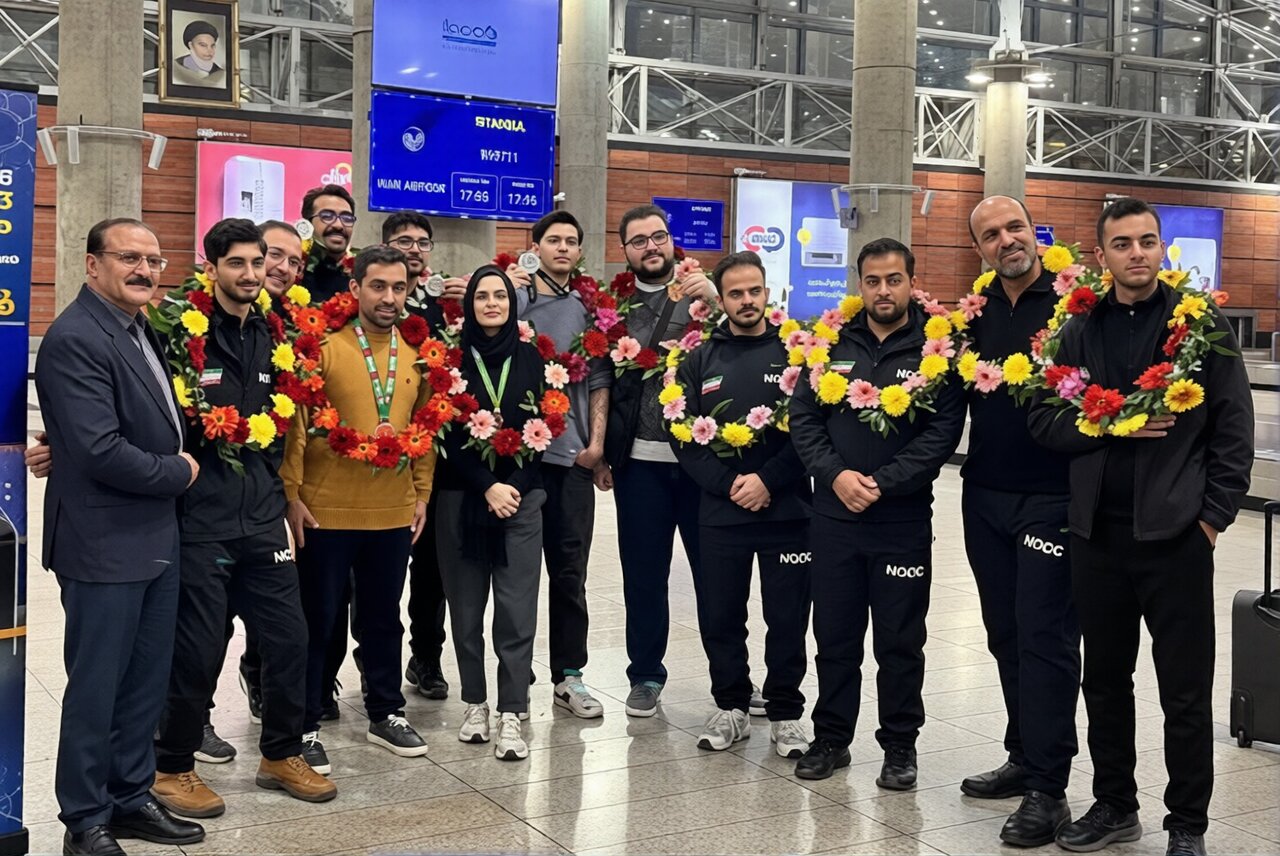
The bloc also builds soft power, as the BRICS+ film festival award to an Iranian film shows 1.

Middle powers and multi-alignment

Middle powers such as India, Indonesia, Brazil, Turkey, Saudi Arabia and South Africa practise what is often called multi-alignment: deepening ties with several great powers at once. In technology, they try to stay 'plugged in, not locked in' 2. In trade, Asia's RCEP shows 'coordination without hegemony' 10. Minilateral groups, small coalitions on specific issues, give them flexibility 12. India is the most debated case: the Lowy Institute asks whether it is a middle power 'more or less' 13, and research examines how its relations with China reshape regional order 11.

Viet Nam's bamboo diplomacy belongs to the same family of strategies.

Power and its limits

Multipolarity does not mean equality. The US still holds unique tools, and commentators argue that energy exports may be its most effective weapon in a multipolar world 3. China's economic weight shapes BRICS. For Global South states, the challenge is to use competition between the powers to win investment and voice without becoming dependent on any one of them. Climate debates show the stakes: developing countries argue that they cannot accept the same obligations as rich countries that industrialised first 6.

Key developments

  • Navigating the AI rivalry. Middle powers try to stay 'plugged in, not locked in' to either the US or Chinese AI ecosystem. 2
  • Energy as leverage. An Asia Times analysis argues that energy exports are America's real weapon in a multipolar world. 3
  • India's status. The Lowy Institute asks whether India is a middle power 'more or less', and research looks at how India–China relations reshape regional order. 1311
  • BRICS and China. Research shows China using its discourse power to shape the BRICS governance agenda, and the bloc reaches into culture with a BRICS+ film festival. 71
  • Regional and minilateral orders. Studies describe RCEP as coordination without hegemony and middle powers adapting through minilateral groupings. 1012

Themes

  • Multipolarity contested. Scholars debate whether multipolarity means a new balance of power, as in the Sahel, or the rise of 'civilisation states' that challenge liberal norms. 59
  • Development and justice. Climate justice debates show the Global South pressing developmental needs against Western climate demands. 6

What to watch

  • Middle-power positioning in AI governance. 2
  • China's role in setting the BRICS agenda. 7
Stories this analysis is based on (11)
  1. Iranian film ‘People’s Child’ wins award at BRICS+ festival Tehran Times (Iranian state-aligned)
  2. Plugged in, not locked in: middle powers navigate US-China AI rivalry SCMP China
  3. Energy is America’s real weapon in a multipolar world Asia Times
  4. Great power competition in the Central Sahel and the multipolar order Journal articles (OpenAlex)
  5. Climate Justice and Developmental Realities: The Global South Predicament in India’s M K Ranjitsinh Opinio Juris (international law)
  6. Shaping BRICS: China’s discourse power and the making of a global governance agenda Journal articles (OpenAlex)
  7. The fall of liberalism and rise of the civilisation state: implications for middle powers Journal articles (OpenAlex)
  8. Coordination without Hegemony: RCEP and the Political Economy of Multipolar Regionalism in Asia Journal articles (OpenAlex)
  9. Navigating multipolarity: India–China relations and the reconfiguration of global and regional order in South Asia Journal articles (OpenAlex)
  10. Designing Resilience: Middle Power Institutional Adaptation and the Politics of Minilateralism in the Indo–Pacific Journal articles (OpenAlex)
  11. India: a middle power, more or less? The Interpreter (Lowy Institute)

Written by Claude (Anthropic), based on 14 recent headlines and excerpts in this section, Nov 11. AI analysis can misread or miss things: the numbers link to the original reporting, which is the authority.

Research 131

Journal articles, academic blogs, think-tank reports and papers, kept apart from the news below.

arXiv (research papers) Francisco W. Kerche Tech policy

Web search in Latin America: language models use less local and diverse news than search engines

AI platforms are becoming a major gateway to news and current events. This shift risks amplifying existing geographical biases that favour narratives from wealthier countries over those from the Global South. This is particularly relevant in Latin America, which accounts for the largest share of AI usage in the Global South. We examine how information about Latin America changes when users shift from conventional search engines to LLM-based search. We construct a dataset of…

Read at arXiv (research papers)

arXiv (research papers) Paulo Camara LUA Vision Tech policy

Inherited Weights: Measuring the Tokenization Premium and the Sovereignty Cost of Language Models for the Global South

Most language models deployed outside the United States and China are fine-tuned descendants of a small number of pretrained families. We argue that fine-tuning leaves the decisive properties of a model inherited from its base: vocabulary, knowledge, cultural alignment, memorized data and license. We contribute (i) an updated, reproducible measurement of the tokenization premium across 31 languages and 7 tokenizers released in 2023-2024, on 27 articles of the Universal…

Read at arXiv (research papers)

Journal articles (OpenAlex) Arta Haxhixhemajli · Cadernos de Estudos Africanos Geopolitics

Great power competition in the Central Sahel and the multipolar order

The Central Sahel is a highly volatile arena for multipolar competition between the US, China, and Russia. While traditional narratives view the region as a passive victim, this study examines how contemporary foreign relations are actively managed by local political structures. Through qualitative document analysis of US aid, Chinese infrastructure investment, and Russian security apparatuses, results show foreign influences are more nuanced than conventional dependency…

Read at Journal articles (OpenAlex)

Opinio Juris (international law) Priya Kumari Geopolitics

Climate Justice and Developmental Realities: The Global South Predicament in India’s M K Ranjitsinh

[Dr. Priya Kumari is currently affiliated with VIT-AP School of Law, VIT-AP, Amaravati, India.] The interlink between human rights and climate justice has been going through a phase of transformation. In 2024, the Indian Supreme Court delivered the judgement in the case of M. K. Ranjitsinh v. Union of India (hereinafter, Ranjitsinh). It is hailed as a groundbreaking judicial pronouncement...

Read at Opinio Juris (international law)

Journal articles (OpenAlex) Silvia Menegazzi · The Pacific Review Geopolitics

Shaping BRICS: China’s discourse power and the making of a global governance agenda

How does China affect BRICS’s Global Governance Agenda? The enlargement of BRICS intensified debates on the emergence of alternative centres of power in global governance. The group is often portrayed as a unified voice of the Global South, yet the internal dynamics that shape its normative agenda remain underexplored. This article examines China’s discourse power (huayuquan) in structuring BRICS’s Global Governance agenda drawing on the Discourse-Historical Analysis (DHA)…

Read at Journal articles (OpenAlex)

All 131 research items in this section

All news 17

Asia Times Saima Afzal Geopolitics

Shenzhen summit letdown and the limits of multipolarity

The United States, China and Russia emerged from their historic Shenzhen summit with a declaration for peace but no settlement for Ukraine or Iran, no binding nuclear reductions and no mechanism for resolving their most consequential strategic disputes. A day earlier, Moscow hosted a political gathering drawing participants from across the Global South to advocate

Read at Asia Times

SCMP China Carol Yang Geopolitics

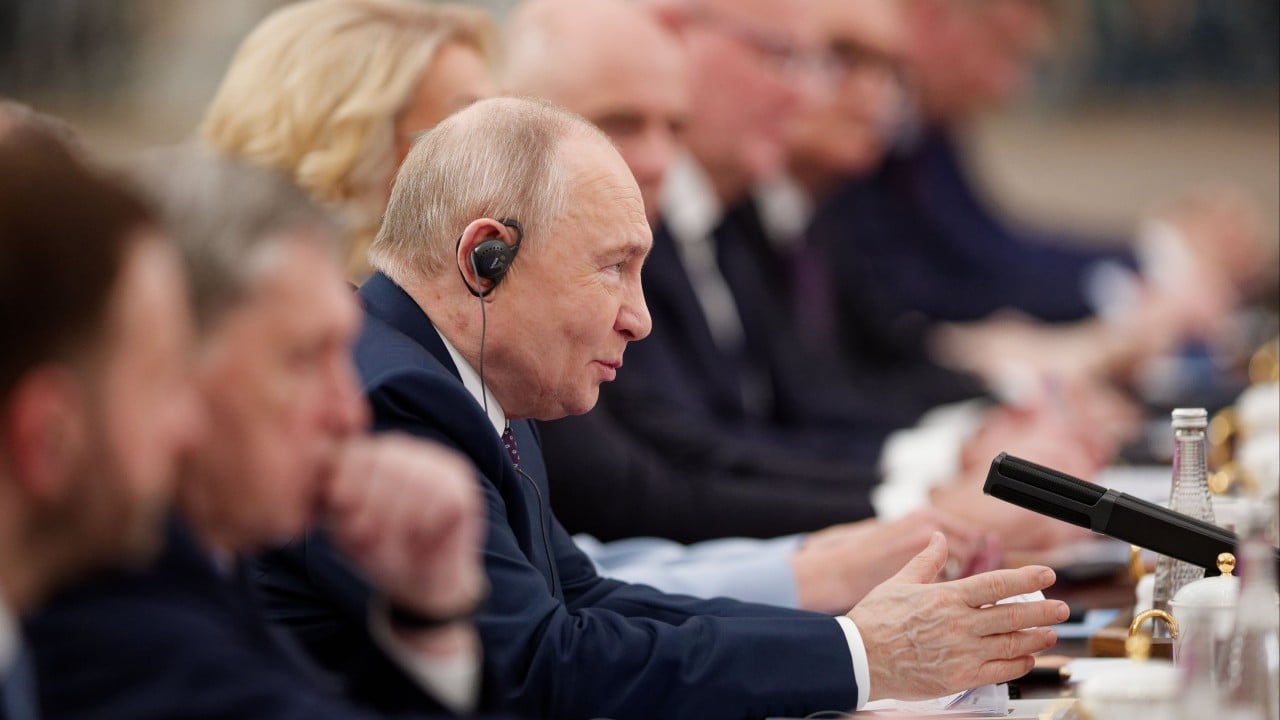
Xi and Putin say they will maintain stable ties, seek ‘more fair multipolar world order’

Chinese President Xi Jinping and his Russian counterpart Vladimir Putin pledged to maintain stable bilateral ties and advance a multipolar world amid mounting global uncertainties during their meeting on the sidelines of the Apec summit in Shenzhen on Wednesday, ahead of their landmark trilateral summit with the United States. Highlighting the resilience of bilateral relations, Xi said China-Russia ties “stand as firm as a mountain amid wind and rain” and called for taking a…

Read at SCMP China

SCMP China Fan Chen Geopolitics

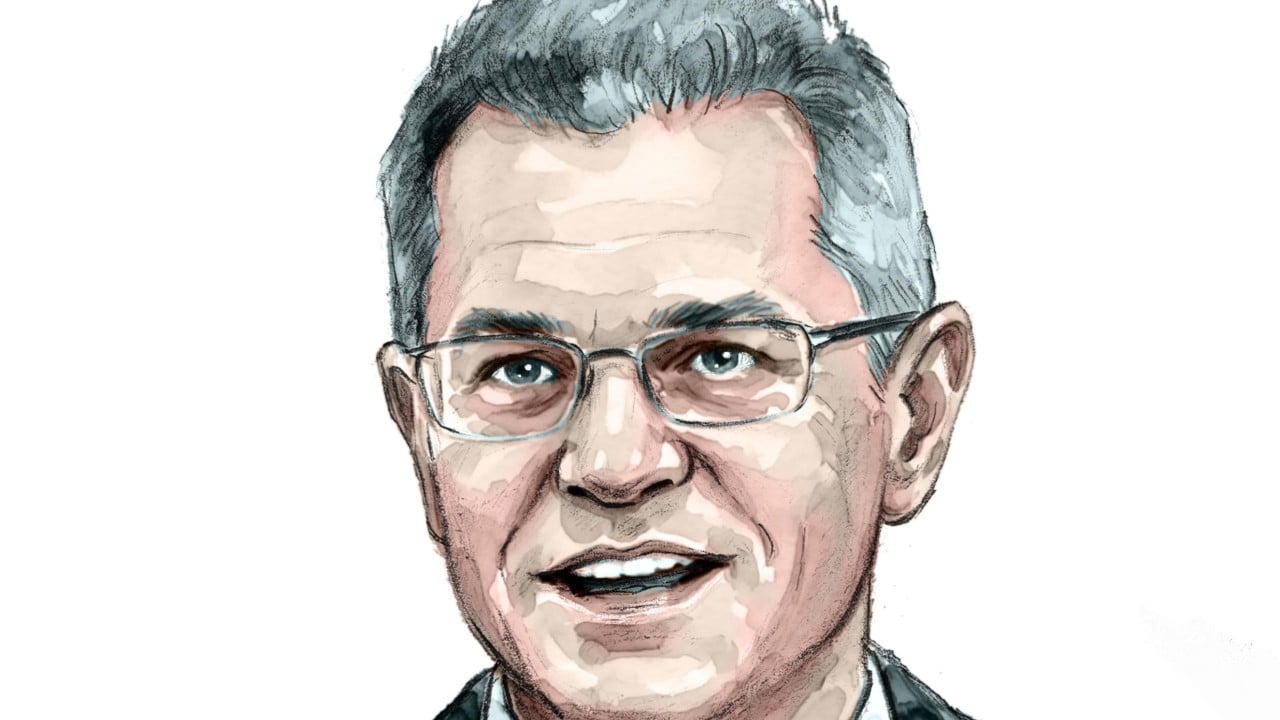
Vuk Jeremic on US-Europe fracture, EU-China tensions and adjusting to a multipolar world

Vuk Jeremic is a former Serbian foreign minister and served as president of the United Nations General Assembly from 2012 to 2013. He was also a candidate for UN secretary general in 2016, finishing in second place behind Antonio Guterres. Jeremic now heads the Centre for International Relations and Sustainable Development, a think tank based in Serbia. In this Open Questions interview, Jeremic discusses Europe’s geopolitical standing, transatlantic ties and China-Europe…

Read at SCMP China

ReliefWeb UN Office for Disaster Risk Reduction

World: £2 million to back Global South leadership on loss and damage

Countries: World, Kiribati, Saint Kitts and Nevis, Uganda, United Kingdom of Great Britain and Northern Ireland Source: UN Office for Disaster Risk Reduction Funding backs frontline countries to lead their own solutions. The Scottish Government will provide £2 million to help countries that have done the least to cause the climate crisis but are being hit hardest by its effects. The funding will support countries in the Global South to lead their own response to loss and…

Read at ReliefWeb

SCMP China Alyssa Chen

Plugged in, not locked in: middle powers navigate US-China AI rivalry

Middle powers navigating the US-China competition in artificial intelligence (AI) favour flexible partnerships over closed alliances, demanding a “plugged in, not locked in” approach, an AI governance panel heard on Saturday. Alejandro Reyes, adjunct professor in the department of politics and public administration at the University of Hong Kong, said that middle powers were exercising agency in the AI era, selectively partnering with both Beijing and Washington “issue by…

Read at SCMP China

Asia Times Bob Savic Geopolitics

Energy is America’s real weapon in a multipolar world

Faced with an emerging multipolar order, the United States appears to be relying less on dominance of every frontier technology than on leveraging its influence over the world’s most finite and strategically vital commodities: oil and gas. Control, disruption or the credible threat of disruption to global energy supplies has become Washington’s principal instrument for

Read at Asia Times

Asia Times Ronny P Sasmita South China Sea

Indonesia shows the non-aligned way through US-China rivalry

On April 13, 2026, Indonesia executed a rare feat of high-stakes diplomatic choreography. On one side of the planet, Defense Minister Sjafrie Sjamsoeddin stood at the Pentagon to sign the Major Defense Cooperation Partnership (MDCP) with US Secretary of War Pete Hegseth. Simultaneously, on the other side, President Prabowo Subianto held a marathon five-hour meeting

Read at Asia Times