Research topics

Sixteen standalone research topics in international relations and comparative politics, each narrower than a news section: from buffer zones and great-power competition to Viet Nam's diplomacy, grey-zone coercion at sea, the technology rivalry, nuclear weapons, drone warfare, jihadist insurgencies, organised crime, women's rights, Taiwan, oil chokepoints and the Global South. Each topic has news, journal articles and an essay; pick one from the list on the left. This page gathers the stories from all of them. Kept for a year as an archive.

Summary

3,660 news articles and 1,529 research items in this section, back to 21 November 2025. Browse the news ↓ Research ↓

275 stories from 74 publishers in the last 24 hours, 900 from 111 this week; 79 stories were covered by more than one newsroom.

PBS News Politics 21 publishers

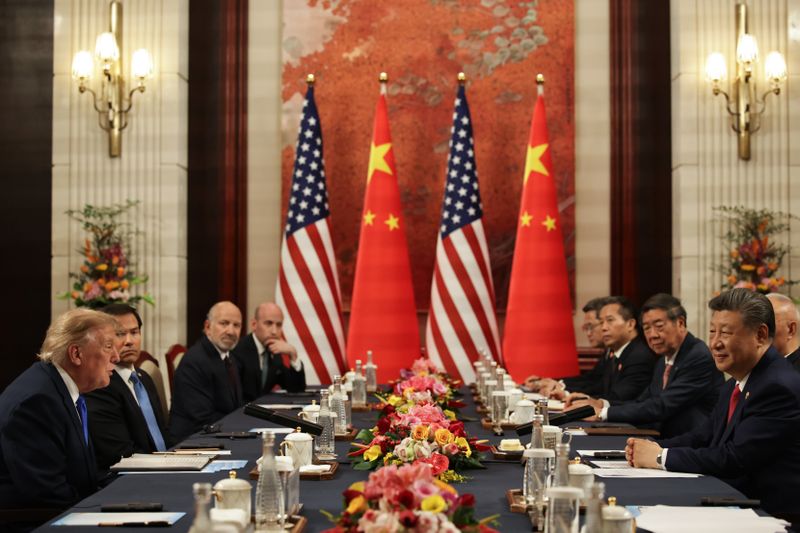
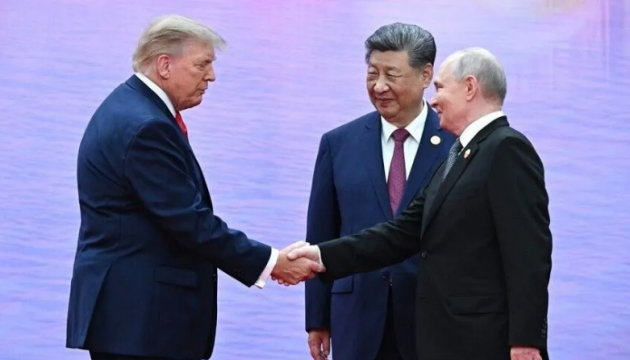
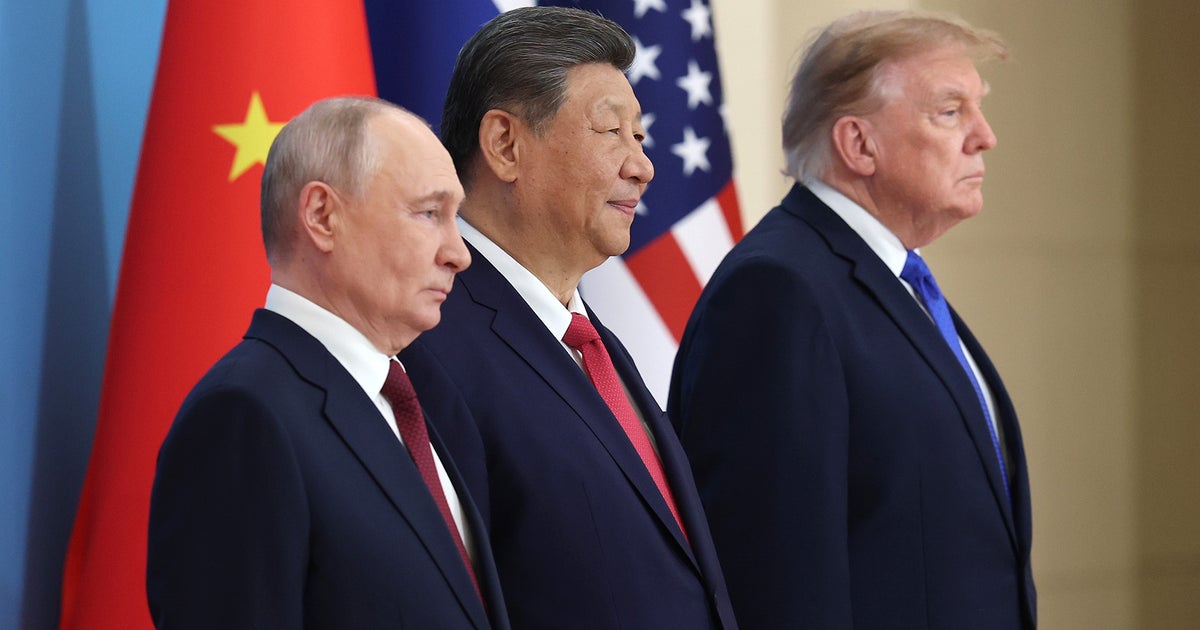
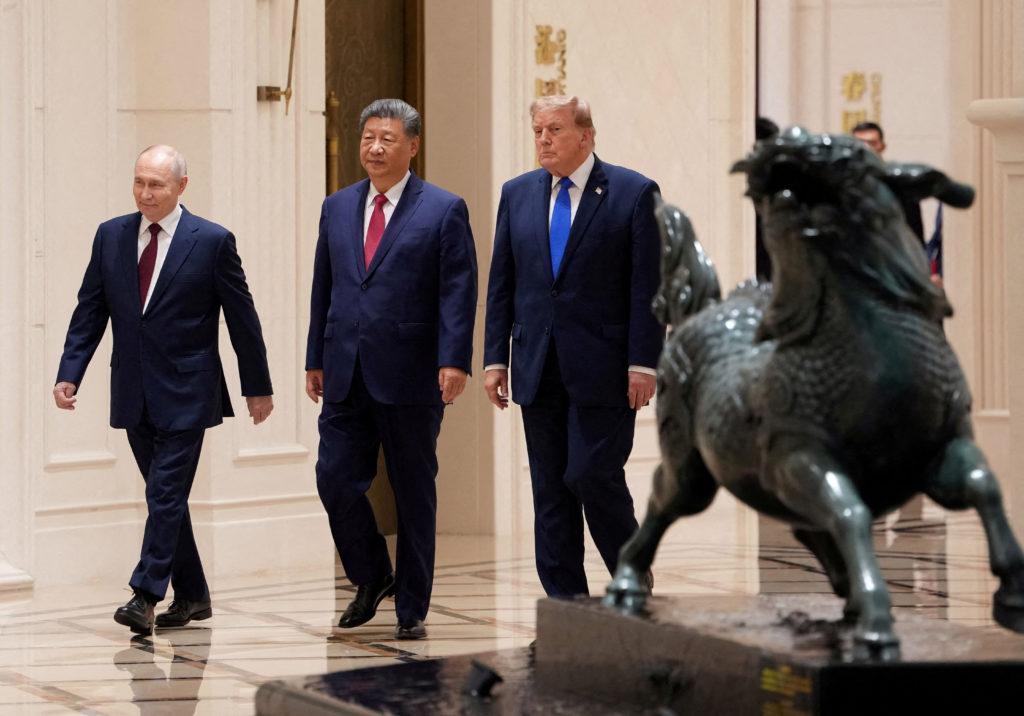
3 takeaways from Trump, Xi and Putin's historic summit

The meeting between U.S. President Donald Trump, China's Xi Jinping and Russia's Vladimir Putin on Thursday was the first-ever sit-down for the leaders of the three countries.

Also at The Hill, Al Jazeera, Africanews, The National (UAE), Al-Monitor, The Japan Times, Hong Kong Free Press, Nikkei Asia, CBS News Politics, The Hindu International, Financial Times China, The New York Times Asia, The Diplomat, BBC World, NBC News, Financial Times Russia, Ukrainska Pravda, Kyiv Post, Meduza, RFE/RL

Most mentioned in Research topics headlines, last 3 days: Trump 173China 124Putin 122Ukraine 80Russia 76Russian 66Summit 53APEC 52Drone 48Meeting 41

Most active this week: VietnamPlus (Vietnamese state media) (82), Nhân Dân (Vietnamese state media) (59), Al Jazeera (50), Ukrainska Pravda (42). Built automatically from headlines; the top items are the stories the most newsrooms covered in the last three days.

Analysis

Across the research topics, Russia's war shapes both the buffer zone and great-power bargaining, as US-led talks resume while spying and hybrid attacks spread in Europe.

This page brings together the research-project sections on geopolitics and buffer zones, international relations and great-power competition, and Cuba. This week one story links them: the war in Ukraine. In Abu Dhabi the US mediated the first Russia–Ukraine talks since February, called for a new European security order and pressed Russia to let Europe join, but the talks made little headway. In the belt of states between Russia and NATO, Poland and Ukraine set up joint drone working groups, Russia and Moldova expelled each other's diplomats, and Serbia shut a bank used by Russian exiles. Russian spying and hybrid attacks are spreading, from a US soldier arrested in Britain to arrests in Poland and a contest for the High North. With China, the Nvidia spy affair and Beijing's courtship of US tech bosses test relations, while China, Russia and the US try to agree an agenda on AI in nuclear weapons. Research examines Russia's arms industry, great-power competition in the Sahel and the Indo-Pacific, and strategic stability with China.

Essay

One war, many arenas

The four research topics on this page, buffer zones in Europe, great-power competition, Cuba and Chile, seem far apart. This week they are connected by one fact: the war in Ukraine and the competition it has sharpened between the United States, Russia and China. In Abu Dhabi the US mediated the first trilateral talks since February 14, calling for a new European security order 3 and pressing Russia to let Europe join 9. The talks made little progress 25, but they show Washington trying to manage the war while it competes with both Moscow and Beijing elsewhere.

The same competition shapes small states far from Ukraine. In Cuba, Chinese deals and US sanctions meet; in Chile, a right-wing government keeps close financial ties with China. Great-power rivalry is global, and each research topic is a different lens on it.

The vanishing buffer

In Europe, the states between Russia and NATO have moved from buffer to frontline. Poland and Ukraine are setting up joint drone and counter-drone working groups 26, and Russia expelled a Moldovan diplomat in a tit-for-tat move 20. Serbia, which still hedges between Russia and the EU, closed a bank used by Russian exiles 30. Russian spying and sabotage spread, from a senior US soldier arrested in Britain 222 to arrests in Poland 5 and a surge of hybrid incidents across Europe and the High North 3236.

These developments suggest that the security-dilemma logic, in which arming one side makes the other feel less safe, now runs in one direction: the frontline states judge Russia's intentions as hostile and are arming regardless of how Moscow reacts.

Washington, Beijing and Moscow

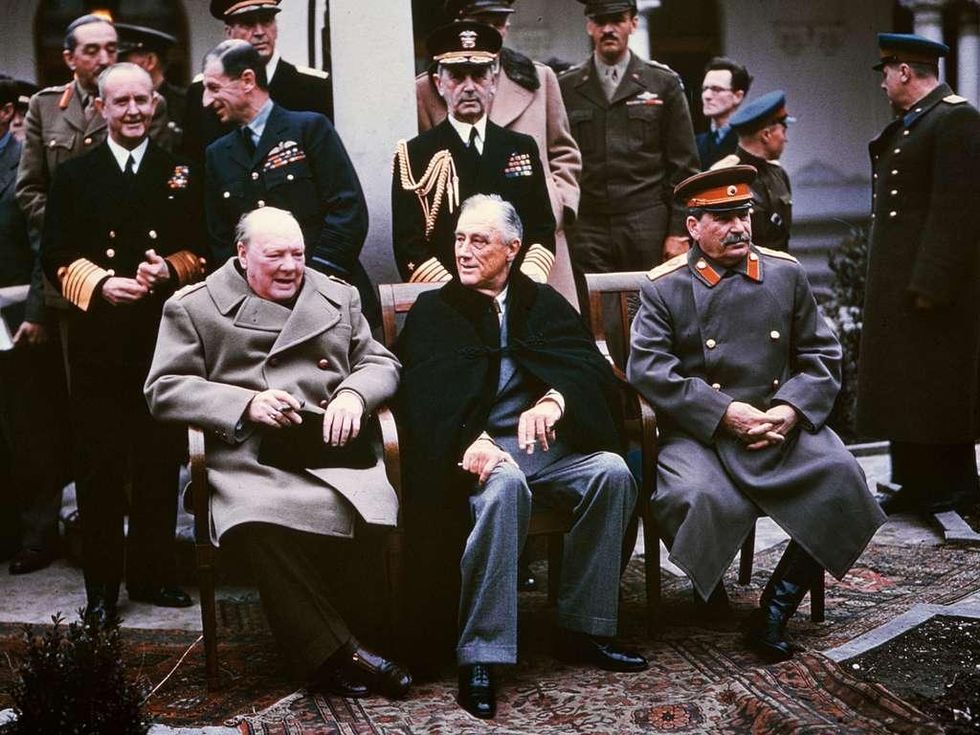
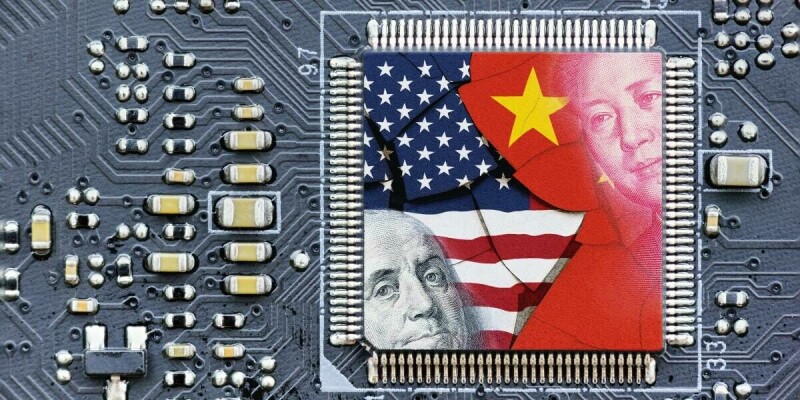
Relations among the three great powers mix rivalry and limited cooperation. The FBI is looking into Nvidia chief Jensen Huang's affair with an alleged Chinese agent 1112, and China courts US technology bosses as Trump looks weakened 14. At the same time, China, Russia and the US are trying to agree an agenda on AI in nuclear arsenals before APEC 15. Analysts warn that a Trump–Xi–Putin 'Yalta 2.0' would have little upside for Beijing 38 and call for rethinking strategic stability with China 41.

Research adds depth: scholars describe how Russia and China present themselves as anti-colonial powers while pursuing imperial identities 31, and how great-power competition is reshaping the Central Sahel 42 and the Indo-Pacific 34.

Small states between giants

Cuba and Chile show two ways small and middle states respond. Cuba, under US sanctions, depends on China and other socialist partners for survival, while its domestic crisis deepens. Chile, under President Kast, aligns politically with the US and the global right but keeps trade and financial ties with China open. Both cases show that great-power competition narrows the options of smaller states but does not remove their agency: each government chooses how to hedge.

For Viet Nam, both cases are instructive. Cuba is a close political partner whose economy is in distress; Chile is an important trading partner in Latin America whose government is ideologically distant but economically pragmatic. Viet Nam's own strategy of balancing among the great powers is reflected, in different forms, in both.

What to watch across the topics

The coming weeks will test whether the Abu Dhabi talks produce a framework for security guarantees 25, whether Russian hybrid attacks in Europe continue to grow 32, and whether the APEC agenda on AI and nuclear weapons is agreed 15. Each outcome will affect the buffer states, the great powers and smaller countries such as Cuba and Chile.

A useful way to read the news on these pages is to ask three questions of every story: who gains leverage, who loses room to manoeuvre, and which theory, such as balance of power, the security dilemma or hedging, best explains the behaviour described. The essays on each topic page apply those questions in more detail.
Key developments

  • US-mediated Ukraine talks. Talks in Abu Dhabi covered security guarantees, prisoners and the postwar order. The US called for new European security and pushed for Europe's inclusion, but little progress was made. 134925
  • The buffer zone hardens. Poland and Ukraine will set up joint drone and counter-drone groups, Russia expelled a Moldovan diplomat in a tit-for-tat move, and Serbia shut down a bank used by Russian exiles. 262030
  • Spying and hybrid war. A senior US soldier was arrested in Britain on suspicion of spying for Russia, Poland arrested two Ukrainians for sabotage, and suspected Russian hybrid incidents are rising across Europe and the High North. 22253236
  • US–China tests. The FBI is examining Nvidia chief Jensen Huang's affair with an alleged Chinese spy, while China courts US tech bosses as Trump looks weaker and mocks US pressure in the Dominican Republic. 111424
  • Three-way agenda on AI and nukes. China, Russia and the US are trying to agree commitments on AI in nuclear arsenals before APEC, though analysts warn a Trump–Xi–Putin 'Yalta 2.0' has little upside for Beijing. 1538
  • Pressure on Iran. Rubio told the G7 the US will keep imposing 'devastating' costs on Iran, which coordinates with Russia on the Caspian. 729

Themes

  • Russia's war as the organising fact. Talks, buffer states and hybrid attacks all turn on the war, while research describes Russia's arms industry entering 'managed degradation'. 12633
  • Multipolar competition beyond Europe. Studies trace great-power rivalry in the Central Sahel and the Indo-Pacific, and how Russia and China present themselves as anti-colonial powers. 423431

What to watch

  • Whether the Abu Dhabi talks produce a framework on security guarantees. 25
  • More Russian spying and sabotage cases in Europe. 232
  • The APEC outcome on AI in nuclear weapons. 15
Stories this analysis is based on (26)
  1. U.S.-mediated talks on ending Russia-Ukraine war begin in Abu Dhabi NPR
  2. Senior US soldier arrested in UK on suspicion of spying for Russia Financial Times Russia
  3. U.S. calls for new Europe security at Russia-Ukraine talks The Japan Times
  4. Russia and Ukraine discuss prisoners, security guarantees, and postwar future on first day of Abu Dhabi talks Meduza
  5. Poland arrests two Ukrainians suspected of spying and sabotage for Russia Meduza
  6. Rubio tells G7 US will keep imposing 'devastating' costs on Iran, diplomats say Al-Monitor
  7. US Urges Russia to Let Europe Join Ukraine Talks Kyiv Post
  8. Trump says FBI looking into Nvidia CEO Jensen Huang's affair with 'Chinese agent' The Hindu International
  9. Trump says FBI investigating Nvidia boss's affair with alleged Chinese spy BBC World
  10. With Trump weakened, China courts US tech bosses as it seeks new Kissinger moment Nikkei Asia
  11. China, Russia and US try to nail down AI nuclear agenda in time for Apec talks South China Morning Post
  12. Russia expels Moldovan diplomat in tit-for-tat move Al Jazeera
  13. British police arrest senior U.S. Army soldier near Gloucester on suspicion of spying for Russia Meduza
  14. China mocks US ‘congratulations’ over Dominican closure of Chinese-run factory South China Morning Post
  15. U.S.-Mediated Russia-Ukraine Talks Make Little Headway Foreign Policy
  16. Ukraine and Poland to establish joint working groups on drone and counter-drone technologies Ukrinform
  17. Gharibabadi and Russian ambassador discuss US unilateral actions in Caspian Sea IRNA (Iranian state media)
  18. Serbian regulators shut down the go-to bank for Russian exiles, costing many their life savings Meduza
  19. Anti‐Colonial Colonialism: Imperialist Identities of Russia and China in Their Quest for Post‐Subalternity Nations and Nationalism (journal)
  20. Europe sees surge in suspected Russian hybrid warfare incidents Atlantic Council
  21. Managing Russia’s Military-Industrial Degradation: Navigating Wartime Industrial Constraints, Stockpile Exhaustion, and Hardware Attrition CEPA (Center for European Policy Analysis)
  22. Regional Security and Political Change in the Indo-Pacific: Major Powers, Institutional Responses, and Implications for International Cooperation Journal articles (OpenAlex)
  23. Hybrid War Makes High North a Contest for NATO CEPA (Center for European Policy Analysis)
  24. Yalta 2.0: A Trump-Xi-Putin summit has little upside for Beijing The Interpreter (Lowy Institute)
  25. Rethinking Strategic Stability with China: From Coercion to Constructivism War on the Rocks
  26. Great power competition in the Central Sahel and the multipolar order Journal articles (OpenAlex)

Written by Claude (Anthropic), based on 45 recent headlines and excerpts in this section, Nov 11. AI analysis can misread or miss things: the numbers link to the original reporting, which is the authority.

Research 1,529

Journal articles, academic blogs, think-tank reports and papers, kept apart from the news below.

GNET (Global Network on Extremism and Technology) Muskan Sangwan Geopolitics

From Active Clubs to ‘Acceleration Clubs’: How Neo-Nazi Accelerationists Are Adapting the Active Club Model

Active Clubs have become an established organisational model within transnational white-supremacist movements, combining physical fitness, combat sports and local activism with a decentralised network of like-minded groups. Local chapters retain some operational autonomy rather than answering to a single central command, while shared messaging, online promotion, and cross-group relationships connect them to a wider ideological milieu. Recent research published by

Read at GNET (Global Network on Extremism and Technology)

All 1,529 research items in this section

All news 3,660

Nhân Dân (Vietnamese state media)

Viet Nam and southwest China ready for strategic connectivity forum

Preparations for the forum linking Viet Nam’s development strategy with southwest China have been largely completed in Kunming, Yunnan Province, China, as of November 19. With more than 800 delegates from 570 businesses of the two countries, the forum is expected to promote cooperation and expand investment and trade opportunities between the two sides. Da Nang strengthens friendship and cooperation with Chinese localities Vietnamese and Chinese localities seek to expand…

Read at Nhân Dân (Vietnamese state media)

VietnamPlus (Vietnamese state media)

China's Shandong promotes tourism and heritage in Hanoi

From sacred mountains and natural springs to coastal beaches and ancient Confucian heritage, the attractions of China's Shandong province were showcased to Vietnamese travelers at a cultural and tourism promotion event in Hanoi on November 18. Vietnam, China’s Shandong province broaden economic, trade ties Vietnam, China exchange experience in talent training, public governance Vietnam, China asked to keep elevating strategic trust

Read at VietnamPlus (Vietnamese state media)

Nhân Dân (Vietnamese state media) Geopolitics 2 publishers

Top leader meets Vietnamese community in China's Yunnan province

General Secretary of the Communist Party of Viet Nam and President To Lam, his spouse and a high-ranking Vietnamese delegation met with officials and staff of the Vietnamese Consulate General and representatives of the Vietnamese community in Yunnan province, China, on November 20. General Secretary and President To Lam meets with staff of Vietnamese agencies in Belgium, Vietnamese community in Europe PM pledges continued support for Vietnamese community in Cambodia…

Read at Nhân Dân (Vietnamese state media)

Also at VietnamPlus (Vietnamese state media)

Nhân Dân (Vietnamese state media) Geopolitics 2 publishers

Top leader meets Vietnamese, Chinese youth participating in 'Red Journey' programme in Yunnan

General Secretary of the Communist Party of Viet Nam (CPV) Central Committee and President To Lam, his spouse and a high-ranking Vietnamese delegation met with young Vietnamese and Chinese participants in the “Red Study Tour” programme in Yunnan province on November 20. In pictures: General Secretary and President To Lam attends 2026 APEC Economic Leaders’ Meeting

Read at Nhân Dân (Vietnamese state media)

Also at VietnamPlus (Vietnamese state media)

Responsible Statecraft Anatol Lieven Geopolitics

A gross misreading of 'Yalta' undergirds lame critique of trilateral

Representatives of the transatlantic establishment were quick to liken the trilateral summit in Shenzhen to the supposed Anglo-American “betrayal” of Poland and other Eastern European states at Yalta in February 1945. Yalta ratified — but did not create — the division of Europe into spheres of influence that later became frozen into the dividing lines of the Cold War. A less apoplectic strain of the same underlying sentiment holds that President Trump’s willingness to meet…

Read at Responsible Statecraft

The National (UAE) Thomas Harding

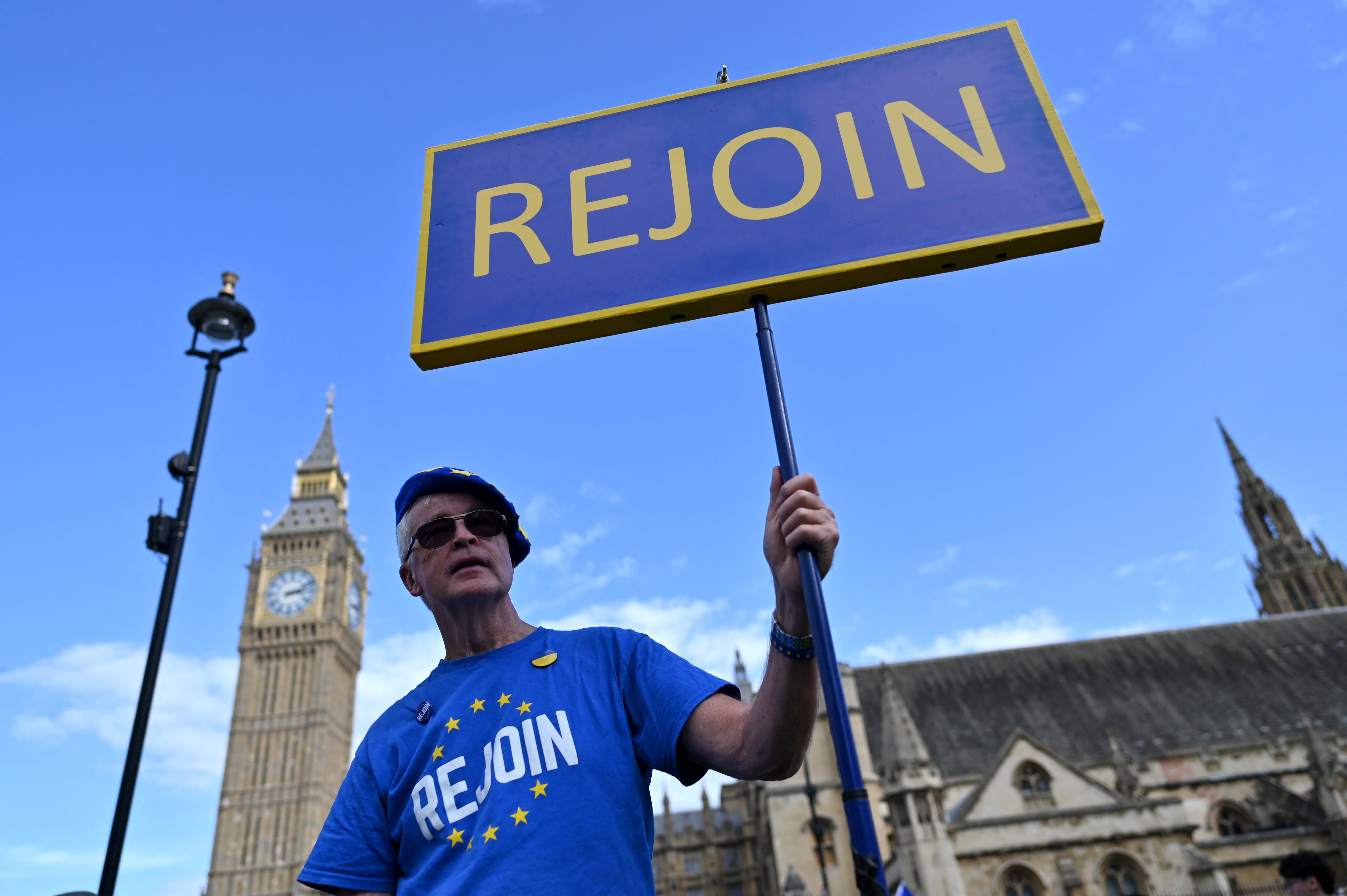
Burnham offers slow fix of Brexit's broken promises

It has been 10 years since Britain voted to leave the European Union and the number who still believe it was a good idea has dwindled significantly, with even some of those who voted for Brexit now expressing remorse. The reason? Few can explain how it has benefited the UK, especially when some observers estimate it has cost the nation as much as 8 per cent of its gross domestic product, or more than £3 billion a week. That helps explain why few people The National…

Read at The National (UAE)

The National (UAE) Thomas Helm Geopolitics

As Israeli opposition makes gains in Knesset, Palestinians count mounting losses in West Bank

In an increasingly wintry Jerusalem, Israel’s opposition allowed itself to celebrate a few wins this week, as it started to take control of parts of the political system after last month’s inconclusive election. No one is close to declaring victory yet, but for the first time in four years Prime Minister Benjamin Netanyahu’s opponents are starting to exercise some form of power. Gadi Eisenkot, the opposition leader who is currently trying to form a government, said it was “a…

Read at The National (UAE)

South China Morning Post Alice Yan Geopolitics

Debate erupts over China university’s US$4.6m smart system tracking ‘head-raising rates’

An elite university in eastern China has spent more than 30 million yuan (US$4.6 million) installing a smart classroom system to track students’ “head-raising rate” – an indicator intended to reflect their attentiveness during lectures – and link it to their academic scores. Nanjing University, in Jiangsu province, came under fire after some students shared on social media that the smart system would go into operation in the first week of November, Haibao News reported. The…

Read at South China Morning Post

South China Morning Post Ben Hu Geopolitics 2 publishers

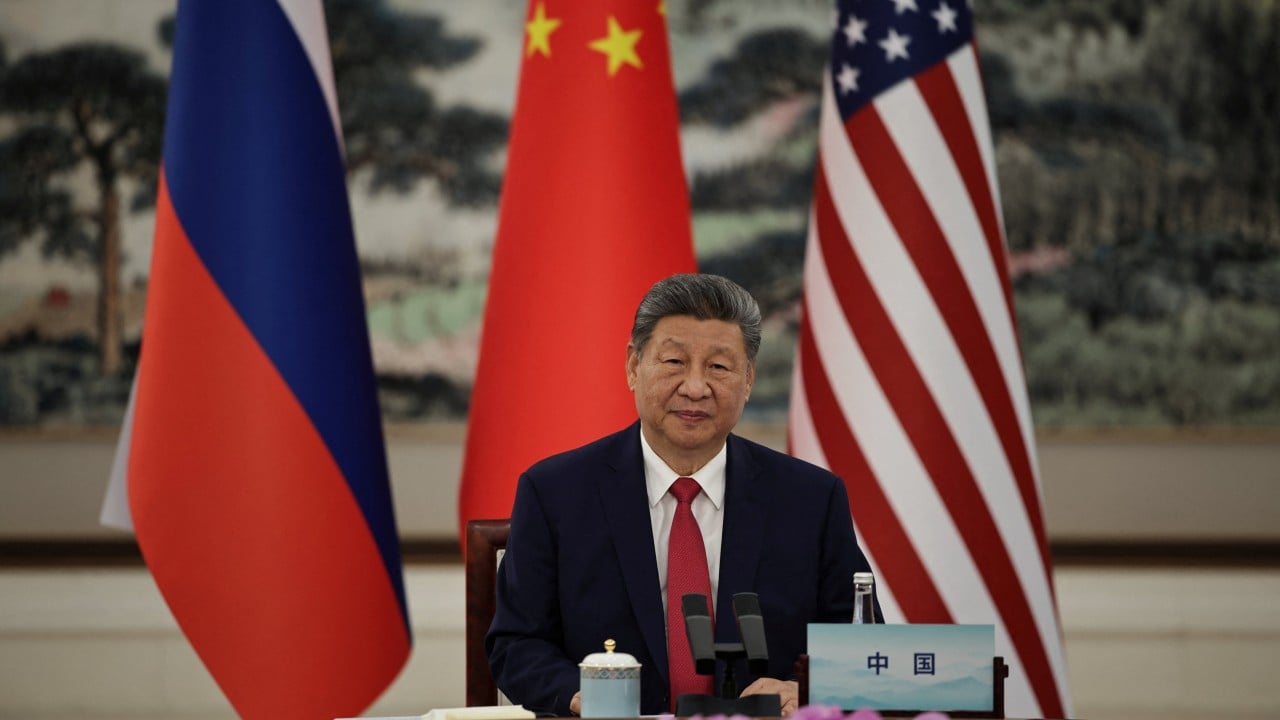
China-Russia-US trilateral summit declaration towards peace

Chinese President Xi Jinping, US President Donald Trump and Russian President Vladimir Putin held a trilateral summit in Shenzhen on November 19, 2026. Following the summit, the three sides issued a joint declaration towards peace, including consensus on United Nations reform, global energy supply, sovereign immunity, and nuclear risk reduction. Below is the official English transcript of the declaration from the Ministry of Foreign Affairs:

Read at South China Morning Post

Also at Hong Kong Free Press

South China Morning Post The Star South China Sea

Malaysia’s military eyes gamers for South China Sea drone surveillance

Malaysia’s military chief Malek Razak Sulaiman said the armed forces are looking at tapping into the digital skills of the nation’s youth, including gamers, to strengthen its drone capabilities. Malek Razak stressed, however, that experience in video games alone would not qualify someone to become a military drone operator. Malek Razak said the military is continuously monitoring developments in defence technology and identifying the expertise required to support the…

Read at South China Morning Post

VietnamPlus (Vietnamese state media)

Vietnam promotes coffee culture at UN event in New York

Coffee, introduced into Vietnam nearly 170 years ago, has become one of the country's major agricultural exports, reflecting Vietnamese cultural identity and creativity. EU-funded project supports circular Arabica coffee production in Son La Dak Lak turns Saturday coffee into business fix shop Vietnamese coffee seeks to boost competitiveness amid new regulations

Read at VietnamPlus (Vietnamese state media)

Axios Barak Ravid Geopolitics

Trump tells skeptical Europeans: "Putin wants to end the war"

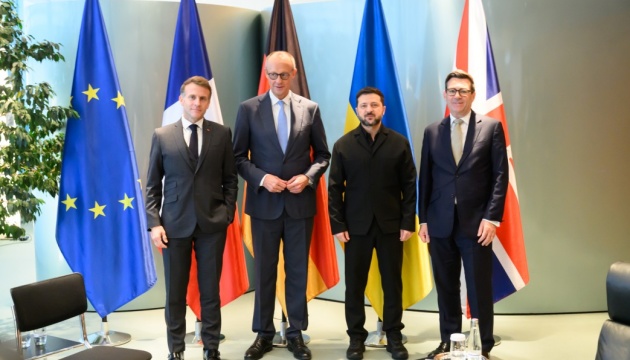
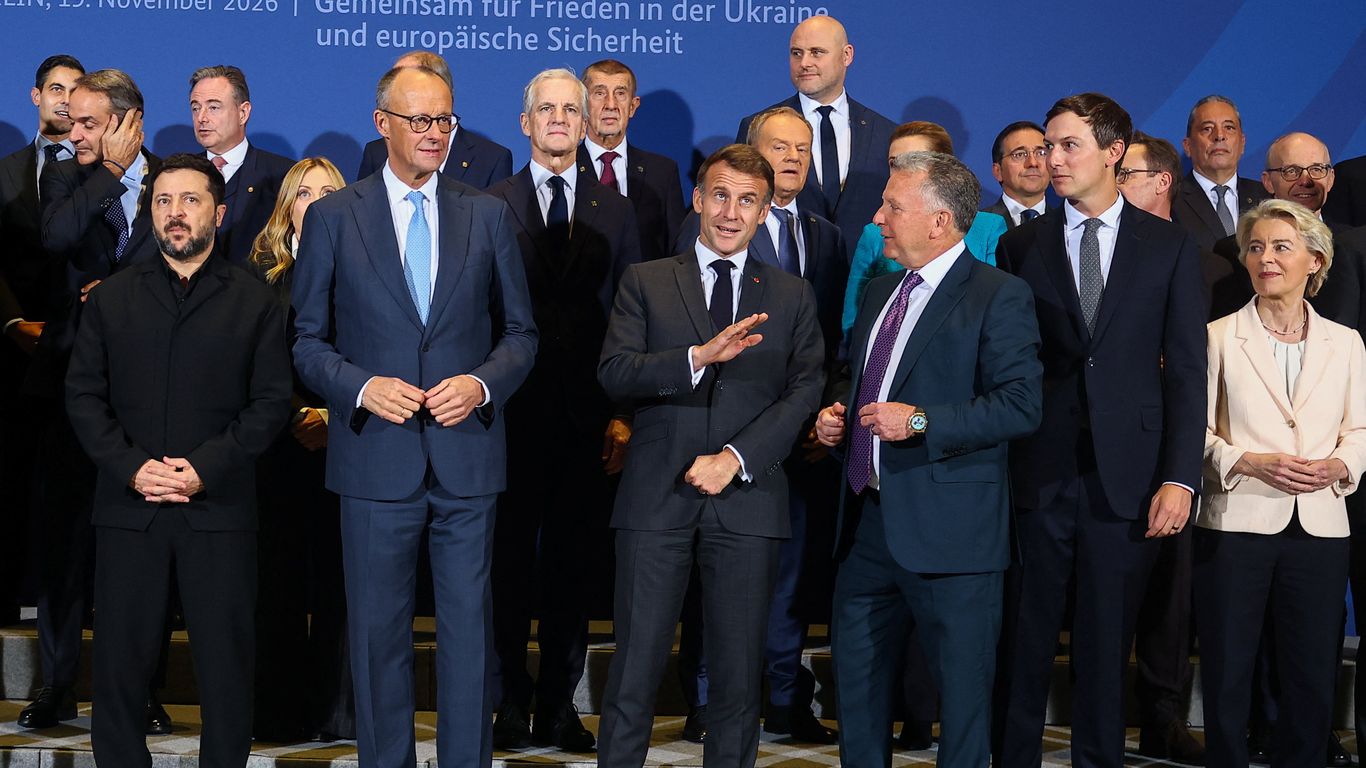
On his way back from China Thursday aboard Air Force One, President Trump called in to a meeting his envoys Steve Witkoff and Jared Kushner were holding in Berlin with a group of European leaders and Ukrainian President Volodymyr Zelensky. "Putin wants to end the war, he wants the deal done, he is getting tired of this," Trump said, according to people in the room. Why it matters: Instead of turning his historic trilateral summit with Chinese President Xi Jinping and Russian…

Read at Axios

CBS News Politics Geopolitics

Trump calls Putin his friend at summit, prompting backlash from some world leaders

President Trump insisted that Russian President Vladimir Putin wants to end his war with Ukraine as the two leaders met with Chinese President Xi Jinping. But Putin later told reporters he plans to halt negotiations with the country he invaded in 2022. Mr. Trump also called Putin his friend, sparking a rebuke from the prime minister of Poland. Nancy Cordes and Anna Coren report.

Read at CBS News Politics

Older stories