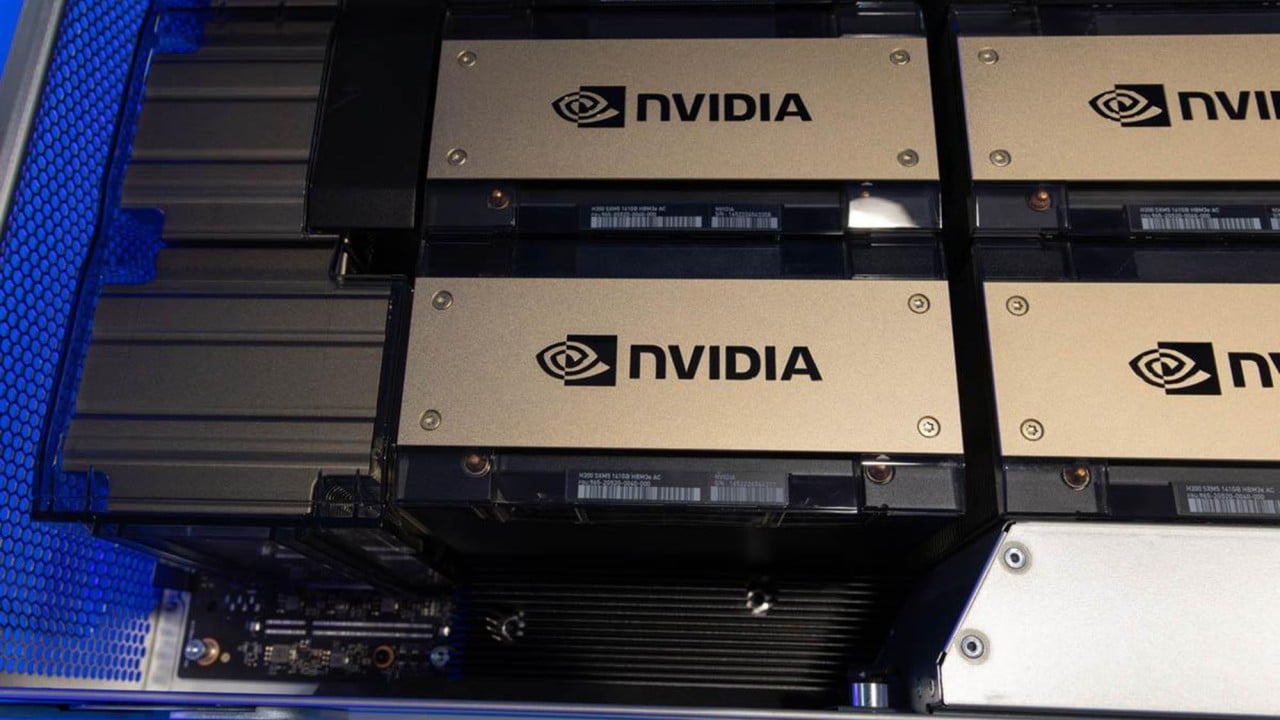
US let Nvidia and AMD sell bucketloads of chips to military-linked Chinese companies
Not many of them made it in, but Chinese clouds no longer care
Also at Financial Times China
Technology and great-power rivalry: the US–China contest over chips, AI, export controls, rare earths and critical minerals, telecoms and undersea cables, and the companies caught in it, from the news and journal research. Kept for a year as an archive.
168 news articles and 54 research items in this section, back to 26 November 2025. Browse the news ↓ Research ↓
10 stories from 7 publishers in the last 24 hours, 81 from 38 this week; 6 stories were covered by more than one newsroom.
Not many of them made it in, but Chinese clouds no longer care
Also at Financial Times China
NVIDIA's applications include a request covering 610,000 chips for Alibaba Group, approved with China listed as the ultimate destination.
A US House committee on Thursday released confidential licence applications from Chinese companies seeking to buy advanced artificial intelligence chips from Nvidia and AMD, information normally…
US House committee releases chip export data amid scrutiny of former Nvidia CEO's alleged links to a Chinese spy.
Most mentioned in Technology and great-power rivalry: chips, AI and export controls headlines, last 3 days: China 16Nvidia 12Trump 8Chip 8Chinese 6Chips 5Scandal 5firms 3face 3Sell 2
Most active this week: South China Morning Post (16), The Hill (6), SCMP China (6), Al Jazeera (4). Built automatically from headlines; the top items are the stories the most newsrooms covered in the last three days.
The Nvidia spy affair puts AI chips at the centre of US–China rivalry, with Congress pushing tighter export controls and middle powers trying not to be locked in.
This week's tech rivalry news is dominated by the affair between Nvidia chief Jensen Huang and Alice Huang, an alleged Chinese spy. The FBI is investigating, the Commerce Department received a national security warning, and Congress is pressing Nvidia and pushing tougher export controls in the defence bill. Analysts say the scandal weakens Huang's lobbying against chip curbs and could test the fragile US–China truce, even as Trump backs Huang and says Xi may raise the case. Reports that the US let Nvidia sell chips to an empty office in China add to concern about enforcement. Beyond chips, China, Russia and the US are trying to agree an agenda on AI in nuclear weapons, and middle powers look for ways to navigate the rivalry.
Advanced semiconductors are the foundation of modern AI, and AI is seen in both Washington and Beijing as decisive for economic and military power. Since 2022, the US has used export controls to deny China the most advanced AI chips and the tools to make them, while China has poured money into domestic alternatives and restricted exports of critical minerals. The contest is not only about trade: it is about who sets the pace of technological change and who controls the chokepoints in global supply chains.
Nvidia sits at the centre of this contest. Its chips power most AI systems, and its chief executive has lobbied against tight controls, arguing that cutting off China hurts US firms and speeds Chinese self-reliance. That is why the current affair matters far beyond one person 128.
The FBI investigation into Jensen Huang's relationship with Alice Huang, an alleged Chinese agent 19, turns a corporate scandal into a national security question. Axios reports that the Commerce Department, which administers export controls, received a classified warning 4, and Congress is ramping up pressure 16. Analysts ask whether the affair could become another 'spy balloon' moment that freezes US–China contacts 5.
The political effect is already visible. Commentators argue the scandal weakens Huang's lobbying against tighter AI chip export controls 21 and, combined with the Democratic midterm victory, adds 'fuel to the fire' for stricter curbs 617. Lawmakers are pushing tougher controls in the defence bill 8.
Export controls are only as strong as their enforcement. Reports that the US let Nvidia sell chips to an empty office in China 29 point to a familiar weakness: chips can be routed through shell companies and third countries. This is why engineers and policymakers are racing to build a 'Find My' for AI chips, a way to track where advanced processors end up 20. Such tools raise their own questions about privacy, trust and whether allies will accept them.
The theory of 'weaponised interdependence' explains why the US can use its control of chip technology as leverage. It also predicts the response: the more the leverage is used, the harder the target works to escape it.
US–China relations are in a fragile truce after earlier rounds of tariffs and controls, and experts warn the scandal could test it 14. Trump has backed Huang and said Xi may raise the case 1526, which shows how personal relations between leaders can cut across institutional policy. At the same time, the two countries, together with Russia, are trying to agree an agenda on AI in nuclear weapons before APEC 3, and commentators argue they must cooperate to measure the rising AI tide 3032.
This mix of rivalry and cooperation is typical of great-power competition in technology: the rivals compete hard for advantage but share an interest in avoiding catastrophic accidents.
Allies and partners feel the pressure. South Korea's chip 'bromance' with Nvidia is overshadowed by the scandal 12, and analysts describe how middle powers try to stay 'plugged in, not locked in' to either side's AI ecosystem 27. Countries such as Myanmar try to attract US investment in rare earths to balance China's dominance 10.
For Viet Nam, which assembles and tests chips and hopes to move up the value chain, tighter controls bring both risk and opportunity: risk if supply chains are disrupted, opportunity if firms move production away from China. Its first domestically designed security chip, announced this month, shows the ambition to build its own capabilities.
Written by Claude (Anthropic), based on 32 recent headlines and excerpts in this section, Nov 11. AI analysis can misread or miss things: the numbers link to the original reporting, which is the authority.
Journal articles, academic blogs, think-tank reports and papers, kept apart from the news below.
Washington’s push to close loopholes could invite renewed Chinese restrictions on rare earths, exposing a supply-chain vulnerability that the trade truce never resolved.
In the "AI race" between the United States and China, mutual restraint on frontier AI development is the rational choice for each state.
The upcoming Xi-Trump meeting on the sidelines of the APEC meeting shouldn’t distract from the fierce AI competition underway.
A spy scandal underlines the holes in US efforts to keep China from obtaining cutting-edge US technology.
Our experts unpack what the alleged Nvidia espionage incident means for national security, markets, and relations with Beijing.
NVIDIA's applications include a request covering 610,000 chips for Alibaba Group, approved with China listed as the ultimate destination.
Not many of them made it in, but Chinese clouds no longer care
Also at Financial Times China
A US House committee on Thursday released confidential licence applications from Chinese companies seeking to buy advanced artificial intelligence chips from Nvidia and AMD, information normally protected under US export-control law. Brian Mast, a Florida Republican and chair of the House Foreign Affairs Committee, used his authority under the Export Control Reform Act to make public the details of Nvidia and AMD licence applications to sell AI chips to China. “[The…
US House committee releases chip export data amid scrutiny of former Nvidia CEO's alleged links to a Chinese spy.
The Trump administration approved the shipment of nearly 900,000 AI chips to Defense Department-designated Chinese military companies, according to newly released documents from the House Foreign Affairs Committee. The documents revealed the U.S. signed off on the sale of 879,868 AI semiconductor chips from Nvidia and AMD. The specific chips sold were Nvidia’s sensitive H200...
Ask an artificial intelligence model to grade a job interview or test answers, and a person’s accent may change the score. That is according to new University of Washington research that looked at how some of the most advanced AI models rated English speakers with different accents, both on what they said and how they said it. In the scripted tests, every speaker said the same words, and AI models transcribed the accented speech accurately, meaning the models understood the…
US President Donald Trump bought as much as US$265,000 in Nvidia stock and sold as much as US$15,000 worth of the stock in September, weeks before reports surfaced of CEO Jensen Huang’s ties to an alleged Chinese spy, according to Trump’s latest financial disclosure released on Thursday. US lawmakers have been asking questions about Trump’s knowledge of Huang’s personal life, and the president has said he “was amazed” by the allegations against Huang, who is among the…
Stricter US export controls on AI chips are hitting fast. China's Moonshot AI walked away from a $150 million deal in Indonesia, while TSMC and Samsung stopped shipping to Chinese customers. A New York Times investigation found that Alibaba had routed Nvidia chips to Chinese military researchers through a web of front companies. The article Chinese tech firms face a double hit as chip shipments stop and overseas cloud access disappears appeared first on The Decoder.
As Washington continues to tighten controls over advanced chip exports, China faces greater obstacles to accessing high-performance processors. The fall of Nvidia CEO Jensen Huang, a prominent advocate for selling chips to China, adds another layer of uncertainty. Some observers believe China’s abundant electricity can help offset chip constraints in the artificial intelligence (AI) race. Elon Musk, CEO of Tesla and SpaceX, has said China’s ability to scale up electricity…
Anthropic’s record-shattering US$81.3 billion initial public offering (IPO) is handing the US artificial intelligence powerhouse a massive war chest to wage a global price war, piling fresh valuation and monetisation pressure on lower-cost Chinese rivals, according to analysts. The San Francisco-based creator of the Claude chatbot priced its shares at US$83 apiece on Wednesday, above its marketed range of US$70 to US$78, giving the firm a market capitalisation of around…
US President Donald Trump has described China and Russia as “natural enemies” whose partnership “should never have been allowed to happen”, while defending former Nvidia CEO Jensen Huang as an irreplaceable genius. He was speaking in a Fox News interview given just before a bilateral meeting with Chinese President Xi Jinping and a trilateral with Xi and Russian leader Vladimir Putin. Trump said China and Russia were driven together by competing needs rather than affinity…
The Nvidia scandal has spilled over into the Trump administration, which is now under intense scrutiny for how it allowed America's top AI chips to end up in China's hands.
Fallout from the Nvidia scandal has made any negotiations around AI difficult, officials say.
China-U.S. hotlines have historically failed when needed most. This one needs to actually work – and here’s how to make sure it does.
Senate Democratic leader hails result which will give the party a commanding 56-44 seat majority Trump in China for Apec summit – follow live Sign up for US breaking News email Hello and welcome to the US politics live blog. Mary Peltola’s win in Alaska to give the Democrats a commanding Senate majority of 56-44 seats has been hailed as “a gift” by the party’s leader. The National Security Agency’s internal network, NSA Net, went down on Tuesday. An NSA spokesperson told the…
A bipartisan US commission urged Congress on Wednesday to require companies exporting advanced artificial intelligence chips to China to certify that the shipments would not divert manufacturing capacity from the US market, adding a new proposal to the debate over chip controls ahead of President Donald Trump’s meeting with Chinese President Xi Jinping. The US-China Economic and Security Review Commission, a bipartisan panel created by Congress to assess the national…
Tencent Holdings ramped up capital spending more than sixfold in the third quarter to above US$12 billion, weighing on profit and free cash flow as the Chinese tech giant poured money into computing power to catch up in the country’s cutthroat artificial intelligence race. Adjusted net income for the three months ended September 30 fell 6 per cent year on year to 66.5 billion yuan (US$10 billion), matching the consensus estimate of analysts polled by Bloomberg. Revenue rose…
The administration has been seeking to ban U.S. imports of new models of Chinese optical transceivers over national security concerns.
China worries the scandal could ramp up pressure on the US to further restrict the sale of advanced chips.
US chip giant Nvidia doubled revenue in the third quarter to more than US$115 billion, the company reported on Tuesday while ruling out any return for ousted CEO Jensen Huang after a Chinese spy scandal. The results, which beat expectations, came hours after Huang said he wanted his job back in the latest twist for the company at the centre of an AI boom that has propelled markets to record highs and boosted global economic growth. Huang, a leading promoter of AI, stepped…
Commerce secretary Howard Lutnick has been under attack for not blacklisting a company caught up in the Jensen Huang scandal. But Trump is on board with the policy.
Former Nvidia CEO Jensen Huang has agreed to testify before the US Congress amid scrutiny over national security risks following revelations that he had an extramarital affair with a businesswoman suspected of working for Chinese intelligence. On December 1, Huang will voluntarily appear for transcribed interviews before the Select Committee on China, the House Foreign Affairs Committee and the House Intelligence Committee. Nvidia general counsel Tim Teter will testify…
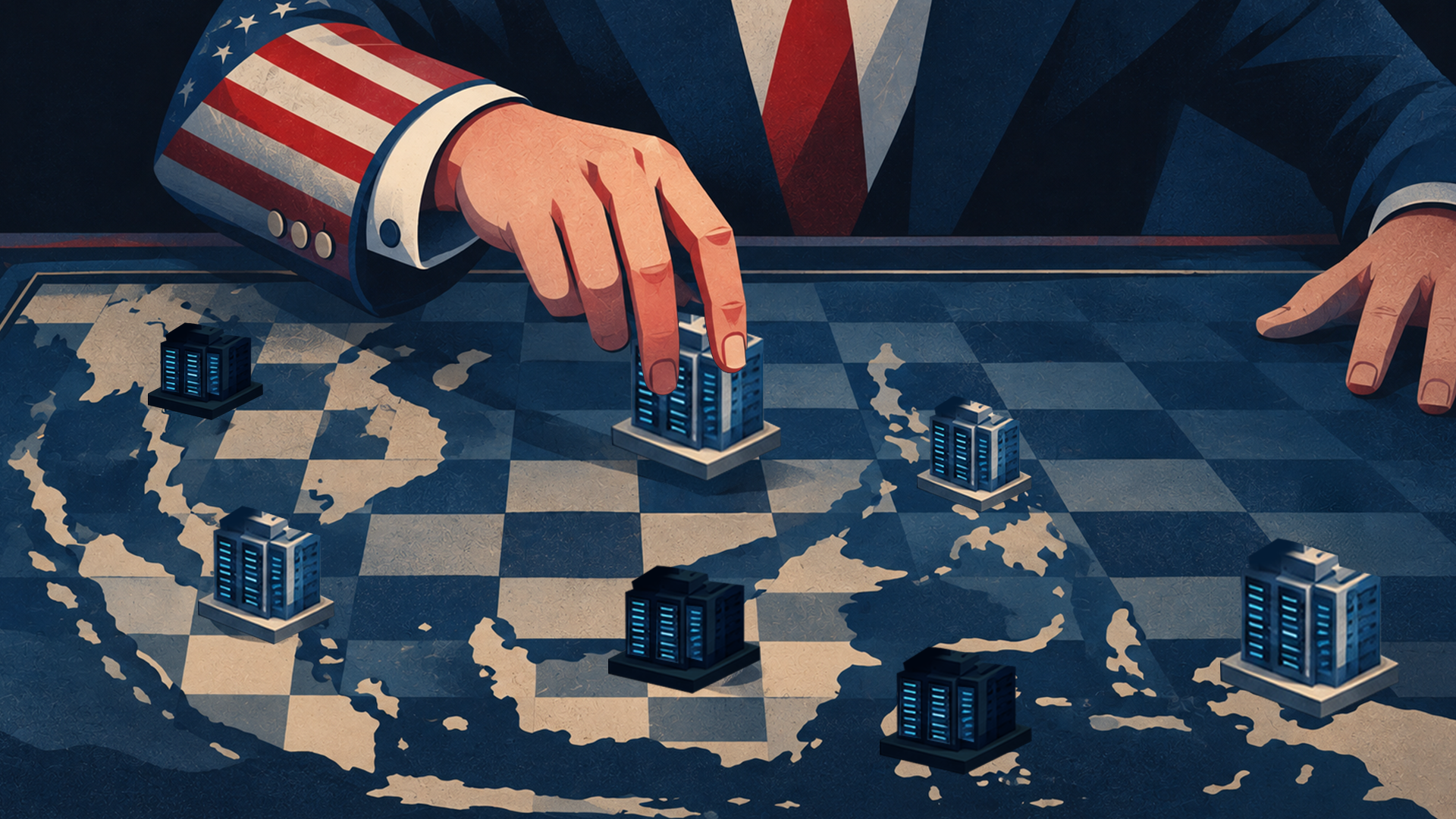
The US is tightening its chip export controls. Data centers in third countries like Singapore and Malaysia will soon need a US license to buy Nvidia chips, closing the loophole that let Chinese firms rent cloud compute abroad. A Reuters investigation also reveals how China offsets its hardware shortage through industrial-scale distillation of US AI models. The article The US wants to block China from renting AI power abroad but China already built a parallel supply chain…
Barely hours after arriving in Manila on Tuesday, US President Donald Trump was already looking ahead to his meeting with Chinese President Xi Jinping in Shenzhen. “We have some very important things to discuss,” he said. Trump also appeared to be anticipating the reception awaiting him in the southern Chinese tech hub. “I hear we’re going to have quite a landing. It’s going to be a beautiful thing,” he said. First up, however, was a series of engagements around the…
A leadership crisis at Nvidia and a fresh round of US chip curbs have highlighted fractures inside the Trump administration and Silicon Valley over how to maintain America’s artificial intelligence lead over China, according to analysts. The turmoil escalated after the US Commerce Department’s Bureau of Industry and Security (BIS) extended export controls to remote cloud access on Monday, closing a major loophole that had allowed Chinese firms to tap advanced Nvidia chips…
A rift has emerged in Trump’s cabinet over China’s access to advanced AI chips as export controls tighten.
China helped fuel Southeast Asia’s data center boom. A new US chip rule could slow its buildout and test demand for the GPUs already there.
Singapore is working to maintain its reputation as a trusted business hub, tainted by allegations that Chinese companies had exploited it to gain access to top-end AI chips despite US export restrictions. A widening scandal sparked by an affair between Jensen Huang, until recently head of US chip titan Nvidia, and a suspected Chinese spy
The new rules restrict chip exports and also access to their computing power, which China relies on heavily.
Yesterday, the U.S. Commerce Department's Bureau of Industry and Security (BIS) released an interim final rule to address remote access to advanced AI chips and servers. This rule significantly addresses a long-standing gap in U.S. export controls, where Chinese companies that are barred from accessing NVIDIA's latest GPUs have been renting overseas computing power instead of purchasing the chips outright. Notably, BIS states that the rule was written by and at the direction…