Oil, tankers and chokepoints: the Iran war and global shipping

Oil, tankers and chokepoints: how the Iran war and attacks on shipping in the Strait of Hormuz and the Red Sea move oil and gas prices, insurance and trade, and who bears the cost, from the news and journal research. Kept for a year as an archive.

Summary

187 news articles and 62 research items in this section, back to 21 November 2025. Browse the news ↓ Research ↓

11 stories from 10 publishers in the last 24 hours, 102 from 29 this week; 8 stories were covered by more than one newsroom.

Most mentioned in Oil, tankers and chokepoints: the Iran war and global shipping headlines, last 3 days: Hormuz 16Strait 12Iran 9Oil 7fire 6Energy 5Tanker 5Navy 5naval 4hits 4

Most active this week: IRNA (Iranian state media) (22), Al Jazeera (16), Al-Monitor (13), South China Morning Post (6). Built automatically from headlines; the top items are the stories the most newsrooms covered in the last three days.

Analysis

Tankers burn in the Strait of Hormuz as Iran uses the chokepoint for leverage, while oil prices fall on talk that the US war is 'effectively over'.

The Strait of Hormuz, through which a fifth of the world's oil passes, is the economic centre of the US-Iran war. This week Iran's Revolutionary Guards reported blasts on a third tanker, two more tankers exploded, and Iran says ships were destroyed after hitting mines; a Filipino seafarer was killed in a drone attack on a Gulf tanker. Iran describes the strait as leverage, floats a 'two-day proposal' to restore security and a toll regime that would hit Asian allies of the US, and a Qatari plan would reopen the strait in exchange for nuclear inspections. South Korea is sending a naval mission to keep the strait open. Yet oil prices fell to their lowest since August as Trump said the war was 'effectively over', giving relief to fuel prices, inflation and even carbon emissions. A separate Trump-Putin deal to ship Russian diesel to the US faltered as tankers turned back.

Essay

Why a strait decides a war

About a fifth of the world's oil and a large share of its liquefied gas pass through the Strait of Hormuz, a channel barely 40 kilometres wide between Iran and Oman. No pipeline network can replace it. This makes the strait Iran's strongest card in its war with the United States: it cannot defeat the US navy, but it can make shipping dangerous enough to raise insurance, divert tankers and push up prices worldwide. Analysts call it a lasting source of leverage 21.

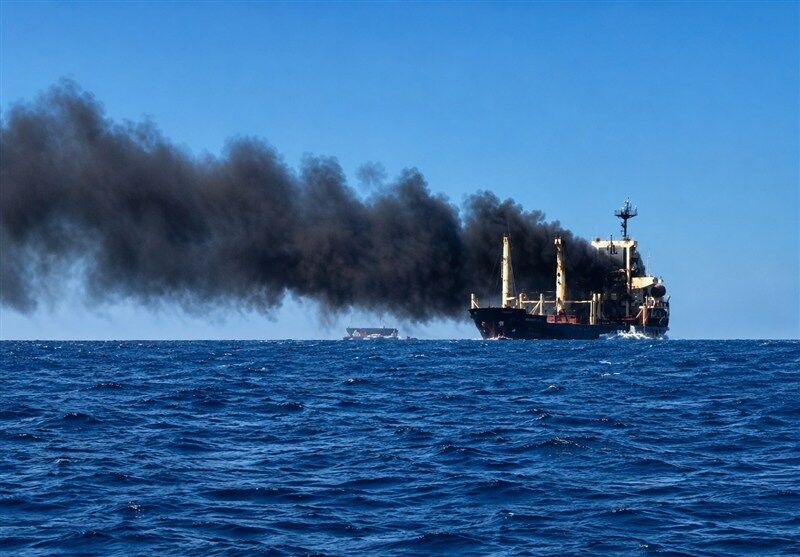
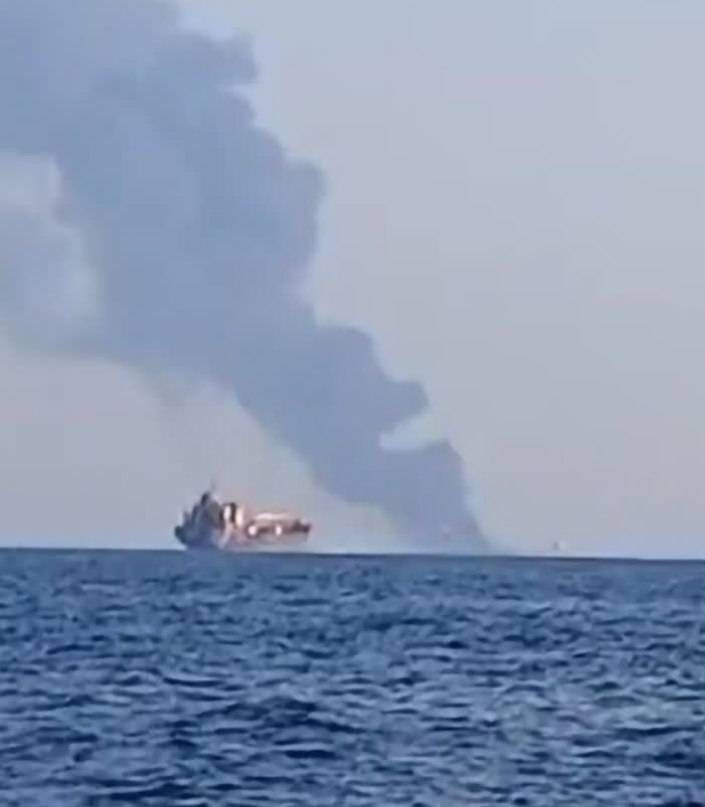
This week showed the card being played. The Revolutionary Guards reported a blast on a third tanker 4, two more tankers exploded and burned 1210, and Iran said ships were destroyed after hitting mines 32. A Filipino seafarer was killed in a drone attack on a Gulf tanker 26, a reminder that the crews bearing the risk are mostly from Asia.

Coercion with a price list

Iran's tactics are calibrated. Rather than closing the strait outright, which would invite a full US response and anger China, Tehran attacks selectively and proposes terms: a 'two-day proposal' to restore security 19, and a toll regime that analysts say is designed to punish the Asian allies of a weakened Trump 28. This is coercion with a price list. It keeps oil flowing to friends while making enemies pay.

The response from Asia shows the pressure working. South Korea, dependent on Gulf oil, will deploy a military mission and expand naval operations closer to the strait 2931. European ministers are cautious after G7 briefings 11, unwilling to be drawn into escorting ships.

Markets bet on peace

Paradoxically, oil prices fell to their lowest since August as Trump declared the war 'effectively over' 1413. Markets have learned that threats to Hormuz rarely become a full closure, and they price the probability of a deal: a Qatari plan would reopen the strait as part of nuclear inspections 27, and Trump signals openness 23. Lower fuel prices gave inflation a breather 18 and even cut global carbon emissions 7. But the costs are uneven: Japan's and Europe's electricity futures hit a four-year high on fuel costs 2, and in Kabul rising fuel prices squeeze taxi drivers and passengers 15.

Research on oil prices and bond yields finds they no longer move together 20: investors now treat oil shocks as supply disruptions rather than signals of global growth.

Russia's diesel and the limits of deals

A side story shows how sanctions and deals interact. Under a Trump-Putin arrangement, tankers carrying Russian diesel sailed for the United States, but the first found no buyer 9, others changed course 301, and the last turned back. Buyers feared legal and reputational risk even where politics had cleared the way. Energy flows follow trust and law as much as presidential agreements.

What to watch

The strait's future turns on three things: whether the Qatari plan produces inspections and a reopening 27; whether mine and drone attacks continue, which would raise insurance costs even without a formal closure 32; and whether Asian navies' deployments change Iran's calculus 29. For importers such as Viet Nam, Japan and Korea, the lesson is that energy security now depends on diplomacy in the Gulf as much as on contracts with suppliers.
Key developments

  • Attacks on tankers. The IRGC navy reported a blast on a third tanker, two more tankers exploded and caught fire, Iran says ships hit mines, and a Filipino seafarer was killed in a drone attack. 412103226
  • Iran's leverage. Analysts say Hormuz remains a source of leverage for Iran, which floats a two-day proposal to restore security and a toll regime aimed at US allies in Asia. 211928
  • Diplomacy. A Qatari plan would reopen the strait as part of nuclear inspections, Trump signals openness to a deal, and European ministers are cautious after G7 briefings. 272311
  • Navies move in. South Korea will deploy a military mission and expand naval operations closer to Hormuz. 2931
  • Oil prices fall. Oil fell to its lowest since August as Trump said the war is effectively over; fuel prices eased inflation and cut emissions, though Japan and Europe's power futures hit a four-year high. 14131872
  • Russian diesel deal falters. Tankers carrying Russian diesel to the US under a Trump-Putin deal changed course or found no buyer. 3019

Themes

  • Energy security beyond the Gulf. A drone attack on Iraq's Khor Mor gas field and fuel prices squeezing Kabul's taxi drivers show the war's reach. 1615
  • Markets decouple. Oil prices and bond yields no longer move together, a sign that markets read the war as a supply story rather than a growth story. 20

What to watch

  • Whether the Qatari plan reopens the strait. 27
  • More tanker attacks or mine incidents. 32
Stories this analysis is based on (24)
  1. Another tanker carrying Russian diesel changes course en route to U.S. – Bloomberg Ukrinform
  2. Fuel prices drive Japan, Europe electricity futures to 4-year high Nikkei Asia
  3. IRGC Navy reports blast in third tanker in Hormuz Strait IRNA (Iranian state media)
  4. High oil prices have led to a dip in global carbon emissions Ars Technica
  5. First tanker carrying Russian diesel arrives off US coast but finds no buyer – Reuters Ukrainska Pravda
  6. Two oil tankers catch fire after explosions in Strait of Hormuz Tehran Times (Iranian state-aligned)
  7. European ministers cautious over Strait of Hormuz after G7 briefings The National (UAE)
  8. Two more offending tankers explode in Strait of Hormuz IRNA (Iranian state media)
  9. Oil price relief as Trump declares US war on Iran ‘ending fairly soon’ | First Thing The Guardian US
  10. Oil prices fall to lowest since August as Trump says Iran war is ‘effectively over’ The Guardian US
  11. Rising Fuel Prices Put Kabul Taxi Drivers and Passengers Under Pressure Khaama Press
  12. Khor Mor drone attack raises fears over Iraq’s energy security Al Jazeera
  13. Inflation likely took a breather last month as fuel prices fell NBC News
  14. Iran’s two-day proposal most logical path to restoring security in Strait of Hormuz: Baqaei Tehran Times (Iranian state-aligned)
  15. Oil prices and bond yields no longer moving together Axios
  16. Strait of Hormuz still a source of leverage for Iran DW
  17. Trump signals openness to Iran deal amid renewed Hormuz tensions Iran International
  18. DMW: Filipino seafarer killed in drone attack on Persian Gulf tanker Inquirer Global Nation
  19. Strait of Hormuz could reopen as part of Qatari plan for Iran nuclear inspections The Guardian Iran
  20. Iran’s Hormuz toll regime to punish weakened Trump’s Asian allies Asia Times
  21. S. Korea to deploy military mission to help keep Strait of Hormuz open Inquirer Global Nation
  22. Russian Diesel Tankers Bound for U.S. Change Course, Casting Doubt on Trump Deal The Moscow Times
  23. South Korea says it will expand naval operations closer to strait of Hormuz The Guardian Asia-Pacific
  24. Iran says tankers destroyed after hitting mines in Strait of Hormuz Inquirer Global Nation

Written by Claude (Anthropic), based on 32 recent headlines and excerpts in this section, Nov 11. AI analysis can misread or miss things: the numbers link to the original reporting, which is the authority.

Research 62

Journal articles, academic blogs, think-tank reports and papers, kept apart from the news below.

Journal articles (OpenAlex) Nektarios A. Michail, Konstantinos D. Melas · Case Studies on Transport Policy Geopolitics

Geopolitical risk and oil tanker freight rates: Clean–dirty asymmetries and route-level evidence

This paper examines how geopolitical risk is transmitted to maritime oil transportation costs across crude-oil and petroleum-product markets. Using monthly data from January 2005 to December 2024 and a vector autoregressive (VAR) framework, we analyse the Baltic Dirty Tanker Index (BDTI), the Baltic Clean Tanker Index (BCTI), and major individual tanker routes. Both aggregate indices exhibit positive responses to geopolitical risk shocks. Under the recursive identification…

Read at Journal articles (OpenAlex)

Journal articles (OpenAlex) Qiang Lu · Marine Economics and Management Geopolitics

Global tanker shipping market under geopolitical shifts: current situation, transmission mechanisms and development trends

Purpose Against the backdrop of eastward shift of global refining capacity, tightening environmental regulations and shipping cyclical fluctuations, geopolitical conflicts have become the key exogenous shock reshaping tanker shipping market fundamentals. This paper aims to reveal the inner transmission logic of geopolitical shocks on global tanker market, identify long-run structural market trends, and propose adaptive strategic principles for industrial stakeholders…

Read at Journal articles (OpenAlex)

Journal articles (OpenAlex) Ibraheem T. AlAskar, Ahmad Bash, Ibrahim Naser Khatatbeh · Cogent Economics & Finance Geopolitics

From Strait of Hormuz to KOSPI: sectoral responses of the South Korean stock market to the 2026 Iran strikes

This paper examines how the South Korean stock market responded to the 28 February 2026 U.S.–Israel strikes on Iran, asking whether an oil-supply shock is priced mainly through Korea's status as an oil importer or through firm-level characteristics, particularly in petroleum refining and energy. Using a market-model event study of 784 firms on the Korea Composite Stock Price Index (KOSPI), we estimate abnormal returns over a 250-day window, with 200-day and 100-day windows…

Read at Journal articles (OpenAlex)

All 62 research items in this section

All news 187

Kyiv Post Kyiv Post

Naftogaz Books 3 US LNG Cargoes for Early 2027 Under New Orlen Contract

Naftogaz Group and Poland’s Orlen signed a contract for three partial cargoes of US liquefied natural gas to be delivered to Ukraine in the first quarter of 2027. The gas will be regasified at the Świnoujście terminal in Poland and transported through the Polish gas transmission system. The deal follows a memorandum signed at the Carpathian Eight Summit in September 2026.

Read at Kyiv Post

SCMP China Amber Wang Geopolitics

Xi, Trump and Putin meet for landmark trilateral talks at Apec

Chinese President Xi Jinping, US President Donald Trump and Russian President Vladimir Putin began a historic trilateral meeting on Thursday afternoon, marking the first-ever three-way summit between the leaders of the world’s major nuclear powers. The meeting is taking place in the southern Chinese city of Shenzhen on the sidelines of the Asia-Pacific Economic Cooperation (Apec) summit. Ahead of the trilateral talks, Xi held separate bilateral meetings with Putin and Trump…

Read at SCMP China

South China Morning Post Dewey Sim Geopolitics

As talks with Xi get under way, Trump asks China to do more for US farmers

US President Donald Trump says he will press China on agricultural purchases as talks begin with his counterpart Xi Jinping on Thursday. The request on the sidelines of the Apec summit in Shenzhen comes as Trump stresses that the two leaders have made their relationship “fair”. In his opening remarks of their meeting, Trump said he would ask Xi to “do some more for our farmers”, citing China’s “insatiable appetite”. He also cited the Ukraine war, energy security and Iran in…

Read at South China Morning Post

Al-Monitor

OPEC speaks up for fossil fuels at COP31 climate talks

By William James ANTALYA, Turkey, Nov 18 (Reuters) - Efforts to boost electrification will depend on fossil fuels, OPEC Secretary General Haitham Al Ghais said on Wednesday at the COP31 talks, where host Turkey is seeking to make increased electricity use a central outcome of the conference. Turkey has presented a target to increase electricity's share of final energy demand worldwide to 35% by 2035 from around 20% now as a way to curb climate change driven by carbon…

Read at Al-Monitor

Al-Monitor

Tunisia olive oil exports jump nearly 50 pct on bumper harvest

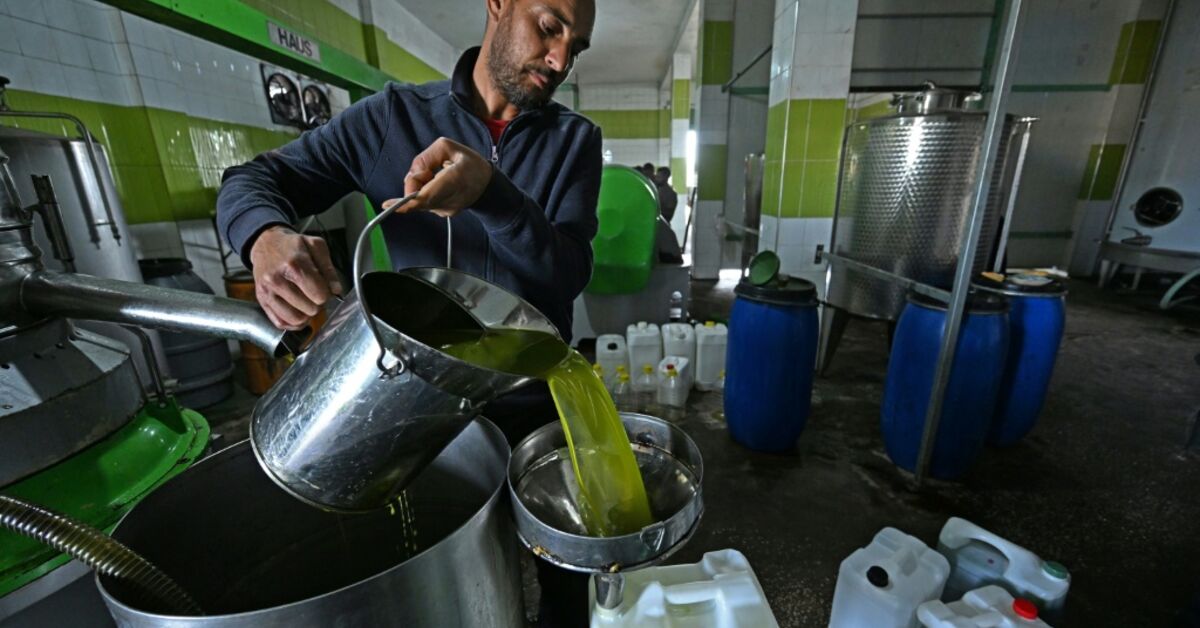
Tunisia's olive oil exports rose nearly 50 percent, official figures showed on Wednesday, after a bumper harvest that made it the world's second biggest producer after Spain. Exports jumped 47.7 percent to 413,100 tonnes during the season that ended in October, earning revenues of $1.7 billion, the National Agricultural Observatory said. Tunisia produced more than 500,000 tonnes of olive oil this season, a five-year record. Agriculture accounts for 10 percent of the…

Read at Al-Monitor

South China Morning Post Biman Mukherji Geopolitics

How low tech exposure turned India into a haven during Asia’s chip sell-off

India is emerging as an unlikely winner in Asia’s artificial intelligence-driven market rout following the Nvidia fallout, as tighter US chip curbs and falling oil prices steer investors towards Indian equities – even as observers question how long the rally will last. The boost to India’s markets comes after a two-year hiatus, with global investors shifting capital towards non-AI sectors and crude oil prices dipping since the US midterm elections eased fears of an…

Read at South China Morning Post

Al-Monitor

Iran attacks US bases in Gulf countries despite diplomatic efforts

By Enas Alashray Nov 18 (Reuters) - Gulf countries said on Wednesday they intercepted missiles and drones from Iran and its Houthi allies in Yemen, after the United States had struckQeshm Island in the Strait of Hormuz in an uptick of hostilities despite efforts to end the nine-month-old war. The back-and-forth attacks were a reminder of the hurdles facingdiplomatic efforts to end a war that has destabilised the Middle East, pushed up global energy prices and helped fuel the…

Read at Al-Monitor

The Guardian World Richard Partington Senior economics correspondent

UK inflation rises to 3.6% as energy prices increase

October annual rate piles pressure on households as Iran war pushes up oil cost and rattles global economy Business live – latest updates Inflation in the UK rose to 3.6% in October amid an increase in energy prices triggered by the war in the Middle East. Figures from the Office for National Statistics show the headline rate of inflation as measured by the consumer prices index rose from 3.5% in September. City economists had forecast a reading of 3.6%.

Read at The Guardian World

The Guardian World Maya Yang

First responders describe rescue efforts after New Orleans boat crash: ‘we have to save each other’

More than 100 people were pulled from the Mississippi River in mission being hailed as ‘Mississippi miracle’ Mariners and first responders who took part in the so-called “Mississippi miracle” rescue mission, which saw around 100 people pulled from the water after a tanker collided with a cruise ship, have said they are thankful “everything came out alright”. The collision on Friday between the Atlantic Asphalt tanker and the American Heritage riverboat saw more than 30…

Read at The Guardian World

Tehran Times (Iranian state-aligned) 2 publishers

Iran strikes US radar system in Bahrain as Iran downs more drones

TEHRAN- The Islamic Revolution Guards Corps (IRGC) has announced the destruction of a US radar system at Sheikh Isa Air Base in Bahrain, while Iranian forces have intercepted and captured additional US drones in separate operations. Meanwhile, two separate maritime incidents involving tankers have been reported in the Persian Gulf and the Strait of Hormuz, amid heightened tensions in the strategic waterway.

Read at Tehran Times (Iranian state-aligned)

Also at South China Morning Post

Older stories