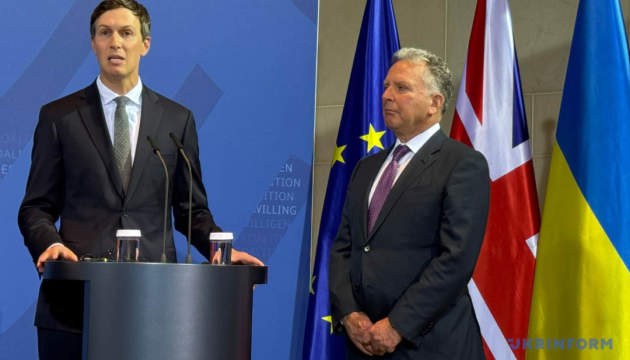
Kushner: Trump open to NATO-like security guarantees for Ukraine
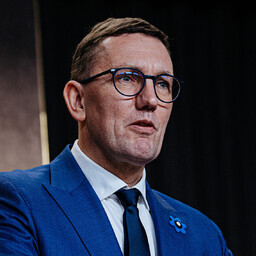
US President Donald Trump is open to offering NATO-like security guarantees to Ukraine, envoy Jared Kushner has said.
Also at The Guardian Russia, Kyiv Post, Ukrinform
Geopolitics and security buffer zones since Russia's full-scale invasion of Ukraine in 2022: NATO's eastern flank, the Baltic and Nordic states, Poland, Belarus, Moldova, the Black Sea, Georgia and the South Caucasus, Central Asia, the Western Balkans and the Arctic, from CEPA, regional public broadcasters, the defence press and the Guardian. Kept for a year as an archive.
638 news articles and 205 research items in this section, back to 25 November 2025. Browse the news ↓ Research ↓
44 stories from 26 publishers in the last 24 hours, 294 from 46 this week; 13 stories were covered by more than one newsroom.
US President Donald Trump is open to offering NATO-like security guarantees to Ukraine, envoy Jared Kushner has said.
Also at The Guardian Russia, Kyiv Post, Ukrinform
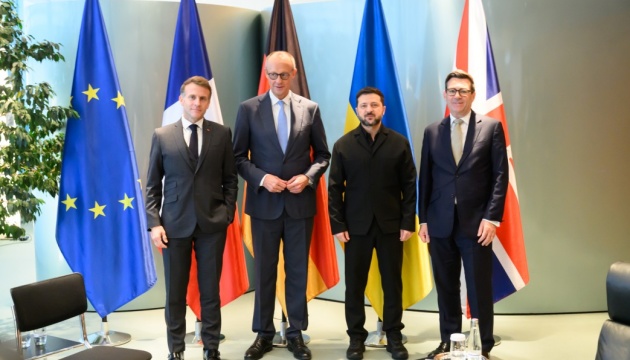
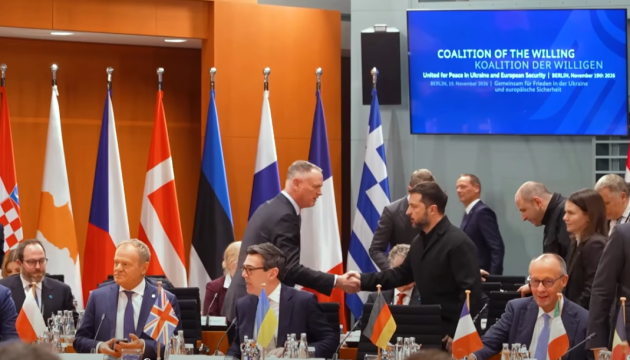
Following their summit in Berlin, the leaders of the Coalition of the Willing called on Russia to agree to an energy truce for the winter and a ceasefire to ensure food exports from the Black Sea region.
Also at The Kyiv Independent
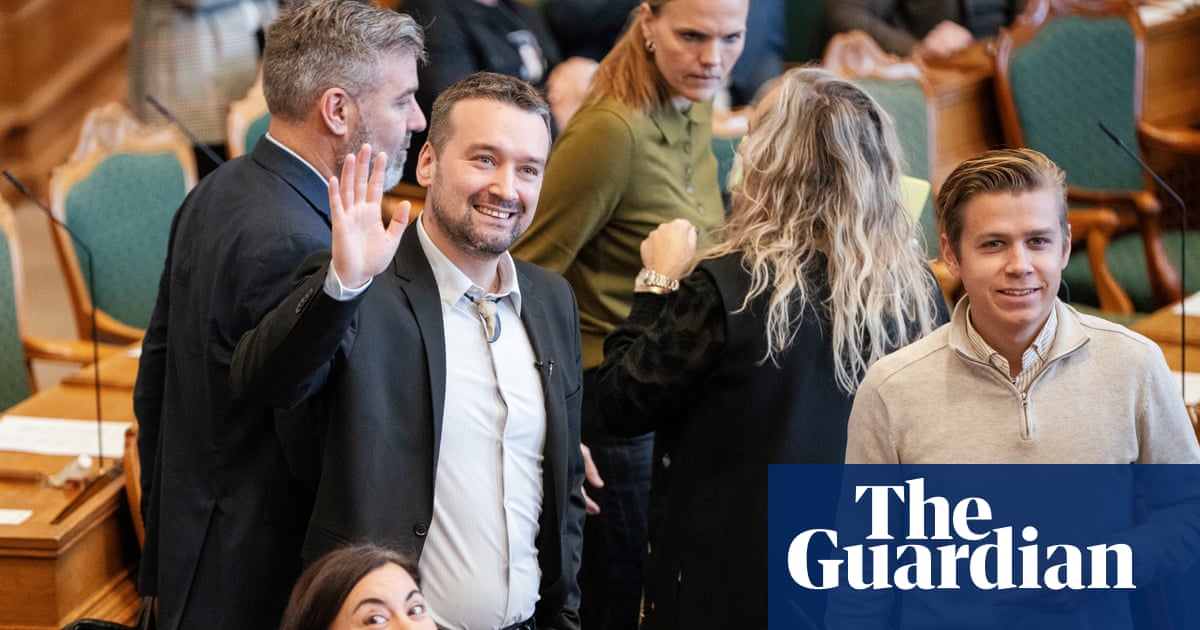
Danish foreign minister says deal ‘removes all uncertainty’ over territory but warns trust in US needs rebuilding Europe live – latest updates The Danish parliament has unanimously approved a new…
Also at South China Morning Post
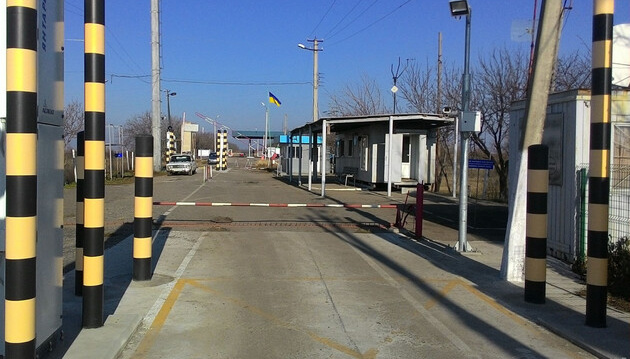
Moldova temporarily closed six border crossing points with Ukraine on November 17 after Russian drones violated its airspace.
Also at Ukrainska Pravda
Most mentioned in Geopolitics and security buffer zones since Ukraine 2022 headlines, last 3 days: Ukraine 32Russia 27Russian 18security 11Border 11Finland 10Lithuania 10Poland 8Talks 8Sweden 7
Most active this week: ERR News (Estonian public broadcaster) (35), Ukrainska Pravda (29), Ukrinform (28), Kyiv Post (23). Built automatically from headlines; the top items are the stories the most newsrooms covered in the last three days.
Europe's eastern buffer zone hardens: Poland and Ukraine trade jets for drones, the Baltics and Moldova cut Russian links, and the Black Sea gets a security hub while talks go on in Abu Dhabi.
The belt of states between Russia and NATO is at the centre of this week's geopolitics. As the US-mediated talks in Abu Dhabi discuss security guarantees, Rubio says guarantees must also be acceptable to Russia, Lithuania insists Moscow have no say over NATO deployments, and Zelensky says Ukraine cannot trade Donbas for guarantees. Poland will send two MiG-29s to Ukraine in exchange for drone technology, and the two set up joint drone working groups. Moldova is moving to full alignment with EU sanctions, and Lithuania tightened checks on Russian grain. In the Black Sea, EU pledges reached €70 million after deadly drone strikes on ships, and a security hub will open in 2027. Serbia, Georgia and Armenia show Russia's remaining reach, and Russian hybrid attacks are rising from Poland to the High North.
Before February 2022, the states between Russia and NATO were often described as a buffer: neutral or semi-aligned countries whose ambiguity was supposed to reduce the risk of direct confrontation. Russia's full-scale invasion of Ukraine destroyed that logic. This week's news shows the result clearly. Poland will transfer two MiG-29s to Ukraine in exchange for drone technology 9 and the two countries are creating joint working groups on drones and counter-drone systems 5. Estonia is expanding its military academy 22, and Lithuania insists that Russia must have no say over NATO deployments while the Abu Dhabi talks are under way 30. The former buffer has become a forward defence line, organised around arms production, intelligence sharing and military education rather than neutrality.
The conceptual point is that buffer zones only work when both great powers accept them and when the buffer states themselves see neutrality as safe. After 2022, most of the states concerned concluded that ambiguity invited aggression rather than preventing it. Their choice was not to stay between blocs but to join one as firmly as possible.
Alignment is not only military. Moldova is preparing full alignment with EU sanctions on Russia and Belarus 14, a step that ties its legal and economic system to Brussels. Lithuania has tightened checks on Russian grain transit 19, treating trade flows as a security issue. These measures show that the new frontier is built from customs rules, banking supervision and sanctions law as much as from tanks. Each step reduces Moscow's ability to use trade dependence as leverage.
The costs fall unevenly. Serbia's regulators shut down Alta Bank, the go-to bank for Russian exiles, costing many their savings 625, while a Serbian company reportedly supplied Russia with €27 million of machine tools for missiles and aircraft 12. Serbia illustrates the states that still hedge, trying to keep economic ties with Russia while moving towards the EU. Its contradictory behaviour is a reminder that the buffer has not disappeared everywhere; it has shrunk to the places where governments still believe they can profit from ambiguity.
The Black Sea remains the most dangerous part of the zone. Drone strikes on ships have left 34 people dead or missing, and EU pledges for Black Sea security reached €70 million 17. An EU-backed security hub is planned to start in 2027 18, and India is trying to broker a food corridor 16. These moves show that the sea is being treated as a shared European security problem, not only a Ukrainian one, and that non-Western powers such as India want a role in managing it.
In the South Caucasus the picture is more fluid. A Russian official praised Georgian Dream for having 'prevented a coup' in 2024 26, which signals Moscow's view of Georgia's government as friendly. In Armenia, Russian soldiers are accused of assaulting a Ukrainian man 29, a small incident that feeds a larger argument about whether Russian bases there protect Armenia or constrain it. Here the buffer still exists, but it is contested from within: domestic politics decides which way each state leans.
The frontline is also invisible. Russian hackers compromised government email servers to steal NATO and EU correspondence 21, Poland arrested two Ukrainians suspected of spying and sabotage for Russia 227, and the Atlantic Council reports a surge in suspected Russian hybrid warfare incidents across Europe 31. CEPA argues that the High North is becoming a contest for NATO because hybrid tactics, from cable cutting to GPS jamming, are hard to attribute and easy to deny 34.
Hybrid operations matter because they test the cohesion of the frontline states without crossing the threshold of open war. They aim to raise the domestic cost of supporting Ukraine and to show that membership of NATO and the EU does not guarantee safety. The response so far has been more surveillance, more prosecutions and more preparedness exercises 23, which in turn deepen the securitisation of everyday infrastructure such as data centres and undersea cables 3338.
The US-mediated talks in Abu Dhabi put the future of the zone on the table. They covered prisoners, security guarantees and the postwar order 113. Rubio said that any guarantees for Ukraine must also be acceptable to Russia 7, while Zelensky explained why Ukraine cannot trade Donbas for guarantees 24. This is the heart of the buffer question: if guarantees require Russian consent, Moscow gains a veto over the security arrangements of its neighbours, which is exactly what Lithuania and others reject 30.
A security-dilemma reading suggests that Russia sees Western guarantees as threatening and will demand restraint in return. A balance-of-threat reading suggests the opposite: the frontline states will keep arming because they judge Russian intentions, not only capabilities. The evidence of this week, from jet-for-drone swaps to sanctions alignment, supports the second reading. Whatever the talks produce, the states of the former buffer are unlikely to return to neutrality.
Written by Claude (Anthropic), based on 39 recent headlines and excerpts in this section, Nov 11. AI analysis can misread or miss things: the numbers link to the original reporting, which is the authority.
Journal articles, academic blogs, think-tank reports and papers, kept apart from the news below.
Russia has a taste for attacking energy facilities. Norway’s gas infrastructure is central to Europe’s economy, and it looks extremely vulnerable.
Alia Brahimi and Alexander Kolyandr discuss the “one-shot” mercenaries Russia employs for its shadow war in Europe.
The 2027 Ukraine Recovery Conference in Tallinn is an opportunity to turn this event from a one-off series of signing ceremonies into a substantive discussion of Ukraine’s future, writes Luke Zahner.
China was the big winner of the new trade era, and that soon caused a flood of red ink for European businesses.
For much of the 2000s, the romance between China and the West blossomed. But the 2008 financial crisis changed Beijing’s thinking.
ASML, Europe’s leading tech company, could face renewed US pressure to cut sales to China.
A security camera near Chmielek filmed a flash behind the roofs as sirens sounded in Lublin. An object later burned in a field nearby.
Judge Lauri Madise was nominated Thursday as Estonia's candidate for the Court of Justice, the European Union's highest court.
Military officials are verifying radar readings after sirens sounded in two eastern border regions and authorities warned residents of a potential strike
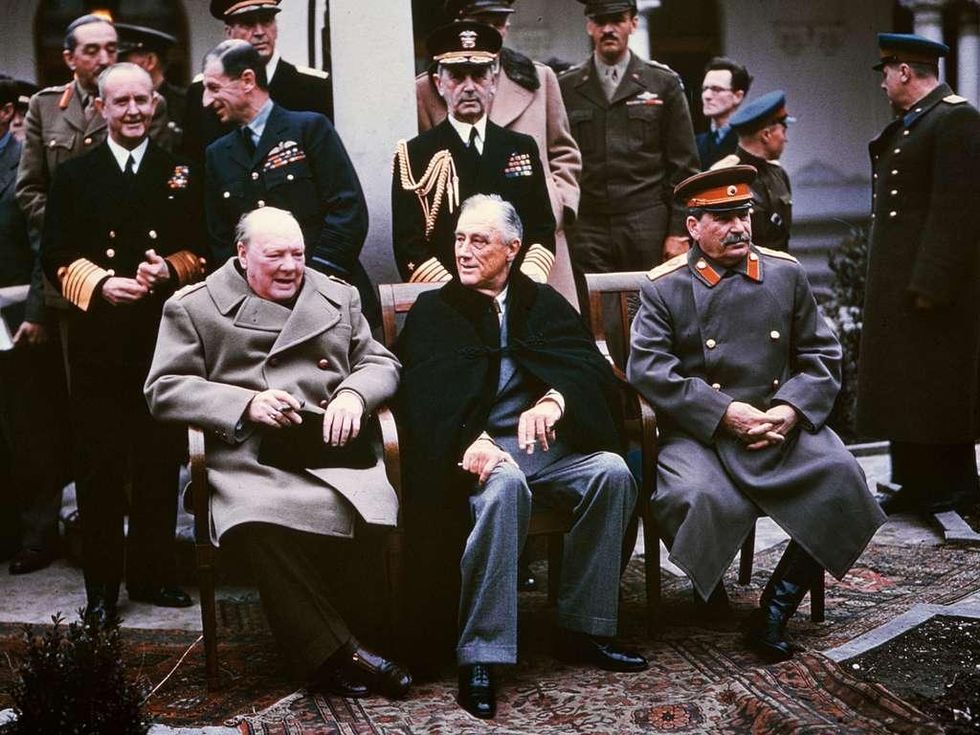
Representatives of the transatlantic establishment were quick to liken the trilateral summit in Shenzhen to the supposed Anglo-American “betrayal” of Poland and other Eastern European states at Yalta in February 1945. Yalta ratified — but did not create — the division of Europe into spheres of influence that later became frozen into the dividing lines of the Cold War. A less apoplectic strain of the same underlying sentiment holds that President Trump’s willingness to meet…
Following their summit in Berlin, the leaders of the Coalition of the Willing called on Russia to agree to an energy truce for the winter and a ceasefire to ensure food exports from the Black Sea region.
Also at The Kyiv Independent
US President Donald Trump is open to offering NATO-like security guarantees to Ukraine, envoy Jared Kushner has said.
Also at The Guardian Russia, Kyiv Post, Ukrinform
The diversity of energy sources, including nuclear and hydropower generation, has strengthened Ukraine's energy security amid Russian attacks, and Sweden is looking to deepen cooperation while drawing lessons from Ukraine's experience.
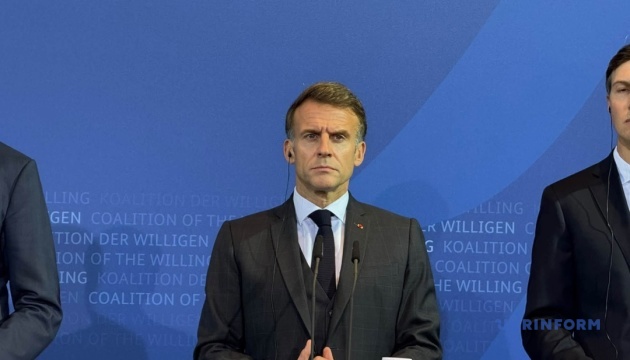
French President Emmanuel Macron called for renewed discussions on Ukraine’s NATO membership, citing Russia’s maximalist demands and Ukraine’s growing military strength. Speaking after the Berlin summit, he urged immediate air defense support and backed European involvement in peace negotiations.
At a Coalition of the Willing meeting in Berlin, President Volodymyr Zelenskyy outlined proposals for accelerating EU integration and establishing security guarantees, while Emmanuel Macron stressed the need for a strong Ukrainian army.
Ukrainian President Volodymyr Zelenskyy met Steve Witkoff, Jared Kushner and European national security advisers on 19 November to discuss security guarantees and closer coordination between Kyiv, Washington and Europe.
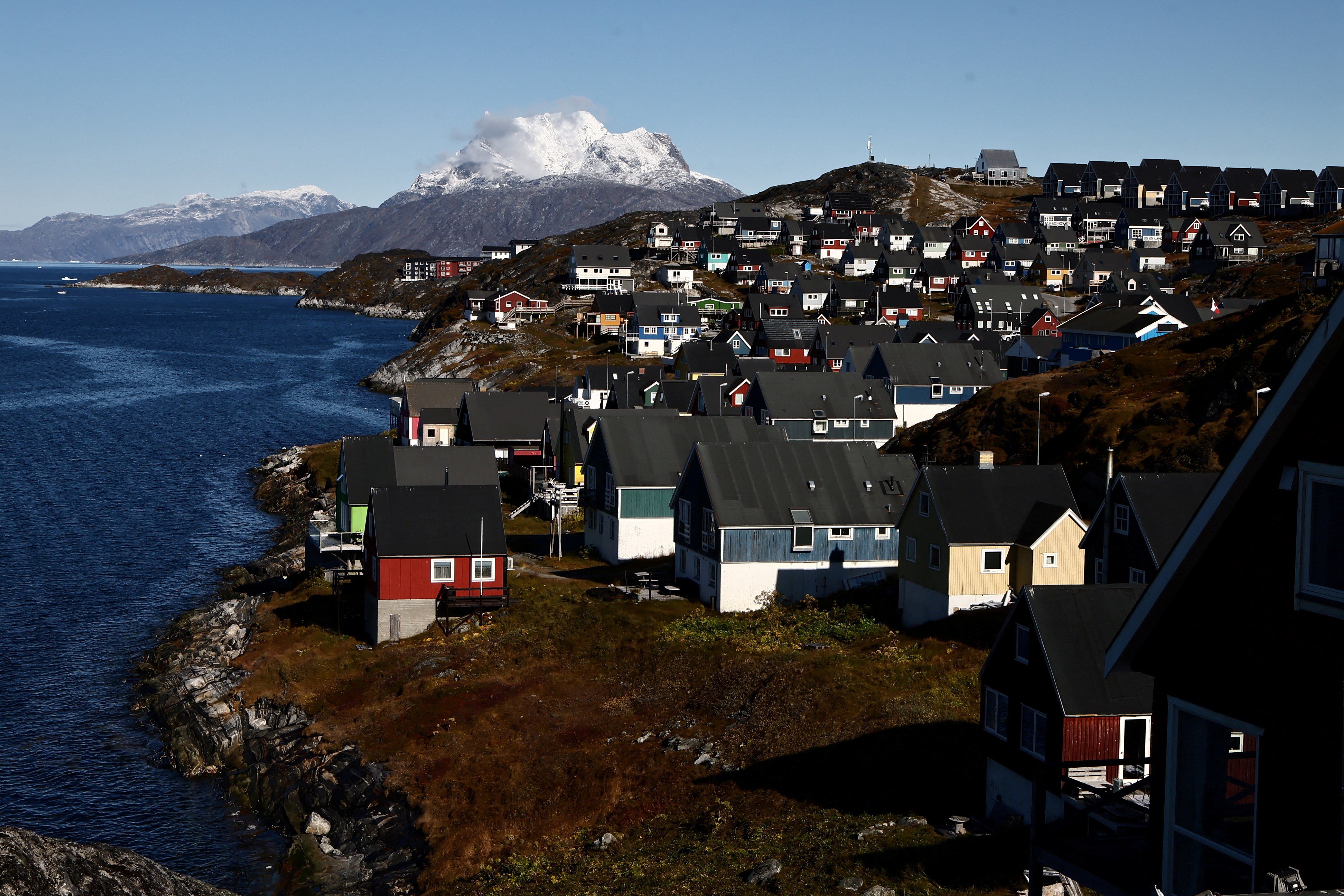
Denmark's parliament unanimously ratified a security agreement with the United States on Greenland on Thursday, hoping to end a standoff over the Arctic island's future.
Polish Foreign Minister Radosław Sikorski urged Elon Musk to stop “mouthing Russian propaganda” after the SpaceX CEO falsely claimed at The New York Times DealBook Summit that the US staged a coup in Ukraine in 2014. Musk was likely referring to the Maidan protests, a grassroots movement the Kremlin has framed as Western-backed. Musk also accused Zelensky of lying about Starshield disruptions and claimed Ukraine’s front would collapse without Starlink.
U.S. President Donald Trump’s son-in-law Jared Kushner has said that talks with Ukraine and European partners have made progress on future security guarantees, Ukraine’s accession to the EU, and a postwar reconstruction plan.
French President Emmanuel Macron has said that peace negotiations should involve Ukraine, Russia, the United States, and Europe. He also called for revisiting the question of Ukraine’s NATO membership as part of long-term European security.
The exercise didn’t involve actual nuclear weapons and was not directed at any country, the defense ministries said.
Latvian Foreign Minister Girts Jaunzems has said that Latvian diplomats will carry on their work in Ukraine despite Russian strikes on diplomatic missions in Ukrainian cities.
Speaking in Berlin after Coalition of the Willing talks, Jared Kushner noted that Donald Trump may consider backing a wider security arrangement if it aligns with Washington's interests.
The Russian Foreign Ministry summoned Maarit Keitanen, Finland’s acting chargé d’affaires in Moscow, to lodge a “strong protest” over restrictions on entry for Russian athletes.
Entertaining Moscow's demands for talks on European security could make bargaining chips of the Baltics and Poland, Estonian Prime Minister Kristen Michal (Reform) has warned.
President of Ukraine Volodymyr Zelensky said that the key topics at today’s Coalition of the Willing meeting in Berlin include covering Ukraine’s budget needs, strengthening air defense, and a winter package of ballistic missile interceptors.
The Danish Parliament approved the U.S.-Greenland security deal this week, after pressure from President Trump to acquire the Arctic territory. The agreement, which Trump announced in September, will replace a previous deal signed between the U.S. and Denmark in 1951. It was approved by both the Danish and Greenlandic legislatures, according to a press release....
Discussions ahead of the Coalition of the Willing gathering focused on protecting Ukraine's energy grid, countering Russian strikes and coordinating allied security guarantees.
Hungary had been delaying the final approval needed to unlock the two so-called enlargement clusters, but without explicitly stating a reason.
New military satellites are part of a wider plan for Poland to earn a seat at the table with Europe’s major space players, senior Polish defense officials exclusively told Breaking Defense.
Defence and space spending will be as 'untouchable' as CAP and cohesion, Kubilius says
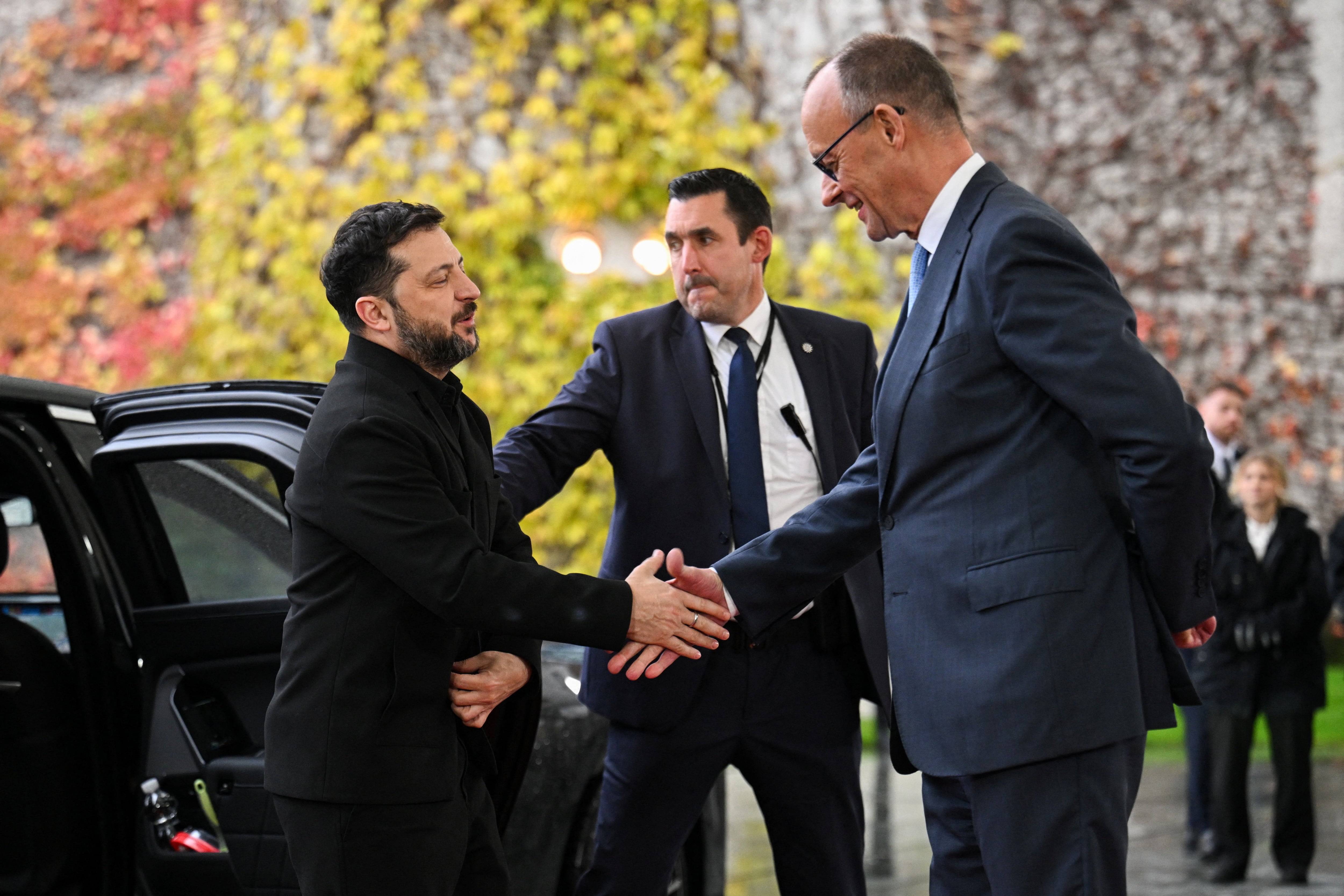
US President Donald Trump said he could work together with European leaders on Ukraine-Russia talks, his special envoy Jared Kushner said after a meeting in Berlin. “President Trump wants to make a deal with Europe by his side,” Mr Kushner said at a joint press conference with German, French, UK and Ukrainian leaders. Among them was Ukraine's President Volodymyr Zelenskyy, Germany's Chancellor Friedrich Merz, French President Emmanuel Macron and UK Prime Minister Andy…
George Zurabashvili, Georgia’s first deputy foreign minister, who has recently been appointed special representative for relations with Russia, met with Russian Deputy Foreign Minister Mikhail Galuzin in Minsk, Belarus, on November 19, in their first meeting under what Moscow described as a “resumed direct Russia-Georgia dialogue.” The post of a Special Representative was established as …
Poland has sought to position itself as a regional gas hub.
German Foreign Minister Wadephul has said the Coalition of the Willing meeting in Berlin sends a clear message to Moscow to take peace talks seriously. He also warned Ukraine should be prepared for peace talks to fail.