Can Washington Afford to Deter Chinese Cyber Activity?
Costly signaling to Beijing could hurt the U.S. economy.
International relations and great-power strategic competition: the United States, China and Russia in rivalry and cooperation, alliances and alignments, trade and technology wars, arms control and a multipolar world, from Foreign Affairs, Foreign Policy, War on the Rocks, the Stimson Center, the defence press and Asian, African and Middle Eastern newsrooms. Kept for a year as an archive.
Costly signaling to Beijing could hurt the U.S. economy.
The narrative surrounding the Ukraine war often marks its beginning on February 24, 2022, when Russia launched its full-scale invasion. But the rivalries and political decisions that brought the two countries into conflict stretch back centuries. The start of the Cold War, meanwhile, was the beginning of sustained US efforts to further antagonize Ukraine’s relationship
A 2,000-meter runway in Ban Keun, situated about 50 kilometers north of the Lao capital of Vientiane, is an unlikely location for US-China great-power rivalry. Yet it may become one of the most revealing markers of China’s strategic ambitions in Southeast Asia. On September 29, China and Laos opened the China-Laos Joint Support and Training
As talks are due to recommence, Russia has continued with deadly strikes
Faced with an emerging multipolar order, the United States appears to be relying less on dominance of every frontier technology than on leveraging its influence over the world’s most finite and strategically vital commodities: oil and gas. Control, disruption or the credible threat of disruption to global energy supplies has become Washington’s principal instrument for
Two Chinese men who admitted trying to recruit US military service members to spy for Beijing were imprisoned in California on Friday. Liren Lai and Yuance Chen were ordered to serve 30 months in a federal lockup and to undergo three years of supervised release after pleading guilty to acting on the orders of China’s
The Belt and Road Initiative is over ten years old now, and in Pakistan, there’s less to show than what each side promised in the 2010s. Midway through the next decade, what will come of the lofty ambitions of each growing nation?
President Trump’s efforts to maintain stable U.S.-China relations face resistance from anti-China hawks within his own party. Despite positive developments from recent bilateral summits, disagreements over Taiwan, nuclear weapons, and China’s growing global influence raise questions about whether
Dream found that a suspected Chinese-nexus actor gained root access to Palo Alto Network firewall servers to target government organizations
Pentagon officials have urged several NATO allies in recent weeks to tone down their public rhetoric about the threat posed by Russia, arguing that some statements by European leaders and officials, including in the Baltics, have undermined the continent’s security, Reuters reported Friday.
Fears of continent being sidelined in Ukraine peace negotiations prompt disjointed outreach to Vladimir Putin
Beijing has vowed to defend its firms after Washington blocked imports from China’s leading genomics group, extending the two countries’ trade war into biotechnology weeks before their leaders are due to meet in Shenzhen. The US Department of Homeland Security (DHS) on Wednesday added three Shenzhen-based companies to the Uyghur Forced Labor Prevention Act (UFLPA)
Spy accused of exploiting Trump ties to Huang, funneling secrets to China.
A top executive of a Singapore AI cloud company that was accused of illegally selling Nvidia chips to China could also have been a Chinese spy, sources have told the New York Times.
Luiz Inacio Lula da Silva’s re-election on October 25 may have frustrated Donald Trump’s ambitions in Latin America, but the more consequential story lies beyond the ballot box on China. Brazil’s relationship with Beijing is now so deeply embedded in its economy that even a president more sympathetic to Washington would struggle to unwind it.
US Ambassador Ronald Johnson said on 28 October that China would gain from a chaotic, insecure Mexico. He named no firm and announced no measure.
This article first appeared on Pacific Forum and is republished with kind permission. Read the original here. With so much media focus in recent months on the war in Iran, it’s no surprise that Under Secretary of War for Policy Elbridge Colby’s speech in Manila received so little coverage. That means very few know what
If ever enacted, proposals by Marine Le Pen and the AfD leader, Alice Weidel, to hollow out EU institutions would be a continental act of self-harm Following the Brexit referendum in 2016, Marine Le Pen was in a predictably celebratory mood. Britain’s vote to leave the European Union, she told one interviewer, was the first breach in the “Brussels Wall”. Ms Le Pen’s Front National party was at that point committed to taking France down the same path, given the chance. But as…
Venture funding to robotics startups has soared in 2026, with the bulk of investment going to companies based in China and the U.S., Crunchbase data shows. All told, global venture funding to robotics startups totaled $9.9 billion in Q3, more than double the $4.3 billion invested in Q3 2025, per Crunchbase data.
China accused the United States on Monday of “targeted smearing” over Washington’s designation of Beijing-funded Confucius Institute cultural centres as national security threats. Washington considers the centres on American university campuses as propaganda tools of the Chinese Communist Party and has imposed funding restrictions on the institutes since 2025. US Defense Secretary Pete Hegseth said
The US Department of Defense has designated Confucius Institutes, Chinese-funded cultural centers on American university campuses, a threat to US national security, Defense Secretary Pete Hegseth said Friday. Washington considers the centers to be propaganda tools of the Chinese Communist Party, and has taken steps to shut them down. Hegseth said the Defense Department took
Chile's central bank renewed its currency swap with China's central bank for five years on 23 October. The precautionary line is worth about US$7.5 billion.
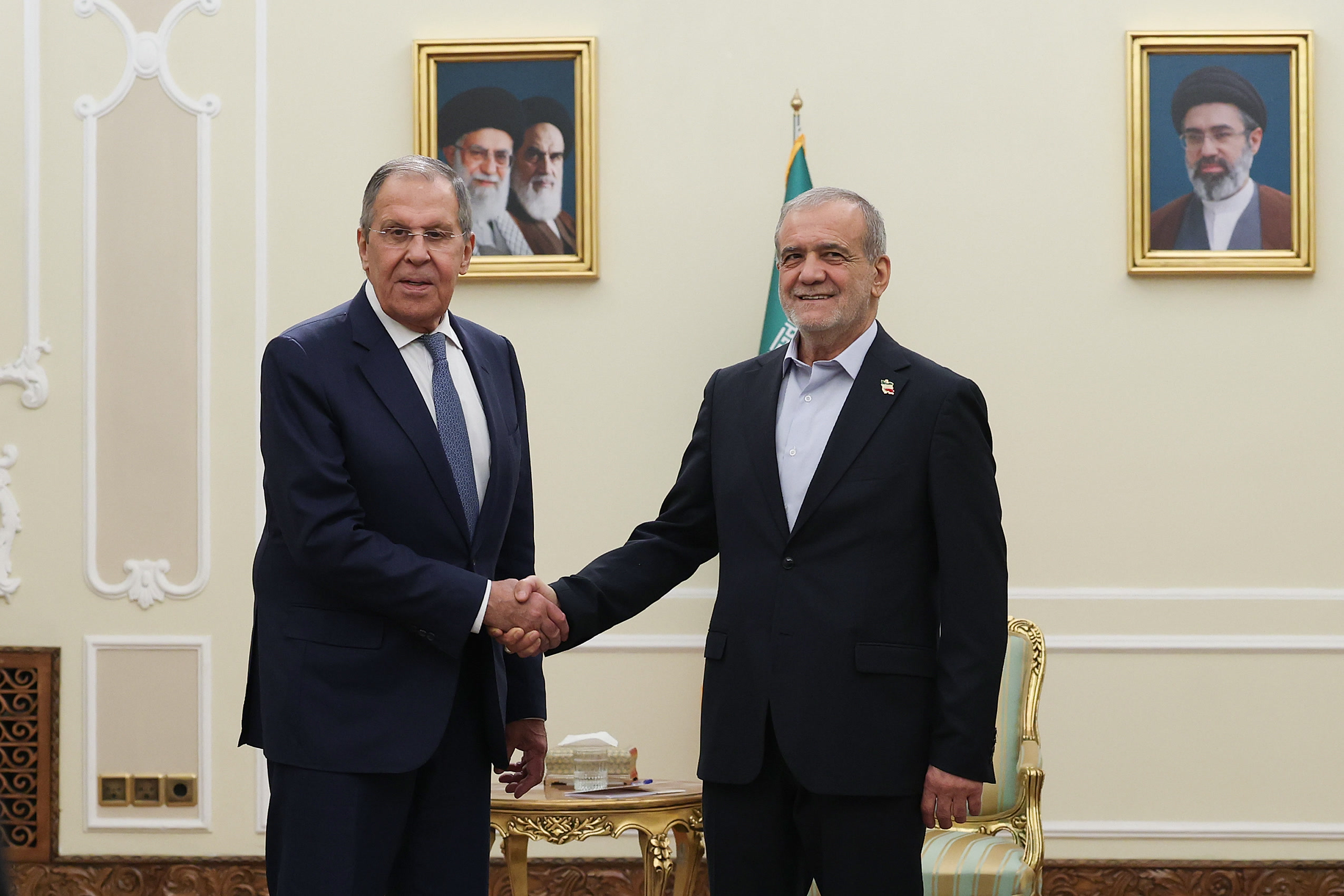
The story: Russian Foreign Minister Sergey Lavrov has traveled to Tehran, his first trip to Iran since the start of the Israeli-US war on the Islamic Republic. The chief diplomat offered Moscow's help in brokering a diplomatic resolution to the conflict, alongside a pledge to continue economic and nuclear cooperation with Iran. The visit comes as Russia seeks a key role, alongside China and Iran, in shaping a new regional order. The coverage: Lavrov held a joint press…
Brazil's National Treasury is pitching a 5 billion yuan (about US$747 million) debut bond to investors in China, and the sale could follow the 25 October vote.
Talks in Oslo made ‘meaningful progress’ toward engaging Russia, a US official said. What we know on day 1,701 US envoy Steve Witkoff will meet Russian president Vladimir Putin on Wednesday after what a US official called “constructive” talks with Ukrainian president Volodymyr Zelenskyy in Norway. The US official said Ukraine brought forward new ideas and proposals to the Oslo talks, which also involved the leaders of Norway and Finland and European and Nato…
The U.S. has ordered federal civilian agencies to remove DeepSeek products and third-party services built using its technology, citing national security concerns.
(1st UPDATE) A Philippine military spokesperson says the US ship 'did not trespass into "Chinese territory,"' adding that no nation has the authority to require prior permission for 'lawful transit through international waters'
Washington’s lifting of sanctions on the Bosnian Serb leader left him free to pursue closer ties to Russia without restrictions – effectively giving Moscow veto powers over Bosnia and Herzegovina’s future.
The US government on Monday ordered its agencies to stop using artificial intelligence tools from Chinese startup DeepSeek, as the countries race for dominance in the fast-moving sector. A notice from the Department of Homeland Security announced the ban on products developed by DeepSeek — and tools created using DeepSeek by third parties — saying
U.S. President Donald Trump said on Monday he is open to three-way arms-control talks with the leaders of China and Russia as soon as next month, raising the prospect of an unprecedented meeting and a major diplomatic gambit for the U.S. president.