Venezuela faces a deepening energy crisis as protests grow
Venezuela’s worsening electricity crisis is disrupting daily life, pushing frustrated residents into the streets as prolonged blackouts expose the fragility of the country’s power grid.
Sixteen standalone research topics in international relations and comparative politics, each narrower than a news section: from buffer zones and great-power competition to Viet Nam's diplomacy, grey-zone coercion at sea, the technology rivalry, nuclear weapons, drone warfare, jihadist insurgencies, organised crime, women's rights, Taiwan, oil chokepoints and the Global South. Each topic has news, journal articles and an essay; pick one from the list on the left. This page gathers the stories from all of them. Kept for a year as an archive.
Venezuela’s worsening electricity crisis is disrupting daily life, pushing frustrated residents into the streets as prolonged blackouts expose the fragility of the country’s power grid.
Robert Kuzovkov (who went by the name of Semyon Skrepetsky) was shot dead near his home in Poland this year.
The new online repository, cubabloqueo.com, links data from Cuba’s 2026 report to specific impacts—such as those affecting access to medicines, fuel, water, and resources for schools
The Foreign Minister explained the new conditions surrounding the upcoming UN discussion on the resolution calling for an end to the blockade
The Ministry of Foreign Affairs reiterates Cuba's firm commitment against mercenary spirit, as well as its willingness to evaluate avenues for cooperation, in accordance with national legislation and international obligations, to prevent, confront and punish this serious crime in all its manifestations
Polish-Indian relations are "gaining speed", said Narendra Modi.
Europe’s leaders can no longer trust a word that comes out of Washington. No more slaps on the wrist – we need concrete steps to punish Trump Historical comparisons are always inexact. No one conflict precisely mirrors another. Yet Donald Trump’s shameless appeasement of Vladimir Putin carries more than a noxious whiff of Neville Chamberlain’s failed attempt in Munich in 1938 to head off war with Nazi Germany. To be fair to the former UK prime minister – and history largely…
A far-right win in the country’s presidential election would open the door to U.S. military activity on Brazilian soil.
Polls suggest deadlock between Netanyahu and Zionist opposition parties ahead of Israel’s election, with neither set to secure enough seats to form a government. Yet opposition leaders have rejected the idea of allying with an Arab party to achieve victory. Mansour Abbas is trying to change their minds.
Aleksandar Vucic’s Serbian Progressive Party is facing anti-establishment sentiments and demographic pressure on its ageing nationalist base in this weekend’s elections – similar to the dynamics that ousted Viktor Orban’s government in Hungary.
Romania's state arms industry is supposed to help defend NATO's eastern flank. Instead, politically connected and corrupt managers, wasted funds, and poor security have left several of its factories barely functioning.
While a court in Bosnia and Herzegovina has sentenced 13 people to a combined total of more than 180 years in prison for the killing of Bosniak civilians in two villages during the 1992-95 war, the acquittal of two others by a court in Belgrade has raised further doubts about the merit of transferring war crimes cases from Sarajevo to Belgrade.
Taiwan has been waiting months for US President Donald Trump to approve a $14 billion sale of weapons and equipment, which the island democracy would use to fend off a potential Chinese attack. Washington — Taipei’s most important security backer — has sold many billions of dollars’ worth of arms to Taiwan, most recently in
Last month, Manila accused Beijing of obstructing a similar mission to resupply troops stationed aboard a grounded warship on the shoal.
Five people in Taiwan were charged on Wednesday for allegedly attacking a Taiwanese stand-up comedian after he criticised the Chinese Communist Party, prosecutors said. Taiwan has accused China of growing transnational repression targeting critics on the island, which Beijing claims is part of its territory and has threatened to use force to bring it under
In collaboration with prominent Iranian academic and scholar Dr. Hamidreza Azizi, Amwaj.media endeavors to publish daily situation reports on the Iran War on Mondays-Fridays. The focus will be on Iranian strategic narratives. The economy-related dimensions Iranian tankers carrying crude destined for China continue to pass through the Strait of Hormuz even as the waterway remains effectively...
Brazil's National Treasury is pitching a 5 billion yuan (about US$747 million) debut bond to investors in China, and the sale could follow the 25 October vote.
The Syrian man had been seeking 50,000 zloty (€11,500) in compensation.
In 1993, as Cuba was enduring the darkest moment of the "Special Period"—with its economy in collapse and its adversaries betting on the imminent fall of the Revolution—Fidel Castro uttered a phrase that many interpreted as a rallying cry: "Culture is the first thing that must be saved." He spoke these words before the 5th Congress of the Union of Writers and Artists of Cuba
The blockade is a form of collective punishment that defies simple description; it has reached record-breaking levels, and its impact on daily life is becoming increasingly dire
The First Secretary of the Central Committee of the Communist Party of Cuba and President of the Republic, Miguel Díaz-Canel Bermúdez, denounced—during the third broadcast of Criterio Compartido (Shared Views) on Radio Rebelde—the diplomatic pressure exerted by the United States to secure changes in votes, abstentions, or absences during the upcoming UN vote on October 28th
This Tuesday was no ordinary day; it was October 20th—Cuban Culture Day. To mark the occasion, a meeting took place in the Portocarrero Hall of the Palace of the Revolution between the country’s leadership and a group of figures from the island’s cultural sphere. The event was presided over by the First Secretary of the Central Committee of the Communist Party of Cuba, Miguel Díaz-Canel Bermúdez
A drone attack struck Amiet market, north of Abyei town, killing at least 150 people and causing extensive damage to property, according to local officials. An Abyei government minister and South Sudan's foreign ministry blamed Sudan’s military for the attack. Monday's strike is the latest in a wave of deadly air assaults. On Sunday, a drone strike killed 80 people near a market in West Kordofan state Drone strike kills more than 150 at market in Sudanese war
Measures would remove some penalties for those helping women access abortion but are ‘small-scale step’, say campaigners Poland’s lower house of parliament has approved two bills aimed at loosening a near-total ban on abortions, in what campaigners have described as a “small-scale step” ahead of protests calling on the government to fulfil its promises to overhaul the country’s laws. The new measures, which are likely to be vetoed by Poland’s nationalist president, would…
Kosovo Serb Milorad Djokovic was sentenced by a Pristina court to 10 years in prison for war crimes related killings and beatings of civilians during a Serbian military assault on a village in 1999.
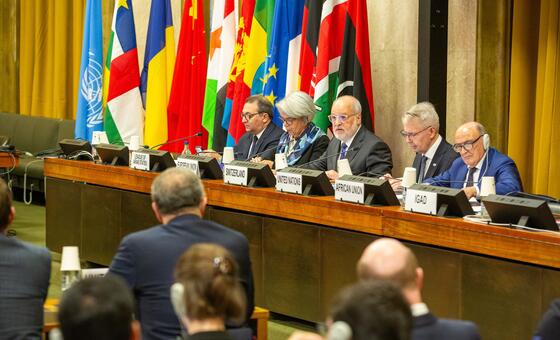
Talks to halt the fighting in Sudan and alleviate the humanitarian crisis there continued in Geneva on Wednesday, where nearly two dozen countries convened to discuss a pathway to a ceasefire and transition to peaceful governance that represents all Sudanese people.
"Glorifying criminal figures is contrary to European values," says the foreign ministry.
Taiwan’s intelligence agency said China has cranked up cyberattacks and the distribution of misleading information against the island democracy ahead of local elections next month. China claims Taiwan is part of its territory and has long threatened to use force to bring it under its control. Taipei, which rejects that claim, accuses China of using
Russia remains ready to aid its Balkan allies in their electoral endeavours and sabotage EU and NATO membership prospects, as Vladimir Putin’s recent efforts to boost Milorad Dodik and Aleksandar Vucic’s campaigns showed.
The prime minister says he doesn’t believe in Nato solidarity, even as Slovakia relies on its partners for military protection and continues its alliance commitments. So why is he using such damaging rhetoric?