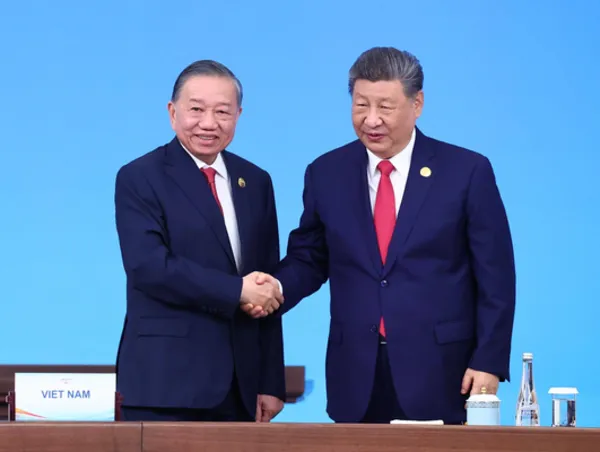
To Lam's state visit to Japan shows Viet Nam's bamboo diplomacy at work: deeper ties with a US ally, balanced by party links with China, Laos, Cambodia and the Japanese communists.
Viet Nam's diplomacy over the past two weeks centres on General Secretary and President To Lam's state visit to Japan. He addressed the Diet, met former prime ministers, governors and party leaders, named a special ambassador and pushed cooperation in technology, energy, human resources and trade. Japanese firms signed energy deals, backed a tungsten supplier with US investment and expanded airline and banking ties. At the same time, Hanoi kept its other relationships in balance: parliamentary cooperation with China, solidarity with Laos and Cambodia, and consultations with Venezuela. Analysts describe this as hedging backed by capability, as Viet Nam engages its neighbours and partners to avoid depending on any one power.
Essay
What 'bamboo diplomacy' means
Viet Nam's leaders describe their foreign policy as 'bamboo diplomacy': firm roots, a strong trunk and flexible branches. In practice it means independence and self-reliance, many partners, and the 'four noes': no military alliances, no siding with one country against another, no foreign bases, and no use or threat of force. Viet Nam has turned this into a dense network of comprehensive strategic partnerships, the highest tier of its diplomatic relations, which now includes China, the United States, Japan, Russia, India, South Korea, Australia and others.
This week's news shows the method. During his state visit to Japan, To Lam addressed the Diet 11, met former prime ministers 922 and leaders of other parties 10, and named a special ambassador 6. Each of these steps deepens ties with a close US ally without joining any alliance.
Japan as the ideal partner
Japan fits Viet Nam's strategy almost perfectly. It is a leading investor and lender, it shares concerns about China's behaviour in the South China Sea, and it does not ask Hanoi to choose sides. The deals of this visit point to Viet Nam's priorities: energy to meet surging power demand 24, high technology and electronics 5, skills and human resources 3, and critical minerals such as tungsten 1425. The tungsten case is telling: a Vietnamese supplier backed by a Japanese trading house and by US investment becomes part of a supply chain outside China's control.
For Japan, Viet Nam is a manufacturing base, a growing market, and a partner in balancing China. For Viet Nam, Japan offers capital and technology without the political conditions or security risks that come with closer ties to Washington or Beijing.
Keeping China close
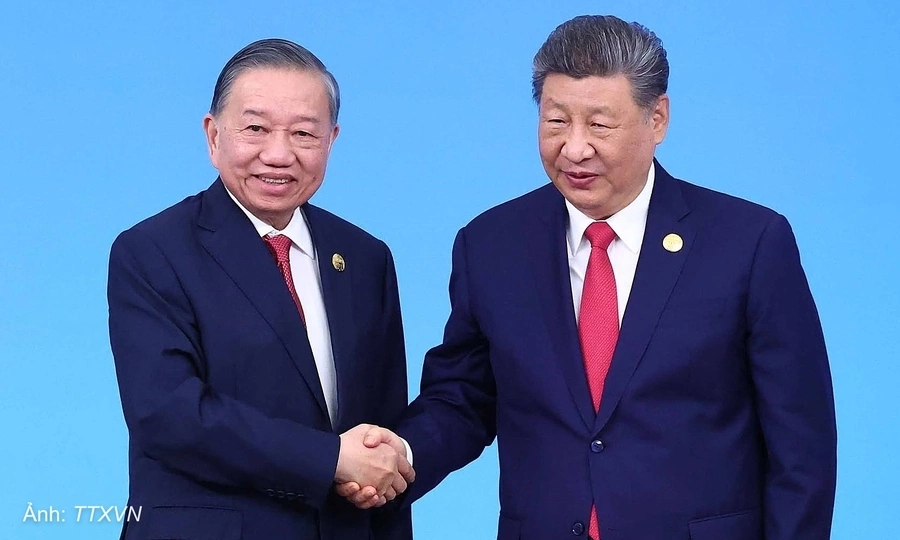
Hedging only works if relations with the strongest neighbour stay stable. While To Lam was in Tokyo, Hanoi and Beijing were looking to deepen parliamentary cooperation 18. Party-to-party links are a key channel: the Communist Party of Viet Nam shares ideology and an interest in regime stability with the Chinese Communist Party, which helps manage disputes, including those in the South China Sea. Viet Nam also maintains its 'special' relationship with Laos and Cambodia 15, countries where Chinese influence is strong.
Analysts describe Viet Nam engaging its neighbours to hedge against China's 'encircling power', as in its engagement around Ban Keun and beyond 31. The goal is not to confront China but to reduce the leverage that dependence would give it.
The United States and the limits of hedging
The US is now one of Viet Nam's comprehensive strategic partners and its largest export market. But US policy is less predictable. Tariffs and trade pressure push Hanoi to diversify, and commentators note that Viet Nam's other trade deals could erode Washington's gains 34. Research argues that Viet Nam's strategic autonomy is 'capability-backed': it relies on building its own economic and defence strength so it can say no to any partner 35.
Hedging has costs. It requires constant attention to signals from every capital, and it can look like ambiguity to partners who want commitment. If US–China rivalry hardens into blocs, the space for bamboo diplomacy will shrink.
What to watch
Three things will show whether the strategy keeps working. First, whether Japanese investment and technology transfer actually follow the visit 1624. Second, how Beijing reacts to Viet Nam's deeper ties with Japan and the US. Third, whether Viet Nam can turn its position in supply chains, from solar panels 33 to tungsten, into lasting bargaining power. Viet Nam's experience is an important case for other middle powers in Asia that want to benefit from great-power rivalry without becoming its victims.