Haiti police say 34 gang members killed in capital raid
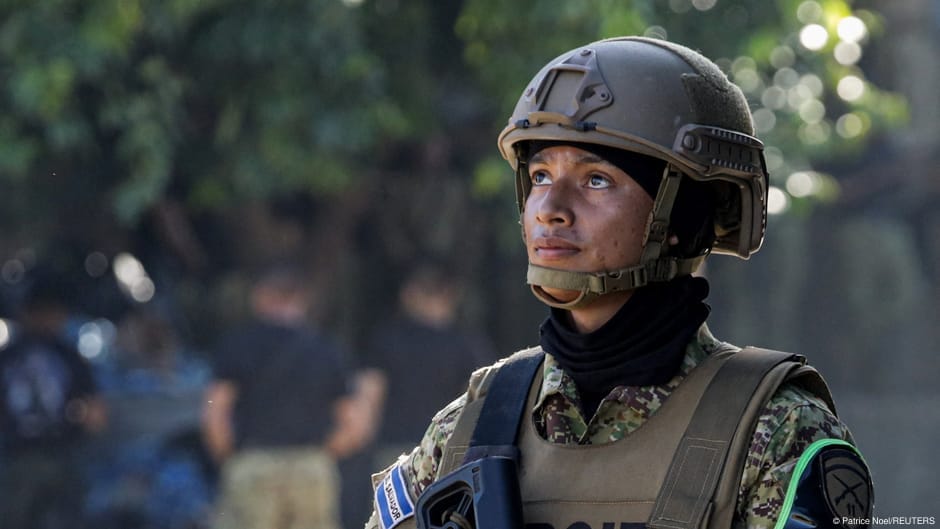
Haitian police say at least 34 gang members were killed in an operation in the capital city of Port-au-Prince.
Organised crime and the state in Latin America: cartels and gangs in Mexico, Ecuador, Colombia, Haiti and Central America, militarised responses from Bukele's prisons to naval raids, extortion economies and criminal governance, from the news and journal research. Kept for a year as an archive.
55 news articles and 78 research items in this section, back to 27 November 2025. Browse the news ↓ Research ↓
4 stories from 1 publisher in the last 24 hours, 25 from 16 this week.
Haitian police say at least 34 gang members were killed in an operation in the capital city of Port-au-Prince.
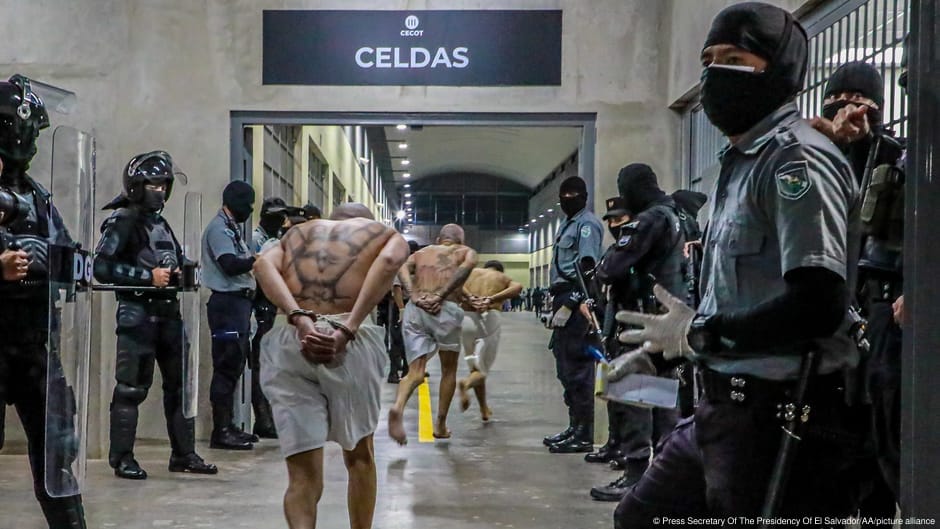
The Salvadoran president has won popularity through a crime crackdown that has granted the state enormous power.
Police say the raid targeted the Martissant area, located on a key route out of Port-au-Prince held by gangs since 2021.
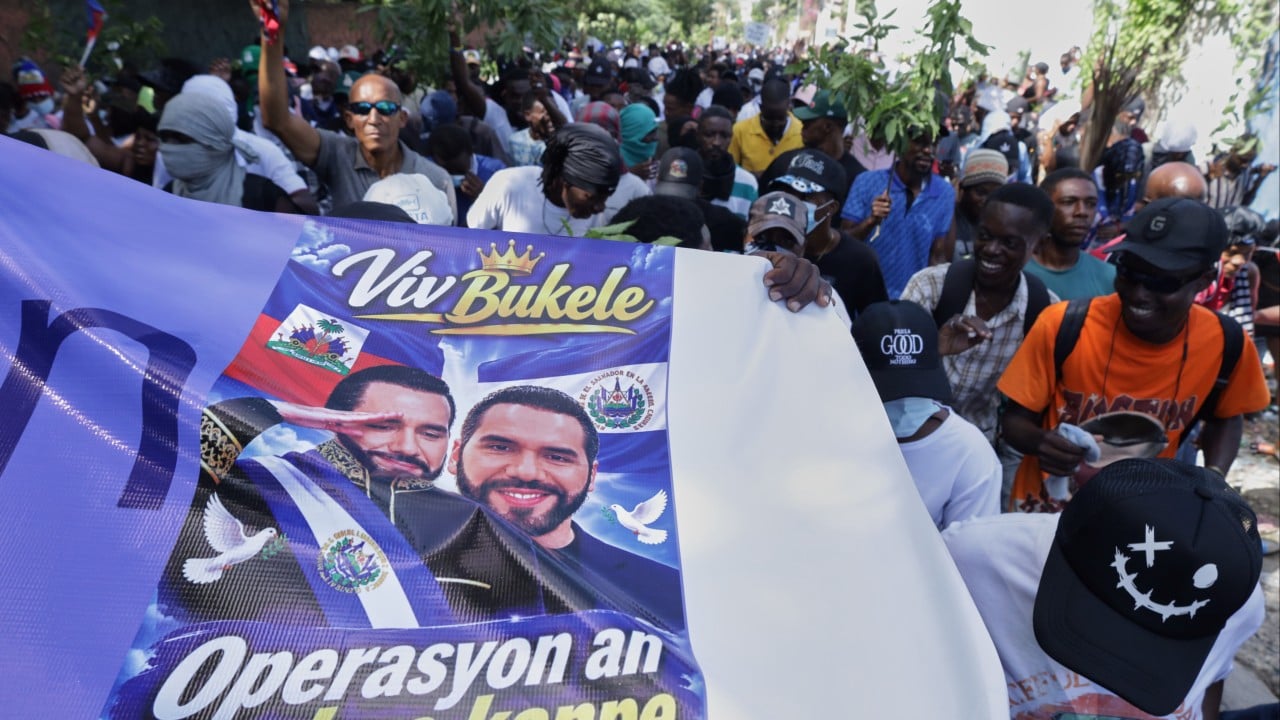
With crowds rallying behind El Salvador's deployment in Haiti, analysts question whether civilians are any safer.
Most mentioned in Organised crime and the state in Latin America headlines, last 3 days: Haiti 4gang 4police 3Salvador 3Bukele 3extortion 3members 2killed 2raid 2bid 2
Most active this week: Al Jazeera (6), South China Morning Post (2), DW (2), Tehran Times (Iranian state-aligned) (2). Built automatically from headlines; the top items are the stories the most newsrooms covered in the last three days.
El Salvador takes its war on gangs to Haiti with missile strikes, Mexico presses its offensive against the Jalisco cartel, and Ecuador is losing its fight against organised crime.
Organised crime is now a question of state power across Latin America. El Salvador fired missiles on a Haitian gang hideout and says it destroyed a gang headquarters, extending President Bukele's war on gangs abroad, a move that analysts call potentially ugly and that drew a clash with the US State Department. Mexico's navy continues its offensive against the Jalisco New Generation Cartel, from El Mencho to the arrest of 'R2'. Ecuador, by contrast, is losing its fight against organised crime. The reach of gangs extends to Europe, where French drug gangs recruit children to kill, and to Afghanistan, where the Taliban and transport companies extract extortion payments. Research examines criminal governance, how groups become transnational, women leaders in organised crime, and the AI-enabled criminal landscape.
In much of Latin America the central political question is no longer left versus right but whether the state or criminal organisations govern territory. Cartels and gangs collect taxes through extortion, provide order and jobs, and kill those who defy them. Research describes this as 'criminal governance' and offers a typology of its forms, from predatory to quasi-state 14. The shift of groups from local to transnational actors 16 means that no country can solve the problem alone.
This fortnight's news shows three states responding in three ways: El Salvador exporting its hard line, Mexico pursuing a military offensive, and Ecuador losing ground.
El Salvador fired missiles on a Haitian gang hideout and says it destroyed a gang headquarters 12. President Bukele built his popularity on a state of exception that jailed tens of thousands and cut murders dramatically, at the cost of due process. Taking that war to Haiti, where gangs control most of the capital, is a new step: analysts call it 'potentially ugly' for Bukele 8, and it provoked a clash with the US State Department 4.
The episode shows the appeal of the Bukele model to governments overwhelmed by gangs, and its risks. Haiti's gangs are embedded in neighbourhoods, and air strikes cannot rebuild a police force or a justice system.
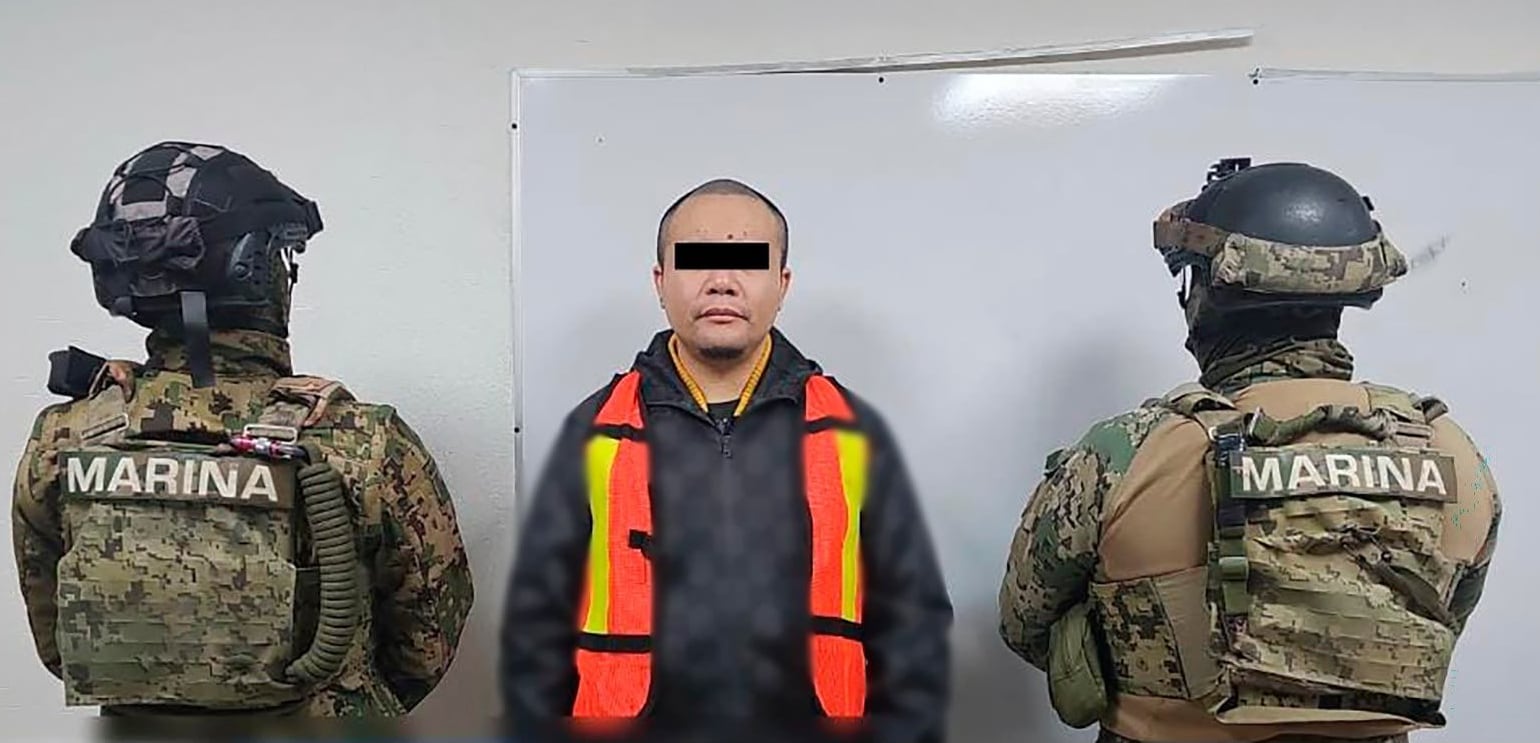
Mexico's navy continues its offensive against the Jalisco New Generation Cartel, from the hunt for El Mencho to the arrest of 'R2' after a shootout 3. Mexico has fought cartels with the military since 2006, with more than 400,000 killed and no clear victory; the current offensive is partly a response to US pressure and tariff threats. Ecuador shows the other trajectory: once peaceful, it has become a transit hub for cocaine, and analysts conclude it is losing its fight against organised crime 11 despite a militarised crackdown.
The difference between the two is less about toughness than about state capacity: courts, prisons and police that cannot be bought. A former sanctions official warns that even companies face cartel risks they cannot see 10.
The same dynamics appear far from Latin America. French drug gangs recruit children to commit violence and to kill 56, because minors face lighter sentences. In Afghanistan, vehicle owners on the Kabul-Herat road pay extortion to the Taliban and transport companies 7, a reminder that insurgents and governments can run the same rackets. Research on 'Organized Crime 5.0' examines how AI is changing criminal capabilities 13, and studies of women leaders in organised crime 18 and youth recruitment through networks 19 widen the picture beyond the stereotype of the male kingpin.
Legal scholars warn that offences defined as 'organised crime' have become elastic enough to fit almost any group 12, which lets governments use anti-mafia laws against protesters and opponents. Research on how criminal groups survive in authoritarian China through 'soft violence' 17 shows that strong states do not eliminate organised crime; they absorb it. For policy, the lesson is that the real measure of success is not arrests or strikes but whether citizens can rely on the state rather than on gangs for order.
Written by Claude (Anthropic), based on 20 recent headlines and excerpts in this section, Nov 11. AI analysis can misread or miss things: the numbers link to the original reporting, which is the authority.
Journal articles, academic blogs, think-tank reports and papers, kept apart from the news below.
The deployment of thousands of Salvadoran troops to Haiti entrenches a security model in the country beyond legal constraints and U.N. guardrails.
Treasury sanctions Guatemala’s Los Mendoza and Los Huistas as terrorists while State designates Los Lorenzanas as a Foreign Terrorist Organization.
The undeniable danger posed by real criminal organisations justifies offences so elastic that they fit almost any group of people, and whose invocation unlocks consequences bearing no proportion to the conduct. By punishing mere membership, these statutes create what Gerard Lynch called the crime of being a criminal. The vagueness is not a drafting failure. It is by design. A liberal criminal law – understood as one committed to constraining the state’s power to punish…
Artificial intelligence (AI) has captured the collective zeitgeist; the last five years have witnessed a period of acceleration in AI technological development in almost every aspect of its deployment. Industry 5.0 provides a conceptual framework that articulates AI dominance in not just industry per se, but all organisations and sectors and foregrounds human and robot interactivity where both work together to achieve desired outcomes. This development is also discernible in…
The Neo Black Movement of Africa (Black Axe) is an organized crime concern in Ireland, linked since 2020 to large-scale fraud and money laundering. Peer-reviewed research on Black Axe in Ireland is almost non-existent. This paper applies Relational Quantitative Content Analysis to 160 Irish media items (2012-2026), drawing on framing theory, news values, and the primary definer thesis. Findings reveal substantial but episodic coverage clustering around enforcement…
Haitian police say at least 34 gang members were killed in an operation in the capital city of Port-au-Prince.
The Salvadoran president has won popularity through a crime crackdown that has granted the state enormous power.
Police say the raid targeted the Martissant area, located on a key route out of Port-au-Prince held by gangs since 2021.
With crowds rallying behind El Salvador's deployment in Haiti, analysts question whether civilians are any safer.
A business proposition turned ugly when a Vietnamese woman was allegedly forced to strip naked after she followed a man into a car in Malaysia, believing they were going to discuss offers. The Malaysian Chinese Association’s Public Services and Complaints Department head Michael Chong said that the 32-year-old victim had been approached by a man on October 28 after he offered her a 1,000 ringgit (US$243) loan. “She said no but then offered to refer her Vietnamese friends to…
El Salvador’s President Nayib Bukele said on Wednesday that his troops had demolished the lavish home of a prominent gang leader in Haiti known as Jeff. It was not immediately clear if he was killed. Bukele posted a video on social media that begins with old footage of Jeff posing in front of his mansion in the Caribbean country and then cuts to Salvadorean helicopters flying towards it as they fire shot after shot, with big plumes of smoke rising from Jeff’s home. “My gift…
Wiretaps from Ukraine's anti-corruption bureau turned a drug case into a test of how far the cartel reached into the state.
El Salvador's mega-prison has become a model for governments across Latin America seeking to combat organized crime. But experts question whether the approach is effective, sustainable or compatible with human rights.
Border guard forces in the southern province of Tay Ninh have arrested two people for transporting more than 13kg of drugs from Cambodia into Vietnam for sale, the provincial border guard command said on November 18. Vietnam, Laos coordinate efforts to combat drug crime 11 defendants sentenced to death in drug trafficking case involving flight attendants Procurators seek death penalty for nine defendants in extremely serious drug trafficking case
A reported Iranian plot to detonate a “dirty bomb” in Washington has put Tehran’s capacity to strike inside the United States under scrutiny.
A 43-year-old Kazakh national accused of helping a ransomware crew steal data from US hospitals and schools, then threatening to publish patients’ medical information, has been extradited from Italy, the US Department of Justice announced. Prosecutors believe Roman Khlynovskiy was a member of the “8-Digits Team,” a group affiliated with the INC and Lynx ransomware operations. They allege the conspirators broke into victims’ networks, stole data, and demanded payment in…
A Kazakh national charged in a ransomware and extortion conspiracy targeting U.S. hospitals and schools was also charged with violating the TAKE IT DOWN Act.
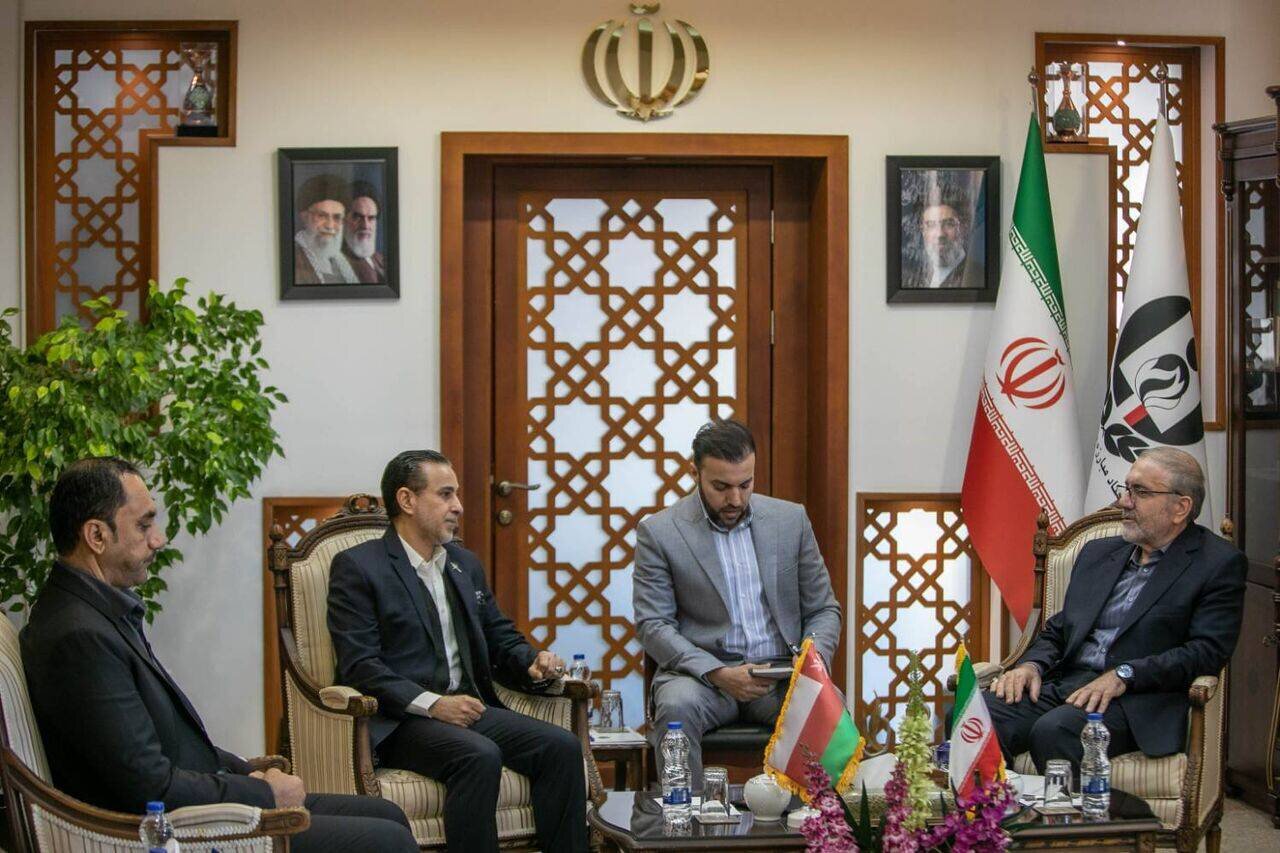
TEHRAN – Brigadier General Hossein Zolfaqari, the secretary general of the Drug Control Headquarters (DCHQ), in a meeting with Oman’s ambassador to Iran, Yarub bin Qahtan bin Nasser al Busaidi, has announced the country’s readiness to develop joint efforts with Oman in the fight against drugs and related crimes.
Iran has warned that drug cultivation in Afghanistan is increasing again, raising concerns over the effectiveness of the nationwide ban and the threat of regional narcotics trafficking. According to Iran’s Tasnim News Agency, on Monday, November 16, Iran’s anti-narcotics chief, Hossein Zolfaghari, made the remarks during a meeting with Oman’s ambassador to Tehran, Ya’arab bin
Miguel Angel Felix Gallardo was convicted of the 1985 murder of a US drug enforcement agent and a Mexican pilot.
Known as the 'Boss of Bosses', he was the head of all-powerful Guadalajara Cartel in the 1980s before his arrest broke up his drug organisation.
The arrest in Mexico City of Bojun He, alias ‘El Chino,’ the alleged leader of a money-laundering ring, highlights the growing involvement of financial intermediaries in organized crime
President Volodymyr Zelensky told journalists on Nov. 14 that anti-corruption authorities confirmed Interior Minister Ihor Klymenko, Health Minister Viktor Liashko, and other senior officials named in Operation Carthage wiretaps have no ties to the criminal network. Zelensky called for international action to dismantle the Khimprom narcotics cartel, warning that it has entered Poland, is targeting Germany, and operates with backing from foreign special services beyond Russia.
Washington designated three Guatemalan crime groups as terrorists on 13 November, saying Los Mendoza and Los Huistas serve Mexico's Sinaloa and CJNG cartels.
The brother of the slain prominent cartel leader known as "El Mencho" was sentenced on Friday to 22.5 years in prison.
A man whose slain brother led one of Mexico’s most violent drug cartels has been sentenced to more than 22 years in U.S. prison for his role in a sprawling drug trafficking conspiracy that brought cocaine and methamphetamine to American streets
Haiti's Prime Minister congratulating El Salvador's President for a gang crackdown in Haiti has shone a light on the relationship between the two countries. What's going on, and where does the US stand?
TEHRAN – Iran’s anti-narcotics police chief, Iraj Kakavand, has stressed the need to strengthen cooperation between Iran and countries in the Asia-Pacific region to combat drug trafficking and enhance regional security.
El Salvador's ruling Nuevas Ideas says it has registered all 44 mayoral slates and now runs 28 municipalities, ahead of the 28 February 2027 vote.
El Salvador’s President Nayib Bukele has released a video showing armed robots during an operation against gangs.
The cybercriminals are retargeting law firms that refused to pay its first ransom, with a social engineering con aimed at stealing Microsoft access tokens.
Maersk has revealed a threat actor extracted data from one of its legacy systems
The WhiteArmor ransomware group claims it stole 100GB of data from the shipping giant’s systems.
Hong Kong’s anti-corruption watchdog has charged a subcontractor’s team leader for allegedly extorting more than HK$75,000 (US$9,600) from five electrical workers at the Kai Tak Hospital site, vowing to work with the government to strengthen protections for imported labour. According to an Independent Commission Against Corruption (ICAC) statement on Thursday, Zeng Chusong, the 52-year-old site team leader from Billion Best (E&M) Engineering Company, faced 10 counts of an…
Arrests in Bolivia linked to a US-backed security alliance crackdown on drug cartels in Latin America.